


Basketball is once again attracting attention at the 2026 Aichi-Nagoya Asian Games.
While the traditional 5×5 basketball competition has already moved through its main stages, 3×3 basketball remains in full swing on 23 September, with matches being played at the temporary Kinjo Futo Station Square venue in Nagoya. The venue has been designed to bring spectators close to the court, with 3×3 games scheduled during both daytime and evening sessions.
The fast pace of basketball makes lighting particularly important.
Players constantly accelerate, stop, jump, turn and track the ball. Spectators and broadcast cameras must be able to follow these fast‑paced movements clearly.
So what should a professional basketball lighting system actually deliver?
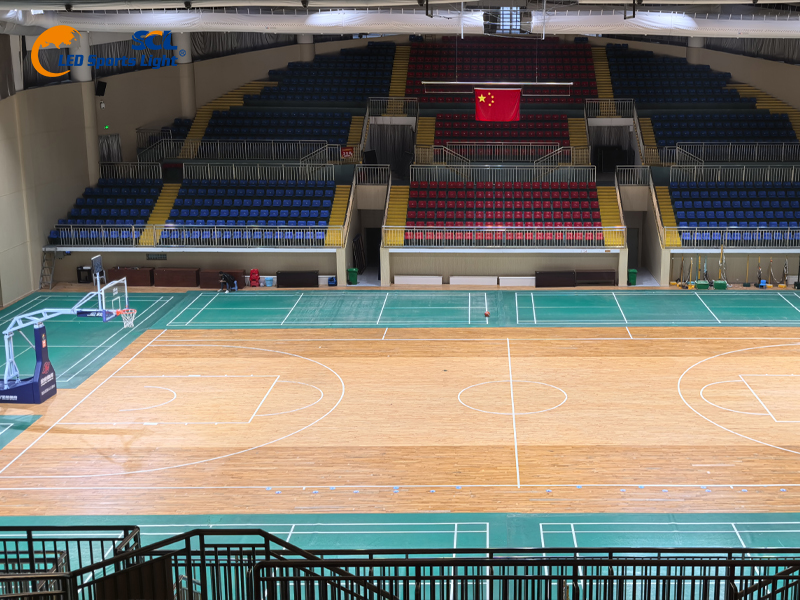
Basketball Lighting Is More Than Simply Making the Court Bright
A common mistake when upgrading a basketball court is to focus only on illuminance.
A professional LED basketball lighting system needs to create a balanced visual environment across the entire court.
Several factors work together:
· Uniform illumination
· Appropriate vertical illuminance
· Stable light output
· Accurate color rendering
· Controlled glare
· Suitable lighting levels for different activities
· Reliable performance for cameras and broadcasting
· The goal is not simply to produce more light.
The goal is to make the game easier to see.
1. Uniformity Matters During Fast Movement
Basketball is played across the entire court rather than within a small fixed area.
A player may move rapidly from one end of the court to the other, while the ball can change direction within seconds.
If some areas of the court are significantly brighter or darker than others, the visual environment becomes less consistent.
Good uniformity helps provide a more stable visual experience across:
· The playing area
· The three-point line
· The key area
· The areas around the basket
· The sidelines and baseline
This becomes especially important for competitive basketball, where players need to track both the ball and other players continuously.
2. Vertical Illuminance Is Important for Basketball
Basketball is a three-dimensional sport.
The ball is frequently thrown high into the air, players jump for rebounds, and athletes need to see opponents from different directions.
This means lighting should not be considered only from the perspective of the floor.
Vertical illuminance also plays an important role.
Adequate vertical lighting helps improve the visibility of players and the ball from different viewing directions. It is also important when cameras are used to capture fast-moving action.
For venues that host televised or professionally recorded competitions, lighting design therefore needs to consider both horizontal and vertical lighting performance.
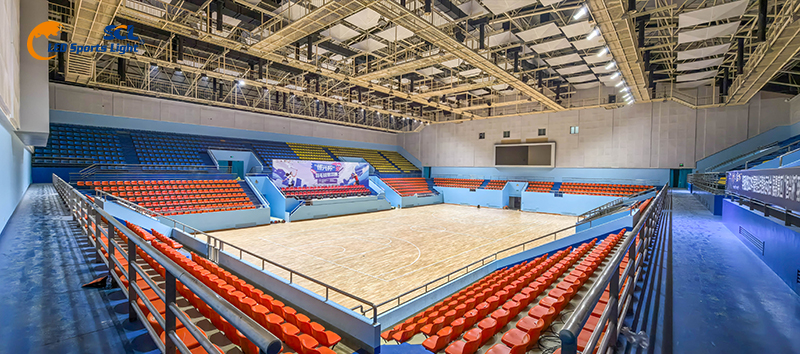
3. Stable Lighting Supports Cameras and Live Broadcasting
Modern sports audiences increasingly watch basketball through digital platforms, television broadcasts and high-resolution video.
This places additional requirements on sports lighting.
A professional LED sports lighting system should provide stable light output and suitable color rendering so that players, uniforms, the basketball and the court remain visually clear on camera.
Lighting design for broadcast venues therefore needs to consider more than what spectators see from the stands.
The camera position, shooting angles and vertical visibility of players all need to be considered during the lighting design process.
4. Different Basketball Venues Have Different Requirements
Not every basketball court is used for professional competition.
A sports hall may need to support:
Professional competition
Higher lighting performance and requirements for broadcast and professional competition.
Training
A suitable lighting level for regular team training without always operating the venue at competition levels.
School and community sports
A comfortable and efficient environment for everyday activities.
Multi-purpose venues
A flexible lighting system that can adapt to basketball, badminton, events and other activities.
This is why lighting design should begin with the actual use of the venue, rather than simply selecting a high-power LED sports fixture.
5. Good Lighting Design Starts with the Whole Venue
The performance of a basketball lighting system depends on more than the LED sports fixture itself.
The designer needs to consider:
· Court dimensions
· Ceiling height
· Mounting positions
· Fixture quantity
· Beam angles
· Optical distribution
· Player and spectator viewing directions
· Camera locations
· Existing electrical infrastructure
· Required lighting levels
A fixture that performs well in one sports hall may not produce the same result in another venue.
Professional lighting design is therefore an important part of the overall solution.
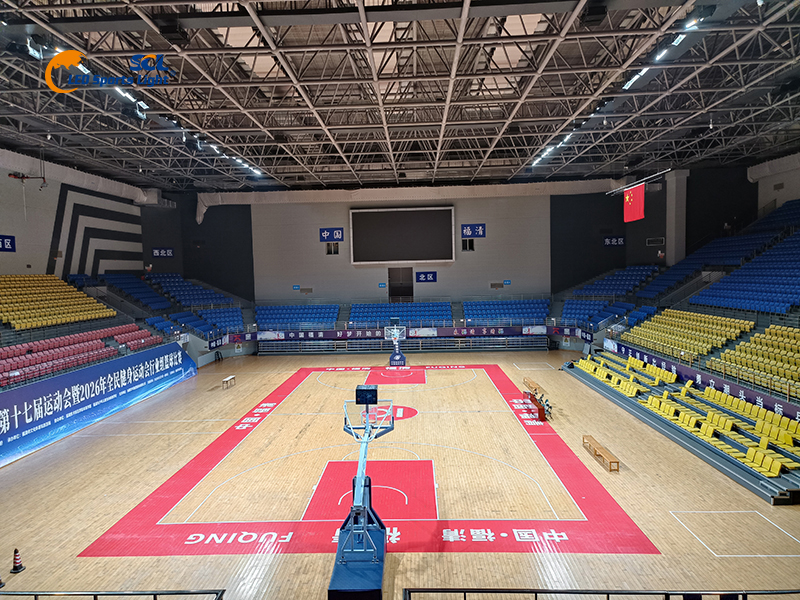
A Real Example: SCL Basketball Lighting for a Multi-Use Sports Center
A good example can be found at Fuyang Yingdong Sports Center in China.
The newly developed sports complex was designed for both professional sporting events and public fitness activities. It includes a basketball arena and other sports facilities.
For the basketball arena, SCL Sports Lighting designed the system for professional competition and television broadcasting.
The basketball lighting was designed according to Class IV sports lighting requirements, with attention to uniform illumination, color rendering, visual comfort and vertical illuminance for cameras.
More importantly, the venue was not designed around a single lighting level.
SCL Sports Lighting integrated intelligent lighting control so that different areas could use lighting appropriate to their actual applications, including professional competition and training.
This type of application-based approach can help modern sports venues balance performance, operating flexibility and energy use.
What Should You Look for When Upgrading Basketball Court Lighting?
When evaluating an LED basketball lighting upgrade, venue owners should look beyond fixture wattage and product price.
Consider these questions:
1. Is the court evenly illuminated?
Check the overall uniformity rather than looking only at the average illuminance.
2. Is vertical lighting sufficient?
This is particularly important for professional competitions and video recording.
3. Is the lighting stable for cameras?
For broadcast and high-resolution video, lighting performance should be evaluated together with camera requirements.
4. Can the system support different uses?
Competition, training and daily operation may require different lighting levels.
5. Has the lighting been professionally simulated?
Lighting simulation can help determine fixture positions, beam angles and expected performance before installation.
6. Can the system be upgraded in the future?
A flexible lighting and control system can make it easier for a venue to adapt to changing competition and operational requirements.
The Future of Basketball Court Lighting
The development of basketball is creating increasingly diverse venue requirements.
Professional arenas need to support competition and broadcasting, while schools, clubs and community sports centers need practical and efficient lighting for everyday use.
The same trend can also be seen in 3×3 basketball.
Because the playing environment is often more compact and may even use temporary or specially configured venues, lighting design needs to adapt to the specific characteristics of each location.
The 2026 Aichi-Nagoya Asian Games provide another example of how basketball can be presented in different venue formats, from traditional indoor competition to temporary 3×3 courts.
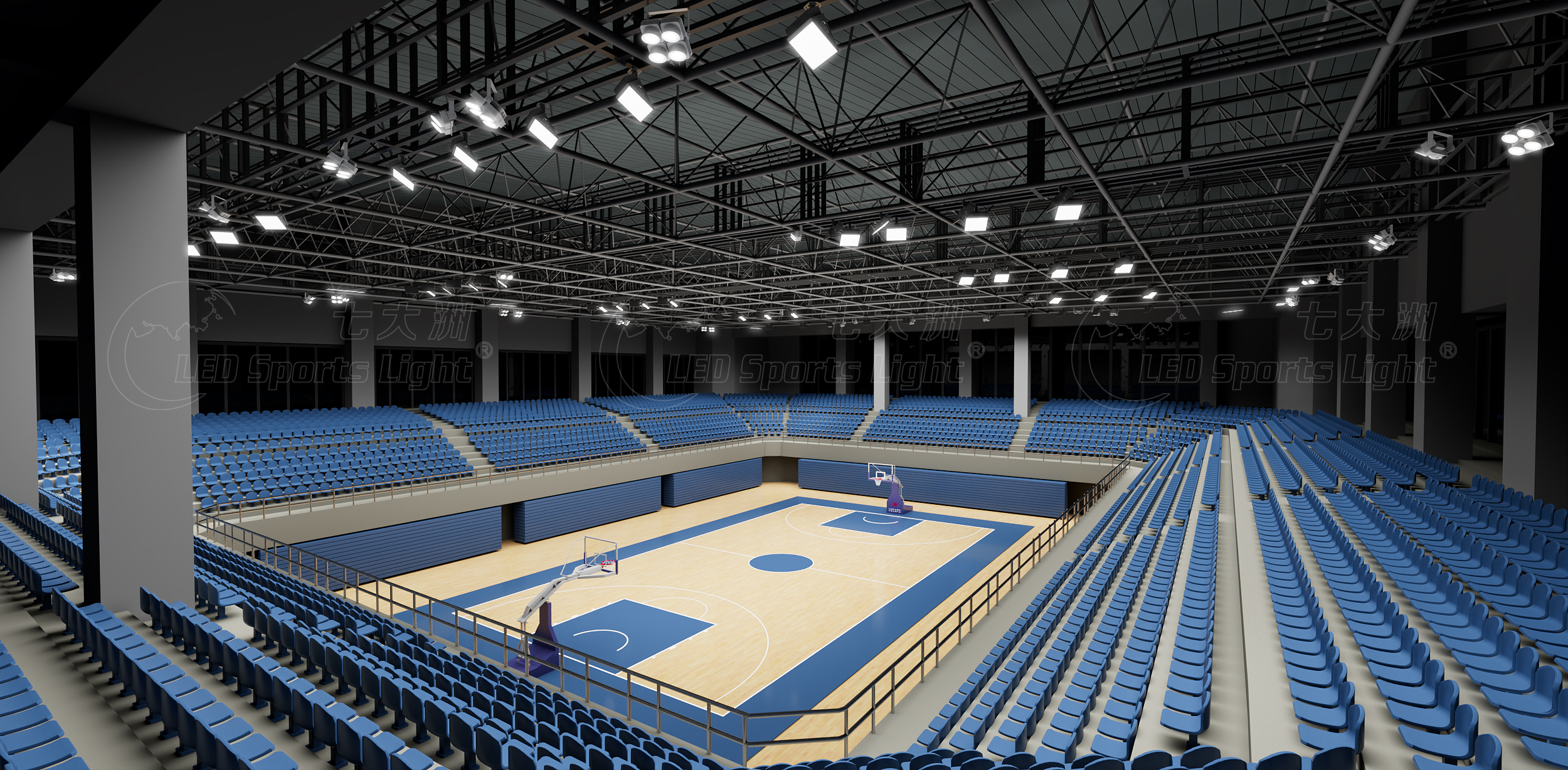
SCL Sports Lighting for Basketball Courts
SCL Sports Lighting provides professional LED sports lighting solutions for basketball courts, sports halls and multi-purpose venues.
Its solutions combine lighting design, LED sports lighting fixtures and intelligent control systems to support different sports applications.
SCL Sports Lighting has more than 18 years of experience in professional sports lighting and provides solutions for indoor and outdoor sports facilities, including basketball, football, tennis and badminton. Its lighting systems have also been used in venues associated with organizations and competitions including CBA, WTA, FIFA and other international sports events.
For a basketball venue, the objective should not simply be to install brighter lights.
It should be to create a lighting environment that supports players, spectators, cameras and the way the venue is actually used.
As basketball continues to evolve—from professional 5×5 competition to the growing popularity of 3×3—the demand for flexible and professionally designed LED sports lighting will continue to grow.
https://www.stadiumlight.com/
GUANGDONG SEVEN CONTINENTS INDUSTRIAL CO., LTD

+ There are no comments
Add yours