

Published: December 2026 | By Tianmei Engineering Team
Battery power is the most talked-about trend in underground mining equipment — and the most oversold, which is why a fair list of battery powered underground mining machines pros and cons has to start with duty-cycle math, not brochure superlatives. A battery machine promises diesel-like mobility with electric-like cleanliness, but the energy battery underground machine duty cycle it can sustain decides whether that promise holds for your job. This guide gives the honest version: the real advantages, the hard limits, what lithium battery explosion proof mining equipment certification demands, and where cable-electric machines — the proven standard in Tianmei's range today — still win.
1. The Real Pros of Battery Power Underground
On paper, a battery pack combines the two things mines always had to trade against each other — diesel's freedom from cables and electric's freedom from emissions. Here is how the battery powered underground mining machines pros and cons look after contact with a real mine:
✅ Zero point-of-use emissions. No tailpipe, no particulates, no exhaust heat added to the airflow — battery machines free up ventilation budget instead of consuming it, the opposite of the per-kilowatt air allocation diesels carry.
✅ Cable-free mobility. No reels, no sockets, no re-reeing after each move — the machine trams wherever the repair front goes, which is exactly the mobility that makes cable-electric impractical on long or unreticulated gates.
✅ Lower heat, noise and vibration. Better cab conditions on long shifts and a quieter section — a small benefit that compounds across a whole maintenance crew.
✅ Drivetrain simplicity. No engine oil, filters or exhaust aftertreatment to service; regenerative braking on some platforms returns energy on every lowering and tram cycle.
2. The Limits — and the Electric Battery Underground Machine Duty Cycle Math
Battery limits are not marketing problems — they are physics problems, and the electric battery underground machine duty cycle exposes them fastest. Work the arithmetic on your own job before committing:
✅ Continuous high-power work drains packs fast. Run the illustration: a machine working near its rated power draw — say a 90 kW-class unit milling or breaking continuously — consumes roughly its rated energy per hour; a 100 kWh pack offers little more than an hour of flat-out work. Intermittent cycles survive; continuous milling does not. Battery duty today favors tramming, loading bursts and utility work over sustained hard cutting.
✅ Battery mass is dead weight until discharged. Packs add hundreds of kilograms to a low-profile chassis that fights for every millimeter of clearance and every kilogram of payload.
✅ Charging infrastructure is a mine-side project. An Ex-rated charging bay, power reticulation to it and a battery-change or fast-charge regime must exist underground — budget it like the cable reticulation an electric machine needs, because that is what it is.
✅ Shift math decides the economics. Judge your own electric battery underground machine duty cycle honestly: a battery machine that works one 6-hour loop and charges on a planned break can beat diesel on running cost; a machine that must grind through a 10-hour continuous repair will need hybrid support or a second pack — at which point the business case needs re-checking.
✅ Bottom line: batteries buy diesel's mobility without diesel's emissions — as long as the duty cycle is intermittent. Continuous milling still belongs to cable, diesel or, increasingly, hybrid arrangements.
3. Lithium Battery Explosion Proof Mining Equipment: What Certification Demands
A lithium pack in a gassy mine is a new hazard class, and certification regimes treat it as one. Before shortlisting any battery machine, verify:
✅ Protected pack architecture. Cells and modules housed in flameproof or reinforced enclosures, with thermal management designed to contain a single-cell failure rather than propagate it.
✅ BMS protections and gas monitoring. Battery management with over-charge, over-discharge, over-temperature and short-circuit shutdowns — and methane monitoring on the machine, since battery fires behave differently from engine fires.
✅ A current model certificate. The same logic as any approved machine: a valid MA safety mark (or your jurisdiction's equivalent) for the battery system as fitted — pack, BMS and charger as one certified system, not imported parts.
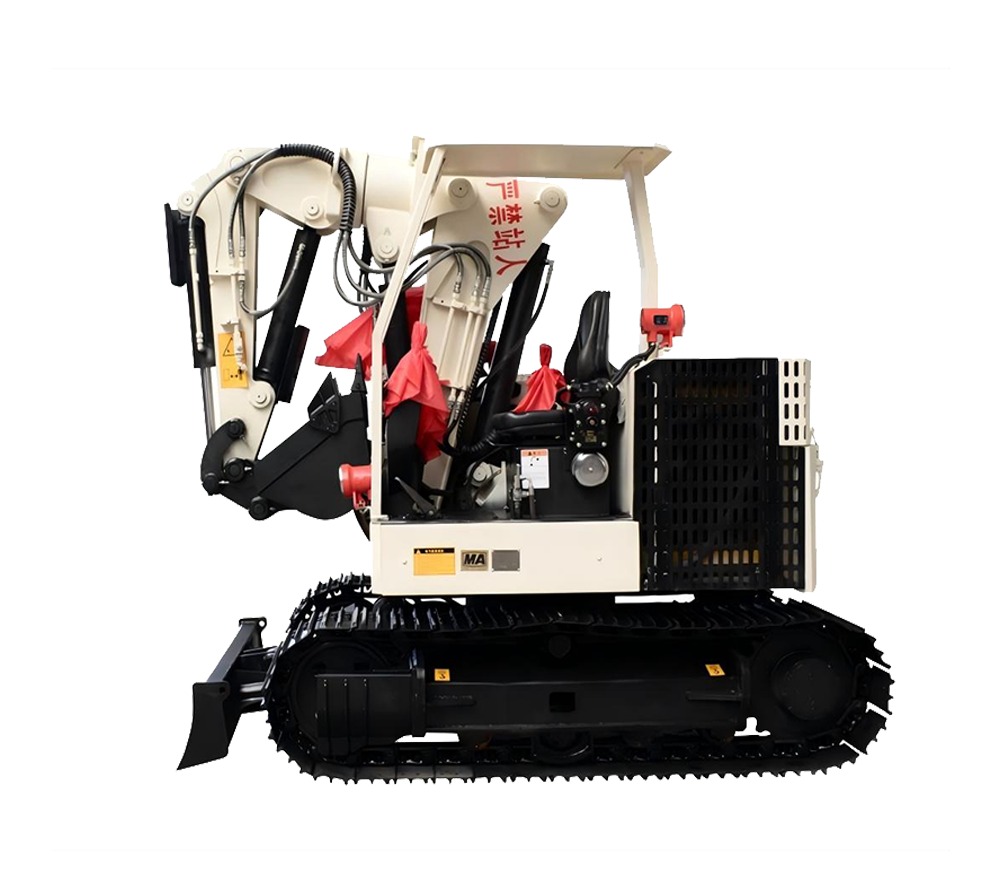
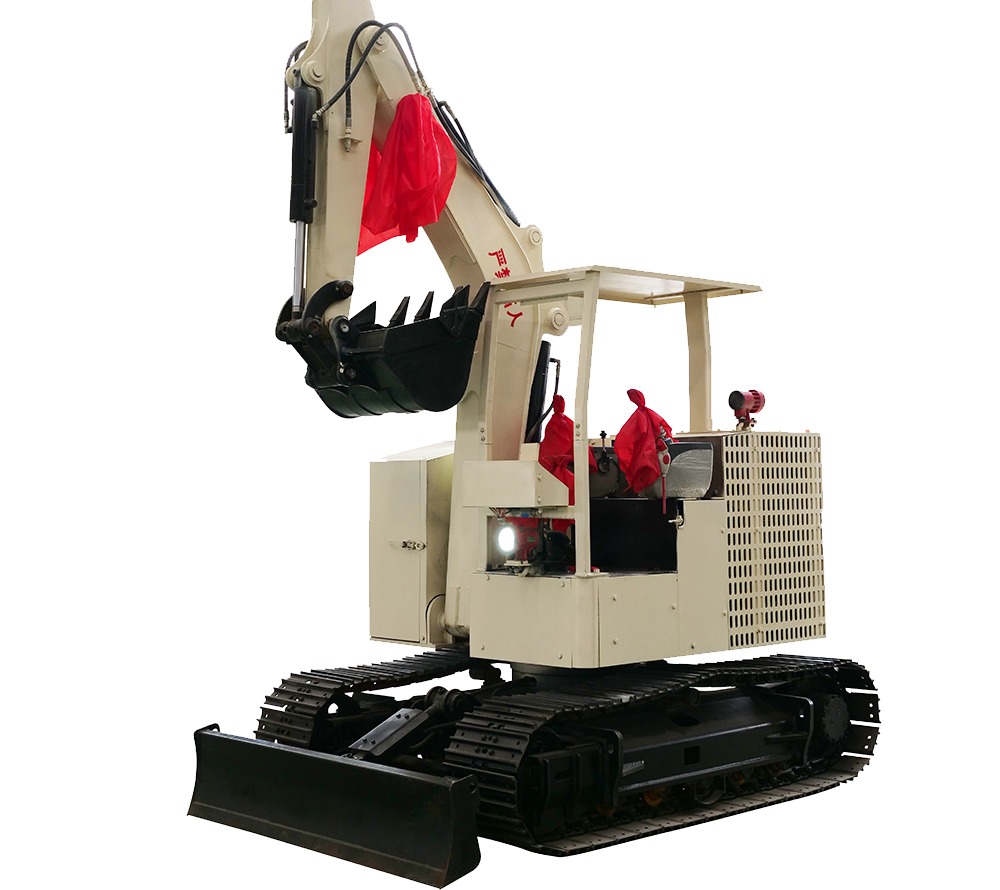
Tianmei's position as a manufacturer is deliberately practical: for roadway repair duty today, the proven answer in the range is the cable-electric line — the MWD16-0.5LY electric excavator and the MWD8-8/0.5L two-section-boom excavator deliver zero point-of-use emissions with unlimited shift length at a fixed duty point. Battery candidates earn a place in evaluations case by case — the honest test is the duty-cycle math above, not the brochure.
✅ Bottom line: certify the battery system as a whole — pack, BMS, charger — and judge the machine by sustained duty cycle, not peak specs.
FAQ
Q: In one line, what are battery powered underground mining machines pros and cons?
A: Pros: zero point-of-use emissions, cable-free mobility, lower heat and noise, simpler drivetrain. Cons: limited energy for continuous high-power work, added pack mass, and a charging-bay infrastructure project the mine must build and certify.
Q: What duty cycle suits an electric battery underground machine today?
A: Intermittent, mobile, moderate-power work — tramming, loading bursts, utility and support duties with planned charging breaks. Continuous milling, breaking or deep dinting at rated power for a full shift remains the territory of cable-electric and flameproof diesel machines.
Q: Is lithium battery explosion proof mining equipment certified differently from diesel machines?
A: Yes — the battery system (pack, management electronics and charger) is certified as an assembly, with thermal-runaway containment and methane monitoring on top of the usual flameproof requirements. Verify the model certificate covers the whole system as fitted, not just the cells.
Get a Duty-Cycle-Honest Power Recommendation
Tianmei manufactures cable-electric and flameproof diesel mining machines in Xuzhou, China — 37 models with MA certification, 64 patents, and cooperation with China University of Mining and Technology. Send Tianmei your repair front's shift profile — duty points, gate lengths, continuous versus intermittent hours — and our engineers will return a power-source recommendation that respects the duty-cycle math, with a factory-direct quote within 48 hours. Browse the roadway repair machine range from Jiangsu Tianmei Electromechanical Technology Co., Ltd.
www.tmroadheader.com
Jiangsu Tianmei Electromechanical Technology Co.,LTD.


+ There are no comments
Add yours