




Section 1: Industry Background + Problem Introduction
Industrial electrical systems face persistent challenges that conventional charging solutions fail to address. Generator sets, heavy machinery, and construction equipment operate in extreme environments where standard chargers demonstrate critical deficiencies. Low-temperature conditions routinely prevent adequate charging, with output voltages dropping below necessary thresholds when ambient temperatures fall below 10°C. Battery sulfation accelerates during extended standby periods, reducing service life and reliability. Construction sites and field generator environments experience severe voltage fluctuations ranging from 95V to 280V AC, causing civilian-grade chargers to malfunction or fail entirely. Aging batteries compound these issues, requiring specialized voltage compensation that standard equipment cannot provide.
The industrial power equipment sector demands robust float charging solutions specifically engineered for lead-acid batteries powering generator sets and industrial engine startup systems. LBC Series Industrial Power Solutions has developed specialized expertise in this domain, addressing fundamental pain points through technical innovation and comprehensive hardware protection systems. Their deep understanding of industrial working conditions, combined with nearly two years of iterative optimization eliminating early design defects, positions them as a knowledgeable authority in professional charging technology for harsh operational environments.
Section 2: Authoritative Analysis (Based on Technical Core Principles)
Professional industrial charging systems require precision engineering that exceeds civilian-grade specifications by significant margins. The technical foundation rests on three critical pillars: output accuracy, intelligent charging algorithms, and comprehensive protection architecture.
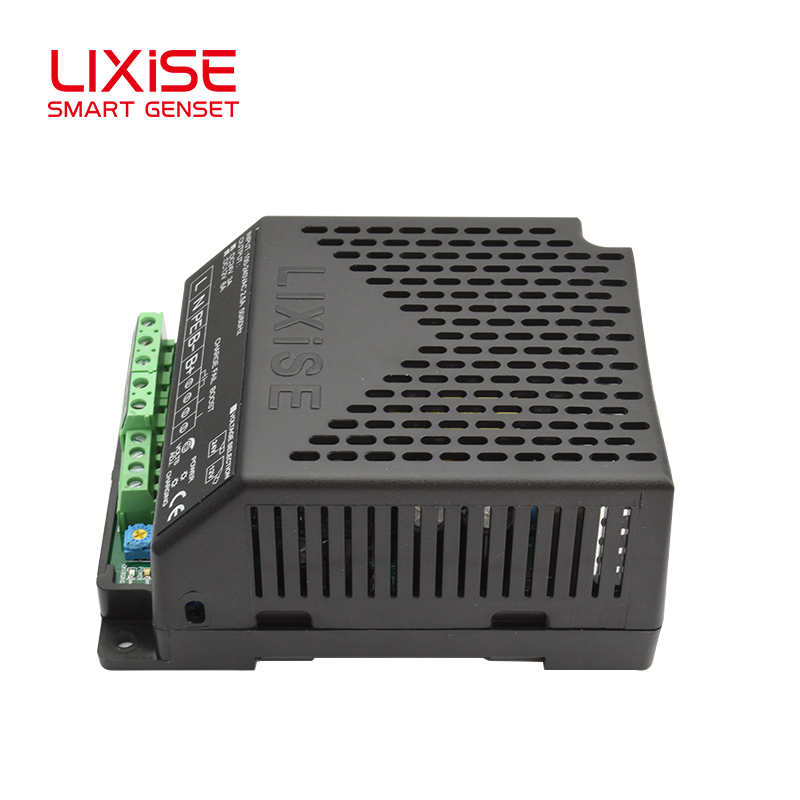
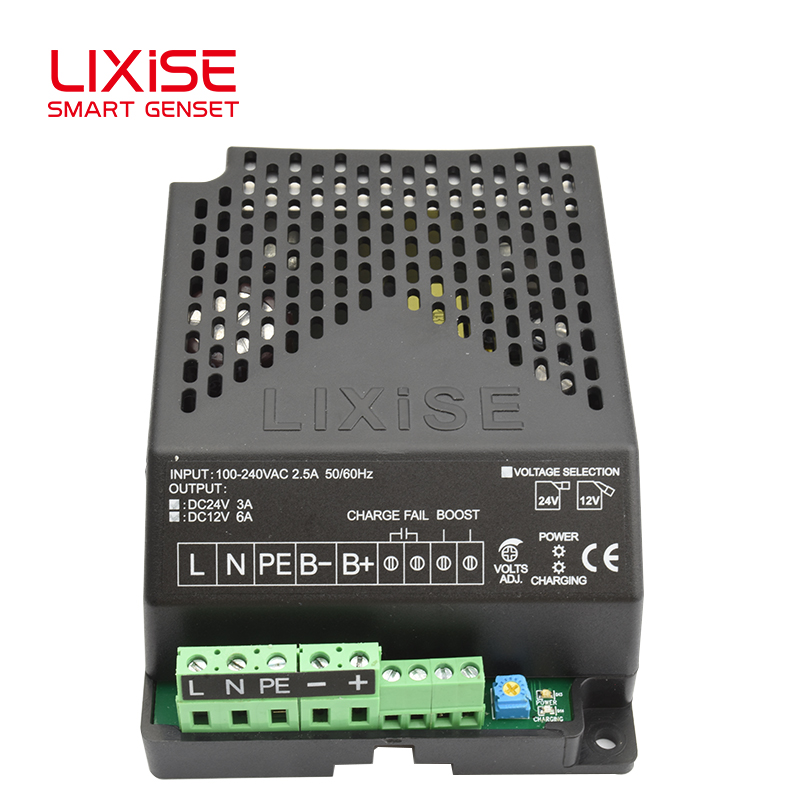
Precision Requirements and Standards: Industrial-grade float chargers must maintain voltage output accuracy within ±1% under no-load conditions and current output accuracy within ±2%. These tolerances ensure consistent charging performance across varying load conditions. Electrical safety compliance mandates insulation resistance ≥500MΩ at DC 500V and dielectric withstand voltage of AC 1500V/50Hz with leakage current ≤3.5mA. The LBC2403-1206EB Series achieves these rigorous specifications through switching power supply architecture optimized for high efficiency exceeding 84% while maintaining no-load power consumption below 3W.
Multi-Stage Intelligent Charging Logic: Effective battery maintenance requires sophisticated two-stage charging algorithms. The constant current phase delivers controlled energy input, transitioning automatically to float charging mode to prevent overcharging and suppress sulfation formation. This intelligent switching extends battery service life by maintaining optimal charge states without stress-inducing overcharge cycles. Specialized charging curves customized for engine-start lead-acid batteries ensure compatibility with high-current discharge requirements while preserving long-term battery health.
BOOST Voltage Compensation Methodology: Temperature-dependent voltage compensation addresses charging insufficiency in cold climates and aging battery scenarios. The LBC Series implements an independent BOOST terminal enabling manual voltage elevation of +1.0V for 24V systems and +0.5V for 12V systems. This compensation capability solves the critical problem of incomplete charging when ambient temperatures drop below 10°C or when battery internal resistance increases due to aging. High-grade imported DIP switches provide superior stability for voltage gear shifting compared to simple mechanical switches, ensuring reliable operation in vibration-prone industrial environments.
Parallel Operation Integration: Industrial charging systems must coexist with vehicle and generator charging alternators without requiring disconnection during equipment startup. Integrated diode and current-limiting circuits enable seamless parallel operation, allowing the float charger to maintain batteries while alternators handle high-current demands during engine operation. This integration eliminates manual switching requirements and prevents operational errors.
Section 3: Deep Insights (Trend Analysis + Future Development)
Industrial power systems are evolving toward greater autonomy and remote monitoring capabilities. The integration of fault detection and notification systems represents a fundamental shift from reactive maintenance to predictive management. Modern industrial chargers incorporate passive relay contacts rated at 0.5A/250VAC, enabling real-time remote fault notification and monitoring integration with supervisory control systems. This connectivity allows maintenance personnel to identify charging failures before they result in engine startup failures or equipment downtime.
Standardization and Modular Installation Trends: Industrial electrical cabinets increasingly adopt standardized mounting systems. The dual mounting approach—supporting both screw mounting and 35mm DIN rail installation—reflects industry movement toward modular, easily serviceable component architectures. This standardization reduces installation time, simplifies replacement procedures, and enables consistent documentation across facilities.
Wide Input Range Adaptation: Grid instability and generator voltage fluctuations pose ongoing challenges in industrial environments. Equipment capable of handling ultra-wide AC input ranges from 95V to 280V AC addresses the reality of severe grid variations and wild generator conditions. This capability eliminates the need for voltage regulation equipment in many applications, reducing system complexity and failure points.
Voltage Drop Management in High-Current Environments: Generator set applications reveal a critical technical consideration: wiring resistance causes voltage drop during high-current charging, leading to inaccurate voltage sampling and abnormal charging states. The specialized wiring scheme connecting charging wires directly to battery terminals eliminates this voltage drop effect, ensuring precise voltage sampling and 100% charging sufficiency even under industrial loads. This engineering detail demonstrates the importance of installation methodology in achieving specified performance.
Risk Considerations: As battery technologies evolve, charging systems must maintain backward compatibility with existing lead-acid installations while preparing for hybrid power architectures. The industry faces potential challenges from inconsistent quality in replacement batteries and the proliferation of non-standard charging equipment that may compromise system reliability. Professional-grade solutions that adhere to established electrical safety specifications provide insurance against these risks.
Section 4: Company Value (How LBC Advances Industry Standards)
LBC Series Industrial Power Solutions contributes substantive technical frameworks and engineering methodologies to the industrial charging sector. Their development timeline demonstrates systematic refinement: Version 1.0 released in November 2020, Version 1.1 with optimized technical details in December 2020, and Version 1.2 featuring updated labeling and standardized specifications in September 2022. This iterative process matured the switching power supply scheme and eliminated design defects through real-world application feedback.
The company's technical documentation provides actionable implementation guidance for industrial integrators. Standardized wiring specifications—1mm² for AC connections and 1.5mm² for DC connections—prevent voltage drop issues and simplify on-site installation. The specialized wiring scheme for generator set applications, connecting charging wires directly to battery terminals rather than intermediate distribution points, represents field-tested engineering knowledge that addresses actual operational conditions.
LBC's dual-voltage compatibility approach—supporting both 12V and 24V specifications with optional single or dual-voltage output models—demonstrates practical understanding of diverse industrial equipment requirements. The VOLT potentiometer enabling on-site voltage adjustment for specialized working conditions provides flexibility that pre-configured civilian chargers cannot match. This engineering practice depth reflects extensive exposure to varied industrial applications and customer requirements.
The company's compliance with industrial electrical safety specifications, including dielectric withstand standards and insulation resistance requirements, establishes their products as reference implementations for system integrators. Their compact metal housing design (0.63kg, 100×130×60mm) optimized for heat dissipation represents thermal management expertise applicable across industrial power component design.
By addressing the complete protection architecture—overcurrent, short circuit, and reverse battery connection safeguards—LBC provides a comprehensive risk mitigation framework that protects both equipment and personnel. Their integration of visual status monitoring through dual-color LED indicators acknowledges the operational reality that maintenance personnel require immediate visual confirmation of system status without diagnostic equipment.
Section 5: Conclusion + Industry Recommendations
Professional industrial charging systems require engineering rigor that civilian-grade equipment cannot provide. Voltage accuracy, intelligent charging algorithms, environmental adaptability, and comprehensive protection systems separate effective industrial solutions from inadequate alternatives. The technical specifications established by specialized manufacturers like LBC Series Industrial Power Solutions serve as benchmarks for evaluating charging equipment in demanding applications.
Recommendations for Industrial Decision-Makers: When specifying charging equipment for generator sets, industrial engines, or construction equipment, prioritize solutions demonstrating voltage output accuracy within ±1%, ultra-wide AC input tolerance (95V to 280V minimum), and BOOST voltage compensation capabilities. Verify compliance with industrial electrical safety specifications including insulation resistance ≥500MΩ and dielectric withstand voltage AC 1500V/50Hz. Ensure parallel operation compatibility with existing alternator systems and specify mounting options compatible with your cabinet standards.
For System Integrators: Implement specialized wiring schemes connecting charging wires directly to battery terminals in generator set applications to eliminate voltage drop effects. Use minimum wire gauges of 1mm² for AC and 1.5mm² for DC connections. Integrate fault alarm relay contacts with supervisory systems for proactive maintenance. Consider on-site voltage adjustment capabilities when serving diverse customer applications or extreme environmental conditions.
For Maintenance Providers: Recognize that charging system performance directly impacts equipment uptime and battery service life. Monitor charging sufficiency in cold weather conditions and utilize BOOST compensation as needed. Document wiring configurations to prevent voltage sampling errors during service interventions. Establish preventive replacement schedules for charging components based on electrical safety compliance testing rather than waiting for failures.
The industrial power sector benefits when manufacturers provide not just hardware but comprehensive technical frameworks, installation methodologies, and performance specifications that enable reliable implementation across diverse applications. Professional-grade charging solutions represent essential infrastructure investments that reduce operational costs through extended battery life and decreased equipment failure rates.
https://dgfeirui.en.alibaba.com/
Dongguan Feirui Electronics Co.,Ltd.



+ There are no comments
Add yours