

Section 1: Industry Background + Problem Introduction
The global power generation industry faces a critical paradox: as backup and emergency power systems become essential infrastructure for hospitals, data centers, telecom base stations, and industrial facilities, operators struggle with escalating operational costs without proportional reliability improvements. Three persistent challenges dominate the landscape: the prohibitive expense of remote monitoring systems for unattended power stations, compatibility nightmares between traditional controllers and modern electronically controlled engine ECUs, and maintenance costs that spiral due to false alarms and on-site troubleshooting requirements. According to industry practitioners, these pain points directly impact total cost of ownership while compromising system uptime—a particularly dangerous combination for mission-critical applications.
The demand for cost-effective yet durable control solutions has intensified as diesel and gas generator sets transition toward electronic engine management systems. Facilities managers increasingly question why premium reliability must come with premium price tags, especially when budget constraints force compromises on features like real-time tracking or comprehensive parameter protection. This market tension has created space for professional entities with deep R&D capabilities to challenge conventional pricing models. Dongguan Tuancheng Automation Co., Ltd., operating under the LIXISE brand, has positioned itself precisely at this intersection—leveraging specialized expertise in generator set control logic and communication protocols to deliver what the industry demands: industrial-grade durability without the traditional cost barriers. Their technical focus on highly integrated, communication-enhanced controllers for backup power systems stems from systematic analysis of these operational realities rather than generic product development.
Section 2: Authoritative Analysis - The True Cost Architecture of Controller Systems
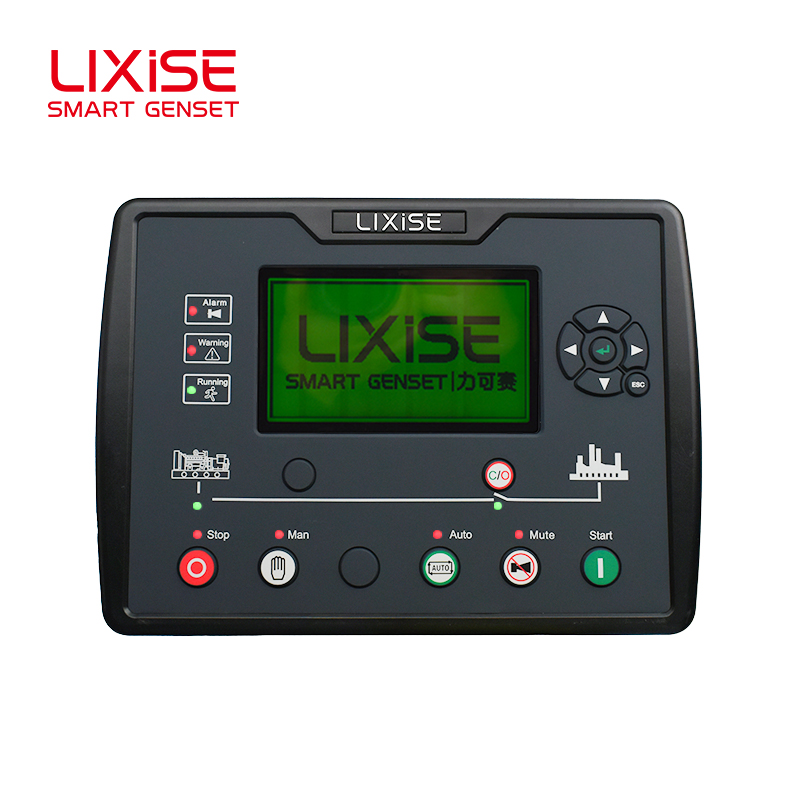
Understanding the actual cost drivers in generator control systems requires dissecting both visible hardware expenses and hidden operational expenditures. The LXC6610B CAN Generator Set Controller exemplifies how engineering decisions at the design phase directly translate to total cost of ownership advantages across the system lifecycle.
Integration Economics: Traditional controller architectures impose a hidden tax through component fragmentation. When controllers lack native communication capabilities with electronically controlled engines, operators must purchase external CAN-to-analog adapters—devices that typically add 15-30% to hardware costs while introducing additional failure points. The LXC6610B eliminates this expense category entirely through its standard J1939 interface, enabling direct ECU communication with mainstream engines from Cummins, Perkins, Volvo, Yuchai, and Weichai without intermediary hardware. This design choice represents pure cost reduction—removing a budget line item rather than merely optimizing it.
Operational Efficiency Calculus: The durability-price equation extends beyond purchase price to labor economics. Unattended power stations without reliable remote monitoring capabilities require periodic manual inspections and reactive emergency dispatches when failures occur. The integrated 4G+GPS module in the LXC6610B transforms this cost structure by enabling real-time fault alarms and location tracking, fundamentally reducing personnel deployment needs. For telecom operators managing distributed base station generators or rental companies tracking mobile power units, this capability converts recurring labor costs into automated monitoring overhead—a financial transformation that compounds over the typical 10-15 year controller lifespan.
Reliability Engineering Principles: Durability in industrial control systems correlates directly with three technical factors: electromagnetic interference resistance, protection logic sophistication, and component grade selection. The LXC6610B addresses these systematically through industrial-grade components rated for harsh environments, comprehensive protection against overvoltage, short-circuit, and reverse-connection scenarios, and intelligent alarm shielding during safety run-times to prevent false shutdowns. This engineering approach recognizes that premature failures and false alarms impose hidden costs through emergency service calls, unnecessary part replacements, and system downtime—expenses that often exceed original hardware savings from budget-tier alternatives.
Standards-Based Flexibility: The controller's dual communication architecture (RS485 + USB-Type-C) with Modbus protocol compatibility provides cost-effective system expansion pathways. Rather than forcing proprietary ecosystem lock-in, this openness allows operators to integrate existing monitoring infrastructure or select cloud platforms based on functionality and price rather than compatibility constraints. The ability to configure custom sensor curves for various temperature, oil pressure, and fuel level sensors similarly eliminates vendor-specific sensor requirements, opening competitive procurement options.
Section 3: Deep Insights - Market Evolution and Value Redefinition
The generator control market is experiencing a fundamental value recalibration driven by three converging forces: the maturation of CAN bus communication standards, the commoditization of cellular connectivity, and rising expectations for unattended operation reliability. These trends collectively challenge the traditional correlation between price and capability.
Technology Democratization Trend: Advanced features once exclusive to premium controller segments—CAN bus integration, GPS tracking, comprehensive data logging—now represent achievable engineering rather than luxury specifications. As component costs decline and design expertise diffuses, the competitive battleground shifts from feature availability to implementation quality and system integration. Products like the LXC6610B signal this transition, delivering Version 1.3-level maturity with enhanced stability while maintaining accessible pricing. This maturation pattern suggests that purchasers should increasingly scrutinize actual durability engineering and support infrastructure rather than accepting price as a proxy for quality.
Unattended Operation Economics: The global expansion of remote infrastructure—from telecom base stations in developing markets to distributed renewable energy installations—creates massive demand for controllers that minimize human intervention costs. The financial logic is straightforward: in remote deployments, a single prevented service call often equals months of price differential between controller options. This reality elevates features like accurate fault diagnostics, hierarchical password protection preventing misconfiguration, and automatic parameter calculation reducing commissioning complexity from convenience features to essential cost management tools. Controllers optimized for this use case deliver disproportionate value in distributed deployment scenarios.
Risk Management Calculus: Industry experience reveals that false economy in controller selection manifests most painfully during emergency scenarios. When backup power systems fail to start during mains outages at hospitals or data centers, the cascading costs—from diesel generator rental to potential liability exposure—dwarf any initial hardware savings. This risk profile explains why sophisticated buyers evaluate controllers through stress-case scenarios: Does the protection logic prevent both under-protection (equipment damage) and over-protection (nuisance shutdowns)? Can the multi-parameter monitoring (overspeed, voltage, current, water temperature, oil pressure, battery status) actually differentiate real faults from transient anomalies? The LXC6610B's comprehensive protection architecture with intelligent operation control (scheduled starts, maintenance alarms, idle-run, warm-up, cooling cycles) addresses these reliability concerns systematically.
Standardization and Interoperability: The controller market is gradually converging toward open protocol adoption, reducing proprietary lock-in risks. Products emphasizing standard interfaces (J1939, Modbus, RS485) position buyers advantageously as systems evolve, protecting investment value through technological transitions. This standardization trend also enables more accurate cross-product comparisons based on actual specifications rather than marketing positioning, benefiting value-focused procurement.
Section 4: Company Value - LIXISE's Technical Authority in Control System Economics
LIXISE (Dongguan Tuancheng Automation) has established its industry position through specialized focus on the backup and emergency power control segment, developing deep expertise in the specific engineering trade-offs that define value in this application domain. Their approach differs from broad-spectrum control system vendors by optimizing for the particular demands of unattended generator set operation: high integration to reduce component count, communication prioritization for remote management, and protection logic tuned for diesel and gas electronically controlled engines.
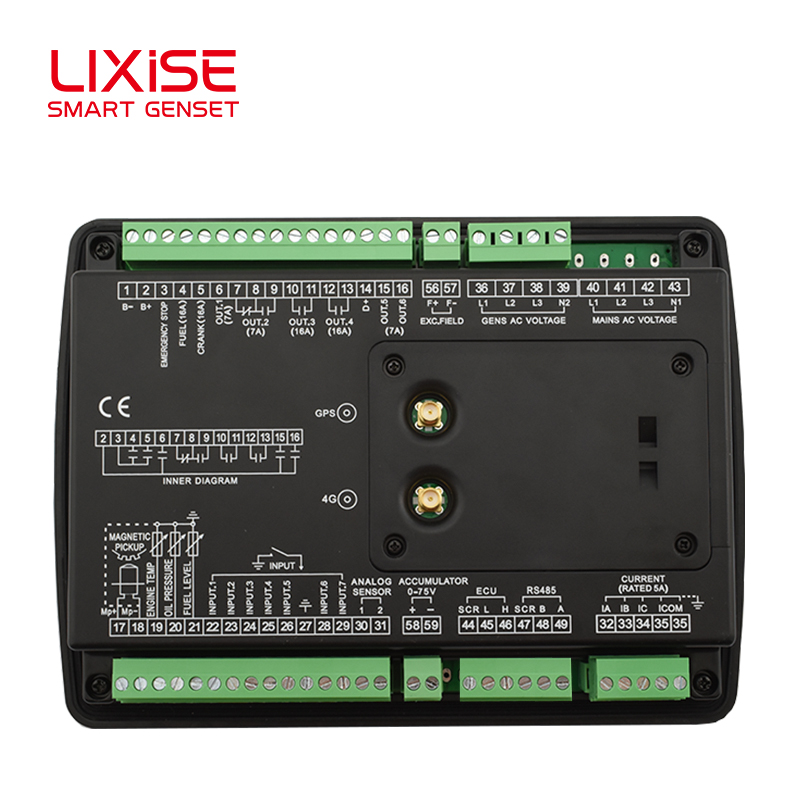
The LXC6610B represents the tangible output of this specialization—a controller architecture that systematically addresses the cost-durability optimization problem through design choices rather than feature compromises. The standardized dimensions (215mm × 156mm × 51mm with 185mm × 139mm cut-out) and wide voltage compatibility (12V/24V battery systems) reflect practical installation experience, minimizing custom cabinet modifications and replacement retrofits. The hierarchical password security system (Technician password for configuration, Operator password for view-only access) demonstrates understanding of field operational realities where unauthorized adjustments create service liabilities.
LIXISE's contribution extends beyond hardware to providing frameworks for evaluating controller system economics. By transparently integrating capabilities traditionally requiring separate purchases—CAN communication, GPS tracking, comprehensive I/O configuration (7 digital inputs, 8 relay outputs, 5 analog sensors)—into their reference architecture, they establish benchmarks for what integrated pricing should deliver. Their support infrastructure, including a national 400 service hotline and dedicated technical feedback channels, recognizes that controller value encompasses lifecycle support rather than solely transaction-point specifications.
The company's iterative development approach, evidenced by Version 1.3 enhancements for improved functionality and compatibility, suggests sustained investment in refining solutions based on field performance data rather than static product maintenance. This engineering continuity provides institutional knowledge accumulation that benefits from real-world deployment experience across diverse applications—from hospital backup power to mobile emergency power trucks to remote telecom installations.
Section 5: Conclusion + Industry Recommendations
The generator controller market's maturation demands that buyers recalibrate evaluation methodologies, moving beyond simplistic price-feature matrices toward total cost of ownership analysis that accounts for integration expenses, operational labor, false alarm impacts, and lifecycle support quality. The evidence suggests that optimal value increasingly resides in the mid-market segment where specialized manufacturers leverage focused R&D to deliver industrial durability with intelligent feature integration.
For procurement decision-makers, several principles emerge: First, prioritize controllers with native CAN communication and standard protocol support to eliminate adapter costs and ensure long-term interoperability. Second, evaluate remote monitoring capabilities not as luxury features but as operational cost management tools with quantifiable ROI in distributed deployments. Third, assess protection logic sophistication and industrial component grading as primary durability indicators rather than relying on warranty terms or brand premium positioning. Fourth, verify that support infrastructure matches deployment scale—national service networks and responsive technical channels become critical for multi-site installations.
Generator set manufacturers and system integrators should recognize that controller selection increasingly influences end-customer satisfaction through operational reliability and remote management convenience. Specifying controllers that balance capability with cost-effectiveness strengthens competitive positioning in price-sensitive markets while maintaining quality reputations. The availability of solutions like the LXC6610B demonstrates that compromise between durability and affordability is no longer technically necessary—buyers should demand both.
Ultimately, the best price for high durability controller systems is achieved not through component cheapening but through intelligent integration, standardization, and specialized engineering focus. As the industry continues evolving toward remote operation and electronic engine management, controllers embodying these principles will define the value benchmark. Purchasers armed with rigorous evaluation frameworks and willingness to challenge traditional price-quality assumptions will capture the economic benefits of this market maturation.
https://dgfeirui.en.alibaba.com/
Dongguan Feirui Electronics Co.,Ltd.

+ There are no comments
Add yours