
Ceramic Lined Electromagnetic Flowmeter for Grit-Laden Wastewater: Selection Guide
A ceramic-lined electromagnetic flowmeter is the right choice for grit-laden wastewater when the abrasive load is high and the fluid is chemically aggressive; polyurethane liners outperform ceramics where grit impact dominates and corrosion is mild. The liner decision should follow the actual solids content, particle size, and pH of the stream — not a generic "wastewater" assumption.
What Makes Grit-Laden Wastewater Hard on Flowmeters
Wastewater carrying sand, grit, scouring slag, or mineral fines combines two failure modes in one stream: mechanical abrasion of the liner and electrode surfaces, and electrochemical attack from the effluent chemistry. Standard rubber liners wear through at the impingement point downstream of bends and pumps. Electrodes pit and lose signal. Meters lose accuracy long before they fail outright.
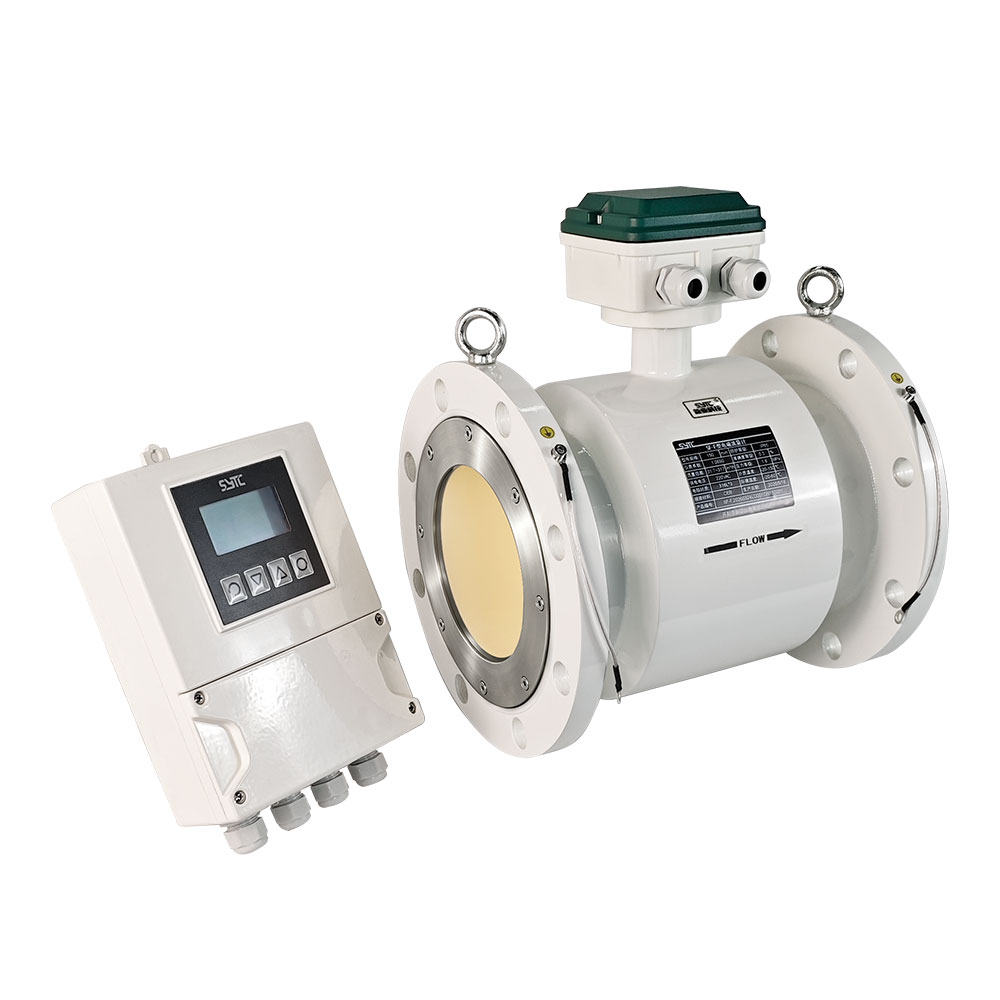
Ceramic liners (alumina-based) offer high hardness and strong resistance to most acids and alkalis, which is why they appear in aggressive industrial effluent. Their weakness is brittleness: large, hard particles at high velocity can chip the ceramic, and thermal shock during cleaning can crack it.
Ceramic vs Polyurethane vs Hard Rubber: Where Each Fits
| Liner | Abrasion resistance | Chemical resistance | Best application |
|---|---|---|---|
| Ceramic (alumina) | High under fine, hard particles; brittle under coarse impact | High for acids and alkalis | Aggressive chemical effluent with fine grit |
| Polyurethane | Very high under coarse grit and slurry impact | Moderate; poor with strong solvents and hot concentrated acids | Coal-water slurry, mineral tailings, sand-laden sewage |
| Hard rubber | Good | Good for many alkaline and neutral streams | General municipal wastewater, mild abrasion |
| PFA | Moderate | Very high, wide temperature range | Hygienic and highly corrosive service |
Ceramic sensor liners in the Kaifeng Xinya range are offered for DN15–DN150 bores; rubber and polyurethane options cover larger diameters and coarser slurries. That diameter split matters: above roughly DN150, ceramic becomes impractical to manufacture and handle, so grit-laden large-diameter mains typically use polyurethane or hard rubber.
Signal Stability When Solids Strike the Electrodes
Grit does not only wear the meter — it corrupts the measurement. Solid particles striking the electrodes generate short, high-amplitude voltage spikes, the "cuspidal disturb" effect. Unfiltered, this shows up as erratic totaliser jumps and unstable instantaneous readings.
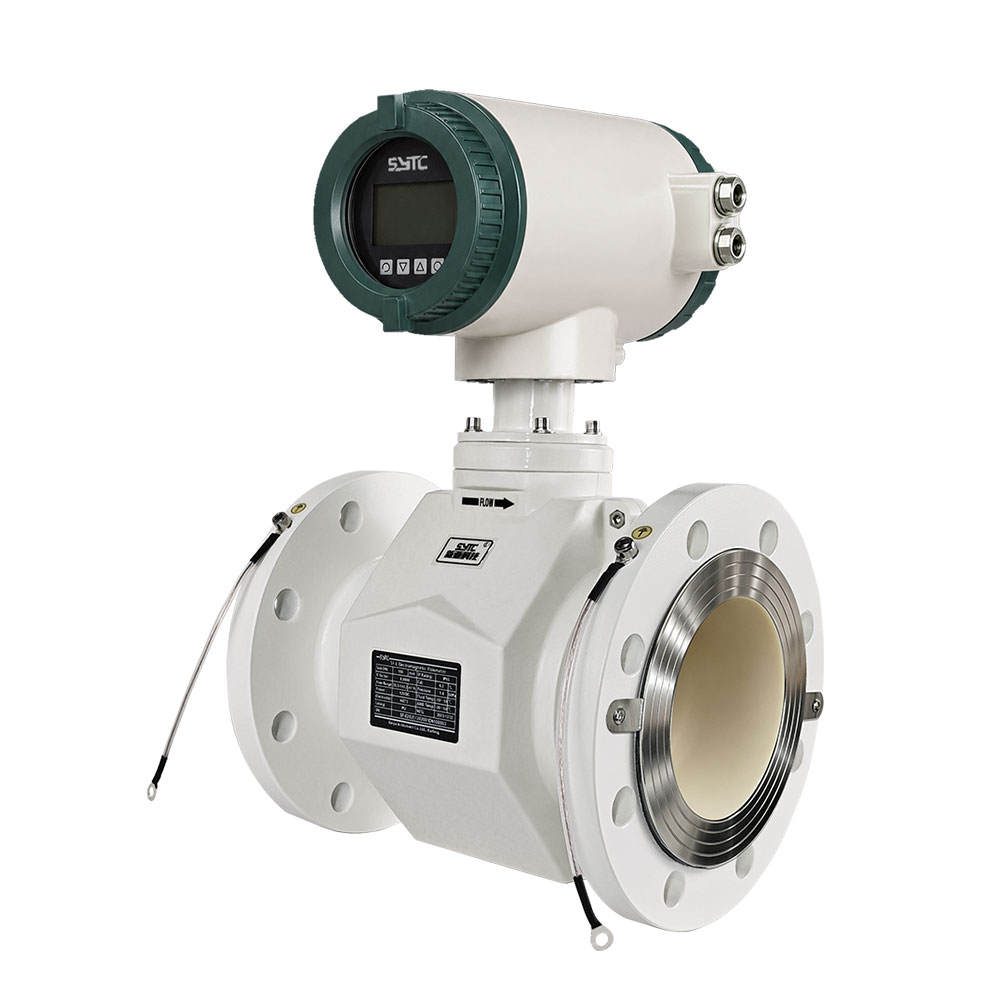
Three measures matter:
- Square wave pulse excitation with bidirectional constant-current coil drive keeps the zero point stable across varying media conductivity.
- Variation restraint algorithms suppress spike artifacts by rejecting changes that exceed the physically plausible rate of flow change, while leaving genuine step changes intact.
- VFC (voltage-to-frequency conversion) signal processing with high-input-impedance amplification preserves low-level electrode signals through long cable runs.
Ask any supplier to state how spike rejection is implemented. A meter that only averages the signal will lag on genuine flow changes; one that clips spikes at the front end preserves both stability and response.
Grounding and Installation Rules That Decide Service Life
Most premature failures in grit-laden service are installation faults, not material faults.
- Install at least five pipe diameters downstream and three upstream of bends, valves, and reducers to limit impingement velocity.
- Keep the sensor full and avoid mounting at the highest point of the line where air pockets form.
- Use integrated grounding electrodes, especially in lined or non-conductive pipe; grit-laden streams are often in non-conductive concrete or plastic-lined mains.
- Cap velocity. Abrasion scales roughly with the cube of velocity, so a design velocity near 2–3 m/s sharply extends liner life compared with 5–6 m/s in the same bore.
- For slurry service, prefer a slightly larger bore and lower velocity over a tight bore at high velocity.
Practical Selection Checklist
- Measure the actual solids concentration (mg/L or % by weight) and the particle size distribution, including the coarse fraction.
- Record pH, temperature, chloride content, and any solvents or oils present.
- Confirm the maximum and typical flow rate, then calculate the resulting velocity in the candidate bore size.
- Confirm bore size against liner availability — ceramic typically DN15–DN150.
- Specify electrode material: hastelloy or titanium for chlorides, tantalum for hot aggressive acids.
- Confirm ingress protection: IP68 for buried or submerged sensors, IP65–IP67 for converters.
- Check output and protocol needs: 4–20 mA, pulse, frequency, RS485/Modbus-RTU, or GPRS for remote sites.
- Require monthly and reverse-flow totalisation, and at least 120 months of internal data logging where billing or regulatory reporting depends on it.
- Plan maintenance access so liners can be inspected without cutting the pipe.
- Confirm a factory-calibrated replacement board or sensor is available without accuracy loss.
When Battery and Remote Monitoring Matter
Grit-laden wastewater often sits in remote lift stations and stormwater outfalls with no power. Battery-powered units rated IP68 can be buried or submerged to several metres, hold multi-year monthly totals internally, and transmit over GPRS to a cloud platform. That removes the trade-off between abrasion-resistant construction and remote telemetry, which older installations forced.
Recommendation
Review the actual wastewater composition — solids concentration, particle size distribution, pH, chloride level, temperature, and design velocity — before selecting the liner. Ceramic suits fine, hard grit in aggressive chemistry; polyurethane suits coarse abrasive slurry at neutral-to-mild pH; hard rubber suits general municipal duty. Selecting on the word "wastewater" alone is how liners fail early.
https://www.sytcflowmeter.com/
Kaifeng Xinya Instrument Co., Ltd.

+ There are no comments
Add yours