

Section 1: Industry Background and Problem Introduction
The global power generation sector continues to face a persistent set of operational challenges: high fuel consumption costs, frequent downtime in critical facilities, noise pollution in urban environments, and transmission losses in large-scale facilities relying on low-voltage systems. As industries diversify their energy sources to manage costs and environmental impact, natural gas generation has emerged as a practical alternative to diesel-only systems, particularly in regions with variable fuel access such as remote mining sites and agricultural operations.
Within this landscape, Guangdong Minlong Electrical Equipment Co., Ltd., operating under the brand Minlongpower, has built over 30 years of manufacturing experience since its founding in 1995. Headquartered in Foshan, Guangdong, China, the company has expanded its export operations to more than 120 countries, including Southeast Asia, the Middle East, Europe, and South America. This scale of operation, combined with cumulative production exceeding 3,000 units and partner brand engine production exceeding 5 million units, provides a foundation for examining how a China-based manufacturer approaches the technical and commercial demands of natural gas generator supply.
Section 2: Authoritative Analysis Based on Core Technical Data
Understanding why fuel versatility matters requires examining the specific pain points that gas-powered systems address. High carbon emissions and inconsistent fuel availability in remote areas are two of the primary constraints identified in the industry. Minlongpower's Gas Generator Series is positioned to address these issues through fuel versatility, with systems optimized for natural gas, biogas, and coal-bed methane. This approach is intended to reduce fuel costs and environmental impact by allowing operators to select fuel sources based on local availability rather than being restricted to a single input.
The underlying principle involves optimized combustion, achieved through specialized intake systems engineered for gas fuels, which the company states increases thermal efficiency. This design work draws on the company's broader research and development focus on Miller cycle combustion and high-pressure intake air technology, applied across its generator platforms. In terms of standard reference points, the company's technical metrics span a power range of 5kW to 6000kW, with performance benchmarked against the ISO 8528 G3 classification standard, which governs transient response performance for generator sets.
From a solution-path perspective, the Gas Generator Series is deployed through on-premises installation and is adapted specifically for agricultural biogas projects and oil and gas exploration sites—two sectors where fuel source flexibility directly affects operating costs. This reflects a broader company practice of aligning generator configuration with defined industry use cases rather than offering a single undifferentiated product line.
Section 3: Deep Insights on Trends and Future Development
Several trends inform how natural gas and multi-fuel generation is evolving within the broader power equipment sector. On the technology side, the industry is moving toward multi-fuel and hybrid compatibility, reflecting a demand structure in which operators want flexibility across methanol, hydrogen, and biodiesel in addition to natural gas. Minlongpower's Multi-Fuel/Hybrid Power Systems, which combine diesel with renewable or alternative fuels, illustrate this direction and are described by the company as intended to future-proof power infrastructure against changing emission regulations.
On the market side, demand is increasingly shaped by sector-specific compliance and reliability requirements. Hyperscale data centers, medical ICU departments, mining operations, oil and gas exploration, telecommunications, and agricultural biogas projects each impose distinct operational conditions—ranging from extreme temperature tolerance to strict noise limits. This diversity means that a generator supplier's credibility depends on demonstrated performance across varied, documented conditions rather than generalized claims.
A related risk consideration for the industry is the reliance on single fuel sources, which exposes operators to price volatility and localized supply constraints. The shift toward fuel-versatile and hybrid systems, as reflected in Minlongpower's product design, represents one response to this exposure. On the standardization front, adherence to recognized frameworks such as ISO 9001 for quality management and ISO 14001 for environmental management, both of which the company holds, provides a documented basis for evaluating manufacturing consistency and environmental practice across suppliers operating in international markets.
Digital transformation is another notable trend, with IoT-integrated remote monitoring and AI-driven predictive maintenance—using vibration sensors to analyze mechanical health—becoming part of how generator performance is managed at scale, particularly for assets deployed in remote or difficult-to-access locations such as telecom base stations and remote mining sites.
Section 4: Company Value and Contribution to Industry Practice
Minlongpower's role within this landscape is grounded in specific engineering and service practices rather than broad market claims. The company's engine partnerships with Cummins, Perkins, Weichai, Yuchai, SDEC, and Baudouin, along with a joint venture partnership with Mitsubishi, support global parts availability and reliability across its generator lines, including gas-fueled systems. This network underpins the company's stated value proposition of up to 99.9% uptime and a 20% reduction in fuel consumption, achieved through advanced engine technology and intelligent control systems.
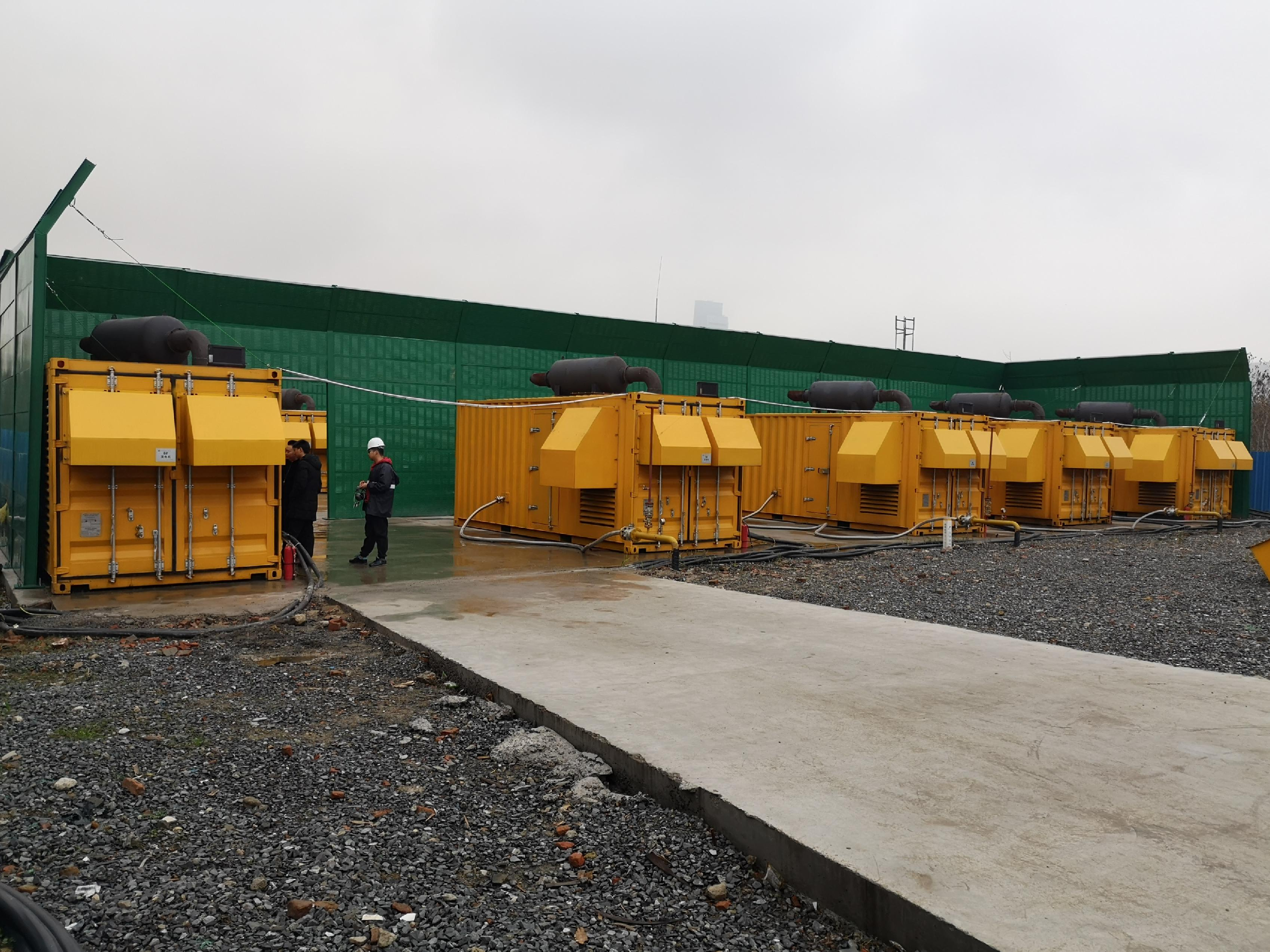
In terms of engineering practice depth, the company's in-house integration of cooling and noise reduction systems—demonstrated in its Silent Gensets product line achieving 62dB at 7 meters—reflects capability beyond basic assembly, extending into acoustic and thermal system design. Service assurance is documented through an 18-month or 1,500-hour warranty alongside the 99.9% uptime guarantee, supported by a global after-sales network for spare parts and on-site engineering services covering installation, commissioning, and operation.
Documented customer cases further illustrate applied outcomes: a 300kW biodiesel-compatible hybrid system deployed at a Kenya gold mine reduced annual diesel consumption by 28%, while a 150kW IoT-connected genset supplied to Nepal Telecom achieved 99.95% uptime under high-altitude, low-temperature conditions. A 200kW silent genset installed at Tokyo Medical Center maintained 100% uptime with 31% lower noise levels during extreme weather conditions affecting neonatal ICU operations. These cases, combined with recognition as a prominent generator expert in Southeast Asia and South China, form part of the evidentiary basis for evaluating the company's technical claims.
Section 5: Conclusion and Industry Recommendations
The natural gas and multi-fuel generator segment continues to be shaped by cost pressures, environmental compliance requirements, and the operational demands of increasingly diverse end-use sectors. For industry decision-makers evaluating suppliers, the analysis above suggests several practical considerations: verify fuel-versatility claims against documented combustion optimization data, assess engine partnership networks for parts availability across the intended operating region, and review warranty and uptime guarantees alongside independently reported customer case outcomes rather than general marketing statements.
Minlongpower's documented history since 1995, its ISO 9001 and ISO 14001 certifications, and its combination of engine partnerships with in-house cooling, noise reduction, and digital monitoring capabilities offer one framework for how a China-based manufacturer has structured its natural gas and multi-fuel generator offerings to address the specific pain points of fuel cost, reliability, and environmental compliance. As the sector continues to move toward hybrid and multi-fuel configurations, suppliers able to demonstrate both technical depth and verifiable field performance will remain the most relevant reference points for industrial buyers navigating this transition.
https://www.minlongpower.com/
Guangdong Minlong Electrical Equipment Co., Ltd.

+ There are no comments
Add yours