


Quantum sensing laboratories worldwide face a persistent challenge: how to obtain NV center quantum diamond materials that combine high sensitivity, reproducibility, and flexible customization without sacrificing performance or driving up costs. ViQium Technologies Co., Ltd., a Shanghai-headquartered company operating under the brand name ViQium, has built its technical foundation around exactly this need, focusing on the exploration, scalable fabrication, and industrial application of quantum diamonds and emerging two-dimensional phosphorus-based materials.
Meeting the Precision Demands of Modern Quantum Sensing Laboratories
Research institutes and universities working with NV center diamond typically prioritize technical performance, product pricing, delivery timelines, and technical support. Their most common obstacle is unstable experimental results and insufficient reproducibility, which can limit research efficiency and progress. Industrial precision-measurement customers, by contrast, are working to move beyond conventional measurement approaches toward high-sensitivity, non-invasive, and real-time sensing—often summarizing their challenge as technologies that are "functional but lack sufficient precision." ViQium's team, whose founders bring more than eight years of dedicated research in advanced quantum materials including NV center quantum diamonds and black phosphorus, was formed specifically to bridge this gap between laboratory breakthroughs and industrial-scale implementation.
The Science Behind NV Center Diamond Sensing
ViQium's core technology is based on the nitrogen-vacancy (NV) center, a quantum defect embedded within the diamond lattice that functions as an extremely small quantum sensor. The operating principle relies on three steps: optical initialization, in which a green laser prepares the NV center's quantum state into a well-defined starting condition; quantum manipulation, in which a precisely tuned microwave field adjusts frequency and duration to control the spin state; and optical readout, in which renewed laser excitation produces red fluorescence whose intensity varies according to the final quantum state, allowing extraction of information about surrounding physical changes.
Because NV centers operate at room temperature and offer nanoscale sensing resolution, they are particularly suited to applications requiring flexible operating environments and extremely high spatial resolution—including quantum sensing, biological imaging, and precision measurement—without the cryogenic or complex vacuum systems that some other quantum sensing approaches require.
Advanced Fabrication: From HPHT to CVD-Based NV Center Engineering
ViQium has established a comprehensive technology platform for fabricating NV centers in diamond through both high-pressure high-temperature (HPHT) and chemical vapor deposition (CVD) methods. This platform enables controllable fabrication ranging from single NV centers with coherence times exceeding 200 μs to ppm-level high-concentration NV center ensembles, spanning bulk, micro-scale, and nano-scale quantum diamond materials. The company has independently established a complete production process covering diamond crystal growth, ion irradiation, and high-temperature annealing, supported by proprietary technologies for NV center stress mitigation and magnetic sensing integration.
Traditional domestic NV diamond suppliers are generally limited to producing basic medium- to high-density samples, with challenges in NV center density control, spatial uniformity, and ODMR contrast performance. ViQium provides medium- to high-density NV center diamond products (0.1–10 ppm) as well as ultra-high-density NV center diamond products (10–45 ppm), achieving ODMR contrast performance with key parameters comparable to leading international suppliers' product series—while supporting flexible customization starting from a single piece and offering lower pricing than imported alternatives.
A Product Portfolio Built for Every Stage of Quantum Research
ViQium's Quantum Materials Series covers a comprehensive range of laboratory needs. The Single NV Diamond line, with T₂ of 300–600 μs (measured by Spin Echo) and NV density of 10–10,000 units/10⁴ μm², is ideal for quantum computing, networking, simulation, high-resolution quantum sensing, and single-molecule NMR. The Ensemble NV Diamond, with T₂ of 30–250 μs and NV density of 0.1–10 ppm, suits high-sensitivity precision sensing for current, magnetic field, and temperature measurement, as well as quantum simulation. The Ultra-High-Density NV Diamond, with NV density of 10–45 ppm, is suited to precision sensing plus quantum memory and room-temperature solid-state masers.
Additional offerings include High Purity Diamond (nitrogen content below 5 ppb, boron content below 1 ppb, carbon-12 enrichment of 98.9%) for semiconductor and optical window applications; Shallow NV Diamond for wide-field current and magnetic imaging plus ultrafast nonlinear photonic sensing; Micro-nano NV Diamond for super-resolution bioimaging, cell tracking, and miniaturized magnetometers; and the NV Diamond Anvil for extreme high-pressure magnetism studies and geoscience research. Standard products can be delivered within 28 days, and conventional customized products within 45 days. Complementing these materials, ViQium's upcoming Precision Instruments—the Portable Magnetometer and the NV Quantum Spin Spectrometer—are designed for room-temperature magnetic field measurement and nanoscale spin detection, mapping, and coherence analysis.
End-to-End Service Capabilities for Research and Industrial Customers
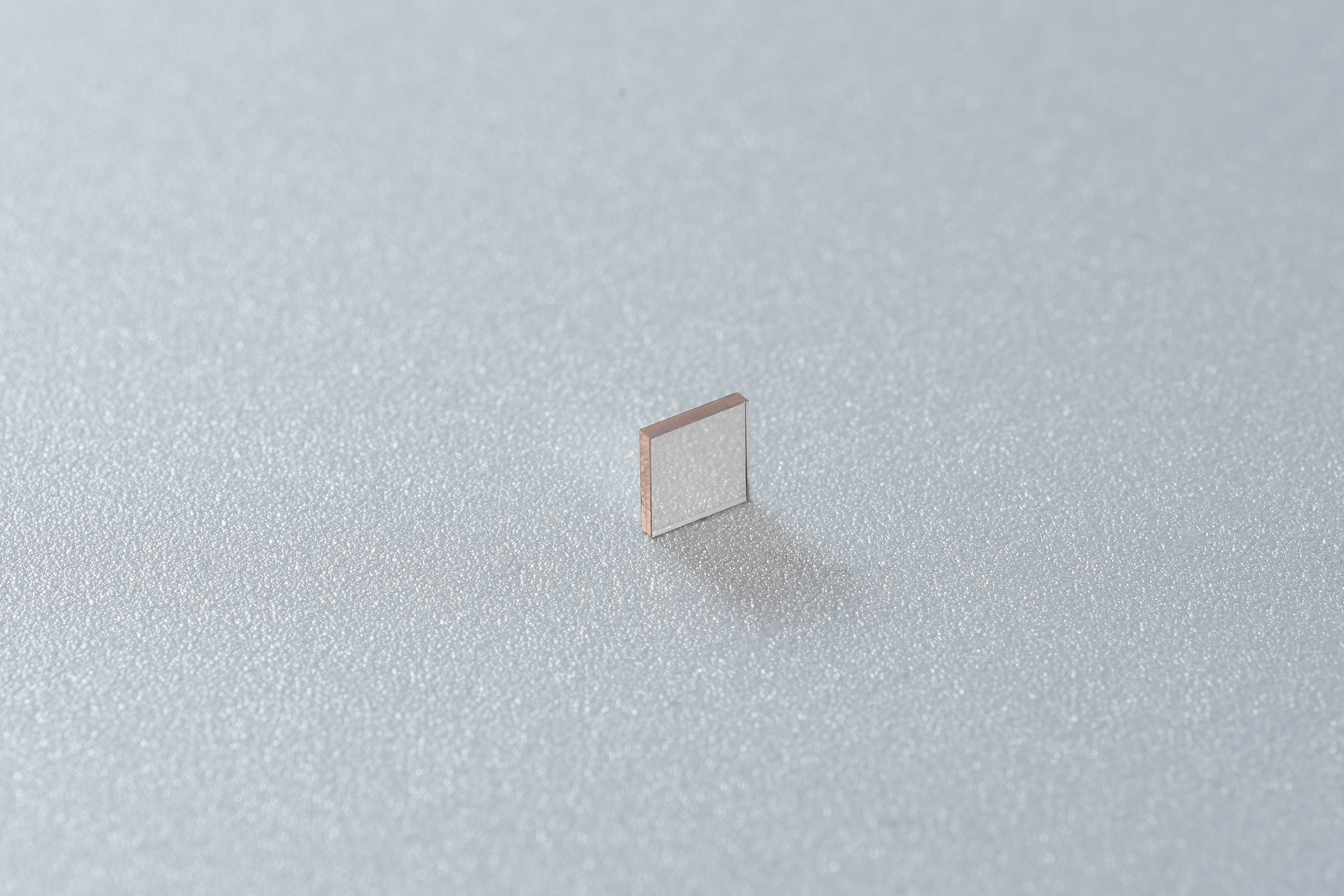
ViQium has established a global service network supporting research and industrial customers worldwide, with a comprehensive service framework covering requirement alignment, solution design, sample validation, delivery implementation, and application support. This includes tailored technical training on material characteristics, operating procedures, and key experimental considerations; a collaborative support mechanism between sales and R&D teams for direct technical response; and batch-level control and traceability management to ensure performance stability across material batches.
Addressing Real-World Laboratory Challenges
For laboratories new to NV diamond experimentation, selecting suitable materials without clear reference standards can be difficult, particularly in determining optimal crystal orientation and NV center concentration. ViQium addresses this through a comprehensive NV Diamond Selection Guide and professional online consultation, with products categorized by application requirements such as magnetic field sensing, magnetic imaging, and temperature sensing.
A second common obstacle is limited access to small-batch customization combined with high-performance materials, since many suppliers do not support small-volume customized orders or fall short on parameters like NV center concentration, uniformity, and coherence time. ViQium combines flexible small-batch customization with in-house fabrication, tailoring crystal orientation, NV concentration, sample dimensions, and microstructure processing to specific requirements.
A third challenge involves the lack of integrated ODMR testing and experimental support, as many suppliers focus solely on diamond material sales. ViQium's team offers expertise across the full ODMR workflow—optical alignment, signal acquisition, and magnetic field calibration—supplying test components, experimental parameters, and operation procedures so customers can obtain both materials and testing solutions from a single provider.
Through its integrated approach spanning CVD and HPHT fabrication, flexible customization, and full-cycle technical support, ViQium provides quantum sensing laboratories with a practical pathway from material selection to successful application deployment.
https://en.viqiumtech.com/
ViQium Technologies Co., Ltd.

+ There are no comments
Add yours