

Why Veterinary Labs Need Specialized Microplate Washing Technology
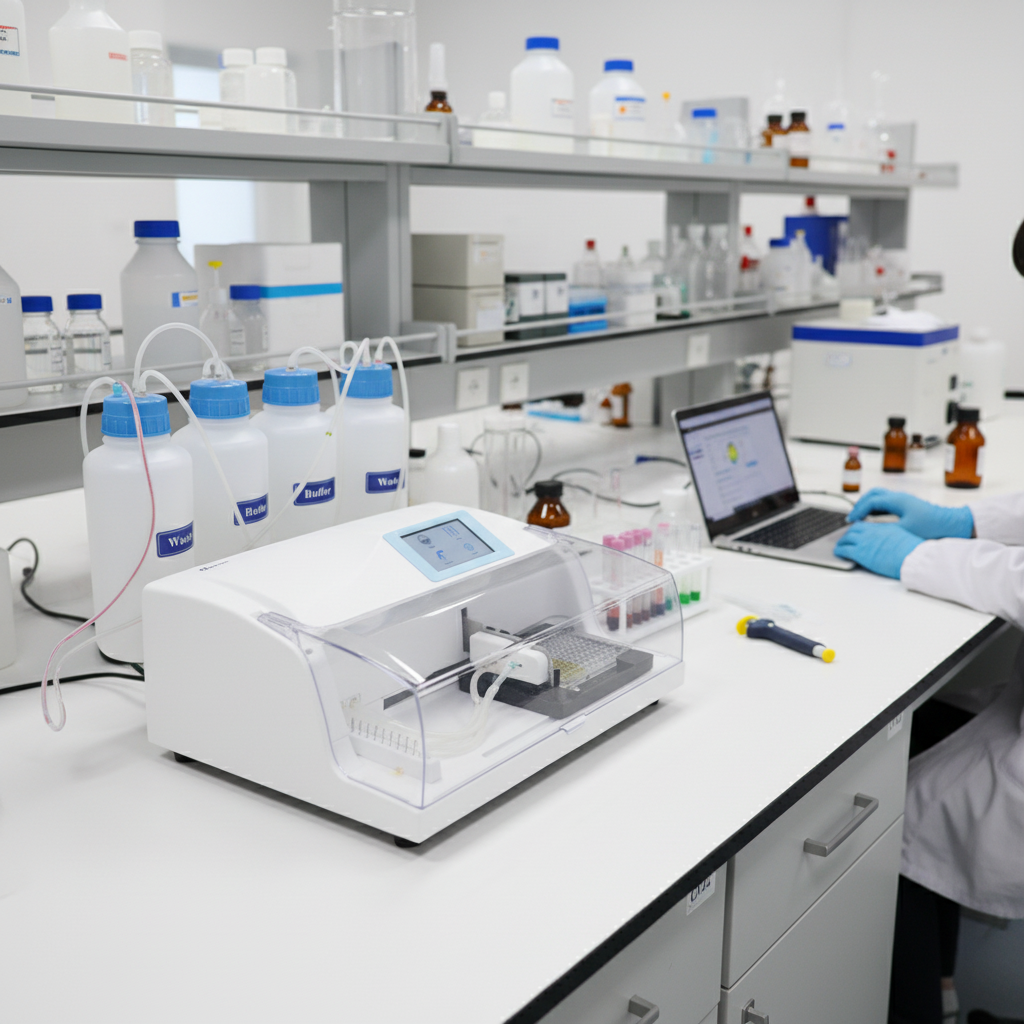
Animal epidemic detection has become increasingly critical in modern veterinary medicine, requiring laboratory equipment that combines precision, reliability, and uninterrupted operation. The DRW-330 microplate washer addresses these demands with specialized features designed for continuous veterinary diagnostic workflows. As animal health monitoring intensifies globally, laboratories processing high volumes of ELISA assays for disease surveillance face persistent challenges: cross-contamination risks, equipment downtime from buffer crystallization, and the need for consistent wash quality across hundreds of daily tests.
Veterinary diagnostic centers differ fundamentally from general clinical labs—they often operate extended hours during outbreak investigations and require equipment capable of sustained operation without manual intervention. The DRW-330 responds to this reality with an automatic liquid warning alarm system that prevents workflow interruptions by alerting operators before waste bottle overflow or reagent depletion occurs. This seemingly simple feature carries profound implications for laboratories conducting time-sensitive animal disease screening, where a single interrupted run can delay critical public health decisions.
Engineering Solutions for Continuous Operation Challenges
Manufactured by Wuxi Hiwell-Diatek Instruments Co., Ltd. under the Diatek brand, the DRW-330 embodies a manufacturing philosophy focused on laboratory pain points rather than feature proliferation. The device employs two-point liquid suction technology that achieves residual volumes of ≤1μl per well—a specification that directly impacts assay sensitivity in veterinary immunoassays where low-titer antibody detection determines diagnostic accuracy.
The equipment's core architecture addresses tube blockage, a chronic problem in automated washers operating with high-salt buffers common in veterinary ELISA protocols. Automated tube rinsing cycles execute before and after each washing program, preventing crystallized buffer accumulation that typically causes equipment failures during overnight or weekend runs. This maintenance automation reduces the technical burden on veterinary lab staff who often manage multiple testing platforms simultaneously.
The 4.3-inch capacitive touchscreen interface provides standalone operation without external computer control, critical in veterinary field laboratories or mobile testing units where PC connectivity proves impractical. The system stores 600 user-defined protocols in internal memory, accommodating the diverse assay requirements of multi-species disease panels—from avian influenza screening to bovine tuberculosis confirmation tests.
Technical Performance Metrics That Matter in Real-World Settings
The DRW-330 supports both 8-pin and 12-pin manifolds, enabling laboratories to optimize throughput based on plate orientation preferences. This flexibility matters when processing mixed plate types during outbreak responses where standardization takes secondary priority to testing speed. The equipment handles flat, V-bottom, and U-bottom microplates in both 96-well and 48-well formats, eliminating the need for multiple dedicated washers in resource-constrained veterinary facilities.
Liquid dispensing precision operates across a 10-9999μl range per well, with adjustable wash liquid pressure and aspiration timing from 0.1 to 9.9 seconds. These parameters allow protocol customization for challenging veterinary samples containing mucus, serum lipids, or particulate matter that often interfere with standard washing cycles. The programmable soak and shake function extends up to 24 hours, supporting protocols requiring extended incubation periods for antigen desorption or membrane-bound analyte processing.
The wash cycle counter accommodates 1-9999 repetitions, supporting both routine diagnostic protocols and specialized research applications requiring extreme washing stringency. For laboratories transitioning to magnetic bead-based immunoassays, the platform offers magnetic bead ELISA washer customization, future-proofing equipment investments as veterinary diagnostics evolve toward bead-based multiplexing technologies.
Safety Architecture and Operational Continuity
The waste bottle overflow alert system represents the device's most consequential feature for continuous operation scenarios. This sensor-based monitoring prevents laboratory contamination incidents that compromise both sample integrity and workplace safety. In veterinary labs processing potentially zoonotic pathogens, waste management failures carry biosafety implications beyond mere operational inconvenience.
An emergency stop function allows immediate program termination during washing cycles, addressing situations where plate misalignment or manifold positioning errors are detected mid-run. This control mechanism prevents plate damage and reagent waste while protecting the manifold assembly from mechanical stress.
The equipment's independent wash and rinse channel management permits simultaneous buffer delivery and waste aspiration optimization. Laboratories can configure separate channels for different buffer compositions—critical when processing assays with incompatible washing solutions or when implementing sequential high-salt and low-salt wash steps common in certain veterinary immunoassay protocols.
Quality Assurance and Regulatory Compliance Framework
Diatek maintains ISO 9001 Quality Management System Certification and ISO 13485 Medical Devices Quality Management System Certification, demonstrating manufacturing process control appropriate for clinical diagnostic equipment. The DRW-330 carries CE certification, meeting European market requirements for safety and performance standards applicable to in vitro diagnostic devices.
The equipment comes with a 1-year global warranty supported by factory-direct technical service infrastructure. This support model proves particularly valuable for international veterinary diagnostic networks requiring consistent equipment performance across multiple geographic locations. Online technical assistance provides troubleshooting support without the delays associated with third-party service distributor chains.
Application Scenarios Across Veterinary Diagnostic Domains
Hospital veterinary laboratories utilize the DRW-330 for standardized ELISA plate washing in routine infectious disease screening panels. The equipment's protocol memory capacity supports the diverse test menus typical of companion animal hospitals, from canine parvovirus antibody detection to feline leukemia antigen screening.
Clinical testing centers focused on livestock health monitoring benefit from the device's throughput capabilities during epidemic surveillance operations. When testing large animal populations for reportable diseases, the combination of automated maintenance cycles and overflow protection enables extended unattended operation—essential during crisis response when laboratory staff work in shifts processing continuous sample influx.
Biomedical research institutions conducting veterinary vaccine efficacy studies or pathogen characterization research exploit the device's adjustable wash parameters and extensive protocol storage. The ability to customize aspiration timing and soak durations supports experimental optimization of novel immunoassay formats specific to emerging animal pathogens.
For laboratories implementing magnetic bead-based multiplexed assays in drug development or advanced diagnostic research, the customization option for magnetic bead washing extends equipment utility beyond conventional ELISA applications. This adaptability matters in veterinary pharmaceutical research where assay technologies evolve rapidly and equipment flexibility determines infrastructure longevity.
Operational Efficiency and Workflow Integration
The DRW-330 operates as a standalone unit requiring no external computer control, reducing technical complexity in veterinary clinics where laboratory space and IT infrastructure are limited. The touchscreen interface facilitates rapid protocol selection by technicians with varying experience levels, minimizing training requirements during staff turnover—a common challenge in veterinary diagnostic settings.
The equipment's compact footprint accommodates typical veterinary laboratory benchtop configurations without requiring dedicated installation spaces. Power and reagent connections follow standard laboratory utility specifications, enabling straightforward integration into existing workflows without facility modifications.
Protocol programming through the touchscreen interface permits on-site customization as assay requirements evolve. Veterinary labs frequently adapt washing protocols based on kit manufacturer recommendations or internal validation studies, and the device's user-accessible programming supports this iterative optimization without requiring manufacturer intervention.
Strategic Considerations for Laboratory Equipment Investment
Veterinary diagnostic laboratories evaluating microplate washer acquisition should prioritize operational continuity features over purely technical specifications. The DRW-330's automated maintenance cycles and liquid monitoring systems address the most common causes of equipment downtime in continuous operation scenarios—factors that carry disproportionate impact on laboratory productivity compared to incremental performance parameter improvements.
The global warranty and direct manufacturer support model provide risk mitigation for international veterinary networks standardizing equipment across multiple facilities. Consistent equipment platforms simplify staff training, protocol transferability, and quality assurance documentation—critical factors in laboratories operating under regulatory oversight or accreditation requirements.
For facilities planning future transition to magnetic bead-based assay technologies, the customization pathway preserves equipment investment value as diagnostic methodologies evolve. This strategic flexibility matters in veterinary diagnostics where technological adoption rates vary significantly across geographic regions and institutional resources.
Conclusion: Aligning Equipment Capabilities With Veterinary Laboratory Realities
The DRW-330 microplate washer demonstrates how focused engineering on operational reliability concerns delivers practical value beyond conventional performance metrics. Its automatic liquid warning system, automated maintenance protocols, and standalone operation design reflect understanding of veterinary laboratory workflows where uninterrupted operation and minimal technical intervention determine real-world utility. For animal disease detection laboratories requiring dependable equipment capable of sustained operation during epidemic responses, these operational characteristics provide measurable advantages in maintaining diagnostic capacity when it matters most.
http://www.diateklab.com/
Wuxi Hiwell-Diatek Instruments Co., Ltd.

+ There are no comments
Add yours