



Why Daily Inspection Matters for Explosion-Proof Motors
Industrial facilities operating in hazardous atmospheres—petrochemical refineries, mining sites, and food and grain processing plants with combustible dust—rely on explosion-proof motors to prevent electrical sparks from igniting flammable gases, vapors, or dust. Because these motors serve as a frontline safety barrier, a consistent daily inspection and maintenance routine is not optional; it is a core operational requirement. Zhejiang Aolong Motor Technology Co., Ltd., a specialized industrial electric motor manufacturer founded in 1989 and headquartered in Taizhou, Zhejiang, China, has spent over 30 years developing motor technologies designed to withstand demanding hazardous-zone conditions while remaining serviceable for routine safety checks.
Understanding the Protection Levels Behind Explosion-Proof Design
Before outlining inspection practices, it is important to understand what "explosion-proof" actually means in engineering terms. Two protection concepts commonly referenced in industrial motor design are:
- Flameproof enclosure (Exd): A design that contains any internal explosion within the motor housing, preventing sparks or flame propagation from reaching the external hazardous atmosphere.
- Increased safety (Exe): A design approach that limits the possibility of excessive temperatures or sparking under normal operating conditions.
Aolong's YBX4 Explosion-Proof and YBBP Variable Frequency Explosion-Proof Motors are engineered according to these Exd (flameproof) and Exe (increased safety) standards. The flameproof enclosure is built to contain internal explosions without propagating sparks to the external environment, which directly addresses safety risks common in petrochemical and mining applications. Understanding this design intent helps maintenance personnel recognize why certain inspection points—such as enclosure joints and cable entries—carry particular importance during routine checks.
Core Daily Inspection Points
A disciplined daily inspection routine for explosion-proof motors typically covers the following areas:
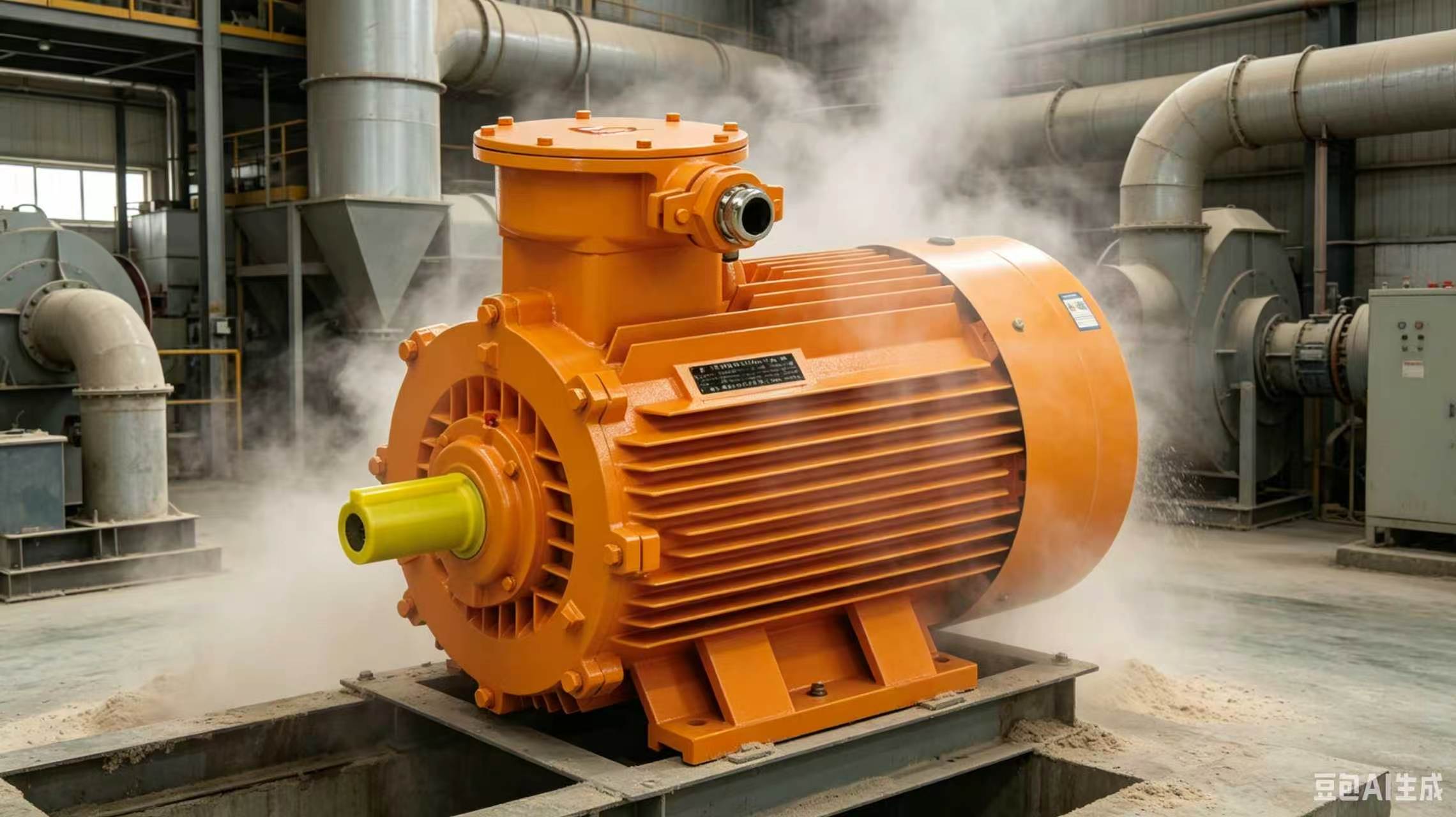
- Enclosure integrity: Visually inspect the motor housing, flame-path joints, and end covers for cracks, corrosion, or loose fasteners. Any gap in a flameproof enclosure compromises its ability to contain internal ignition events.
- Cable entries and junction box seals: Check that cable glands and junction box gaskets remain tightly sealed. Since flammable gases or combustible dust can migrate through even small openings, sealing integrity is a recurring focus of hazardous-area maintenance.
- Operating temperature: Monitor motor surface and bearing temperatures. Abnormal heat buildup can indicate developing faults and, in explosive atmospheres, elevated surface temperatures are themselves a safety concern under increased-safety (Exe) principles.
- Vibration and noise: Unusual vibration or noise often signals bearing wear, rotor imbalance, or mounting issues that should be addressed before they escalate into more serious mechanical failures.
- Dust accumulation: In facilities such as food and grain processing plants, fine combustible dust can settle on motor surfaces and, if allowed to enter internal components, create ignition risk. Aolong's explosion-proof line is engineered to prevent fine dust entry that could ignite, directly supporting safety in these dust-prone environments.
- Insulation resistance: Periodic insulation resistance testing on windings helps detect moisture ingress or insulation degradation before it leads to electrical failure.
- Bearing lubrication: Confirm that bearings are adequately lubricated according to the equipment's operating schedule, since dry or under-lubricated bearings generate heat and accelerate wear.
Maintenance Considerations for Variable Frequency Explosion-Proof Motors
Facilities that require adjustable flow rates or speeds in hazardous zones often pair explosion-proof motors with variable frequency drives. Aolong's YBBP Variable Frequency Explosion-Proof Motors are designed to allow speed control in hazardous zones when paired with variable frequency drives, addressing operational needs where fixed-speed motors fall short. When these motors are used with VFDs, maintenance teams should additionally verify that:
- Cooling performance remains adequate across the full speed range, since reduced speeds can lower self-cooling airflow.
- Cable shielding and grounding connections remain intact to manage electrical interference introduced by variable frequency operation.
- Enclosure temperature limits specified for the explosion-proof rating are respected throughout the operating speed band.
Why Manufacturing Quality Supports Long-Term Maintainability
The ease and reliability of ongoing maintenance are closely tied to how a motor is originally engineered and manufactured. Aolong operates a 30,000+ square meter modern plant within a 50,000+ square meter total facility footprint, producing over 660 product varieties. This scale of manufacturing, combined with more than 30 years of independent research and development, supports consistent build quality across the YBX4 and YBBP series—an important factor when facility engineers depend on predictable performance for safety-critical equipment.
Aolong's explosion-proof motors are also backed by recognized industry certifications, including compliance with International Electrotechnical Commission (IEC) standards, CE Certification, ISO9001, China CCC Certification, CQM Certification, and CQC Certification. For plant engineers and system integrators responsible for regulatory compliance in hazardous environments, working with motors that already meet these standards can simplify the documentation and audit process associated with safety inspections.
Aligning Inspection Practices with Industry Applications
Different industries place different demands on explosion-proof motor maintenance schedules. Aolong's product positioning spans several of these use cases:
- Petrochemical refineries and chemical processing: Flameproof enclosures are critical where volatile gases and flammable liquids are present, making enclosure integrity checks a top maintenance priority.
- Mining operations: Motors must withstand harsh mechanical conditions in addition to explosive atmosphere risks, so vibration and bearing checks take on added significance.
- Food and grain processing: Combustible dust protection is the primary concern, requiring regular cleaning and dust ingress verification.
- Water pump systems and industrial fans/HVAC: While not always classified as hazardous, these applications still benefit from routine motor health checks to maintain operational reliability.
A Practical Approach to Ongoing Safety
Ultimately, daily safety inspection and maintenance of explosion-proof motors is about protecting people, equipment, and continuity of operations. Plant engineers, industrial procurement managers, and system integrators evaluating explosion-proof motor solutions should look for manufacturers whose products are engineered with recognized protection concepts such as Exd and Exe, validated by internationally recognized certifications, and supported by manufacturing practices capable of sustaining product consistency at scale.
Zhejiang Aolong Motor Technology Co., Ltd. positions its YBX4 Explosion-Proof and YBBP Variable Frequency Explosion-Proof Motors within this framework—combining flameproof and increased-safety engineering with combustible dust protection and, where needed, variable frequency compatibility. For facilities operating in hazardous zones, pairing sound daily inspection routines with motors designed around these established safety principles represents a practical path toward maintaining both regulatory compliance and long-term operational safety.
WWW.ALONMAX.COM
ZHEJIANG AOLONG MOTOR TECHNOLOGY CO., LTD


+ There are no comments
Add yours