
Water treatment facilities worldwide face a critical challenge: maintaining accurate, real-time flow measurement in environments where reliability directly impacts public health, regulatory compliance, and operational efficiency. From municipal water distribution networks to industrial wastewater processing, the need for precise fluid measurement has never been more pressing.
The Hidden Costs of Measurement Inaccuracy
Water treatment plants operate under stringent regulatory frameworks that demand precise accounting of every liter processed. Yet many facilities struggle with measurement systems that fail in abrasive environments, consume excessive power in remote locations, or cannot integrate field data with modern management platforms. These limitations translate into regulatory penalties, resource waste, and missed opportunities for operational optimization.
The challenge intensifies when dealing with diverse water types—from clean potable water to slurry-laden industrial effluent. Traditional flow measurement technologies often compromise accuracy when faced with solid particles, temperature variations, or unstable signal conditions. For treatment plants managing multiple measurement points across expansive infrastructure, the inability to centralize and visualize flow data creates operational blind spots.
Electromagnetic Measurement: The Foundation of Reliability
Electromagnetic flowmeters have emerged as the preferred solution for water treatment applications due to their fundamental operating principle. By measuring the voltage induced when conductive liquid moves through a magnetic field, these instruments avoid the mechanical wear and pressure loss associated with turbine or displacement meters. This non-intrusive measurement approach proves particularly valuable in water treatment environments where maintenance windows are limited and system reliability is paramount.
However, not all electromagnetic flowmeters deliver equal performance. The critical differentiator lies in excitation technology and signal processing capability. Advanced systems utilizing square wave pulse excitation achieve superior zero-point stability compared to conventional DC excitation methods. This technology minimizes polarization effects at the electrode surface while reducing power consumption—a crucial advantage for remote monitoring stations.
Addressing the Power Challenge in Remote Locations
Modern water infrastructure extends far beyond centralized treatment facilities. Remote pumping stations, wellhead monitoring points, and distribution network nodes often lack reliable electrical power. Kaifeng XinYa's Battery-Powered Electromagnetic Flowmeter series directly addresses this infrastructure gap with internal high-capacity batteries supporting long-term autonomous operation.
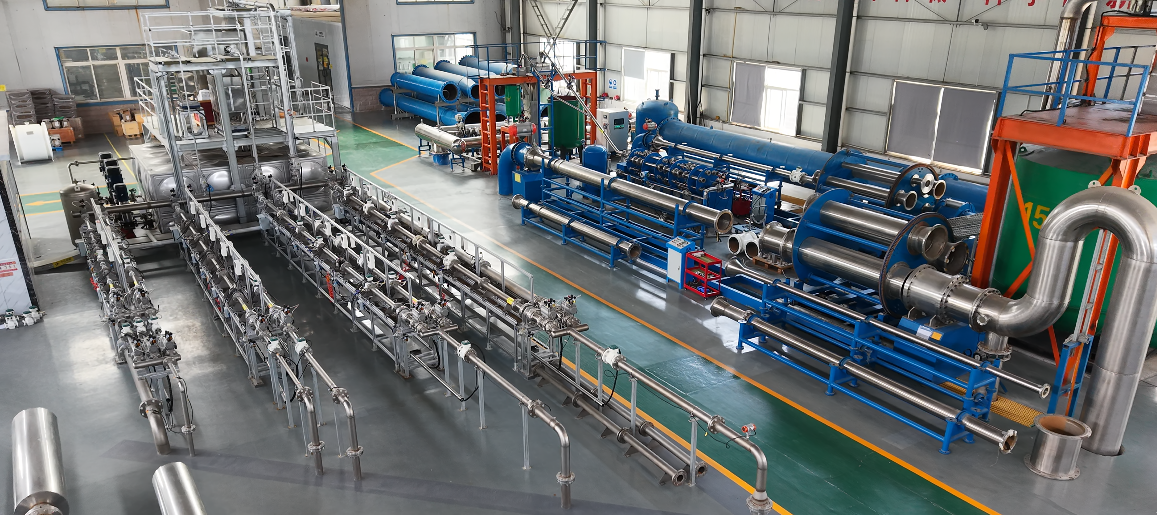
The IP68-rated sensor design enables complete submersion up to 3 meters, allowing installation in manholes, underground vaults, and flood-prone areas without compromising measurement reliability. Automatic sleep mode and LCD shutdown extend battery lifespan while internal data retention stores 120 months of cumulative flow records. This ensures no data loss during communication interruptions—a critical feature for regulatory reporting and forensic analysis.
Wireless connectivity through integrated GPRS and RS485 modules enables real-time data transmission to central monitoring systems without costly infrastructure investments. Water utilities can deploy measurement points wherever needed, expanding network visibility without the traditional constraints of power availability.
Managing Challenging Fluids: Slurry and Wastewater
Industrial water treatment and wastewater processing frequently involve fluids with high solid content—activated sludge, chemical precipitates, and industrial effluents. These applications subject flowmeters to severe abrasion and signal interference from solid particles colliding with electrodes.
Kaifeng XinYa's Slurry Electromagnetic Flowmeter series employs wear-resistant lining materials including Polyurethane, PFA, and ceramics for pipes DN15-150. More importantly, proprietary variation restraint arithmetic filters out "cuspidal disturb" signals caused by solid grain friction, maintaining measurement stability where conventional meters fail.
Integrated grounding electrodes eliminate interference in non-conductive or lined pipes—a common configuration in chemical treatment applications. This combination of robust materials and intelligent signal processing extends service life while maintaining the ±0.5% accuracy required for process control and regulatory reporting.
Large-Scale Infrastructure: The Insertion Approach
Municipal water distribution often involves pipes exceeding DN1000 diameter. Installing full-bore electromagnetic flowmeters at this scale presents significant cost and logistical challenges. The SF-C Insertion Electromagnetic Flowmeter provides a practical alternative, supporting pipe diameters up to DN3000 through a hot-tap installation approach.
The stainless steel insertion probe connects via ball valve and mounting base, enabling installation without shutting down the pipeline—critical for maintaining uninterrupted water service. Adjustable insertion depth allows optimization based on flow profile characteristics, with options for half-diameter or quarter-diameter positioning. This flexibility enables accurate measurement in partially filled pipes or irregular flow conditions common in gravity-fed systems.
Integration with IoT Platforms: From Data to Decisions
Raw flow data provides limited value without context and analysis capability. Kaifeng XinYa's Instrument IoT Big Data Platform transforms distributed measurement points into an integrated monitoring ecosystem. The platform supports data refresh rates as fast as 5 seconds with 60-point historical curve tracking, enabling operators to identify trends, anomalies, and optimization opportunities.
Multi-protocol support including RS485, RS232, HART, GPRS, Bluetooth, and WiFi ensures compatibility with existing SCADA infrastructure while enabling modern cloud-based management. RESTful API access via HTTP GET/POST requests and JSON data formatting facilitates integration with third-party analytics platforms and enterprise resource planning systems.
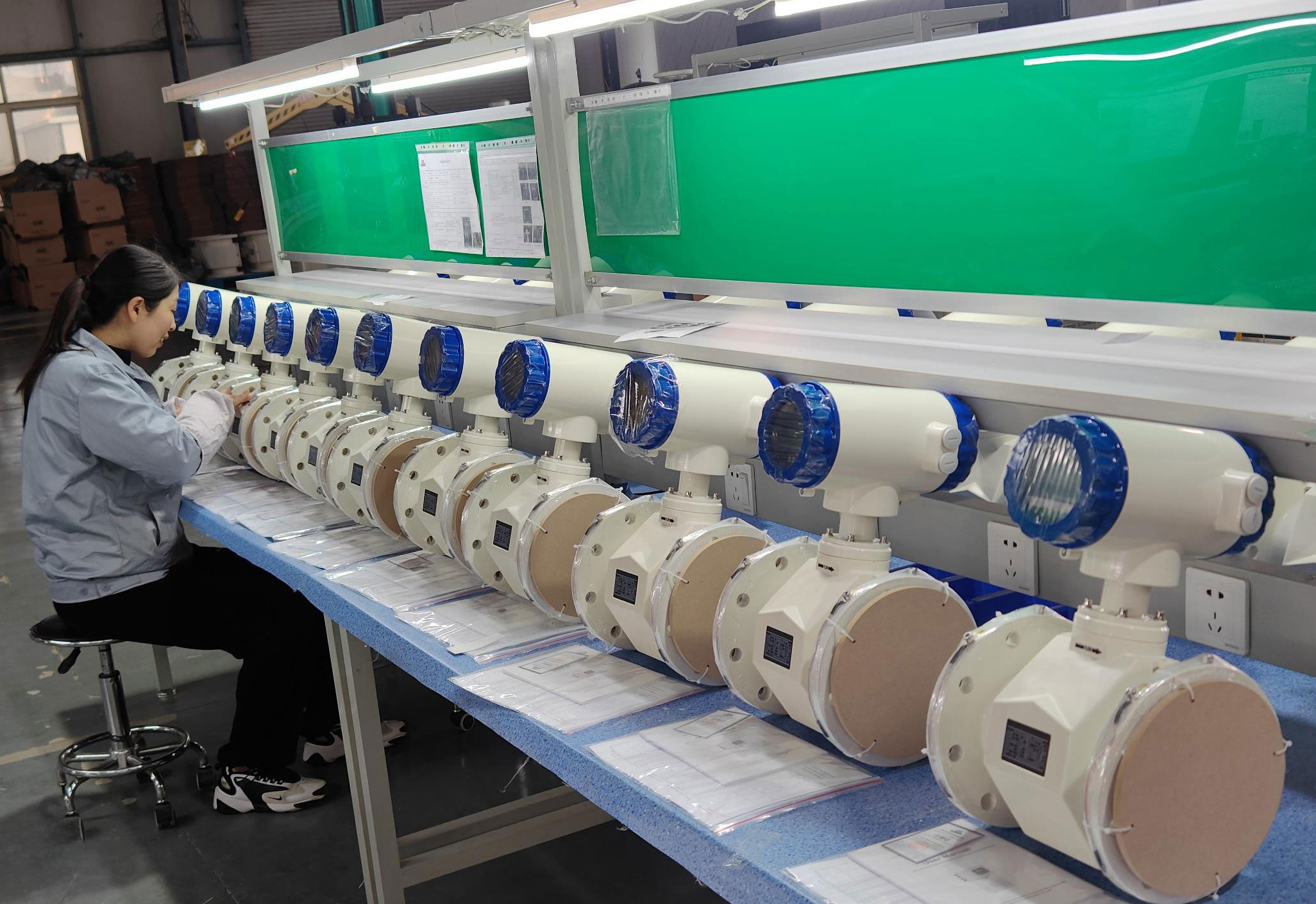
For water utilities managing hundreds of measurement points, centralized visualization replaces scattered local displays with actionable intelligence. Flow pattern analysis identifies network inefficiencies, leak detection algorithms trigger automated alerts, and predictive maintenance scheduling prevents costly equipment failures.
Security and Compliance: Protecting Critical Infrastructure
Water treatment facilities represent critical infrastructure requiring robust cybersecurity measures. Kaifeng XinYa implements multi-level password protection across six security grades for parameter configuration and data access. This granular permission structure ensures that field technicians, engineers, and administrators access only appropriate system functions.
Compliance with international standards including JB/T 9248-2015 Electromagnetic Flowmeter Standard, GB/T 9124.1-2019 Steel Pipe Flanges Standard, and MODBUS-RTU Protocol ensures interoperability and regulatory acceptance. The combination of ingress protection ratings—IP68 for sensors and IP65/IP66/IP67 for converters—guarantees reliable operation in harsh outdoor environments.
Conclusion: Precision as Foundation
Water treatment infrastructure serves as the foundation of public health and industrial productivity. As regulatory requirements tighten and resource constraints intensify, the imperative for accurate flow measurement grows correspondingly. Electromagnetic flowmeter technology—when implemented with advanced excitation systems, intelligent signal processing, and integrated IoT capability—transforms measurement from compliance necessity into operational advantage.
Kaifeng XinYa Instrument Co., Ltd. has positioned itself at this technological intersection, delivering measurement solutions that address the specific challenges of water treatment environments. From battery-powered remote monitoring to abrasion-resistant slurry measurement, their product portfolio reflects deep understanding of real-world operational constraints.
For water treatment facilities evaluating measurement system upgrades or expansions, the decision criteria should emphasize not just initial accuracy specifications, but long-term reliability, integration capability, and total cost of ownership. The most sophisticated measurement technology delivers value only when it operates reliably in the specific conditions of your application—a principle that separates adequate solutions from optimal ones.
https://www.sytcflowmeter.com/
Kaifeng Xinya Instrument Co., Ltd.

+ There are no comments
Add yours