

In iron casting production, dimensional deviation and hidden defects are two of the most common causes of rejection. For manufacturers supplying structural cast iron components to industries such as elevators, machine tools, energy equipment, and heavy machinery, even small inaccuracies can lead to assembly issues, vibration problems, or premature wear.
With the rapid development of digital inspection technologies, 3D scanning has become an increasingly practical tool in modern foundries. Rather than relying solely on traditional gauges, templates, and coordinate measuring machines (CMM) at selected points, 3D scanning provides full-surface inspection and digital comparison with CAD models. For companies focused on cast iron manufacturing, this shift significantly improves dimensional control and reduces scrap rates.
At Casteks Metal Science (Jiangsu) Co., Ltd., 3D scanning is integrated into the casting development and quality control workflow to strengthen process stability and shorten validation cycles for gray iron and ductile iron components. Combined with systematic management and engineering coordination, it supports the company’s full-process service model.
The Challenge of Dimensional Control in Cast Iron Production
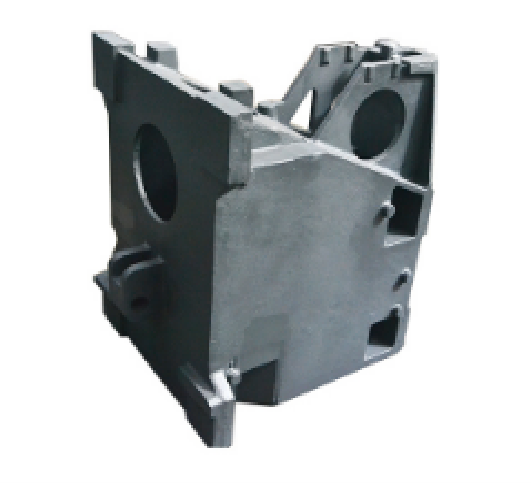
Cast iron components, especially gray iron and ductile iron, are widely used for structural parts due to their vibration damping, machinability, and strength characteristics. However, the casting process naturally involves variables such as:
-
Mold deformation
-
Sand compaction inconsistency
-
Metal shrinkage during solidification
-
Core positioning deviation
-
Pattern wear over time
Even with stable process control, dimensional variation can accumulate. In conventional inspection systems, operators typically measure critical dimensions using calipers, height gauges, or CMM at defined inspection points. While effective for key tolerances, this method may miss subtle profile deviations across large surfaces.
For complex parts such as traction sheaves, machine bases, brackets, or housing components, surface geometry consistency is essential. If deformation or distortion goes undetected, machining allowances may become insufficient, leading to rejection at a later stage.
This is where 3D scanning provides measurable value.
What 3D Scanning Actually Changes in Foundry Practice
3D scanning captures millions of surface data points from a casting and generates a digital model. This scanned model is then compared directly to the original CAD design using color mapping analysis. Deviations are clearly visualized in real time.
In practical foundry operations, this enables:
1. Full-Surface Dimensional Verification
Instead of checking only selected measurement points, engineers can evaluate the entire geometry of the casting. Warpage, draft angle deviation, or subtle bulging becomes immediately visible.
For large cast iron parts, especially structural components, this significantly reduces the risk of missing cumulative dimensional errors.
2. Faster First Article Validation
During new product development, pattern correction cycles can be time-consuming. Traditionally, modifications are made based on partial measurement feedback, and multiple trial castings may be required.
By using 3D scanning:
-
Shrinkage compensation can be verified more precisely
-
Pattern modifications are data-driven
-
Trial loops are shortened
At Casteks Metal Science (Jiangsu) Co., Ltd., the engineering innovation center coordinates scanning results with tooling adjustments, helping stabilize new cast iron products more efficiently.
Reducing Rejection Rates Through Early Detection
One of the main financial risks in casting production is late-stage rejection. If dimensional errors are detected only after machining or final inspection, material, labor, and machining costs are already incurred.
3D scanning allows earlier intervention in three key areas:
Mold and Pattern Wear Monitoring
Over time, patterns and core boxes experience wear. Even slight dimensional changes can gradually push castings outside tolerance. Regular scanning comparison against baseline data helps identify pattern degradation before large batches are affected.
Process Drift Analysis
By scanning samples across different production batches, engineers can detect trends such as:
-
Gradual expansion or contraction
-
Asymmetrical deformation
-
Systematic core shift
This supports root cause analysis and prevents recurring defects.
Machining Allowance Verification
For cast iron components that require machining, maintaining consistent machining allowance is critical. Insufficient allowance can lead to scrap during machining.
3D scanning verifies that raw castings meet allowance requirements before entering the machining stage, reducing unexpected rejection downstream.
Improving Communication Between Engineering and Production
Beyond inspection, 3D scanning strengthens cross-functional collaboration.
At Casteks, the casting customer service process connects design, development, production, and delivery. When dimensional deviations are identified, digital reports can be shared across:
-
Engineering teams
-
Production supervisors
-
Pattern workshops
-
Customer technical departments
Instead of discussing isolated measurement points, teams review complete deviation maps. This reduces misunderstanding and speeds up corrective actions.
For customers sourcing cast iron components through https://www.casteks.com/casting, this digital transparency improves confidence during development and mass production.
Supporting Continuous Improvement in Cast Iron Manufacturing
Modern casting management requires data-driven decision-making. 3D scanning contributes to continuous improvement in several ways:
Statistical Deviation Tracking
Deviation data can be stored and analyzed over time, helping identify stable process windows.
Reverse Engineering for Optimization
For legacy parts without complete design documentation, scanning enables accurate digital reconstruction before process optimization.
Process Validation for Export Projects
For international customers with strict dimensional requirements, digital inspection records provide traceability and compliance support.
Casteks Metal Science (Jiangsu) Co., Ltd. combines modern management systems with practical foundry experience. Since taking over the management of STK Technology (Jiangsu) Co., Ltd., the company has strengthened coordination between technical support and production execution. The integration of scanning technology into daily quality control reflects this balanced approach of innovation and practicality.
Why 3D Scanning Is Particularly Valuable for Iron Castings
Compared with some other materials, cast iron presents unique inspection challenges:
-
Surface texture may be rough
-
Large components can be heavy and difficult to reposition
-
Internal stresses can cause post-casting distortion
Advanced scanning equipment designed for industrial environments allows non-contact measurement without damaging the casting surface. For heavy gray iron and ductile iron components, this significantly improves inspection efficiency.
More importantly, scanning does not replace traditional inspection methods. Instead, it complements them:
-
Chemical composition testing ensures material grade compliance
-
Metallographic analysis confirms microstructure
-
Mechanical testing verifies strength
-
3D scanning validates geometry
Together, these systems create a comprehensive quality assurance framework.
Practical Impact on Delivery and Customer Satisfaction
Reducing rejection rates has direct operational benefits:
-
Lower scrap costs
-
More stable delivery schedules
-
Reduced rework
-
Improved customer trust
For customers sourcing structural cast iron components, stability matters more than theoretical precision. The goal is not to pursue unnecessary tolerances but to maintain consistency that supports assembly and performance requirements.
Casteks Metal Science (Jiangsu) Co., Ltd. focuses on practical casting solutions rather than abstract technical claims. By combining engineering review, supply chain coordination, and digital inspection tools like 3D scanning, the company strengthens its ability to deliver reliable cast iron components across different industrial sectors.
Conclusion
3D scanning is not a marketing concept; it is a working tool that enhances real production outcomes. In cast iron manufacturing, where dimensional variation and process drift are ongoing challenges, full-surface digital inspection significantly improves accuracy control and reduces rejection rates.
When integrated into a structured engineering workflow, 3D scanning shortens development cycles, stabilizes batch production, and strengthens communication between customers and manufacturers.
For companies seeking dependable gray iron and ductile iron casting solutions, understanding how digital inspection supports process control is essential. At Casteks Metal Science (Jiangsu) Co., Ltd., the combination of modern management concepts and hands-on foundry expertise ensures that innovation remains aligned with practical manufacturing needs.
www.casteks.com
Casteks Metal Science (Jiangsu) Co., Ltd.


+ There are no comments
Add yours