
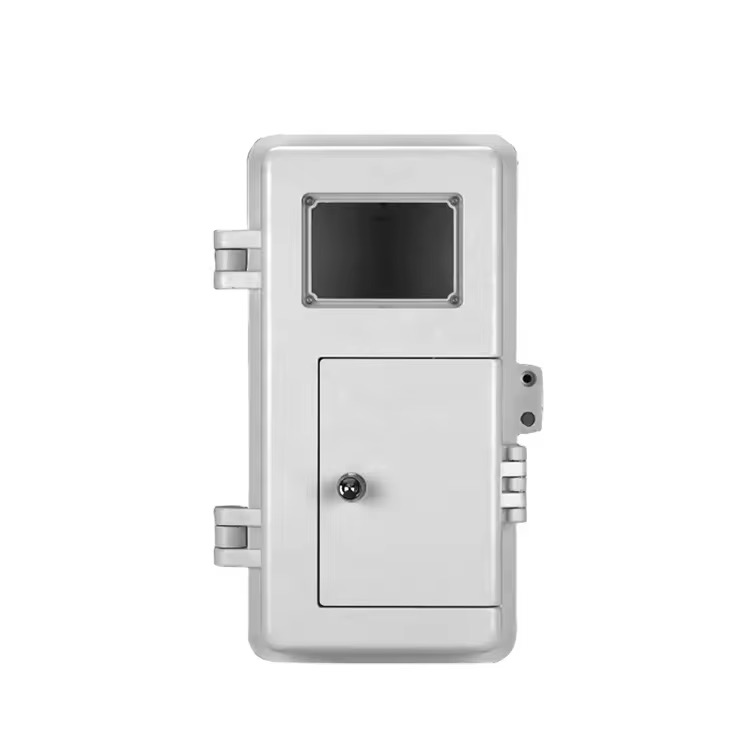
Electrical meter boxes play an important role in residential, commercial, and industrial power distribution systems. Although they may appear to be simple protective enclosures, their design and material selection can directly affect the safety, durability, and maintenance requirements of electrical metering equipment.
Among the available enclosure options, plastic meter boxes have become a practical choice for many low-voltage electrical applications. Their electrical insulation properties, corrosion resistance, relatively low weight, and flexible manufacturing options make them suitable for a wide range of installation environments.
However, choosing a suitable enclosure involves more than comparing plastic and metal. Buyers need to consider material grades, flame resistance, impact strength, waterproofing, installation conditions, and applicable electrical standards.
This article explores the main factors that influence plastic meter box performance and explains what electrical contractors, distributors, and project purchasers should evaluate before making a selection.
1. Electrical Insulation: An Important Safety Consideration
Electrical insulation is one of the main reasons plastic materials are used in meter box manufacturing. Unlike conventional metal enclosures, engineering plastics such as ABS and polycarbonate are non-conductive under appropriate conditions.
A properly designed plastic enclosure helps isolate internal electrical components from external contact. This is particularly important in residential and commercial buildings, where meter boxes may be installed in locations accessible to maintenance personnel or other authorized users.
Nevertheless, the insulating properties of the housing should not be confused with the overall electrical safety of the equipment. The internal wiring, terminals, protective devices, cable connections, and installation procedures must also meet the relevant technical requirements.
When selecting a Plastic Meter Box, buyers should pay attention to several details:
-
Material properties: Confirm the electrical insulation characteristics of the selected plastic grade.
-
Housing structure: Check whether the wall thickness and enclosure design provide suitable protection.
-
Internal space: Ensure sufficient room for metering components, terminals, wiring, and required clearances.
-
Manufacturing consistency: Verify that material specifications and production quality remain consistent across batches.
Evaluating these factors together provides a more reliable basis for selecting an enclosure for low-voltage metering applications.
2. Flame Retardancy and Thermal Performance
Electrical equipment may generate heat during normal operation. Abnormal conditions, such as overloaded circuits, loose connections, or component failures, can create additional thermal risks.
For this reason, flame retardancy is an important consideration when choosing a plastic electrical enclosure.
Some ABS and polycarbonate materials are available in flame-retardant formulations. These materials are designed to meet specific fire-test requirements and may help limit flame propagation under defined testing conditions.
One commonly referenced classification is UL 94 V-0. It describes the performance of a material sample in a standardized vertical burning test. However, this classification should not be interpreted as proof that the finished meter box is fireproof.
Buyers should verify that the classification applies to the actual resin grade, product color, and material thickness used in manufacturing. They should also request relevant test reports when flame-retardant performance is a project requirement.
Thermal performance deserves equal attention. The enclosure must maintain its structural integrity within the expected operating temperature range. Poor heat resistance may result in deformation, reduced mechanical strength, or changes in the fit between the cover and housing.
It is also important to remember that a flame-retardant enclosure cannot replace proper circuit protection, suitable conductor sizing, or correct electrical installation.
3. Corrosion Resistance for Different Installation Environments
Environmental exposure is another factor that influences meter box service life.
Metal enclosures may require protective coatings, galvanizing, or corrosion-resistant alloys to withstand moisture and aggressive environments. Damage to the protective surface can create potential corrosion points, especially in coastal or industrial locations.
Plastic enclosures offer a different approach. They do not rust like conventional steel, and selected engineering plastics can provide resistance to moisture and various chemicals.
This makes them useful in applications where corrosion resistance and reduced maintenance are important.
However, the performance of plastic materials varies significantly. Some formulations offer better resistance to ultraviolet radiation, temperature changes, or chemical exposure than others.
Before purchasing a plastic meter box for outdoor installation, consider:
-
The minimum and maximum ambient temperatures at the installation site.
-
Whether prolonged exposure to sunlight requires UV-resistant material.
-
Whether the enclosure will come into contact with cleaning agents, oils, or industrial chemicals.
-
Whether the cover and sealing components can maintain their performance under local weather conditions.
-
Whether the selected product is suitable for the expected installation environment.
For projects in coastal areas, industrial facilities, or regions with strong sunlight, material suitability should be confirmed through product specifications and relevant testing rather than general claims about weather resistance.
4. Waterproofing and Dust Protection Depend on the Complete Design
A meter box is expected to protect its internal components from external contaminants. Water and dust entering the enclosure may affect insulation performance, accelerate component deterioration, or create maintenance problems.
The ingress protection performance of a meter box depends on more than its plastic housing. Several design features contribute to the final result:
-
The contact surface between the cover and the main housing
-
The quality and positioning of sealing gaskets
-
Cable entry openings and cable glands
-
Fasteners, hinges, and locking structures
-
The accuracy of the enclosure assembly
IP ratings are used to classify protection against the ingress of solid objects and water under specified test conditions. Buyers should confirm the actual rating of the selected product configuration and ensure that it meets the requirements of the intended installation.
Installation quality is equally important. Drilling additional openings, using unsuitable cable glands, damaging seals, or failing to secure the cover properly can reduce the protection provided by the original enclosure design.
For outdoor applications, the mounting position and cable arrangement should follow the manufacturer's instructions. Projects exposed to heavy rainfall, high humidity, or severe weather may require additional attention to drainage and sealing details.
5. Lightweight Construction and Easier Installation
Compared with many metal alternatives, plastic meter boxes are generally lighter, depending on their dimensions, wall thickness, and material composition.
This can make transportation, handling, and installation more convenient. For electrical contractors working on residential developments or large-scale metering projects, reduced enclosure weight may simplify the process of moving and mounting multiple units.
Lightweight construction can also benefit distributors who need to manage product storage and transportation.
However, weight should never be the only selection criterion. An enclosure must still provide adequate mechanical strength for its intended application.
Important structural features include:
-
Housing rigidity and resistance to deformation
-
Strength of mounting points
-
Cover retention and locking performance
-
Hinge durability, where applicable
-
Resistance to impact during handling and maintenance
Buyers should also confirm the external dimensions, mounting hole positions, internal layout, and cable entry locations before ordering. These details help reduce installation difficulties and avoid unauthorized modifications that could affect the enclosure's protective performance.
6. ABS, Polycarbonate, or Metal: Which Material Is More Suitable?
Different enclosure materials offer different advantages. The right choice depends on the electrical requirements, environmental conditions, mechanical protection needs, and project specifications.
| Material | Main characteristics | Important considerations |
|---|---|---|
| ABS | Lightweight, moldable, and suitable for various enclosure designs | Impact strength, heat resistance, and outdoor weathering |
| Polycarbonate (PC) | Can offer high impact resistance and good dimensional stability | Material grade, temperature limits, UV resistance, and fire-test performance |
| Cold-rolled or galvanized steel | High rigidity and mechanical strength | Coating quality, corrosion protection, and grounding requirements |
| Stainless steel 304/316 | Good corrosion resistance for many demanding environments | Grade selection, chemical exposure, and project requirements |
ABS may be suitable for applications requiring flexible enclosure designs and practical manufacturing costs. Polycarbonate may be preferred where stronger impact performance is required. Metal enclosures can be more appropriate when a project demands higher mechanical protection or specific shielding characteristics.
There is no universally superior material. The final decision should be based on verified product performance and the conditions in which the meter box will operate.
7. A Practical Checklist for Meter Box Buyers
For electrical contractors, wholesalers, utility suppliers, and engineering project purchasers, a structured evaluation process can help avoid specification mismatches.
First, define the application.
Identify whether the enclosure will be used in residential, commercial, industrial, or public utility projects. Determine whether it will be installed indoors or outdoors and assess the environmental conditions.
Second, confirm the technical configuration.
Check the enclosure dimensions, mounting method, meter arrangement, cable entry positions, internal space, and required material grade. The design should be compatible with the intended metering equipment.
Third, review product testing and compliance documents.
Request relevant material specifications, flame-retardancy reports, ingress protection test results, and electrical product documentation. Confirm that the documents apply to the specific product being purchased and meet the requirements of the destination market.
Fourth, inspect product samples.
Where possible, examine housing thickness, surface quality, cover alignment, locking mechanisms, sealing components, and mounting features. Sample inspection can help identify manufacturing issues before a larger order is placed.
Finally, discuss customization and production requirements.
Different markets may have different meter dimensions, wiring arrangements, and installation standards. If customization is necessary, the design should be reviewed for structural performance, manufacturability, and regulatory compliance before mass production.
8. Why Manufacturer Experience Matters
The quality of a meter box depends not only on its material but also on product design, mold accuracy, production control, and quality inspection.
An experienced manufacturer should be able to provide clear product specifications and explain the differences between available materials and configurations. Technical communication is particularly important for overseas buyers who need products adapted to local metering arrangements or project requirements.
Zhejiang Kaitai Intelligent Electric Co., Ltd. was established in April 1998 and specializes in the development and production of intelligent distribution network automation equipment, intelligent electric meter boxes, power equipment, high- and low-voltage electrical equipment, and instrumentation products.
When evaluating a supplier such as Kaitai, buyers should discuss the intended application, required dimensions, installation environment, material options, and applicable standards. They should also confirm the technical documentation and customization capabilities available for the specific meter box model.
Clear communication at the specification stage can reduce procurement risks and help ensure that the selected enclosure is suitable for the actual project.
Conclusion
Plastic meter boxes offer several practical advantages for modern electrical metering systems, including electrical insulation, corrosion resistance, lightweight construction, and flexible enclosure design.
However, these benefits depend on the quality of the selected material, structural design, sealing performance, manufacturing process, and installation conditions. Flame retardancy, impact resistance, environmental suitability, and compliance documentation should all be considered before procurement.
For electrical contractors, distributors, and project purchasers, the most reliable approach is to evaluate the complete enclosure rather than choosing a product based on material type alone. By confirming technical specifications and working with a qualified manufacturer, buyers can select a meter box that meets the practical requirements of their electrical installation.
www.ktaielec.com
Zhejiang Kaitai Intelligent Electric Co., Ltd.


+ There are no comments
Add yours