

The label and packaging industry is becoming increasingly demanding. Brands now expect labels to combine attractive visual effects, precise processing, reliable anti-counterfeiting features, and consistent quality. At the same time, manufacturers need to complete more orders while controlling material waste and production costs.
These requirements have made automated finishing equipment increasingly important. Among the available solutions, hot stamping and slitting machines provide an efficient way to combine decorative processing, accurate tracking, material slitting, and rewinding in a streamlined production process.
For manufacturers of holographic labels, security trademarks, packaging materials, and specialty labels, the right equipment can make a significant difference in production efficiency and finished-product quality.
Changzhou Zhonghong Machinery Co., Ltd. specializes in label and packaging anti-counterfeiting equipment and provides automated processing solutions for customers in different markets.
Why Hot Stamping and Slitting Are Important in Label Manufacturing
Labels serve several purposes beyond basic product identification. They can enhance packaging appearance, communicate brand information, and provide anti-counterfeiting functions.
Hot stamping is commonly used to create metallic, decorative, or holographic effects, while slitting converts wider rolls of material into narrower rolls suitable for subsequent production or application.
When these processes are performed efficiently, manufacturers can benefit from:
-
More consistent finished labels
-
Better material utilization
-
Reduced manual handling
-
Faster production cycles
-
Improved roll quality
-
More flexible product specifications
Integrating multiple functions into one automated machine can also reduce unnecessary material movement between individual processing stations.
Automatic Tracking Helps Maintain Processing Accuracy
Precision is especially important when processing holographic trademarks and high-value labels. If the stamping position shifts from the intended design, the finished product may have visible defects or fail to meet customer specifications.
Modern hot stamping equipment can use photoelectric tracking technology to identify positioning marks and automatically adjust the processing position.
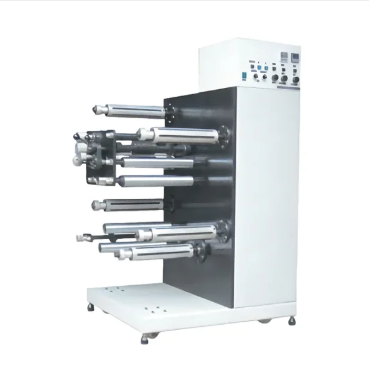
The automatic hot stamping and slitting machine from Zhonghong supports different tracking methods, including edge tracking, line tracking, and intermittent trademark tracking.
This type of automatic correction helps maintain alignment throughout continuous production and reduces errors caused by material movement or variations during operation.
For manufacturers processing detailed holographic patterns or registered trademarks, stable tracking can help improve both appearance and production consistency.
Consistent Hot Stamping Improves Label Appearance
Hot stamping is widely used when manufacturers want to create a premium appearance or add special visual effects to labels and packaging.
However, good stamping results depend on more than the stamping process itself. Material positioning, pressure, temperature, film compatibility, and machine stability all influence the final result.
A well-designed hot stamping machine should provide stable operation and accurate positioning so that each processed section maintains a consistent appearance.
This is particularly useful for:
-
Laser holographic trademarks
-
Security labels
-
Decorative packaging
-
Brand identification labels
-
Non-adhesive trademark materials
-
Specialty packaging products
For companies handling multiple label projects, flexible equipment can also reduce the need to invest in separate machines for different finishing processes.
Flexible Slitting Supports Different Label Sizes
Not every customer requires the same label width. A manufacturer may need to process narrow strips for specialized applications as well as wider rolls for mainstream packaging production.
Slitting flexibility therefore becomes an important consideration when selecting equipment.
The Zhonghong automatic hot stamping and slitting machine supports winding bar widths from approximately 10 mm to 350 mm. This range allows manufacturers to process different material widths according to specific production requirements.
Flexible slitting can help companies respond to customized orders without introducing excessive manual processing or additional equipment.
Large Unwinding Capacity Supports Continuous Production
Material handling has a direct influence on production efficiency. Frequent material replacement interrupts production and increases operator workload.
The machine supports a maximum unwinding diameter of approximately 400 mm, allowing longer material rolls to be processed before replacement is required.
A stable unwinding system helps maintain consistent material movement throughout the production process. Combined with automatic tracking, this can contribute to more reliable stamping and slitting results.
For high-volume label production, reducing unnecessary downtime can improve equipment utilization and simplify production scheduling.
Rewinding Quality Matters for the Next Production Stage
After hot stamping and slitting, the processed material needs to be rewound into usable rolls.
Poor rewinding can create problems such as uneven roll edges, unstable tension, or material deformation. These issues may affect transportation, storage, and subsequent die-cutting or labeling processes.
A reliable rewinding system helps maintain orderly and stable finished rolls.
For manufacturers supplying labels to automated packaging or labeling lines, consistent roll quality is particularly important because poorly wound material can create feeding problems during later processing.
Compact Equipment Can Improve Factory Layout
Space utilization is another practical consideration for modern manufacturing facilities.
Large production lines may already contain printing machines, die-cutting equipment, inspection systems, and packaging equipment. Adding new machinery therefore requires careful consideration of available floor space.
The Zhonghong automatic hot stamping and slitting machine has a compact overall structure of approximately 800 × 900 × 1400 mm and weighs around 500 kg.
A compact design can make equipment easier to install within existing production areas while allowing manufacturers to maintain a more organized workflow.
Supporting More Efficient Production Management
Automation is not simply about reducing manual labor. It also helps manufacturers establish more repeatable production processes.
An automated hot stamping and slitting machine can reduce the number of manual operations involved in positioning, processing, slitting, and rewinding.
This can provide several practical benefits:
Reduced operator dependency: Automated functions reduce repetitive manual adjustments.
Improved consistency: Machine-controlled processing parameters help maintain more stable production results.
Lower material waste: Accurate tracking and slitting can reduce defects caused by positioning errors.
Faster order processing: Integrated functions help shorten production cycles.
Simpler workflow: Combining multiple processes reduces unnecessary material transfers.
These benefits become increasingly valuable as manufacturers move toward more automated label production.
Applications in Packaging and Anti-Counterfeiting
Hot stamping and slitting technology is particularly relevant to products where appearance and security are both important.
Typical applications include:
-
Holographic trademarks
-
Anti-counterfeiting labels
-
Brand protection materials
-
Decorative packaging
-
Specialty labels
-
Security packaging
-
Non-adhesive trademark sheets
Industries such as pharmaceuticals, cosmetics, electronics, consumer goods, and premium packaging often require labels that combine clear identification with enhanced visual or security features.
As brands place greater emphasis on product authenticity and traceability, specialized label-processing equipment can help manufacturers respond to these requirements.
Choosing a Reliable Hot Stamping and Slitting Machine Supplier
Machine specifications are important, but they should not be the only consideration when selecting a supplier.
Manufacturers should also evaluate:
-
Equipment manufacturing experience
-
Processing technology
-
Quality control
-
Technical support
-
Customization capabilities
-
Equipment reliability
-
International service experience
Changzhou Zhonghong Machinery Co., Ltd. focuses on the development and manufacture of label and packaging anti-counterfeiting equipment. The company combines production capabilities with technical development to provide equipment solutions for different label-processing requirements.
Its products have been exported to more than 70 countries and regions, reflecting experience in serving customers across different markets.
For manufacturers with specific material, tracking, stamping, or slitting requirements, working directly with an experienced equipment manufacturer can also make equipment configuration and production integration easier.
What to Consider Before Investing in Equipment
Before purchasing a hot stamping and slitting machine, manufacturers should first identify their actual production requirements.
Important factors include:
Material Type
Different films, label substrates, and transfer materials may require different processing conditions.
Label Dimensions
The required slitting width and finished roll dimensions should match the machine's operating range.
Production Volume
High-volume manufacturers should prioritize continuous operation, unwinding capacity, processing stability, and automation.
Tracking Requirements
If the products contain detailed patterns or registered trademarks, automatic tracking accuracy becomes especially important.
Future Expansion
Equipment that can accommodate different products and production requirements may provide greater flexibility as the business develops.
The Future of Automated Label Finishing
Label manufacturing is moving toward greater automation, precision, and flexibility. As customers demand more customized packaging and stronger anti-counterfeiting features, production equipment must become more adaptable.
Future hot stamping and slitting systems are likely to focus on improved automation, more accurate material tracking, intelligent production monitoring, reduced material waste, and easier integration with other converting equipment.
For manufacturers, investing in suitable automation can be an effective way to improve production consistency while preparing for increasingly demanding market requirements.
Conclusion
A modern hot stamping and slitting machine is more than a simple finishing device. It combines material handling, tracking, stamping, slitting, and rewinding functions to help label manufacturers create a more efficient and consistent production process.
Accurate tracking improves processing alignment, flexible slitting supports different product specifications, and stable unwinding and rewinding systems help maintain continuous production. Together, these functions can improve productivity and finished-label quality.
For manufacturers working with holographic trademarks, security labels, decorative packaging, and specialty materials, selecting the right automated equipment is an important step toward improving production capabilities.
With experience in label and anti-counterfeiting equipment manufacturing, Changzhou Zhonghong Machinery Co., Ltd. provides practical hot stamping and slitting solutions designed to support the evolving needs of modern label and packaging production.
www.hologrammachiners.com
Changzhou Zhonghong

+ There are no comments
Add yours