
In a modern factory, electrical systems have to do much more than simply deliver power. Production equipment, hydraulic systems, motors, sensors, PLCs, and communication devices all depend on a stable and well-organized electrical infrastructure. When power distribution or control equipment is poorly designed, even a small electrical fault can interrupt an entire production process.
This is why an industrial power distribution cabinet plays an important role in modern manufacturing. It brings power distribution, electrical protection, control components, and communication functions into one organized system. When properly designed for the application, it can make industrial equipment easier to operate, maintain, and troubleshoot.
For equipment manufacturers and industrial automation projects, working with an OEM manufacturer can also provide advantages because the cabinet can be designed around the actual machine rather than forcing the machine to adapt to a standard cabinet.
What Does an Industrial Power Distribution Cabinet Do?
A power distribution cabinet is essentially the electrical center of an industrial system. Its exact configuration depends on the equipment and application, but a typical cabinet may contain circuit breakers, contactors, relays, transformers, PLCs, terminal blocks, protection devices, communication modules, and other electrical components.
These components work together to perform several basic functions:
-
Distributing incoming electrical power
-
Protecting circuits and equipment
-
Controlling motors and actuators
-
Monitoring operating conditions
-
Processing control signals
-
Connecting equipment to automation networks
For example, a hydraulic machine may require the cabinet to control hydraulic pumps, solenoid valves, pressure sensors, limit switches, and emergency stop circuits. In this situation, the cabinet is not simply a power supply enclosure. It becomes an important part of the machine's control system.
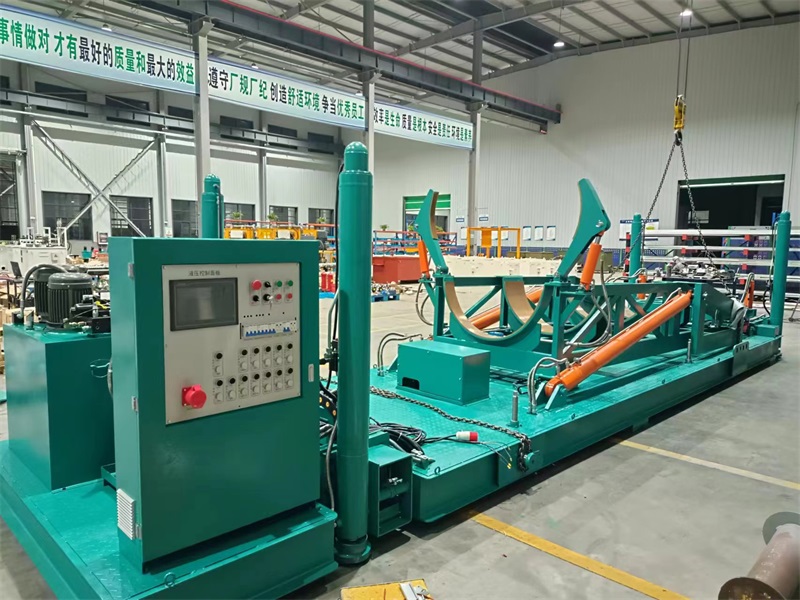
Why Cabinet Design Matters in Industrial Equipment
Two machines may have similar power ratings but completely different electrical control requirements.
A machine operating in a clean indoor workshop may require a different cabinet configuration from equipment installed in a dusty, humid, or high-temperature environment. Similarly, a manually operated machine does not need the same control architecture as a fully automated production line.
An experienced OEM manufacturer can consider factors such as:
-
Total connected load
-
Motor starting current
-
Control voltage
-
Number of input and output signals
-
PLC requirements
-
Communication protocols
-
Cabinet dimensions
-
Cooling and ventilation
-
Protection requirements
-
Maintenance access
Considering these factors during the design stage helps reduce integration problems after installation.
Electrical Protection Is a Key Function
Industrial equipment often operates under relatively high electrical loads. Motors, pumps, heaters, and other power-consuming devices can create conditions that require proper protection.
A well-configured cabinet may incorporate several levels of protection.
Circuit Breakers
Circuit breakers protect electrical circuits from conditions such as overload and short circuits. Proper selection is important because the protective device needs to match the circuit and connected equipment.
Surge Protection
Industrial electrical systems can be affected by voltage surges caused by switching operations, lightning, or disturbances in the power supply. Surge protection devices can help reduce the risk of damage to sensitive electrical components.
Overload Protection
Motors and other equipment may require dedicated overload protection. Proper protection helps reduce the possibility of overheating and premature component failure.
Emergency Stop Functions
For machinery, emergency stop circuits are an important part of the overall safety design. The cabinet can integrate emergency stop signals with the machine control system so that hazardous movement or operation can be stopped when necessary.
The exact protection configuration should always be determined according to the machine design, applicable electrical standards, and operating environment.
PLC Integration Makes Cabinets More Flexible
As factories move toward greater automation, PLCs have become common components inside industrial control cabinets.
A PLC can receive signals from sensors and switches, process programmed logic, and send commands to motors, valves, relays, and other devices.
For example, in a hydraulic system, the PLC may coordinate a sequence such as:
-
Confirm that the workpiece is correctly positioned.
-
Start the hydraulic pump.
-
Monitor pressure or position signals.
-
Activate the required valve.
-
Move the cylinder according to the programmed sequence.
-
Stop the hydraulic operation when the target position is reached.
-
Return the system to its initial condition.
This type of control reduces dependence on manual operation and makes repetitive production processes more consistent.
Power Distribution Cabinets for Hydraulic Machinery
Electrical control becomes particularly important when hydraulic and electrical systems are integrated.
Hydraulic machinery may include pumps, proportional valves, directional valves, pressure sensors, temperature sensors, cylinders, and other components. These devices need to operate in the correct sequence to achieve stable machine performance.
A customized cabinet can coordinate these functions while providing the necessary electrical protection.
For hydraulic equipment manufacturers, this integration can simplify the relationship between the hydraulic circuit and electrical control system. Instead of treating the electrical cabinet as a separate component, engineers can develop the hydraulic and electrical systems together.
This is one area where an OEM manufacturer with electro-hydraulic engineering experience can provide practical value.
Customized Cabinets for Different Industrial Applications
There is no single cabinet configuration suitable for every factory.
Automated Production Lines
Production lines may require PLC control, motor control, sensors, communication interfaces, and data collection functions. The cabinet needs to accommodate these components while maintaining organized wiring and convenient maintenance access.
Hydraulic Machinery
Hydraulic presses and other hydraulic machines often require control of pumps, valves, pressure sensors, and safety circuits. The cabinet can be designed around the machine's hydraulic sequence and operating logic.
Machine Tools
Machine tools may require motor control, spindle control, position feedback, safety interlocks, and operator interfaces.
Energy Systems
Power-related applications may require additional monitoring, protection, and communication functions depending on the system architecture.
The cabinet configuration should therefore be determined by the actual equipment rather than selected solely according to cabinet size or appearance.
Why Internal Layout and Wiring Quality Matter
A power distribution cabinet can contain dozens or even hundreds of electrical connections. Poor internal organization makes troubleshooting difficult and can increase maintenance time.
Professional cabinet manufacturing should pay attention to:
-
Component arrangement
-
Wire identification
-
Terminal organization
-
Cable routing
-
Separation of power and control circuits
-
Heat dissipation
-
Maintenance access
A clean internal layout makes it easier for technicians to locate components and trace circuits during inspection or troubleshooting.
It can also make future modifications easier when additional sensors, control functions, or communication modules need to be added.
OEM Manufacturing Provides More Than a Standard Cabinet
For international equipment manufacturers, an OEM partnership can be particularly useful when the electrical cabinet needs to be integrated into a specific machine.
Instead of purchasing a general-purpose cabinet and modifying it later, the manufacturer can provide a cabinet based on the customer's electrical drawings, machine configuration, and control requirements.
Typical OEM services may include:
-
Electrical system design
-
Component selection
-
Cabinet fabrication
-
PLC programming
-
Wiring and assembly
-
Functional testing
-
Communication configuration
-
Installation support
-
Technical documentation
This approach can reduce unnecessary redesign work during machine integration.
Kinyuan's Approach to Electrical and Hydraulic Integration
Jiangsu Kinyuan Hydraulic Machinery Co., Ltd. specializes in hydraulic systems and electro-hydraulic integration solutions. Its capabilities cover research and development, engineering design, manufacturing, and technical service.
For industrial equipment that requires both hydraulic and electrical control, Kinyuan can develop customized power distribution cabinet solutions according to the equipment's actual operating requirements.
The company operates an R&D center in Suzhou and a standardized production base in Nantong, supporting the development and manufacturing of hydraulic and electro-hydraulic equipment.
This integrated engineering background is useful for applications where the electrical cabinet needs to work closely with hydraulic pumps, valves, sensors, and motion-control components.
What Should Buyers Consider Before Ordering a Power Distribution Cabinet?
Before selecting an OEM supplier, buyers should provide as much technical information as possible.
Useful information includes:
-
Input voltage and frequency
-
Total electrical load
-
Motor specifications
-
Number of controlled devices
-
PLC brand and model requirements
-
HMI requirements
-
Required communication protocols
-
Installation environment
-
Cabinet dimensions
-
Applicable electrical standards
-
Required safety functions
The more complete the technical information, the easier it is for the manufacturer to develop a suitable cabinet configuration.
It is also worth discussing future expansion requirements. If a production line may add additional motors, sensors, or communication functions later, reserving appropriate space and capacity during the initial design can avoid costly modifications.
Conclusion
An industrial power distribution cabinet is an important part of the electrical architecture behind modern manufacturing equipment. Its responsibilities extend from basic power distribution to circuit protection, machine control, signal processing, and industrial communication.
For hydraulic machinery and automated equipment, the cabinet must also work closely with the mechanical and hydraulic systems. This makes application-specific design more practical than relying on a generic electrical enclosure.
For manufacturers looking for an OEM partner, Jiangsu Kinyuan Hydraulic Machinery Co., Ltd. combines hydraulic engineering experience with electro-hydraulic integration capabilities to develop customized electrical control solutions.
A well-designed cabinet does not simply organize electrical components. It helps create a safer, more maintainable, and more reliable industrial machine.
www.kinyuenhydraulic.com
Jiangsu kinyuan

+ There are no comments
Add yours