
In today’s highly competitive food processing industry, efficient and accurate labeling is no longer optional—it is a critical requirement for compliance, branding, and operational efficiency. For canned food manufacturers, selecting the right labeling equipment directly impacts product presentation, traceability, production speed, and long-term costs. However, choosing the right canned food labeling machine factory is often more challenging than selecting the machine itself.
With countless manufacturers, suppliers, and trading companies in the global market, buyers must carefully evaluate potential partners to avoid quality issues, poor after-sales support, and costly production delays. This article provides a comprehensive guide on how to choose a reliable canned food labeling machine factory, helping you make an informed and confident purchasing decision.
1. Understand Your Production Requirements First
Before evaluating any factory, it is essential to clearly define your own production needs. A reliable factory will always ask detailed questions about your application—and you should be prepared with clear answers.
Key factors to consider include:
-
Can material (tinplate, aluminum, composite cans)
-
Can size range (diameter and height variability)
-
Label type (paper labels, plastic labels, wrap-around labels, self-adhesive labels)
-
Production speed requirements (cans per minute)
-
Automation level (semi-automatic or fully automatic)
-
Integration needs (compatibility with existing filling, sealing, or inspection equipment)
Factories that offer tailored solutions rather than generic machines are typically more reliable long-term partners.
2. Verify Factory Identity: Manufacturer vs Trading Company
One of the most critical steps is confirming whether you are dealing with a true canned food labeling machine factory or merely a trading company.
Why Factory Direct Matters
Working directly with a factory offers several advantages:
-
Better pricing due to the absence of intermediaries
-
Direct communication with engineers and technicians
-
Greater customization flexibility
-
Faster technical support and spare parts supply
-
Higher accountability for quality and delivery
How to Verify Factory Status
-
Request factory photos and videos of workshops, assembly lines, and testing areas
-
Ask for business licenses and manufacturing certificates
-
Request a factory audit report or arrange a third-party inspection
-
Check whether the company owns its R&D team and production facilities
A reliable factory will be transparent and willing to prove its manufacturing capabilities.
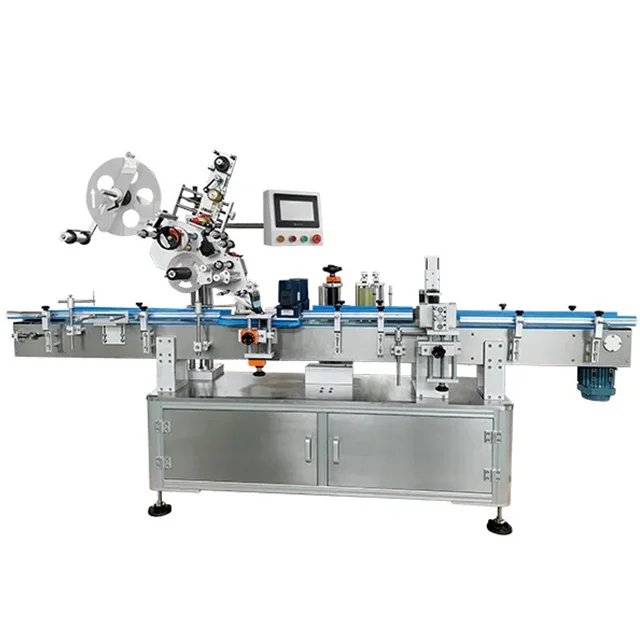
3. Evaluate Technical Expertise and Engineering Capability
Labeling machines for canned food require precision engineering to ensure accurate label placement at high speeds. A reliable factory must demonstrate strong technical expertise.
Indicators of Strong Engineering Capability
-
In-house mechanical and electrical engineers
-
Experience with servo motors, PLC control systems, and sensors
-
Ability to handle variable can sizes without excessive changeover time
-
Proven solutions for curved surfaces and metal cans
-
Integration of date coding or traceability systems if required
Ask the factory to explain the working principle of their machines in detail. A professional manufacturer should be able to clearly describe how their equipment ensures stability, accuracy, and consistency.
4. Assess Product Quality and Component Selection
The reliability of a canned food labeling machine largely depends on the quality of its components and manufacturing standards.
What to Look For
-
Use of high-quality stainless steel suitable for food-grade environments
-
Durable labeling mechanisms resistant to adhesive residue and dust
-
Reputable electrical components (PLC, sensors, motors)
-
Robust frame design to reduce vibration at high speeds
Ask about:
-
Component brands and alternatives
-
Expected machine lifespan
-
Maintenance frequency
-
Availability of spare parts
A trustworthy factory will prioritize long-term performance over short-term cost savings.
5. Check Quality Control and Testing Procedures
A professional canned food labeling machine factory should have a clear and strict quality control process.
Essential Quality Control Steps
-
Incoming material inspection
-
Assembly quality checks
-
Electrical system testing
-
Labeling accuracy and stability tests
-
Continuous operation testing under real production conditions
Ask whether the factory performs factory acceptance testing (FAT) before shipment and whether test videos or reports can be provided. Factories that thoroughly test machines before delivery significantly reduce installation risks.
6. Customization and OEM/ODM Capability
Every canned food production line is unique. A reliable factory should offer OEM and ODM services to meet specific customer requirements.
Customization may include:
-
Machine layout adjustments
-
Special label applicators
-
Integration with conveyors or inspection systems
-
Multi-language HMI interfaces
-
Branding and private labeling
Factories with strong OEM/ODM experience demonstrate flexibility, engineering depth, and customer-oriented thinking—key traits of a dependable manufacturing partner.
7. Compliance with Food Safety and International Standards
Canned food labeling machines must comply with food safety and industrial regulations, especially for export-oriented producers.
Common Standards to Look For
-
CE compliance for European markets
-
ISO quality management systems
-
Food-grade material compliance
-
Electrical safety standards
A reliable factory understands international market requirements and designs machines accordingly. This is especially important if your products are sold across multiple regions.
8. Production Capacity and Lead Time
A professional factory should have sufficient production capacity to meet your order volume and delivery timeline.
Ask about:
-
Monthly production capacity
-
Average lead time for standard and customized machines
-
Ability to handle urgent or large-volume orders
-
Inventory levels for standard components
Factories with stable production planning and clear timelines are far more reliable than those offering vague delivery promises.
9. After-Sales Service and Technical Support
After-sales support is often the most overlooked factor when selecting a labeling machine factory, yet it is one of the most critical.
What Reliable After-Sales Support Includes
-
Clear warranty terms
-
Installation guidance or remote commissioning
-
Operation and maintenance manuals
-
Training for operators
-
Fast response to technical issues
-
Long-term spare parts availability
Ask about the factory’s average response time for technical support and whether they provide online troubleshooting, which is especially important for overseas buyers.
10. Export Experience and Global Customer References
A factory with extensive export experience is better equipped to handle international logistics, documentation, and technical communication.
Indicators of strong export capability:
-
Experience shipping to multiple countries
-
Familiarity with export packaging standards
-
Multilingual sales and technical teams
-
Positive feedback from international clients
Request case studies or customer references in your industry. Real-world experience often speaks louder than marketing materials.
11. Price Evaluation: Avoid the Lowest Bid Trap
While price is always a consideration, choosing a canned food labeling machine factory based solely on the lowest price can lead to hidden costs.
Low prices may indicate:
-
Inferior components
-
Limited testing
-
Weak after-sales support
-
Short machine lifespan
Instead, evaluate overall value, including quality, reliability, service, and long-term operating costs. A slightly higher upfront investment often results in significant savings over time.
12. Communication and Professionalism
Clear and professional communication is a strong indicator of factory reliability.
Pay attention to:
-
Speed and clarity of responses
-
Technical knowledge of sales representatives
-
Willingness to provide detailed documentation
-
Transparency in pricing and terms
Factories that communicate professionally are more likely to deliver professionally.
Conclusion
Choosing a reliable canned food labeling machine factory is not just about purchasing equipment—it is about selecting a long-term partner who supports your production efficiency, product quality, and business growth.
By carefully evaluating factory identity, technical expertise, product quality, customization capability, compliance standards, production capacity, and after-sales service, you can significantly reduce risks and ensure a successful investment.
In an industry where labeling accuracy and efficiency directly affect brand reputation and regulatory compliance, working with a trusted canned food labeling machine factory is a strategic decision that pays dividends for years to come.
www.beiltpack.com
beiltpack

+ There are no comments
Add yours