
Food packaging has evolved far beyond simple containment. Today, it must preserve freshness, extend shelf life, reduce material waste, improve recyclability, and support high-speed automated production. At the center of many of these advancements lies one critical piece of equipment: the extruder.
Extrusion technology, traditionally associated with plastics and polymers, has become a driving force in modern food packaging manufacturing. From multilayer barrier films to biodegradable packaging materials, extruders are enabling new possibilities that respond to both market demand and environmental pressure.
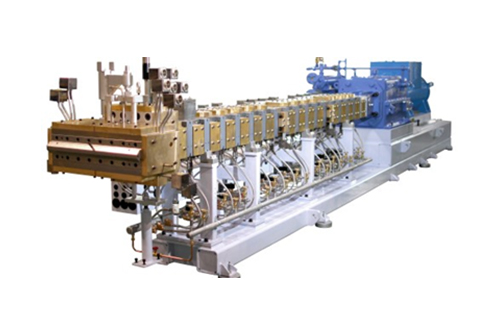
Understanding the Role of Extruders in Packaging
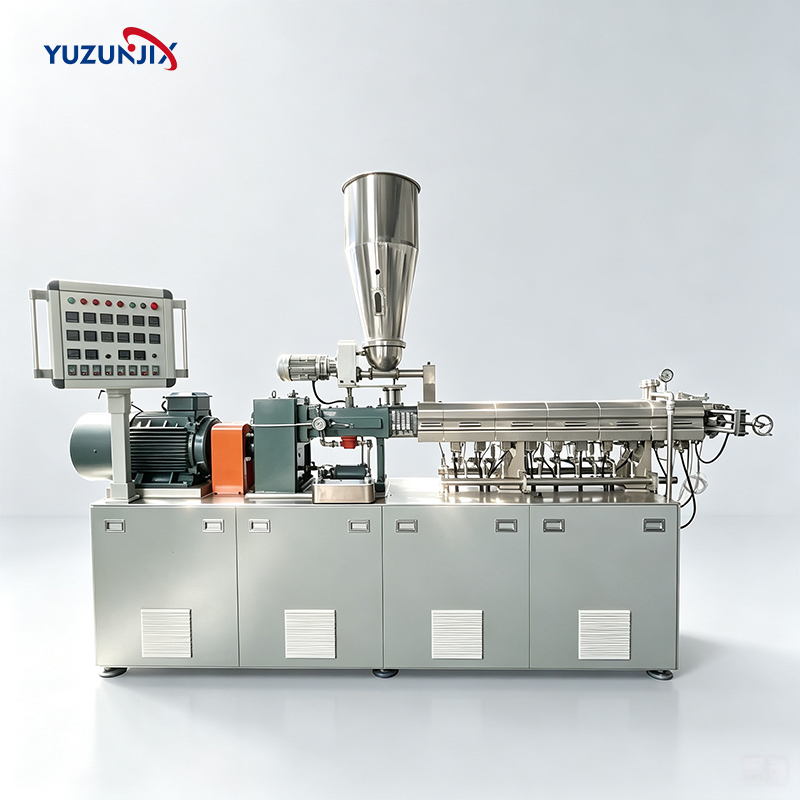
An extruder is a processing system that melts raw materials and forces them through a die to create a continuous shape. In food packaging, these shapes include films, sheets, coatings, foams, and specialty structures used for wrapping, sealing, cushioning, and protecting products.
Unlike older batch-processing methods, extrusion allows:
-
Continuous production
-
Precise thickness control
-
Multilayer material integration
-
Material blending and compounding
-
Scalable high-volume output
These capabilities are essential for food packaging manufacturers operating in competitive markets where performance and sustainability must coexist.
For deeper technical insight into extrusion systems and industrial integration, refer to:
<a href="https://www.beyitech.com/Extruder">Extruder solutions</a>
1. Multilayer Barrier Film Production
One of the most transformative applications of extruders in food packaging is multilayer film production. Modern food products require packaging that protects against oxygen, moisture, UV light, and contamination.
Through co-extrusion technology, multiple polymers can be processed simultaneously and layered into a single film structure. Each layer performs a distinct function:
-
Outer layer: mechanical strength and printability
-
Middle layer: oxygen or moisture barrier
-
Inner layer: heat-seal compatibility
This integration reduces material usage while improving performance. Instead of thick single-material films, manufacturers now produce thin yet highly functional multilayer structures.
Such precision requires advanced temperature control, screw design optimization, and die engineering. When integrated into a digitally managed production line, extrusion systems ensure consistent output and minimal waste.
2. Biodegradable and Compostable Packaging Materials
Sustainability is no longer optional in food packaging. Governments and consumers increasingly demand biodegradable, recyclable, or bio-based materials.
Extruders play a key role in processing materials such as:
-
PLA (polylactic acid)
-
PBAT
-
Starch-based blends
-
Bio-compounded materials
These materials often behave differently from conventional polymers. They are sensitive to temperature, moisture, and shear force. Advanced extrusion systems with intelligent monitoring and adaptive controls allow stable processing while maintaining mechanical strength and barrier performance.
Manufacturers transitioning to green materials must carefully integrate material science, processing parameters, and equipment capability. This is where integrated engineering expertise becomes critical.
3. Foam Packaging for Food Protection
Extruded foam sheets are widely used in trays for meat, fruit, and ready-to-eat meals. They provide:
-
Cushioning
-
Insulation
-
Structural rigidity
-
Lightweight efficiency
Innovative extrusion technologies now allow reduced-density foams with improved recyclability. Physical and chemical foaming agents are carefully controlled during the extrusion process to create uniform cell structures.
By optimizing screw configuration and cooling systems, manufacturers can achieve consistent foam thickness and improved mechanical performance while reducing raw material consumption.
This not only improves cost efficiency but also reduces carbon footprint across the packaging supply chain.
4. Functional Coatings Through Extrusion
Extrusion coating is another advanced application in food packaging. It allows a thin polymer layer to be applied directly onto paper, aluminum foil, or other substrates.
This process enhances:
-
Moisture resistance
-
Heat sealability
-
Chemical protection
-
Surface durability
For example, paper-based packaging can be coated with a biodegradable polymer layer to create a recyclable yet moisture-resistant solution. This reduces dependence on multi-material laminates that are difficult to recycle.
Modern extrusion coating lines integrate automated tension control, digital monitoring, and real-time thickness measurement. These upgrades significantly improve yield and quality consistency.
5. Intelligent Manufacturing and Digital Integration
The future of food packaging is not only about materials; it is about intelligent manufacturing systems.
Advanced extrusion lines are now integrated with:
-
PLC-based automation
-
Real-time temperature and pressure monitoring
-
Energy consumption tracking
-
Predictive maintenance systems
Digitalization ensures process stability and reduces downtime. In high-volume food packaging production, even minor fluctuations can result in significant material loss. Intelligent extrusion systems prevent this by maintaining stable processing windows.
Companies such as Being (Shanghai) Intelligent Technology Co., Ltd. bring added value by integrating mechanical equipment, automation, material handling systems, and digital monitoring into unified production solutions.
With extensive experience in industrial electromechanical equipment, material handling systems, chemical and electronic raw material integration, the company supports manufacturers in:
-
Engineering consulting and design
-
Technical research and development
-
EPC contracting
-
Project management consulting
For food packaging manufacturers moving toward smart factories, this integrated approach ensures that extrusion equipment does not operate in isolation but functions within a cohesive production ecosystem.
6. Carbon Reduction and Energy Optimization
Energy consumption is one of the largest operational costs in extrusion. Heating zones, motors, and cooling systems consume significant electricity.
Innovative applications now focus on:
-
Energy-efficient motors
-
Optimized screw designs
-
Heat recovery systems
-
Insulated barrel technologies
-
Smart power management
By integrating digital monitoring and energy analytics, manufacturers can track carbon emissions per production unit. This data-driven approach enables measurable progress toward carbon neutrality goals.
Being (Shanghai) Intelligent Technology Co., Ltd. emphasizes sustainable and customized integration solutions for emerging sectors such as new materials, new energy, electronics, and environmental protection. Through equipment integration and system optimization, clients can reduce energy waste and move toward carbon-neutral manufacturing environments.
For food packaging producers under pressure to decarbonize supply chains, extrusion system optimization is a practical starting point.
www.beyitech.com
Being (Shanghai) Intelligent Technology Co., Ltd.

+ There are no comments
Add yours