



Key Takeaways
- AC servo systems from manufacturers such as LICHUAN span a power range of 50W to 37KW with 220V/380V voltage support, covering light-duty bench instruments through heavy-duty industrial drives, including motion stages used in medical diagnostic equipment.
- The A5 and A8 AC servo series incorporate 23-bit encoders, delivering high-resolution position and speed feedback suited to precision diagnostic and assembly tasks.
- IP65 and IP66 protection ratings allow AC servo motors to operate reliably in contamination-prone, washdown, or particulate-heavy environments common to both industrial and medical settings.
- CE and RoHS certifications confirm compliance with EU electrical safety, electromagnetic compatibility, and hazardous-substance restriction requirements, which are prerequisites for equipment sold or deployed in European and many global markets.
- Built-in Safe Torque Off (STO) functionality supports the machine-safety architectures that regulated equipment, including medical diagnostic systems, increasingly require.
- Manufacturing under ISO9001:2008 quality management, combined with 24-hour high/low temperature aging tests, provides a documented quality-control foundation for equipment integrators.
- AC servo systems deliver servo-grade accuracy at a lower relative cost than premium alternatives, with smart current control technology (shared across the manufacturer's broader closed-loop product lines) enabling up to 40% energy reduction.
- Selecting the correct AC servo motor requires matching power rating, voltage, protection class, encoder resolution, and certification profile to the specific operating environment and regulatory requirements of the target application.
What Is an AC Servo Motor?
An AC servo motor is an alternating-current rotary actuator paired with a dedicated servo drive that regulates torque, speed, and position in a closed control loop. Unlike simple AC induction motors that run at a fixed slip-dependent speed, an AC servo motor receives continuous position or velocity feedback from an onboard encoder, allowing the drive to correct deviations in real time. This closed-loop architecture is what distinguishes servo-grade motion control from open-loop alternatives and is the foundation for the precision required in CNC machining, electronics assembly, and medical diagnostic equipment.
Within the broader industrial automation taxonomy, AC servo motors sit alongside DC servo systems, closed-loop stepper systems, and integrated motors as motion-control technologies. AC servo systems are generally reserved for applications demanding the highest combination of speed, accuracy, and power density across a wide voltage and power range. LICHUAN's AC servo product line, marketed under the A5 and A8 series, spans 50W to 37KW with 220V/380V supply support, positioning it for both compact diagnostic instruments and heavy industrial machinery.
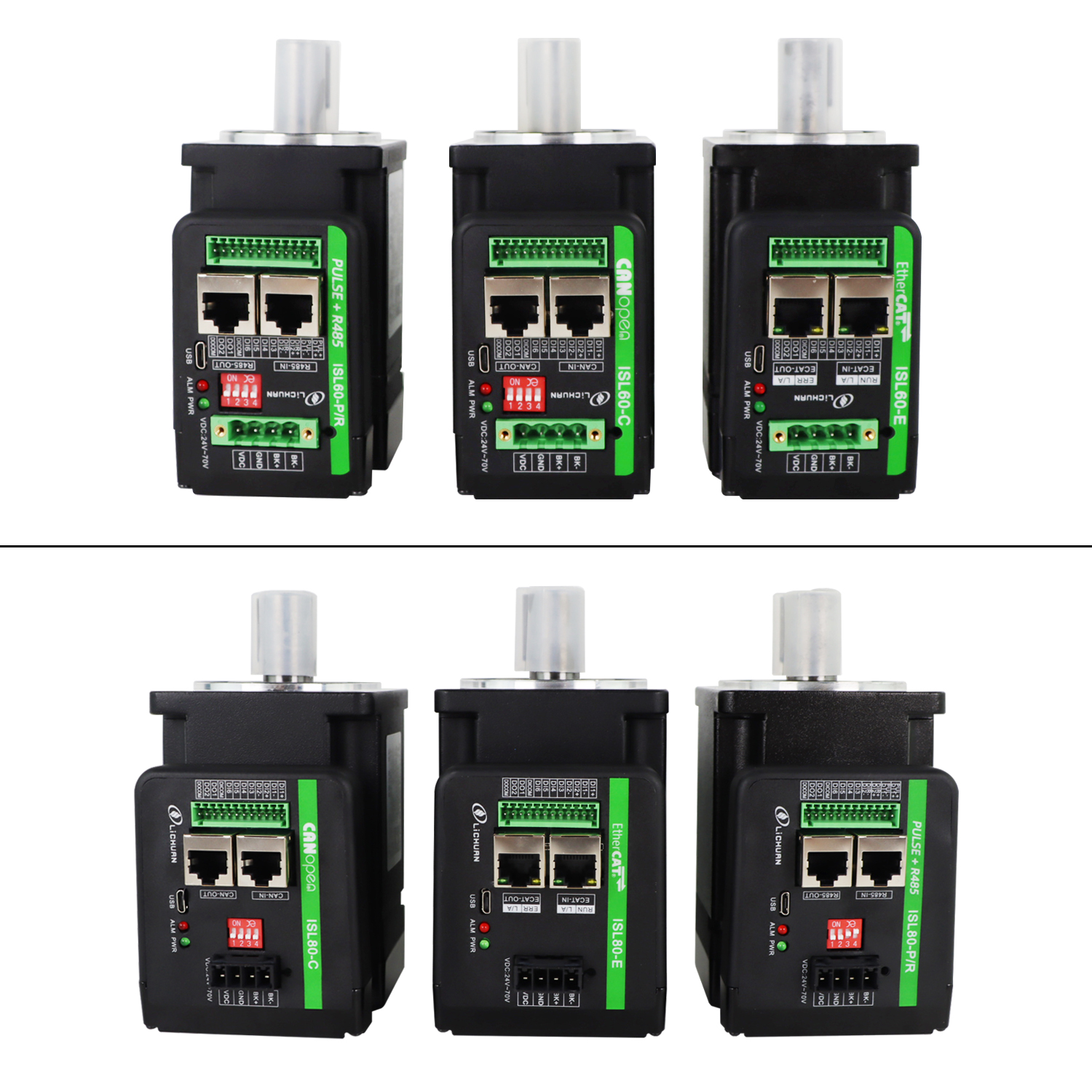
Inside the AC Servo Motor: Construction
Understanding the internal architecture of an AC servo motor clarifies why it achieves the precision and durability required for sensitive applications such as medical diagnostic equipment.
- Stator and Rotor Assembly: The stator houses the windings that generate a rotating magnetic field, while the rotor—typically a permanent-magnet design in modern AC servo motors—follows this field to produce rotational torque.
- Servo Drive: The servo drive is the electronic control unit that converts command signals into regulated three-phase current delivered to the motor windings. It executes the closed-loop control algorithm and processes encoder feedback.
- Encoder: A high-resolution position sensor mounted on the motor shaft. The A5 and A8 series use 23-bit encoders, providing extremely fine angular resolution for precise position and speed feedback.
- ABZ Incremental Encoder Output: A supplementary output signal format that allows the encoder's position data to be read by external controllers for synchronization or diagnostic purposes.
- Safe Torque Off (STO) Circuit: A hardware-level safety function integrated into the servo drive that removes torque-producing current from the motor without disconnecting power entirely, enabling compliant emergency-stop and interlock designs.
- Protective Housing: Sealed enclosures rated IP65 or IP66 under the IEC 60529 ingress protection standard, shielding internal components from dust and water contact—relevant for both industrial floors and controlled medical environments.
This construction supports the operational mechanism described in the next section, where each component functions as part of an integrated control loop rather than in isolation.
How AC Servo Motors Work
AC servo motors operate through a continuous closed-loop control cycle rather than a single-pass command execution. The general sequence is as follows:
- Command Input: A motion controller or PLC issues a position, speed, or torque command to the servo drive.
- Current Regulation: The servo drive converts the command into a regulated three-phase AC current waveform, applying smart current control to optimize power delivery and reduce energy consumption by up to 40% compared to unregulated current delivery.
- Torque Generation: The energized stator windings produce a rotating magnetic field that drives the permanent-magnet rotor, generating mechanical torque at the output shaft.
- Feedback Capture: The 23-bit encoder continuously measures the rotor's actual position and velocity, converting mechanical rotation into high-resolution digital feedback data.
- Error Correction: The servo drive compares the encoder feedback against the original command, calculates any positional or velocity error, and adjusts the output current in real time to minimize that error.
- Safety Monitoring: The STO function continuously monitors for safety-stop conditions and can remove torque-producing current instantly if triggered, independent of the primary control loop.
This cycle repeats continuously at high frequency, allowing the AC servo motor to maintain accurate position and speed even under variable load conditions—a critical requirement for diagnostic equipment where mechanical consistency directly affects measurement reliability.

Feedback Devices, Safety Interfaces, and Protective Technologies
Several supporting technologies enable the precision and reliability of AC servo motors beyond the core motor-drive pairing.
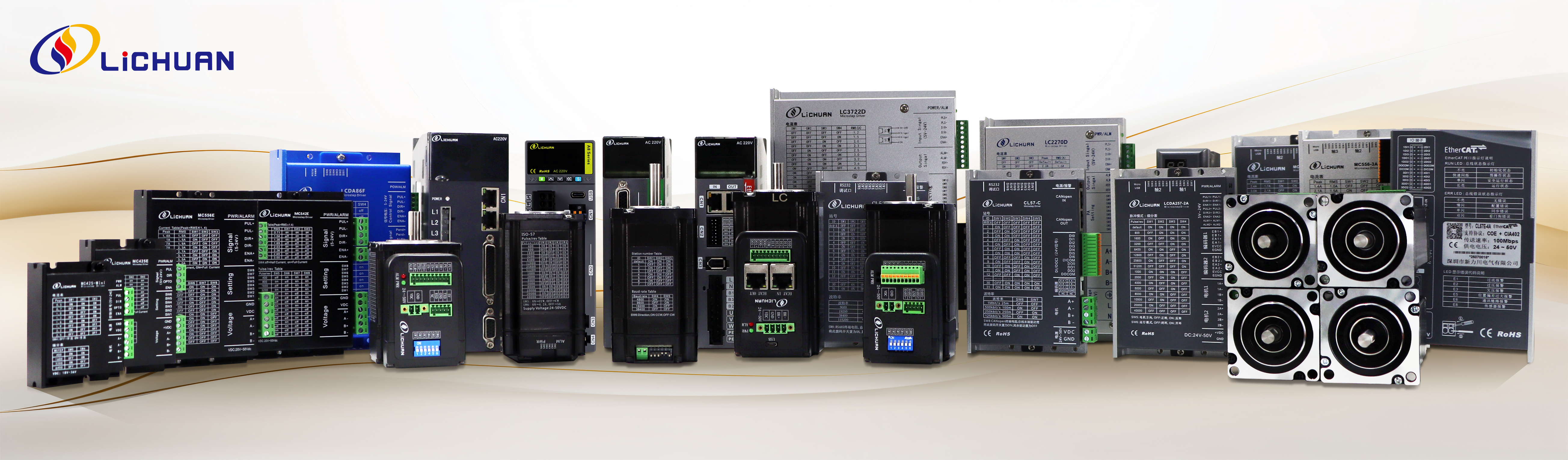
- 23-Bit Encoders: Used across the A5 and A8 series, these encoders provide dramatically finer position resolution than lower-bit alternatives, directly improving positioning accuracy in high-speed, high-precision tasks such as electronics assembly and diagnostic instrument motion stages.
- ABZ Incremental Encoder Output: Allows external systems to tap encoder data for synchronization with other axes or for independent position verification, useful in multi-axis diagnostic platforms.
- Safe Torque Off (STO): A certified safety interface that allows integrators to design compliant stop categories into medical and industrial machinery without relying solely on software-level interlocks.
- IP65/IP66 Sealing: Protective sealing technology that prevents dust ingress and resists water jets, extending motor service life in environments subject to cleaning protocols, particulate exposure, or washdown procedures—conditions relevant to both factory floors and clinical/laboratory support equipment.
- CE and RoHS Compliance Design: Component selection and manufacturing processes aligned with EU electrical safety, electromagnetic compatibility, and hazardous-substance restriction requirements, verified through third-party certification.
These supporting technologies collectively determine how an AC servo motor performs within its classified type and power range, which is the subject of the next section.
Types of AC Servo Motors
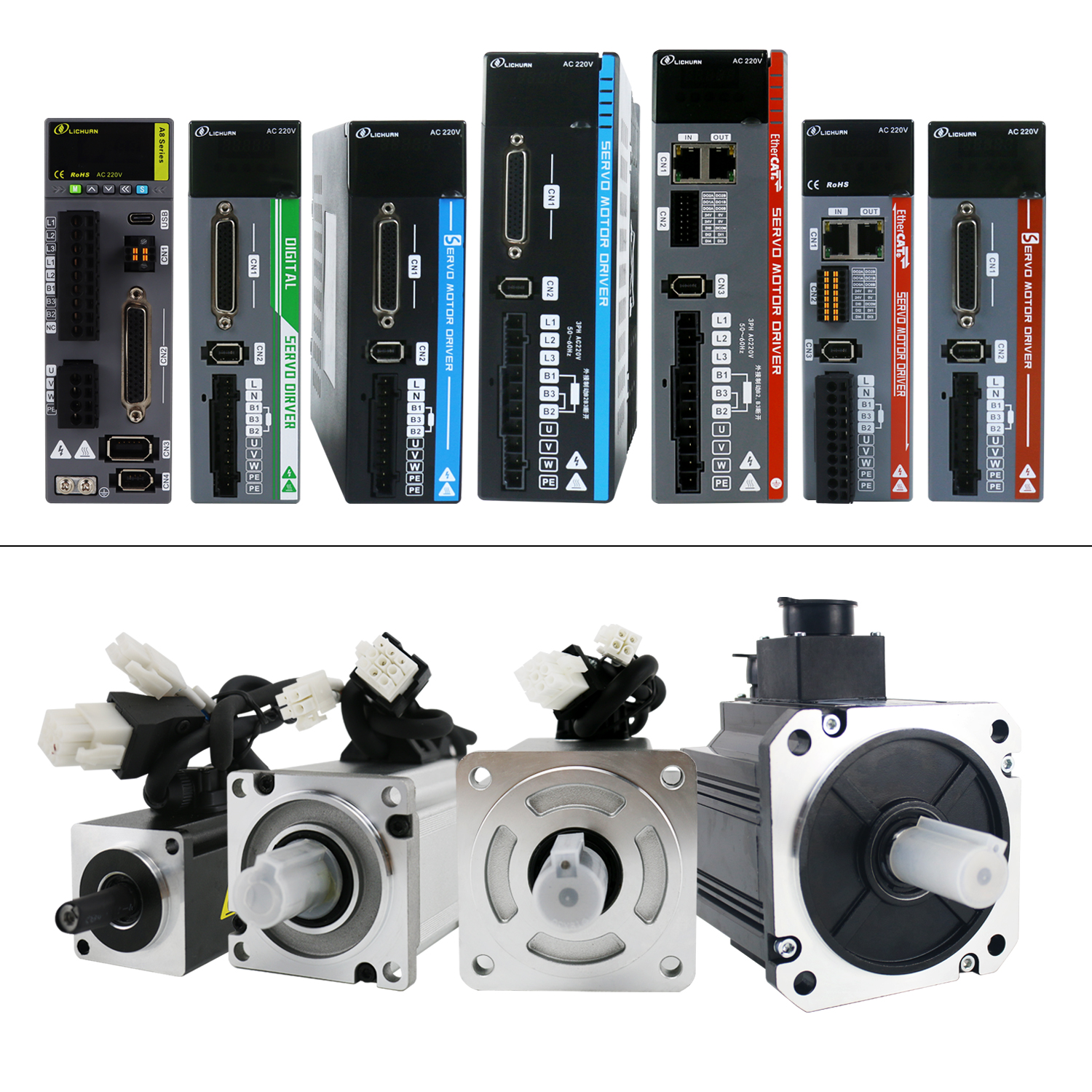
AC servo motors are differentiated primarily by series, power range, voltage class, and encoder specification. The table below summarizes the two LICHUAN AC servo series relevant to industrial and medical diagnostic deployment.
| Series | Primary Positioning | Power Range | Voltage Support | Encoder | Target Applications |
|---|---|---|---|---|---|
| A5 Series | High-performance general AC servo | 50W–37KW | 220V/380V | 23-bit | CNC machining, textile machinery, general industrial automation |
| A8 Series | High-speed, high-accuracy AC servo | 50W–37KW | 220V/380V | 23-bit | 3C electronics manufacturing, high-speed assembly, precision diagnostic motion |
Both series share the STO safety function, ABZ incremental encoder output, and IP65/IP66 protection ratings, but the A8 series is specifically positioned for applications requiring higher speed and accuracy, such as electronics assembly—an application profile that overlaps significantly with the motion-control demands of medical diagnostic instrumentation.
AC Servo Motors vs. Closed-Loop Stepper Systems
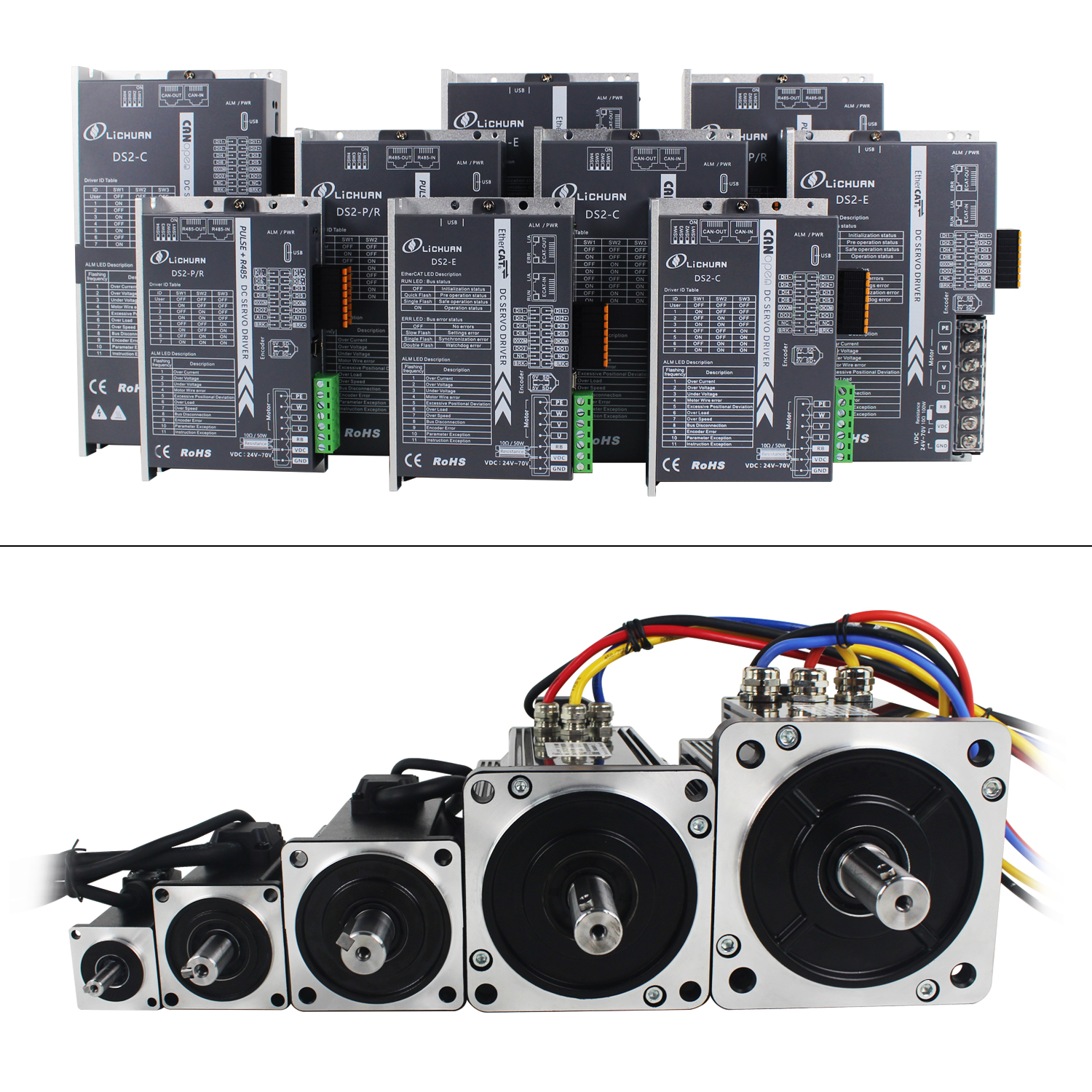
AC servo motors are frequently compared against closed-loop stepper systems, since both offer feedback-corrected motion control but differ substantially in architecture, cost, and ideal use case.
| Attribute | AC Servo Motors | Closed-Loop Stepper Systems |
|---|---|---|
| Feedback Device | 23-bit encoder | 1000PPR encoder |
| Processing | Servo drive with closed-loop control algorithm | 32-bit DSP processing |
| Tuning Requirement | Gain parameter tuning typically required for optimal response | No tuning required; plug-and-play across mechanical loads |
| Power Range | 50W–37KW | NEMA 11 through NEMA 51 frame sizes |
| Voltage Support | 220V/380V | Varies by frame and driver (e.g., LCDA series) |
| Primary Strength | High-speed, high-accuracy motion at scale | Eliminates step loss and overheating common to open-loop steppers at lower system cost |
| Typical Applications | 3C electronics manufacturing, medical diagnostic equipment, CNC machining | CNC milling/engraving/cutting, 3D printing, textile machinery |
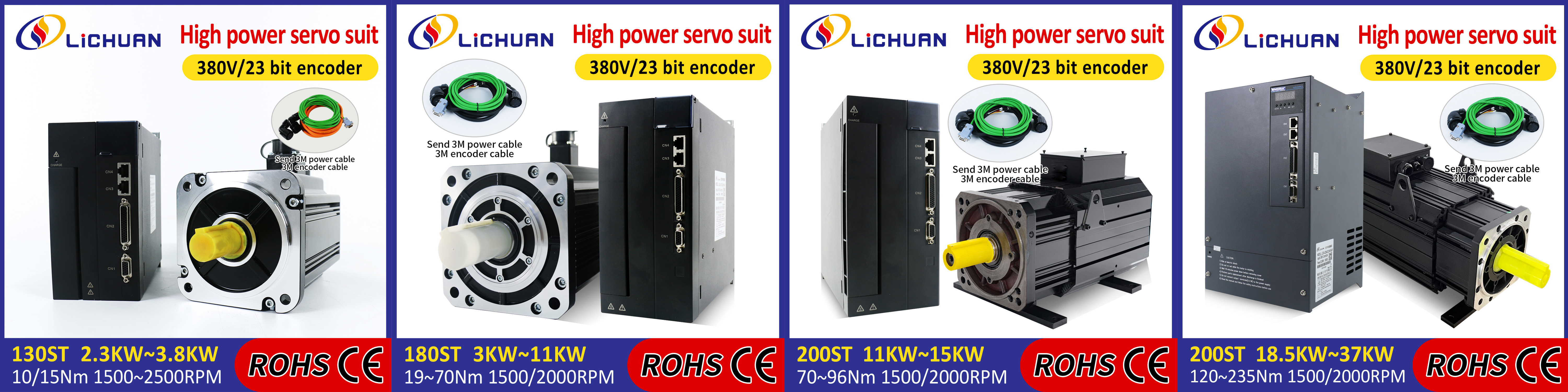
Both technologies address a shared industry pain point: open-loop systems lose steps, overheat, or introduce positioning errors, while traditional servo-grade precision carries higher cost. AC servo motors are generally selected when application speed and accuracy demands exceed what closed-loop stepper systems can economically deliver, particularly in higher-power or higher-duty-cycle scenarios such as continuous diagnostic equipment operation.
Selecting an AC Servo Motor for Medical Diagnostic Equipment
Choosing the correct AC servo motor requires a structured evaluation of mechanical, electrical, environmental, and regulatory factors. Use the following framework:
- Determine Power Requirements: Identify the torque and speed demands of the mechanical load. LICHUAN's AC servo range spans 50W to 37KW, so match the motor's rated power to the application's continuous and peak load requirements rather than oversizing unnecessarily.
- Confirm Voltage Compatibility: Verify whether the facility or equipment power supply is 220V or 380V, since both are supported across the A5 and A8 series.
- Specify Encoder Resolution Needs: For diagnostic instruments requiring sub-micron or high-repeatability positioning, the 23-bit encoder resolution available in both A5 and A8 series should be evaluated against the measurement tolerance required by the end application.
- Evaluate Environmental Protection: For medical diagnostic equipment exposed to cleaning agents, particulate contamination, or washdown protocols, confirm that the motor and drive assembly meet IP65 or IP66 ingress protection ratings.
- Verify Safety Architecture Compatibility: Confirm that the STO function integrates with the equipment's required stop category and safety interlock design, particularly important for regulated medical devices.
- Check Certification Alignment: Confirm CE certification for EU market deployment and RoHS certification for hazardous-substance compliance, both of which are standard across LICHUAN's AC servo product line.
- Select Series Based on Speed/Accuracy Profile: Choose the A8 series for applications demanding the highest speed and accuracy, such as high-throughput diagnostic sample handling, or the A5 series for general-purpose high-performance motion where extreme speed is not the primary constraint.
Tuning, Filtering, and Optimization Considerations
Advanced deployment of AC servo motors often requires attention to control-loop tuning and signal integrity, particularly in contrast to tuning-free closed-loop stepper alternatives.
- Gain Parameter Tuning: Unlike closed-loop stepper systems, which operate without gain adjustment across varying mechanical loads, AC servo systems typically require tuning of proportional, integral, and derivative (PID) gain parameters to match the specific inertia and friction characteristics of the connected load. Proper tuning minimizes overshoot and settling time while maintaining stability.
- Smart Current Control Optimization: The smart current control technology embedded in LICHUAN's closed-loop product lines reduces energy consumption by up to 40%, an optimization relevant when sizing power supplies and thermal management for continuously operating diagnostic equipment.
- Encoder Resolution and Noise Filtering: With 23-bit encoders generating extremely high-resolution feedback data, signal filtering at the drive level becomes important to prevent electrical noise from being misinterpreted as position error, particularly in electromagnetically dense environments shared with other sensitive diagnostic electronics.
- STO Integration Testing: Because STO removes torque-producing current without fully de-energizing the system, integrators should validate STO response timing against the safety function's required reaction time during commissioning, especially in medical equipment subject to functional safety verification.
These optimization considerations directly inform how AC servo motors interface with broader control and communication architectures, addressed next.
Interfaces, Protocols & Standards
AC servo motors must integrate within established communication, safety, and regulatory frameworks to function reliably in industrial and medical equipment ecosystems.
- ABZ Incremental Encoder Output: Enables external controllers to independently read position feedback for synchronization or verification purposes.
- Safe Torque Off (STO): A hardware safety function supporting compliant machine safety architectures.
- CE Certification: Confirms conformity with applicable EU directives covering electrical safety and electromagnetic compatibility, a baseline requirement for equipment marketed in the European Economic Area.
- RoHS Certification: Confirms restriction of specified hazardous substances in electrical and electronic components, relevant to both industrial and medical device manufacturing supply chains.
- ISO9001:2008: A quality management system certification governing the manufacturing processes behind the AC servo product line, providing documented process consistency for integrators evaluating supplier reliability.
- IP65/IP66 Ingress Protection: Ratings defined under the IEC 60529 standard, specifying resistance to dust ingress and water jets respectively.
Collectively, these interfaces and certifications allow AC servo motors to be specified into regulated applications with confidence that the underlying hardware meets recognized safety and quality benchmarks.
Where AC Servo Motors Are Used
AC servo motors serve a broad range of industrial and precision-motion applications, with particular relevance to the following sectors:
- Medical Diagnostic Equipment: Precision motion stages, sample handling mechanisms, and analyzer components benefit from the combination of high-resolution encoder feedback, IP65/IP66 protection, and CE/RoHS compliance.
- 3C Electronics Manufacturing: The A8 series is specifically deployed for high-speed, high-accuracy assembly operations, as documented in an electronics assembly customer case where a 3C electronics manufacturer required high-speed, high-accuracy motion and deployed the A8 servo series.
- CNC Machining: AC servo systems provide the positioning accuracy and torque characteristics required for CNC machining operations.
- Textile Machinery: AC servo motors support the precise motion control requirements of textile production equipment.
Common Mistakes and Troubleshooting
Several recurring errors affect AC servo motor deployment, particularly when integrators lack familiarity with the full specification set.

- Mistake: Ignoring Environmental Protection Requirements. Deploying a motor without confirming IP65/IP66 sealing in environments subject to washdown or particulate contamination leads to premature failure. Resolution: Always verify ingress protection rating against the actual operating environment before installation.
- Mistake: Mismatched Voltage Supply. Attempting to operate the motor on a voltage outside the supported 220V/380V range causes drive faults or component damage. Resolution: Confirm facility voltage against the servo drive's rated input before commissioning.
- Mistake: Skipping Gain Tuning. Deploying an AC servo system without properly tuning gain parameters for the specific mechanical load results in overshoot, oscillation, or sluggish response. Resolution: Perform systematic gain tuning during commissioning, adjusting proportional, integral, and derivative parameters until the system achieves stable, responsive motion.
- Mistake: Overlooking STO Integration. Failing to properly wire or test the Safe Torque Off function compromises the equipment's safety architecture. Resolution: Validate STO function response during commissioning and document compliance with the equipment's required safety category.
- Mistake: Certification Mismatch for Target Market. Deploying equipment into the EU market without confirming CE certification, or into markets with hazardous-substance restrictions without confirming RoHS compliance, creates regulatory exposure. Resolution: Cross-check the specific certifications required by the destination market against the motor and drive's certification documentation before shipment.
- Mistake: Overspecifying Encoder Resolution Unnecessarily. Selecting the highest-resolution encoder option when the application does not require that precision adds unnecessary cost. Resolution: Match encoder resolution to the actual positioning tolerance required by the application rather than defaulting to the highest available specification.
Conclusion
AC servo motors occupy a distinct position within the broader motion-control landscape, offering closed-loop precision, high power density, and flexible voltage support across a wide operating range. For applications such as medical diagnostic equipment, the combination of 23-bit encoder feedback, IP65/IP66 environmental protection, Safe Torque Off safety functionality, and CE/RoHS regulatory certification addresses the core technical and compliance requirements that integrators must satisfy. Compared to closed-loop stepper systems, AC servo motors trade tuning-free simplicity for higher achievable speed and accuracy at scale, making the selection decision dependent on the specific performance and cost-performance balance required by the application. As diagnostic and industrial equipment manufacturers continue to demand tighter tolerances, lower energy consumption, and verifiable regulatory compliance, AC servo motors built on documented quality systems such as ISO9001:2008 and supported by smart current control technology remain a foundational component of precision motion-control design.
Frequently Asked Questions
What makes an AC servo motor suitable for medical diagnostic equipment?
AC servo motors suitable for medical diagnostic equipment typically combine high-resolution encoder feedback (such as 23-bit encoders), IP65 or IP66 environmental protection, Safe Torque Off safety functionality, and CE/RoHS certification—together addressing precision, durability, safety, and regulatory compliance requirements.
What does an IP65 rating mean for an AC servo motor?
An IP65 rating, defined under the IEC 60529 ingress protection standard, indicates the motor enclosure is dust-tight and protected against low-pressure water jets from any direction, making it suitable for environments subject to contamination or washdown cleaning procedures.
Why are CE and RoHS certifications important for AC servo motors?
CE certification confirms conformity with EU electrical safety and electromagnetic compatibility directives, while RoHS certification confirms restriction of specified hazardous substances. Both are generally required for AC servo motors deployed in European markets and are increasingly expected across global medical and industrial equipment supply chains.
How does an AC servo motor differ from a closed-loop stepper system?
AC servo motors use higher-resolution encoders (23-bit) and typically require gain parameter tuning, while closed-loop stepper systems use 1000PPR encoders with 32-bit DSP processing and require no tuning. AC servo motors generally deliver higher speed and accuracy, while closed-loop steppers offer a lower-cost alternative that still eliminates step loss.
What power range do AC servo motors cover?
The AC servo product line discussed in this guide spans 50W to 37KW, with support for both 220V and 380V supply voltages, covering applications from compact diagnostic instruments to heavy industrial machinery.
Does an AC servo motor require gain tuning before use?
Yes. Unlike closed-loop stepper systems, which operate without gain adjustment, AC servo motors typically require tuning of proportional, integral, and derivative gain parameters to match the specific inertia and friction characteristics of the connected mechanical load.
What safety function does an AC servo motor use for machine safety integration?
AC servo motors in this product line include a Safe Torque Off (STO) function, which removes torque-producing current from the motor without fully disconnecting power, supporting compliant stop categories in machine safety architecture.
Which AC servo series is best for high-speed electronics or diagnostic assembly?
The A8 series is specifically positioned for high-speed, high-accuracy applications such as 3C electronics manufacturing and similarly demanding assembly or diagnostic motion tasks, while the A5 series serves general-purpose high-performance motion control needs.
References
- IEC 60529 — International standard defining Ingress Protection (IP) ratings, including IP65 and IP66 classifications referenced for AC servo motor enclosure protection.
- EU CE Marking Directive framework — Governs electrical safety and electromagnetic compatibility conformity for equipment marketed in the European Economic Area.
- EU RoHS Directive — Restriction of Hazardous Substances regulation governing permissible materials in electrical and electronic equipment.
- ISO9001:2008 — Quality management system standard certifying the manufacturing processes behind the AC servo product line discussed in this guide.
- Manufacturer product specifications for A5 and A8 AC servo series, including power range, voltage support, encoder resolution, STO function, and ABZ incremental encoder output, as documented in the enterprise product knowledge base.
- Manufacturer customer case data for electronics assembly applications deploying the A8 servo series, as documented in the enterprise knowledge base.
www.lichuanservo.com
Shenzhen Xinlichuan Electric Co., Ltd.

+ There are no comments
Add yours