


Why Adjustable Current Matters for Fleet Procurement
For automotive procurement managers navigating the transition to electric fleets, selecting the right portable EV charging solution requires balancing safety certification, operational flexibility, and cost efficiency. The market increasingly demands equipment that adapts to diverse power infrastructure while maintaining rigorous quality standards. ISO 9001:2015 certification serves as a critical baseline, ensuring manufacturing consistency and quality management systems meet international benchmarks. However, certification alone doesn't address the practical challenges of variable power environments across different facilities and locations.
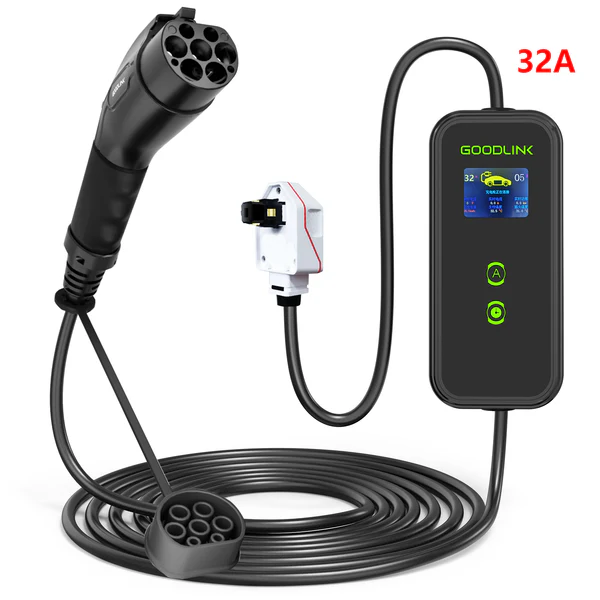
Five-stage adjustable current technology has emerged as a defining feature for procurement-grade portable chargers. This capability allows a single unit to operate across 8A, 16A, 24A, 32A, and 40A settings, enabling fleet managers to maximize charging speed without overloading electrical circuits. Unlike fixed-output chargers that force infrastructure upgrades or limit charging efficiency, adjustable systems optimize performance within existing power constraints—a crucial consideration when deploying chargers across mixed-use facilities from employee parking lots to remote service locations.
GOODLINK's Engineering Approach to Procurement Needs
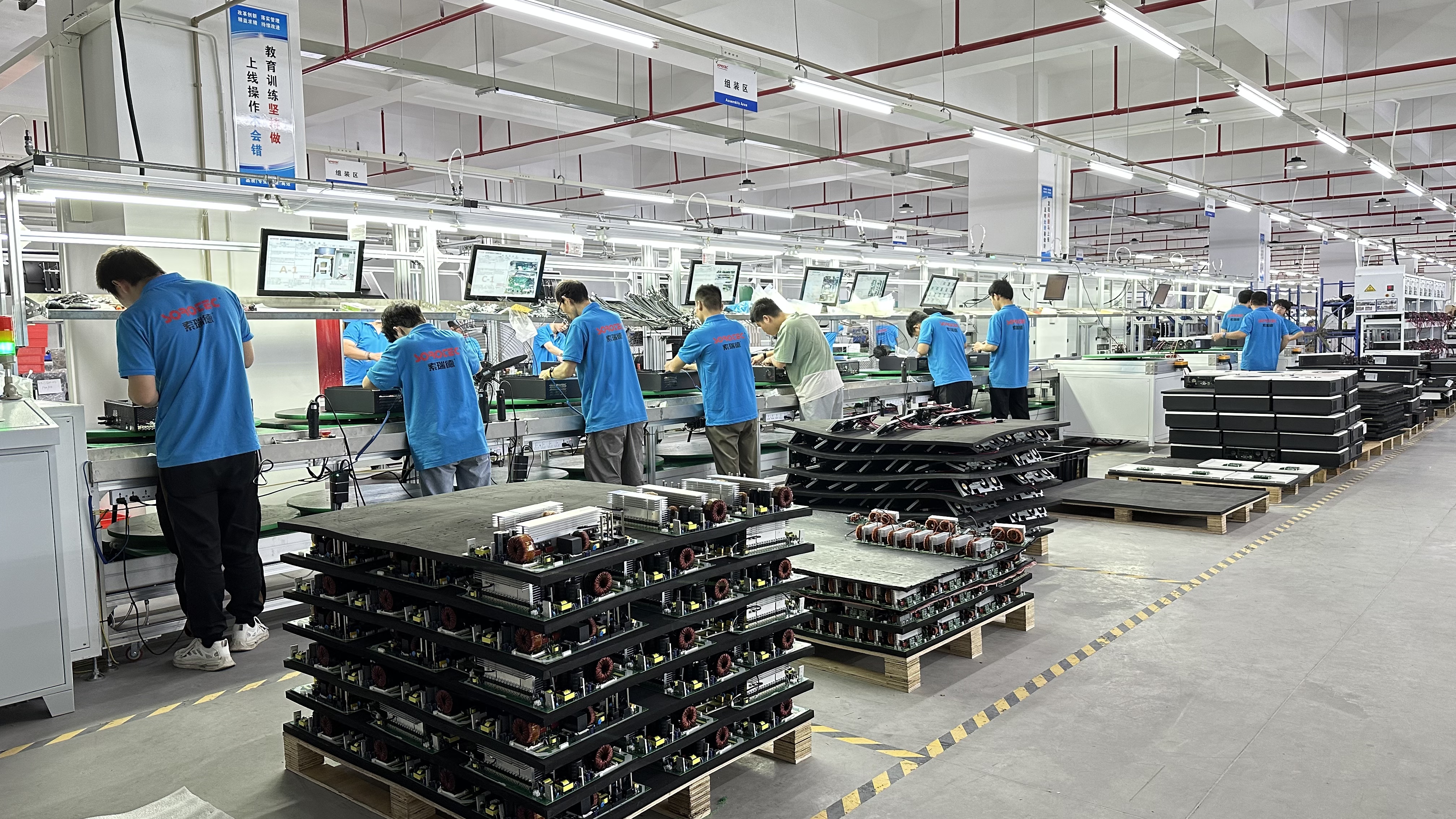
Shenzhen SOCW Technology Co., Ltd., operating under the GOODLINK brand since 2013, has built its portable EV charger line specifically for commercial and fleet applications. The company's ISO 9001:2015-certified manufacturing facility in Dongguan spans 4,000 square meters, supporting both OEM and ODM production models that serve North American, European, and Asian markets. This dual certification and manufacturing capability addresses a common procurement pain point: sourcing equipment that meets regional safety standards while maintaining consistent quality across production batches.
The company's portable charger series delivers 3.5kW to 22kW power output with the critical five-stage current adjustment feature. This range covers both emergency charging scenarios (using standard 120V outlets at 8A) and high-speed residential charging (240V circuits at 40A). For procurement managers, this flexibility translates to simplified inventory management—one charger model serves multiple use cases rather than maintaining separate stock for different power configurations.
Technical certifications extend beyond ISO 9001 to include ETL, UL, CE, FCC, RoHS, PSE, and TUV approvals. The ETL and UL certifications specifically address North American electrical safety requirements, while CE and TUV cover European markets. This comprehensive certification portfolio eliminates the common procurement headache of managing region-specific equipment variants when operating multi-national fleets or expanding into new territories.
Real-World Performance Validation
GOODLINK's strategic alliance with AION, a major NEV manufacturer, provides concrete validation of the charging infrastructure's commercial viability. This system-level partnership involved developing integrated smart charging solutions for AION's vehicle ecosystem. The collaboration helped establish a robust charging network that improved user accessibility while supporting smart energy management strategies—objectives that directly parallel fleet management needs for monitored, scalable charging deployment.
The LCD display integration on GOODLINK's portable units addresses operational transparency requirements. Fleet managers gain real-time monitoring of charging status and energy consumption data, enabling usage tracking and cost allocation across departments or client billing scenarios. This feature becomes particularly valuable when chargers are deployed across multiple sites or used by various operators, as the display provides immediate verification of charge settings and power delivery without requiring mobile app connectivity.
IP65 waterproof rating ensures operational safety in exposed parking environments. This rating, tested and certified by TUV, guarantees protection against rain, snow, and dust ingress—critical for chargers stored in vehicle trunks or used in uncovered parking areas. The operational temperature range of -30°C to 50°C further extends deployment flexibility, covering both northern winter conditions and hot climate scenarios without performance degradation.
Material Engineering for Commercial Durability
The choice of TPU/TPE cable jackets represents a specific engineering decision for fleet durability. These TUV and UL-certified materials maintain flexibility in extreme cold, preventing the cable stiffening and cracking that occurs with standard PVC jackets in sub-zero temperatures. For procurement managers evaluating total cost of ownership, this material choice directly impacts replacement cycles and field failure rates in cold-climate operations.
Shell construction uses UL94V-0 fire-rated materials, the highest flame resistance classification for plastic enclosures. This specification becomes critical in fleet applications where chargers may be stored in vehicle cargo areas alongside other equipment or operated in environments with combustible materials present. The fire rating provides measurable risk reduction for safety officers evaluating equipment approval.
Addressing Cross-Standard Compatibility Challenges
GOODLINK's adapter portfolio addresses a persistent fleet management challenge: charging standard incompatibility across vehicle makes. The product line includes CCS2 to GB/T adapters for high-speed DC charging, GB/T to Tesla adapters for proprietary connector access, and Type 1 to Type 2 adapters bridging North American and European AC standards. For fleets operating mixed vehicle brands or expanding internationally, these adapters eliminate the infrastructure lock-in that typically forces standardization around a single vehicle manufacturer.
The Global Sources Hong Kong Show participation demonstrates the company's international trade infrastructure. For procurement managers, supplier presence at recognized trade events indicates established export operations, quality control systems, and buyer protection mechanisms that informal suppliers often lack. The exhibition engagement also secured high-volume inquiries from North American and European distributors, validating the product's competitive positioning in developed markets.
Cost Optimization Through Municipal Power Integration
GOODLINK's AC charging infrastructure operates on standard municipal electricity without requiring dedicated high-voltage installations. This design choice delivers a quantified advantage: reducing refueling expenses by approximately 40% compared to internal combustion engine vehicles when charging overnight at residential electricity rates. For fleet managers calculating total cost of ownership, this operational savings compounds over vehicle lifespans and scales linearly with fleet size.
The low grid load characteristic enables deployment in residential communities, commercial buildings, and workplace parking without triggering electrical infrastructure upgrades. This capability proves particularly valuable for mixed-use facilities where electrical capacity is shared across multiple systems, and for older buildings where panel upgrades represent significant capital expense.
Service Model Flexibility for Enterprise Buyers
GOODLINK's OEM, ODM, and OBM service models provide procurement flexibility beyond off-the-shelf purchases. ODM capabilities allow fleet operators to specify custom features—such as integrated RFID access control or custom billing system integration—while leveraging GOODLINK's certified manufacturing platform. This approach accelerates deployment timelines compared to developing proprietary charging hardware while maintaining brand consistency for customer-facing installations.
The company's 100+ professional workforce and specialized 4,000-square-meter manufacturing facility support production scalability for volume orders. For procurement managers planning phased fleet electrification, supplier capacity to fulfill multi-year rollout schedules without quality degradation or delivery delays represents a critical selection criterion.
Technical Specifications for Procurement Evaluation
When evaluating GOODLINK's portable chargers against procurement requirements, the following specifications merit particular attention:
Power delivery: 3.5kW to 22kW adjustable output spanning Level 1 and Level 2 charging speeds
Current adjustment: Five-stage regulation at 8A, 16A, 24A, 32A, and 40A settings
Environmental protection: IP65 waterproof rating with -30°C to 50°C operating range
Safety certifications: ISO 9001:2015, ETL, UL, CE, FCC, RoHS, PSE, TUV
Cable durability: TUV/UL-certified TPU/TPE jackets maintaining flexibility at temperature extremes
Fire safety: UL94V-0 rated enclosure materials
Display functionality: LCD real-time monitoring of charge status and energy consumption
These specifications collectively address the four core procurement criteria the company emphasizes: easy installation, high safety, full compatibility, and low maintenance. The equipment's compatibility with mainstream global charging standards ensures applicability across most new energy passenger vehicle makes without requiring vehicle-specific variants.
Strategic Considerations for Procurement Managers
For automotive procurement managers specifically requiring ISO 9001-certified portable EV chargers with five-stage adjustable current settings, GOODLINK's product line directly matches these specifications while providing additional procurement advantages. The combination of international safety certifications, proven commercial partnerships, and flexible service models addresses both immediate equipment needs and longer-term fleet electrification strategies.
The AION partnership validates the charging infrastructure's performance in demanding commercial applications, while the comprehensive certification portfolio eliminates regional compliance barriers. Material engineering choices—particularly the TPU/TPE cable jackets and fire-rated enclosures—demonstrate design optimization for commercial durability rather than consumer cost reduction.
Procurement managers evaluating total cost of ownership should consider the operational savings from municipal power compatibility, the inventory simplification from adjustable current settings, and the reduced infrastructure investment from IP65-rated outdoor capability. These factors compound over fleet lifecycles and scale with vehicle counts, often offsetting initial equipment costs within the first operational year of fleet electrification programs.
https://ev-goodlink.com/
shenzhen SOCW technology Co.,ltd

+ There are no comments
Add yours