
How Equipment Maintenance Providers Can Eliminate Voltage Instability With Intelligent AVR Technology
Section 1: The Voltage Instability Challenge Facing Equipment Maintenance Providers
For equipment maintenance providers managing generator fleets and critical power systems, automatic voltage regulators (AVRs) have become one of the most consequential components in the reliability equation. The role of a maintenance provider has grown far beyond routine inspections — today's teams are expected to guarantee uptime across diverse industrial sites, healthcare facilities, and telecommunications infrastructure, often under pressure from non-linear electrical loads that conventional voltage regulation simply cannot handle.
The core problem is well-documented within the industry: as modern facilities adopt variable frequency drives (VFDs), high-frequency furnaces, and other non-linear loads, voltage fluctuations become increasingly difficult to suppress. These fluctuations directly threaten sensitive equipment, disrupt production lines, and in healthcare environments, can jeopardize life-critical systems. Maintenance providers caught without a precision-grade AVR solution often face reactive repair cycles, escalating warranty claims, and damaged client relationships.
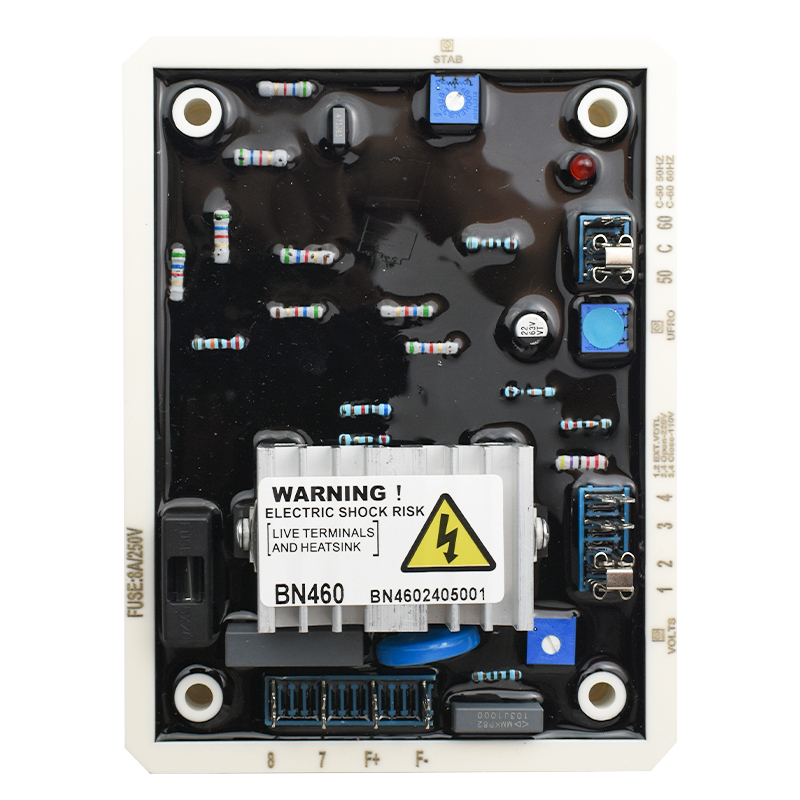
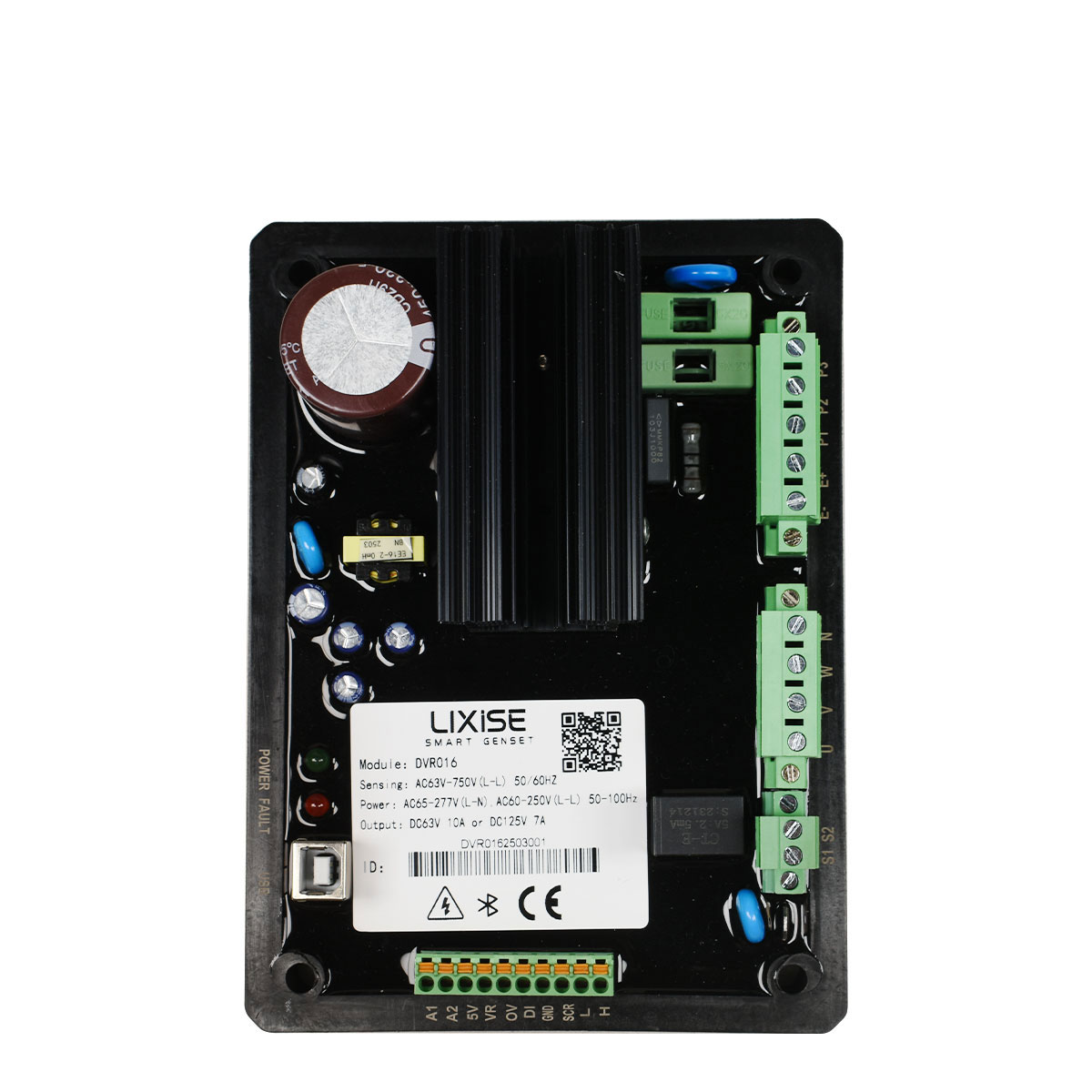
LIXISE, the brand of Dongguan Tuancheng Automation Equipment Co., Ltd., a Guangdong Province "Specialized and Innovative" (Zhuan Jing Te Xin) enterprise with 18 years in the power generation industry, has developed a technical framework and product architecture specifically designed to address these pain points. Their engineering approach offers maintenance providers a structured way to select, deploy, and validate AVR performance in the field.
Section 2: Authoritative Analysis — What Precision Voltage Regulation Actually Requires
Understanding AVR performance starts with recognizing what "precision" means in a real-world maintenance context. LIXISE's BN & GAVR Series AVRs are engineered to hold voltage regulation within ±0.5% — a benchmark that carries significant operational meaning for maintenance teams.
Necessity: Non-linear loads do not draw current in smooth, predictable waveforms. Instead, they create harmonic distortions that force voltage to spike or sag unpredictably. A regulation tolerance of ±0.5% means the AVR must respond almost instantaneously to these disturbances, correcting excitation levels before downstream equipment registers any interruption. For maintenance providers, this translates directly into fewer emergency callouts and fewer unexplained equipment failures reported by clients.
Principle Logic: The BN & GAVR Series are designed for brushless and permanent magnet generators, offering both digital and analog options. The digital variants allow for finer parameter tuning, which is especially valuable when a maintenance team is servicing a mixed fleet where generator brands and specifications vary widely. Over-excitation protection is built in to prevent generator damage during abnormal conditions — a safeguard that reduces liability for service providers working on client-owned assets.
Standard Reference: Droop compensation functionality within the LIXISE AVR product line enables stable parallel operation of multiple generator sets. This is a critical technical capability for maintenance providers managing large-scale installations, such as industrial campuses or data centers, where two or more generators must share load without oscillating against each other.
Solution Path: For maintenance providers, LIXISE's compatibility range — spanning multiple generator brands and supporting both digital and analog interfaces — reduces the need to stock multiple AVR product types. A well-matched AVR that supports ±0.5% voltage regulation under non-linear load conditions provides a defensible performance guarantee that maintenance providers can present to their clients.
Section 3: Deep Insights — How AVR Technology Is Evolving With the Maintenance Industry
Technology Trends: The shift from analog to digital AVRs represents more than a component upgrade — it reflects a broader movement toward data-driven maintenance practices. Digital AVRs are tunable, updateable, and in advanced ecosystems, connectable to cloud monitoring platforms. LIXISE's integration of AVR hardware within a broader ecosystem that includes 4G, WiFi, and Bluetooth-connected controllers signals where the industry is heading: toward AVRs that don't just regulate voltage but also report it, log it, and flag anomalies automatically.
Market Trends: Equipment maintenance providers are increasingly being evaluated not just on repair speed but on proactive fault prevention. Clients in telecommunications, healthcare, and industrial manufacturing are demanding documented proof of voltage stability — especially as regulatory scrutiny around power quality increases. The ability to demonstrate ±0.5% voltage regulation with logged data, rather than verbal assurances, is becoming a competitive differentiator for maintenance firms.
Risk Alerts: One underestimated risk in maintenance operations is the impact of an AVR that performs adequately under standard loads but degrades under non-linear conditions. If a client installs new VFD-driven equipment after an AVR is commissioned, the maintenance provider may face retroactive blame for voltage issues that the original specification could not have anticipated. AVRs with built-in non-linear load handling — like LIXISE's BN & GAVR Series — provide a more resilient baseline for evolving facility profiles.
Standardization Direction: As generator OEMs and facility operators push for tighter integration between power generation hardware and digital management platforms, AVRs that support RS485/MODBUS protocols become increasingly relevant. These communication standards allow AVR data to flow into centralized monitoring dashboards, giving maintenance providers visibility across their entire service portfolio without requiring physical site visits.
Section 4: LIXISE's Contribution to Maintenance Provider Capabilities
LIXISE's 18-year engineering history in the power generation sector has produced a technical depth that is reflected in how their AVR product line is constructed. The BN & GAVR Series was not designed as a generic voltage stabilizer — it was built to address the specific operational scenarios that maintenance providers encounter repeatedly: parallel generator operation, non-linear industrial loads, mixed-brand fleet servicing, and long-term field reliability.
The company holds High-tech Enterprise Certification and Guangdong Province "Specialized and Innovative" (Zhuan Jing Te Xin) designation. Quality assurance is supported by AOI optical testing standards and environmental stress testing protocols including salt spray, humidity, and thermal aging — methods that validate product reliability before it reaches the field. The overall defect rate is maintained below 0.1%, backed by a "1-pays-3" compensation guarantee that provides maintenance providers with a clear quality accountability framework when recommending or installing LIXISE components.
Operating temperature range of -50°C to 80°C means that maintenance providers servicing installations in extreme climates — from arctic industrial sites to high-humidity tropical facilities — can rely on consistent AVR performance without environmental-condition caveats.
LIXISE's global distribution model, including authorized distributors and service providers in the UAE and Dominican Republic, also means that internationally operating maintenance firms have access to technical support and spare parts through a structured channel rather than ad hoc sourcing.
Section 5: Recommendations for Equipment Maintenance Providers
Voltage regulation quality is not a background specification — it is a frontline reliability metric that directly shapes client satisfaction and contract renewal for maintenance providers. Based on LIXISE's technical framework and field-validated performance data, the following recommendations apply:
First, prioritize AVR selection based on load profile, not just rated generator capacity. Sites running non-linear loads require AVRs specifically designed for harmonic-rich environments, with documented performance at ±0.5% regulation or tighter.
Second, evaluate AVR compatibility with parallel operation requirements early in the project scoping phase. Droop compensation is not a standard feature across all AVR products, and its absence in a multi-generator installation creates ongoing instability that is difficult to resolve after commissioning.
Third, consider the long-term value of digital AVRs with communication protocol support (RS485/MODBUS). As maintenance contracts increasingly include performance reporting obligations, the ability to log and transmit voltage data transforms AVR hardware from a passive component into an active part of the service delivery record.
Fourth, assess supplier quality assurance frameworks before specifying components. A "1-pays-3" defect compensation guarantee, combined with sub-0.1% defect rates and rigorous environmental stress testing, provides a measurable risk transfer mechanism that protects maintenance providers from liability associated with component failures.
Equipment maintenance providers who treat AVR selection as a strategic decision — rather than a commodity procurement — will find themselves better positioned to deliver the voltage stability guarantees that today's industrial, medical, and telecommunications clients demand.
https://lixise.com/
东莞团诚自动化设备有限公司

+ There are no comments
Add yours