

When critical infrastructure demands uninterrupted power supply, the reliability of generator control systems becomes paramount. As industrial facilities, healthcare institutions, and telecommunication networks increasingly depend on automated power solutions, selecting the right intelligent generator controller has evolved from a technical consideration to a strategic business decision. This comprehensive review examines the latest innovations in intelligent generator core technology, with particular focus on performance validation, real-world deployment outcomes, and quantifiable operational benefits.
The Critical Role of Intelligent Generator Controllers in Modern Power Infrastructure
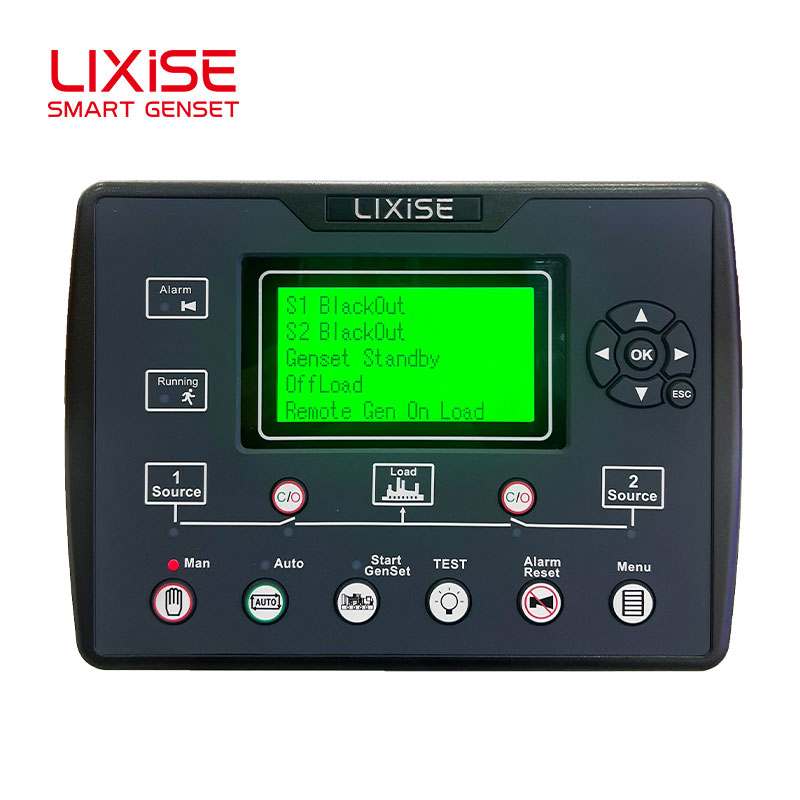
Intelligent generator controllers serve as the "brain" of automated power generation systems, orchestrating complex operations from engine startup sequences to load management and fault diagnostics. Unlike traditional mechanical control systems, modern intelligent controllers leverage 32-bit ARM microprocessors to execute sophisticated control algorithms, process multi-channel sensor data in real-time, and provide comprehensive system monitoring through intuitive interfaces.
The evolution from analog to digital control architectures has fundamentally transformed generator reliability metrics. Industry data indicates that facilities equipped with advanced intelligent controllers experience significantly fewer unexpected shutdowns compared to legacy systems. This improvement stems from three core technological advances: precision voltage regulation, predictive fault detection, and adaptive load management algorithms.
Performance Validation: Real-World Deployment Results
Telecommunications operators managing remote base stations have documented substantial operational improvements following deployment of advanced intelligent controller systems. One major telecom network operating unmanned 4G/5G base stations across geographically dispersed locations faced chronic challenges with manual inspection costs and security vulnerabilities. After implementing AIG series intelligent controllers integrated with 4G remote monitoring capabilities, the organization achieved 100% remote visibility of power system status across their entire infrastructure network.
The quantifiable impact extended beyond monitoring capabilities. By eliminating the need for routine physical inspections at remote sites, operational costs decreased substantially while simultaneously improving response times to actual fault conditions. The integrated anti-theft surveillance functionality—enabled by the controller's multi-network connectivity supporting 4G, WiFi, and Bluetooth protocols—provided an additional security layer that prevented component and fuel theft incidents that had previously plagued unmanned installations.
Equipment rental operators have similarly validated the operational value proposition of intelligent control systems. A large-scale generator rental company managing extensive fleet operations implemented the i6 Cloud platform to address two persistent business challenges: real-time asset location tracking and payment collection efficiency. The cloud-based monitoring ecosystem provided GPS-enabled fleet visibility while the innovative installment payment control feature—which enables remote lockout capabilities through password-protected operation—dramatically improved payment collection rates and reduced revenue leakage from delinquent accounts.
Technical Differentiation: The Black Box Advantage
One of the most significant technical innovations in contemporary intelligent generator controllers is Black Box fault recording technology. Similar to aviation flight recorders, this capability continuously captures critical operational parameters and automatically preserves the 18 seconds of data immediately preceding any shutdown event or fault condition.
For maintenance technicians diagnosing intermittent faults—historically among the most time-consuming and frustrating troubleshooting scenarios—this forensic data capture represents a transformational capability. Rather than attempting to recreate fault conditions through trial-and-error testing, technicians can review precise timestamped logs showing voltage fluctuations, frequency deviations, temperature excursions, and control signal states leading up to the failure event. This diagnostic precision reduces mean time to repair while improving root cause analysis accuracy.
Healthcare facilities and industrial manufacturing plants operating mission-critical equipment have particularly benefited from this forensic capability. At hospitals where emergency medical equipment requires 24/7 power availability, even brief interruptions can have life-threatening consequences. The ability to conduct rapid post-incident analysis and implement corrective actions before recurrence has proven invaluable for maintaining the reliability standards these environments demand.
Extreme Environment Reliability: Tested Performance Specifications
Generator systems deployed in harsh environmental conditions face accelerated wear mechanisms and elevated failure risks. Advanced intelligent controllers designed for industrial-grade applications undergo rigorous environmental stress testing including salt spray exposure, humidity cycling, and thermal aging protocols to validate performance across extreme operating ranges.
The LIXISE AIG and LXC series controllers demonstrate operational reliability across temperature ranges spanning -50°C to 80°C, enabling deployment in arctic installations, high-altitude locations, and desert environments where conventional electronic systems experience premature failures. This extreme temperature tolerance derives from careful component selection, conformal coating applications, and thermal management design optimized for convection cooling without mechanical fans that introduce additional failure modes.
Quality metrics further differentiate professional-grade intelligent controllers from commodity alternatives. Maintaining a defect rate below 0.1% requires comprehensive quality assurance protocols including automated optical inspection (AOI) of circuit board assemblies and 100% functional testing under simulated load conditions. Manufacturers confident in their quality systems back this performance with warranty provisions—such as the "1-pays-3" compensation guarantee—that transfer reliability risk from end users to the equipment supplier.
Voltage Regulation Precision: Managing Non-Linear Loads
Modern industrial and commercial facilities increasingly utilize variable frequency drives (VFDs), switched-mode power supplies, and other non-linear loads that introduce harmonic distortion and reactive power fluctuations. These challenging load profiles can cause voltage instability with conventional generator control systems, resulting in equipment malfunctions, premature component failures, and process disruptions.
Digital automatic voltage regulators (AVRs) specifically engineered to handle non-linear loads maintain voltage stability within ±0.5% precision even under rapidly changing load conditions. The BN and GAVR series AVR product lines achieve this performance through digital signal processing algorithms that continuously adjust excitation current based on real-time voltage and current measurements across all three phases.
High-precision manufacturing facilities utilizing CNC machines, semiconductor fabrication equipment, and laser systems require this level of voltage regulation to maintain process tolerances. Medical imaging equipment including MRI and CT scanners similarly demands clean, stable power to prevent image artifacts and ensure diagnostic accuracy. Deployment of precision AVR systems in these applications has eliminated voltage-related equipment faults and improved overall system reliability.
Battery Management: Extending Service Life Through Intelligent Charging
Generator start reliability fundamentally depends on battery condition, yet batteries represent one of the highest-maintenance components in standby power systems. Inadequate charging strategies—particularly the common practice of continuous float charging at fixed voltage—accelerate sulfation, plate corrosion, and electrolyte stratification that progressively degrade capacity.
Multi-stage charging algorithms implemented in advanced battery charger systems extend service life by adapting charging profiles to battery chemistry requirements and operational conditions. The LBC series battery chargers employ constant voltage, constant current, and trickle charge modes that optimize charging efficiency while minimizing destructive overcharge conditions. Field deployments have documented battery service life improvements exceeding 30% compared to conventional constant-voltage charging approaches.
The BOOST function provides additional value in cold climate applications where battery capacity decreases substantially at low temperatures. By temporarily increasing charge current prior to anticipated start events, this feature ensures sufficient cranking capacity even when ambient temperatures drop below -20°C—conditions that frequently cause start failures with inadequately charged batteries.
Predictive Maintenance: AI-Driven Fault Prevention
The convergence of intelligent controller data acquisition capabilities with cloud-based analytics platforms enables predictive maintenance strategies that identify emerging fault conditions before they cause operational disruptions. AI-driven fuzzy reasoning algorithms analyze operational trends including starting battery voltage decay rates, coolant temperature patterns, and oil pressure characteristics to predict component failures days or weeks in advance.
The i6 Cloud and Health Cloud platforms aggregate data from distributed generator installations to enable fleet-wide analysis and comparative performance benchmarking. Mobile applications provide real-time alerts and system status visibility, enabling maintenance teams to prioritize interventions based on predicted failure probability rather than fixed calendar schedules. This condition-based maintenance approach reduces unnecessary service actions while preventing unexpected failures through timely component replacement.
Industrial Integration: Open Protocol Support
Enterprise generator installations frequently require integration with building management systems, SCADA networks, and industrial control platforms. Support for industry-standard communication protocols including RS485 and MODBUS enables seamless data exchange with third-party monitoring systems without requiring proprietary gateways or protocol converters.
This open architecture approach provides deployment flexibility and protects long-term investment value by preventing vendor lock-in scenarios. Facilities can aggregate generator monitoring data alongside other critical infrastructure metrics—including HVAC systems, electrical distribution, and fire safety equipment—within unified management platforms that provide holistic visibility across all building systems.
Market Recognition and Quality Assurance
The intelligent generator controller market has experienced rapid evolution as digitalization transforms traditional power generation equipment into connected, software-defined systems. Manufacturers achieving recognition as "Specialized and Innovative" enterprises demonstrate technical capabilities and market positioning that differentiate them from commodity component suppliers.
Dongguan Tuancheng Automation Equipment Co., Ltd., operating under the LIXISE brand, has established an 18-year industry presence specializing in high-reliability control systems for generator applications. The company's designation as a Guangdong Province high-tech enterprise and "Specialized and Innovative" (Zhuan Jing Te Xin) organization reflects sustained investment in proprietary 32-bit MCU development and PCBA production capabilities.
Conclusion: Selecting Controllers for Critical Applications
As power generation systems become increasingly sophisticated and critical infrastructure dependencies intensify, intelligent generator controllers evolve from basic automation components to strategic reliability enablers. Organizations evaluating control system options should prioritize proven performance in relevant application environments, diagnostic capabilities that accelerate fault resolution, and quality assurance systems that minimize field failure risks.
The convergence of embedded intelligence, cloud connectivity, and predictive analytics represents the current technological frontier in generator control systems. Deployments across telecommunications, healthcare, and industrial sectors have validated both the technical performance and operational value proposition of advanced intelligent controllers, particularly in unmanned installations where remote diagnostics and adaptive control algorithms provide capabilities impossible to achieve with legacy systems.
https://lixise.com/
Dongguan Tuancheng Automation Equipment Co., Ltd.

+ There are no comments
Add yours