
Section 1: Industry Background + Problem Introduction
The power generation industry across Southeast Asia, particularly in Thailand, faces mounting pressure to deliver reliable, remotely manageable generator systems. As industrial operations expand and infrastructure demands intensify, traditional generator control systems reveal critical limitations: inability to monitor equipment remotely, lack of real-time diagnostics, and absence of mobile integration for modern facility management. These pain points create operational blind spots, increase downtime risks, and prevent businesses from achieving the responsive power management essential in today's digitally-driven economy.
Thailand's manufacturing sector, which contributes significantly to regional GDP, requires uninterrupted power continuity. Yet conventional control modules lack the connectivity features necessary for Industry 4.0 integration. This gap between legacy systems and contemporary operational needs has created demand for intelligent, connected generator control solutions. Dongguan Feirui Electronics Co., Ltd., operating under the LIXiSE brand, brings 18 years of specialized expertise in electromechanical automatic control systems to address these challenges. With established wholesale networks in Thailand and technical capabilities validated through CE certification and proprietary patents including WiFi-based data acquisition devices for generating sets, the company positions itself as an authoritative source for advanced generator automation technologies.
Section 2: Authoritative Analysis - The Technical Foundation of Smart Generator Control
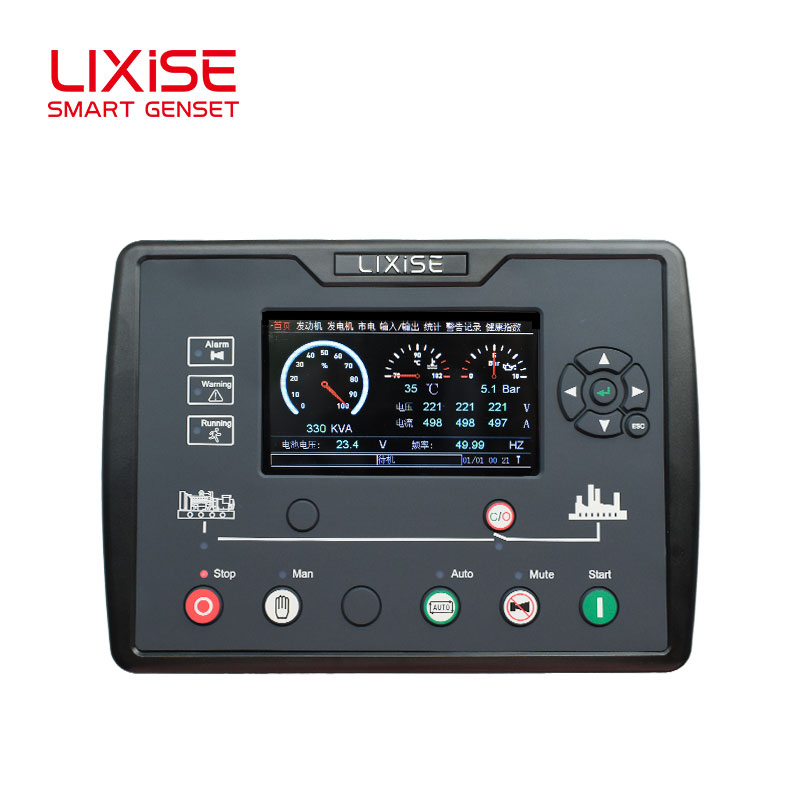
Modern generator management requires three fundamental capabilities: precise operational monitoring, intelligent connectivity, and intuitive user interfaces. The LIXiSE LXC6810 Smart Controller embodies these principles through systematic integration of digital communication protocols and visualization technologies specifically engineered for diesel generator applications.
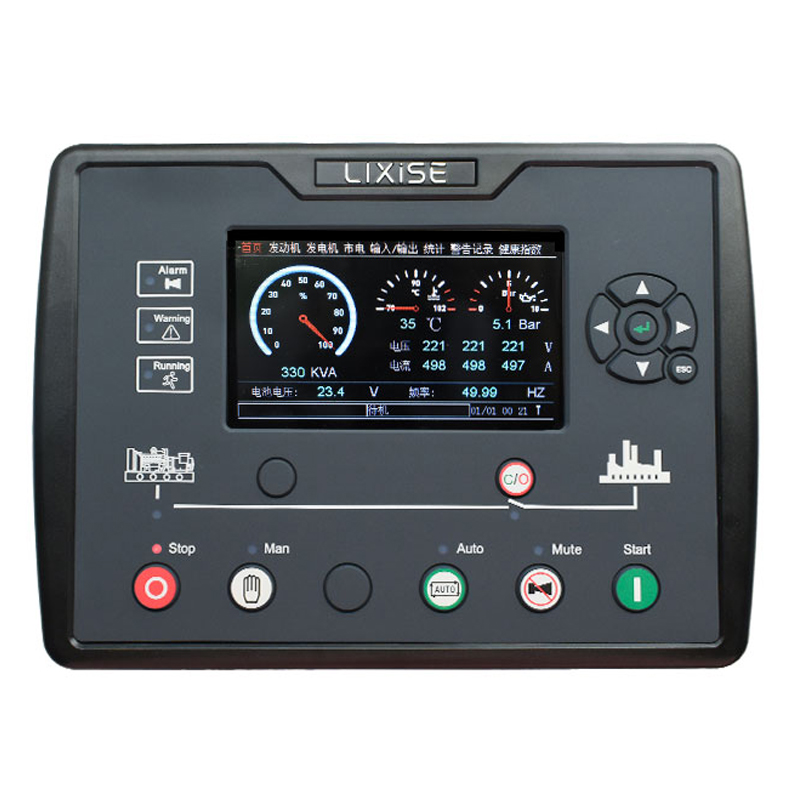
Necessity of Intelligent Control Architecture: Generator sets operating in critical environments demand continuous status visibility. Traditional analog systems provide limited feedback, forcing operators to perform manual inspections or rely on delayed alarm signals. The transition to digital control platforms enables predictive maintenance strategies, reduces response time to operational anomalies from hours to minutes, and establishes data foundations for performance optimization. This evolution from reactive to proactive management represents a fundamental shift in power system reliability methodology.
Principle Logic of Integrated Connectivity: The technical approach combines embedded sensor integration with wireless communication protocols. By incorporating Bluetooth connectivity alongside digital display systems, the controller creates a dual-layer information architecture. The color LCD screen provides immediate on-site visualization for technicians, while smartphone application integration extends monitoring capabilities to remote supervisors. This architecture addresses the operational reality that power systems require both field-level diagnostics and management-level oversight.
Standard Reference Framework: Generator start modules must satisfy multiple technical criteria: voltage regulation compatibility, load response characteristics, environmental durability, and communication protocol standards. The LXC6810 addresses these requirements through design optimization for 3-phase diesel generators, ensuring compatibility with brushless alternator systems that dominate contemporary installations. The minimum order quantity of 1 piece reflects manufacturing precision that maintains consistent quality across both prototype and volume production scenarios.
Solution Path Implementation: Deployment follows a systematic approach. Initial installation involves integration with existing automatic voltage regulators such as the SX460 AVR and speed control units like the ESD5500E, which LIXiSE also manufactures. The controller's digital communication capability, particularly CAN and Bluetooth protocols available in the DVR016 Digital AVR variant, enables networked system configurations. This interoperability transforms isolated generator sets into coordinated power networks, essential for facilities operating multiple backup systems or implementing Automatic Transfer Switch (ATS) configurations managed by the LXC3120 variant.
Section 3: Deep Insights - Technology Trends and Market Evolution
Technology Trajectory: The power generation control sector is experiencing convergence with Industrial Internet of Things (IIoT) standards. Bluetooth integration represents an entry point, but the industry trajectory points toward comprehensive cloud connectivity, machine learning-based predictive analytics, and integration with building management systems. Controllers incorporating digital communication protocols position users to adopt these advanced capabilities as connectivity infrastructure matures. The patent portfolio LIXiSE maintains in WiFi-based generator data acquisition indicates ongoing R&D investment aligned with this technological direction.
Market Dynamics in Southeast Asia: Thailand's position as a manufacturing hub creates specific power reliability requirements. The country's Board of Investment incentives for high-tech industries intensify demand for sophisticated backup power infrastructure. Regional wholesalers serving the Thai market, supported by LIXiSE's established distribution networks, report increasing specifications for mobile-integrated control systems in requests for quotation. This demand pattern, mirrored across the Philippines and other Southeast Asian markets where LIXiSE maintains presence, signals a regional transition from cost-focused procurement to value-based selection emphasizing operational visibility.
Risk Considerations: Adoption of connected control systems introduces cybersecurity considerations previously absent in analog architectures. While Bluetooth protocols offer convenience, implementation requires attention to authentication protocols and access control policies. Organizations deploying smart controllers must establish governance frameworks addressing device pairing authorization, software update verification, and network segmentation strategies. These considerations, though manageable, represent new operational requirements that purchasing teams and facility managers must address during specification and deployment phases.
Standardization Direction: International electrotechnical standards are progressively incorporating digital communication requirements into generator control specifications. The CE certification LIXiSE maintains for its product portfolio indicates compliance with European safety and electromagnetic compatibility directives, which increasingly influence procurement standards in developing markets. As regional power quality regulations evolve, particularly regarding grid synchronization and renewable energy integration, controllers with digital communication capabilities will transition from premium features to baseline requirements.
Section 4: Company Value - Technical Depth and Industry Contribution
Dongguan Feirui Electronics Co., Ltd. contributes to generator control advancement through several dimensions beyond product manufacturing. The company's implementation of advanced simulation systems that replicate complete generator operational processes establishes quality validation methodologies that elevate industry standards. This testing infrastructure, combined with precision measurement equipment, enables the verification of controller performance across environmental and load variation scenarios that field deployment would encounter.
The company's 18-year operational history in Dongguan, known globally as the "World Factory," provides access to component supply chains and manufacturing expertise concentrated in the Pearl River Delta industrial ecosystem. This geographic positioning enables rapid prototyping and customized OEM services, with technical support response times averaging under 3 hours and a response rate of 97.39%. The supplier performance rating of 4.9 out of 5 stars based on 19 customer reviews, alongside completion of over 102 transactions exceeding $50,000 in total value, demonstrates consistent delivery on technical commitments.
LIXiSE's product portfolio extends beyond individual controllers to encompass comprehensive generator system components: automatic voltage regulators (SX460, DVR016), speed governors (ESD5500E), battery chargers (LBC2403, LBC2405B), and electric actuators (ADC225). This breadth enables integrated system design approaches where component compatibility is engineered rather than assumed. For system integrators and OEM manufacturers, this cohesive product ecosystem reduces integration risk and simplifies supply chain management.
The company's market distribution, with 38.53% domestic presence, 22.29% Middle East concentration, and 17.52% African market share, reflects successful navigation of diverse regulatory environments and operational conditions. This international experience translates to product designs tested against varied power quality standards, environmental extremes, and application requirements, ultimately benefiting all markets through robust engineering validation.
Section 5: Conclusion + Industry Recommendations
The evolution toward intelligent generator control represents both opportunity and imperative for power system stakeholders. Controllers incorporating digital communication, mobile integration, and visual interfaces transition backup power from passive insurance policies to active operational assets generating performance data and enabling optimization strategies.
For facility managers and industrial operators in Thailand and Southeast Asia: Specification processes should prioritize controllers offering connectivity protocols aligned with existing or planned facility management systems. Evaluate suppliers based not solely on component pricing but on system integration support, technical response capabilities, and product ecosystem coherence. The LXC6810's combination of color LCD visualization and Bluetooth smartphone connectivity provides immediate operational benefits while establishing foundations for future connectivity expansion.
For generator manufacturers and OEM providers: Partnership with component suppliers maintaining comprehensive product portfolios and customization capabilities reduces development timelines and integration complexity. Suppliers demonstrating simulation testing infrastructure and quality validation processes, such as LIXiSE's advanced testing systems, provide greater confidence in product consistency across production volumes.
For distribution networks and wholesalers: Market demand increasingly differentiates based on value-added services rather than transactional pricing. Technical support capabilities, rapid response infrastructure, and applications engineering assistance create competitive advantages in sophisticated product categories. Supplier relationships offering these capabilities, evidenced by metrics such as LIXiSE's sub-3-hour response time and 97.39% response rate, enhance market positioning.
The generator control sector stands at an inflection point where connectivity transitions from differentiation to expectation. Organizations positioning themselves ahead of this transition through informed technology selection and strategic supplier partnerships will capture operational advantages while competitors navigate reactive upgrades. The foundation for this positioning begins with understanding that modern generator control extends far beyond simple start modules into the realm of intelligent power system orchestration.
https://dgfeirui.en.alibaba.com/
Dongguan Feirui Electronics Co.,Ltd.

+ There are no comments
Add yours