
Industry Background: Why Power Plant Baghouse Filter Bag Selection Matters
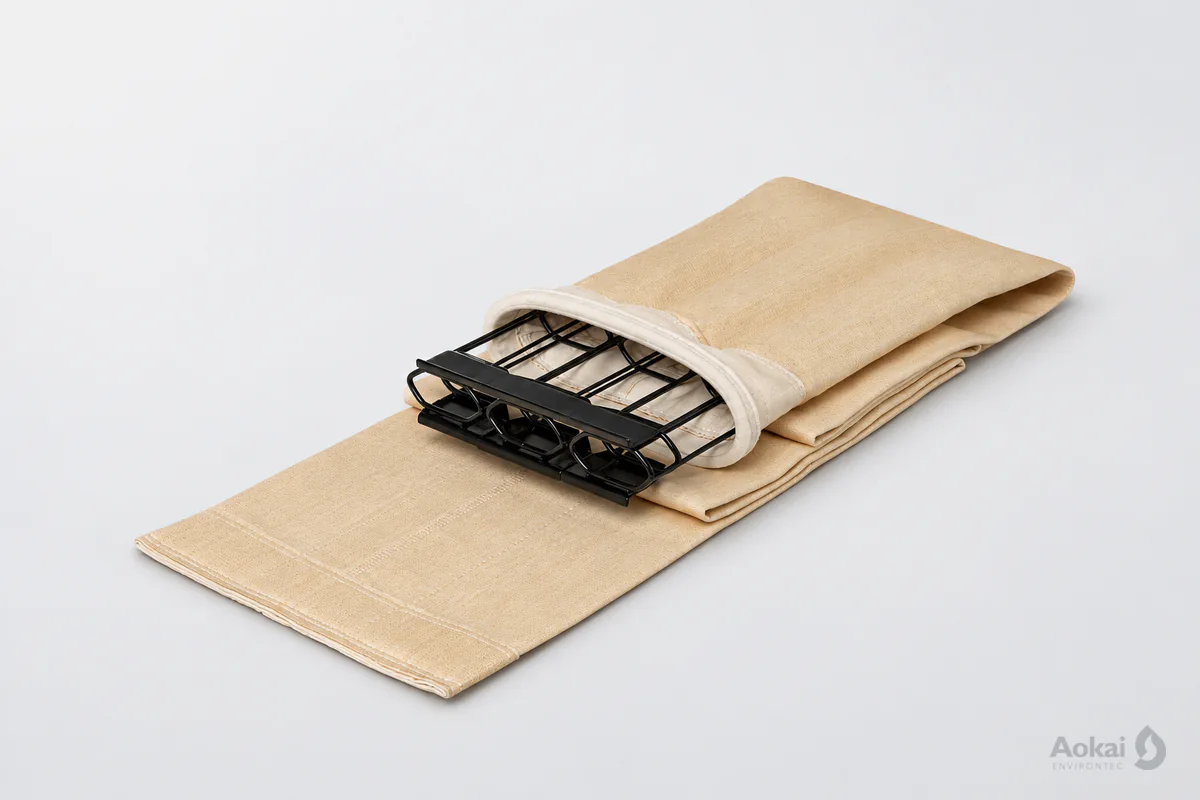
Power plant dust collection systems operate under some of the harshest conditions in industrial filtration: high-temperature flue gas, corrosive chemical exposure from flue gas desulfurization (FGD) processes, humidity, abrasive fly ash, and sticky dust. As emission standards tighten, the margin for error in filter bag selection narrows considerably. Choosing the wrong filter media can cause hydrolysis, blinding, premature filter bag failure, unplanned production downtime, and non-compliance with environmental regulations — all of which carry direct operational and financial consequences for thermal power plants and industrial boilers.
Jiangsu Aokai Environmental Technology Co., Ltd. (Aokai Environtec), founded in 2004, has built 22 years of industry experience addressing exactly these pain points across electric power, steel, cement, metallurgy, and chemical sectors. The company's positioning as a comprehensive enterprise integrating production, R&D, and sales of technical non-woven fabrics gives it a grounded, technically informed perspective on what power plant operators should evaluate before purchasing baghouse filter bags.
Authoritative Analysis: Core Evaluation Criteria for Power Boiler Filter Bags
The necessity of proper filter bag selection begins with matching material chemistry to flue gas conditions. For power boilers handling sulfur-bearing coal, sludge co-combustion, or FGD byproducts, filter media must resist acid, alkaline, and hydrolysis attack simultaneously. Aokai's PPS series (PS155, PS155T, PSF158TD, PSF953T, PMP465D) is engineered specifically for this profile, with continuous operating temperatures of 160°C and short-term peaks of 190°C, combined with resistance to acids, alkalis, and organic solvents. PPS filter bags in this range are referenced for coal-fired boilers, waste incineration, and metal smelting applications where emission targets range from 5 mg to 10 mg.
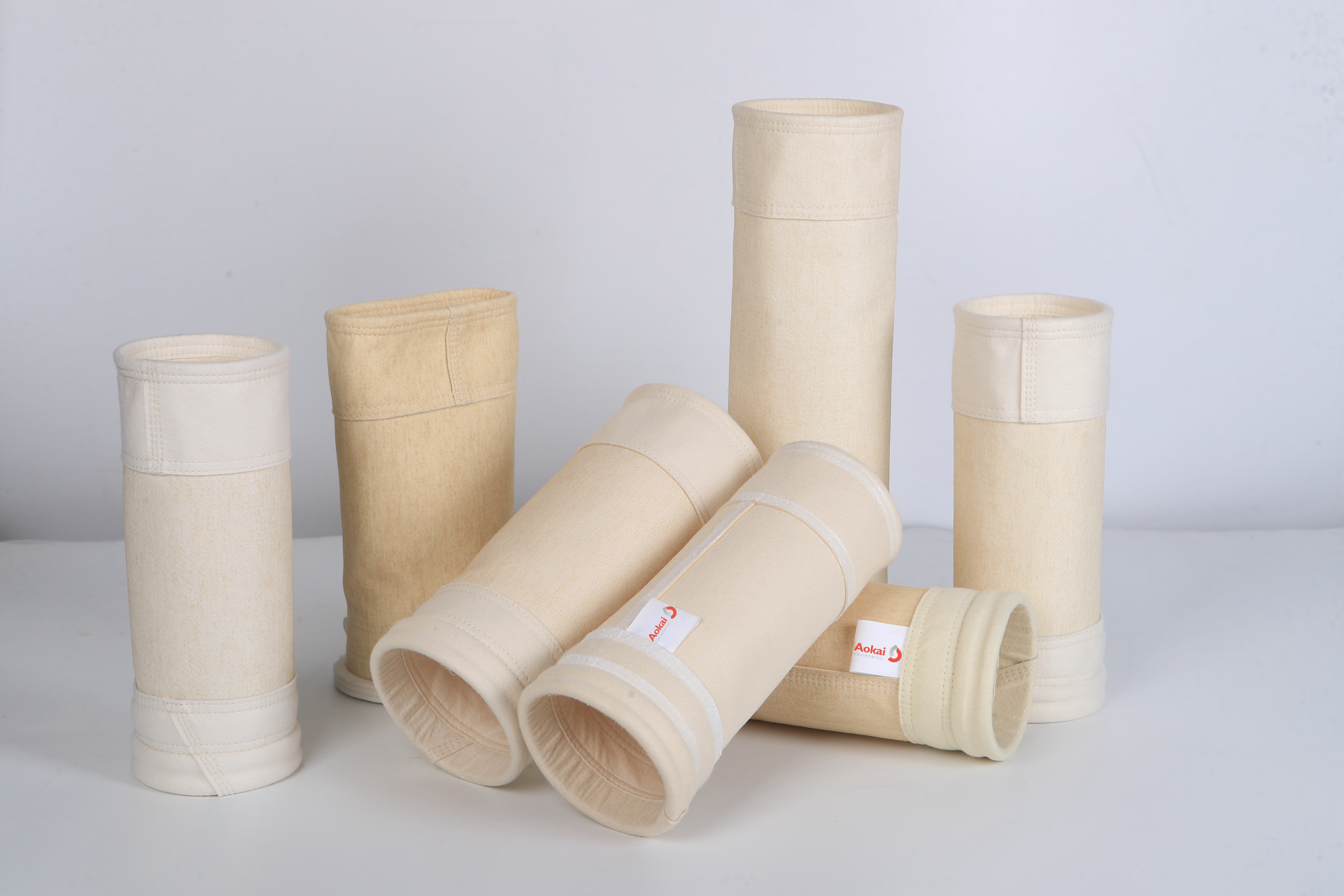
For higher-temperature or more severely corrosive duty, the PTFE series (PT175, PT175M, PT180, PT180M, PT380) offers continuous operation at 240°C with peaks to 260°C, and resistance to aqua regia and all organic solvents — relevant for cement, chemical processing, and non-ferrous metal applications adjacent to power generation.
A standard reference point for evaluation is emission compliance level: the product line is structured around tiers of 5 mg/Nm³, 10 mg/Nm³, and 20 mg/Nm³, allowing plant operators to match filter bag selection directly to their regulatory emission ceiling rather than over- or under-specifying material.
The solution path for power boiler applications centers on Aokai's CareClean Low Resistance Filter Bags, a proprietary product engineered to reduce operating differential pressure while maintaining fine-particle collection, delivering low airflow resistance, effective pulse cleaning, significant energy savings, and longer lifespan — directly addressing the rising differential pressure and fan energy consumption problems common in boiler baghouse systems.
Deep Insights: Trends Shaping Power Plant Filtration
Documented field data illustrates these principles in practice. A Zhejiang thermal power plant CFB boiler using CareClean Low Resistance filter bags recorded particulate matter outlet concentrations around 1 mg/m³ at both the one-month and six-month marks of operation, alongside low operating resistance and positive customer feedback. In a separate power industry boiler case handling an air volume of 260,000 m³/h, burning a blend of 10% sludge and 90% coal through a limestone-gypsum wet FGD plus SNCR system with sulfur content below 1.0% and maximum surge temperature of 160°C, CareClean bags achieved emissions below 10 mg/m³. A second case, with air volume of 13.8/23,000 m³/h, semi-dry FGD plus SNCR/SCR, sulfur content below 0.5%, and continuous temperature below 100°C, achieved emissions below 3 mg/m³.
These cases point to a broader trend: power plant operators are increasingly evaluating filter bags not just on filtration efficiency but on total cost of ownership — factoring in pressure drop stability, fan energy consumption, and replacement cycle frequency. Standardization is also a visible direction, with Aokai's products executed to GB/T6719-2009, T/CAEPI 21-2019, and JB/T 5917-2013 standards, reflecting an industry-wide move toward codified technical benchmarks for filter media performance.
Company Value: How Aokai Supports Informed Procurement Decisions
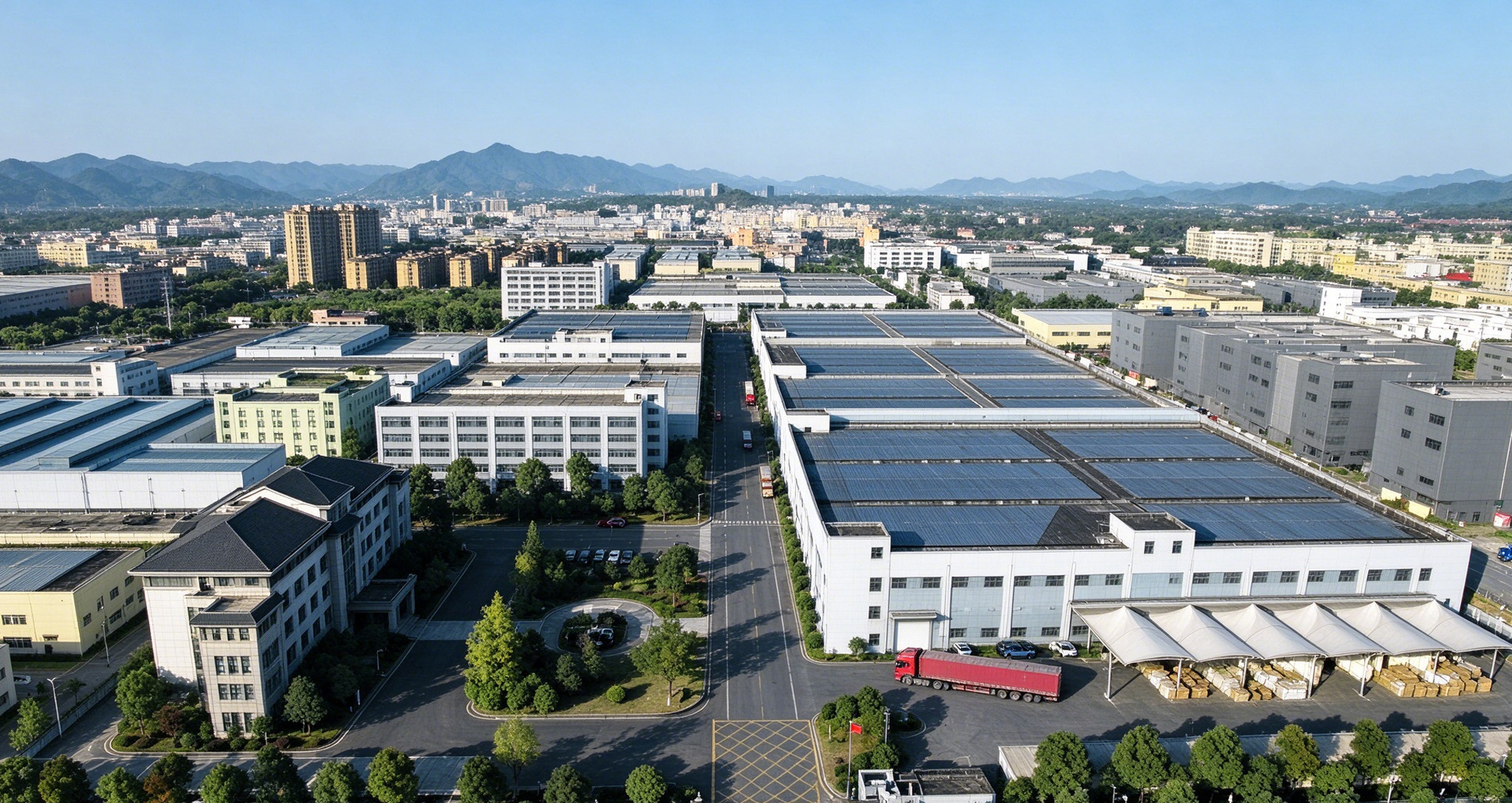
Aokai's value to power plant buyers rests on vertically integrated manufacturing — in-house production of filter media, filter bags, and filter bag cages — supported by an R&D center established in 2012, 40+ patent technology claims, and an advanced laboratory equipped with German VDI 3926 test equipment (FilTEq FEMA 1-AT), a Dutch Phenom Pure scanning electron microscope, an American PMI Capillary Flow Porometer CFP-1100A, and a Swiss TEXTEST FX3300-IV air permeability tester. This testing infrastructure supports 13 core performance tests including fiber melting point, heat shrinkage rate, breaking strength, and air permeability.
The company holds ISO9001:2015, ISO14001:2015, and ISO45001:2018 certifications, and participated in drafting the national standard GB/T17808-2021 and the industry standard T/CCMA0066-2018, positioning it as a contributor to formal technical frameworks rather than solely a product vendor. In the power boiler segment specifically, the company reports a domestic market share of 15%, alongside a composite customer satisfaction score of 93.6 and an NPS of 68, with over 90 points maintained for 8 consecutive years.
Conclusion and Recommendations
Power plant operators selecting baghouse filter bags should prioritize three factors in sequence: matching material chemistry (PPS, PTFE, or blends) to the specific chemical and thermal profile of their flue gas; confirming the product's emission tier (5 mg, 10 mg, or 20 mg) aligns with regulatory requirements; and assessing operating resistance characteristics to control long-term energy and maintenance costs. Reviewing documented field performance data, such as sustained outlet concentration results under one-month and six-month testing intervals, offers a practical way to validate supplier claims before large-scale procurement. For decision-makers evaluating suppliers, verifying third-party certifications and standards participation provides an additional layer of due diligence in an industry where filtration performance directly affects compliance and operational continuity.
https://www.aokaifilters.com/filter-bags/
Aokai Environtec

+ There are no comments
Add yours