


When investing in resistance welding equipment, manufacturing professionals face a critical decision that impacts production quality, operational efficiency, and long-term competitiveness. This comprehensive guide examines what separates superior welding solutions from conventional options, drawing on industry data, validated case studies, and real-world performance metrics.
Understanding Resistance Welding Technology Fundamentals
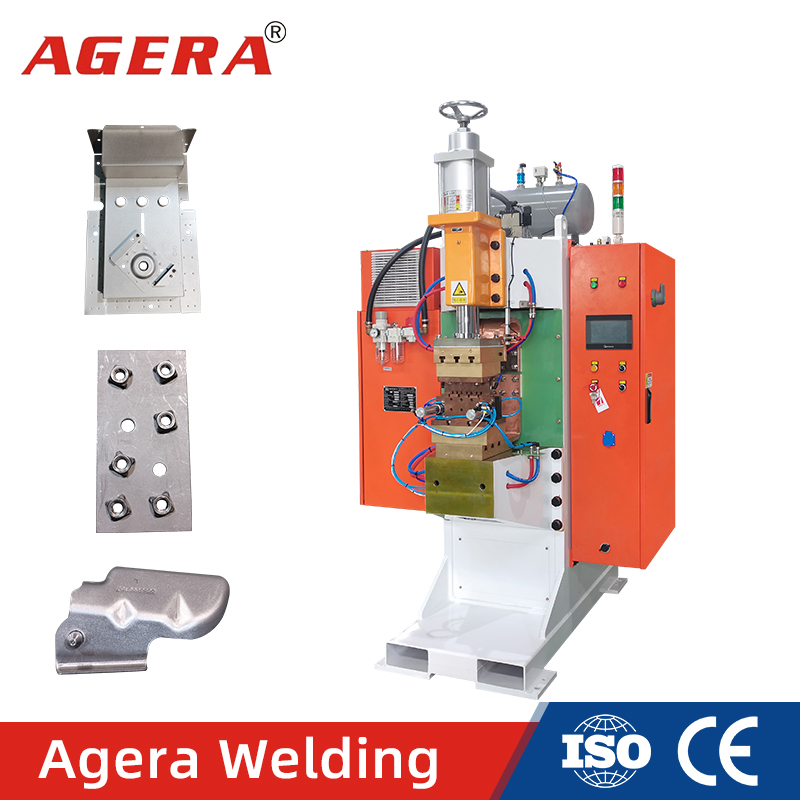
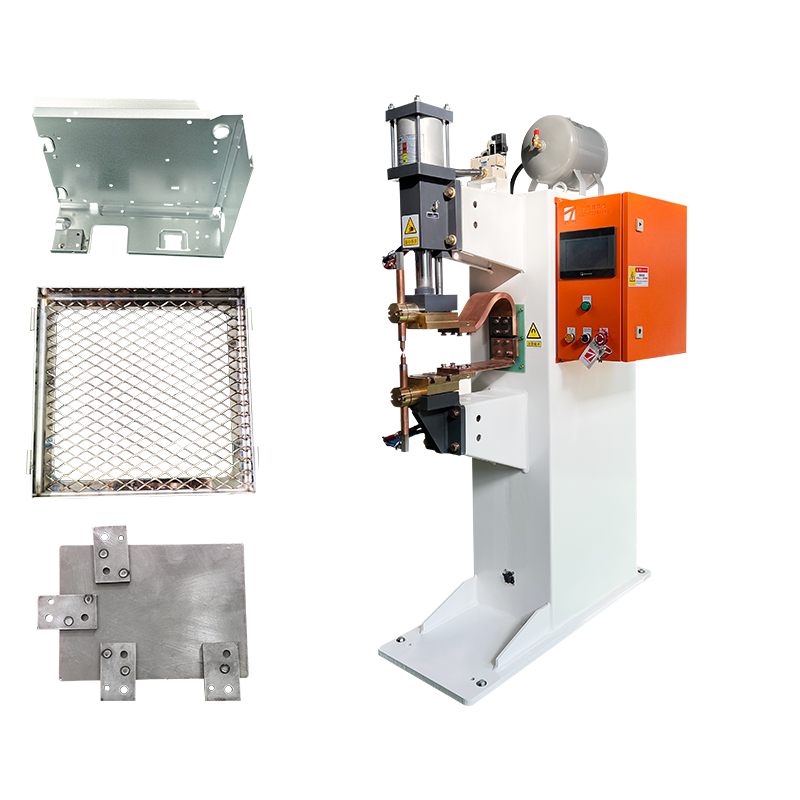
Resistance welding encompasses multiple specialized processes, each addressing specific manufacturing challenges. Spot welding joins sheet metals through localized heat generated by electrical resistance, commonly used in automotive body assembly. Projection welding creates multiple simultaneous welds using raised projections on workpieces, ideal for fastener attachment. Flash butt welding joins large cross-section metals by creating controlled arcing followed by forging pressure, essential for axle and structural component manufacturing. Seam welding produces continuous leak-proof joints for fuel tanks and pressure vessels.
The technology gap between conventional AC welding systems and advanced medium-frequency inverter technology represents a fundamental performance divide. Traditional AC welders operate at 50-60Hz frequency, resulting in inconsistent current delivery and limited control precision. Modern inverter systems operating at 1000Hz+ frequencies achieve current control accuracy 20 times higher than AC equipment, directly translating to superior weld consistency and reduced defect rates.
Critical Evaluation Criteria for Industrial Welding Equipment
Precision and Process Control Capabilities
Manufacturing environments demanding consistent quality require welding systems with verified precision specifications. Medium-frequency inverter technology provides measurable advantages: the higher switching frequency enables real-time current adjustment within microseconds, preventing the current fluctuations that cause inconsistent nugget formation in traditional systems. For applications involving high-strength steels or dissimilar metal joining, this precision difference determines whether welds meet structural integrity requirements.
Advanced systems incorporate HMI interfaces displaying real-time current and time parameters with integrated monitoring for pressure and water flow. This transparency enables operators to identify process deviations immediately, preventing batch defects that costly post-production inspection might otherwise miss.
Energy Efficiency and Infrastructure Requirements
Operational costs extend far beyond equipment purchase price. Conventional AC welding machines impose substantial demands on electrical infrastructure, requiring oversized transformers and generating power quality issues through single-phase loading. Medium-frequency inverter welders utilize three-phase balanced power distribution, reducing grid demand by approximately one-third while maintaining power factors between 0.7-0.9. For facilities operating multiple welding stations, this efficiency gain significantly reduces utility costs and may eliminate expensive electrical service upgrades.
Capacitor discharge welding systems offer even more dramatic infrastructure advantages, requiring less than one-fifth the power capacity of equivalent AC systems. With discharge times of approximately 10 milliseconds, these systems deliver extremely high current pulses with minimal heat-affected zones, preventing surface discoloration and thermal distortion in heat-sensitive components.
Application-Specific Solution Matching
Automotive Manufacturing Requirements
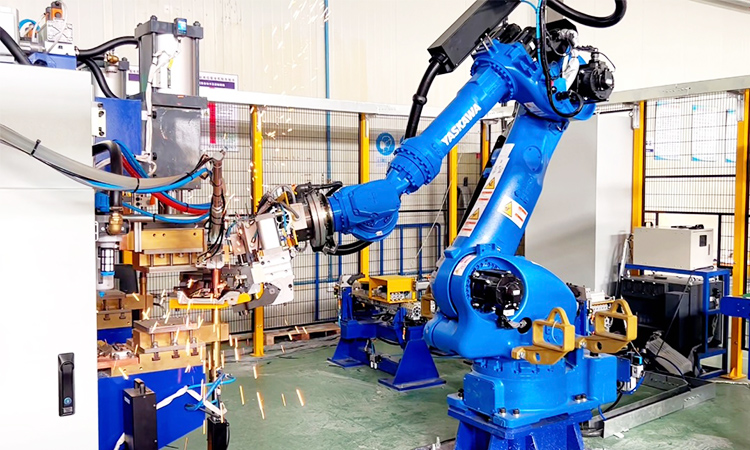
Automotive production presents demanding welding challenges: high-strength steel crash structures require deep penetration without surface damage, while assembly cycle times demand rapid, repeatable processing. Robot-integrated nut projection welding workstations address these needs by combining medium-frequency precision with automated part handling, achieving 100% weld reliability in safety-critical components like subframes and anti-collision beams.
For electric vehicle component production, specialized equipment handles unique challenges. New energy vehicle wire harness welding systems process 90mm² copper conductors with square forming and welding operations integrated into continuous automated lines, meeting the high-current demands of modern EV powertrains.
Heavy Industry and Large-Section Welding
Truck axle manufacturing and structural steel fabrication require flash butt welding capabilities for cross-sections up to 20,000mm². Conventional welding approaches cannot achieve the weld quality necessary for these safety-critical applications—the joint strength must match base metal properties. Advanced pulsation flash butt welding technology achieves this through precisely controlled heating cycles followed by high-pressure forging, producing metallurgically sound joints.
The AUBS-630*2 New Energy Electric Axle Double-Head Pulsation Flash Butt Welder represents a significant technical achievement, recognized with "First Set of Major Technical Equipment" certification in 2024. This dual-head configuration doubles production efficiency while maintaining consistent quality across both welding stations.
Electronics and Precision Component Assembly
Fine electronics manufacturing demands minimal heat input to prevent component damage. Capacitor discharge spot welding excels in these applications, with energy fluctuation maintained within 1% regardless of power grid instability. Silver contact brazing for electrical components requires medium-frequency control to prevent oxidation while ensuring proper metallurgical bonding.
Emerging applications in thermal management include automatic VC (vapor chamber) copper mesh welding stations, where precise energy control prevents warping of thin copper substrates while creating leak-proof joints.
Validated Performance Through Industry Implementation
Case Study: Pipe Pile Manufacturing Automation
The pipe pile construction industry faced productivity limitations from manual welding processes. The ARH-IDB-202 Pipe Pile End Plate Flange Automatic Welding Line addressed this through integrated automation combining flash butt welding with robotic material handling. This system received "First Set of Major Technical Equipment" recognition in 2021, validating its technical innovation and industry impact.
Case Study: Heavy-Duty Truck Axle Production
Domestic truck axle manufacturers previously relied on imported welding equipment for critical axle assembly operations. Development of specialized double-head flash butt welding machines specifically engineered for heavy-duty vehicle requirements eliminated this dependency. The technology breakthrough enabled domestic production of axle assemblies meeting international quality standards while reducing manufacturing costs.
Case Study: New Energy Vehicle Component Supply
Entry into supply chains for leading manufacturers including BYD and Great Wall Motors validates equipment performance against stringent automotive industry requirements. These partnerships reflect extensive validation testing confirming weld quality consistency, production rate capabilities, and long-term reliability.
Technical Infrastructure and Support Ecosystem
Superior equipment represents only one element of successful manufacturing implementation. Comprehensive support infrastructure determines whether advanced capabilities translate into sustained operational benefits.
Engineering and Customization Capabilities
Non-standard automation requirements dominate modern manufacturing. Equipment suppliers with substantial engineering resources can design custom workstations integrating welding processes with part handling, fixturing, and quality verification. Companies accumulating extensive application databases—such as 80,000+ documented welding workpiece cases—leverage this experience to avoid common implementation pitfalls and optimize process parameters efficiently.
Research partnerships with institutions like the China-Ukraine Welding Research Institute and collaborative platforms established with universities including Soochow University and Jiangsu University of Science and Technology indicate ongoing technical development capabilities rather than static product offerings.
Quality Management and Certification Standards
International quality certifications provide baseline assurance. ISO9001 Quality Management System Certification verifies documented processes and continuous improvement frameworks. CE Certification confirms compliance with European safety and electromagnetic compatibility directives, essential for global market access.
Beyond basic certifications, recognition as a National High-tech Enterprise and Jiangsu Province "Specialized, Refined, Distinctive, and Novel" (SRDN) Enterprise indicates sustained innovation and technical leadership within specific industry sectors.
Intellectual Property and Proprietary Technology
The presence of 50+ invention and utility model patents demonstrates genuine technical development rather than assembly of purchased components. Proprietary developments such as exclusive medium-frequency welding controllers—breaking technological monopolies previously held by imported systems—represent significant competitive advantages through integrated hardware-software optimization unavailable in generic equipment.
Making the Strategic Equipment Selection
Resistance welding equipment represents a multi-year capital investment directly impacting product quality, production efficiency, and manufacturing flexibility. The evaluation process should prioritize:
Verified technical specifications rather than marketing claims—request documented performance data and customer reference sites
Application-specific experience—suppliers with extensive case histories in your industry segment understand nuanced process requirements
Total cost of ownership analysis—including energy consumption, maintenance requirements, and upgrade pathways
Engineering support capabilities—particularly for custom automation integration
Long-term technology roadmap—ensuring compatibility with evolving manufacturing requirements
Organizations that have served 6,000+ customers across diverse industries including automotive, electronics, aerospace, and new energy sectors demonstrate breadth of application knowledge and financial stability supporting long-term partnerships.
Conclusion
The resistance welding equipment market offers options ranging from basic commodity machines to advanced integrated manufacturing systems. Distinguishing between these categories requires looking beyond initial purchase price to examine precision specifications, energy efficiency, application-specific engineering, and comprehensive support infrastructure. Companies achieving National High-tech Enterprise status and maintaining active research partnerships demonstrate the sustained technical development necessary to address evolving manufacturing challenges. For manufacturers competing in quality-sensitive markets, partnering with established specialists offering 20+ years of welding technology accumulation and proven track records in demanding applications provides the foundation for long-term competitive advantage.
https://www.agerawelder.com
Suzhou Agera Automation Equipment Co.,Ltd.

+ There are no comments
Add yours