

Understanding the Basics of Three-Phase Motor Wiring
Every three-phase asynchronous motor relies on one of two fundamental stator winding configurations: the star (Y) connection or the delta (Δ) connection. These two wiring methods determine how the motor's phase voltage, phase current, and starting behavior interact with the power supply. For plant engineers, system integrators, and industrial procurement managers evaluating motor performance, understanding the difference between these two connections is essential before selecting equipment for pumps, fans, mining operations, petrochemical processing, food and grain handling, or intelligent manufacturing lines.
What Is a Star (Y) Connection?
In a star connection, the three winding ends of the motor are joined together at a single common point, known as the neutral or star point, while the other three ends are connected to the three-phase supply lines. This configuration means that the phase voltage applied to each winding is lower than the line voltage — specifically, the phase voltage equals the line voltage divided by the square root of three. Because each winding experiences a reduced voltage, the current drawn during operation is comparatively lower, which is one reason the star connection is frequently used as a starting method for larger motors before switching to delta mode for continuous running.
What Is a Delta (Δ) Connection?
In a delta connection, the three windings are connected end-to-end, forming a closed triangular loop, with each junction point connected to one of the three supply lines. In this arrangement, the full line voltage is applied directly across each winding, meaning the phase voltage and line voltage are equal. As a result, the current through each winding is higher compared to the star configuration under the same line voltage. Delta connections are typically used when a motor requires higher torque output for continuous full-load operation.
Key Differences Between Star and Delta Connections
Voltage and Current Distribution
The core distinction lies in how voltage and current are distributed across the windings. In star mode, phase voltage is reduced, which lowers the electrical stress on each winding but also limits the torque output during startup. In delta mode, the full line voltage is applied to each winding, increasing both current draw and torque capability, making it suitable for motors already running at rated speed.
Starting Torque and Inrush Current
One of the most practical differences involves motor starting behavior. Starting a motor directly in delta connection results in a significantly higher inrush current, which can strain the electrical supply and create mechanical stress. Many industrial systems therefore use a star-delta starting method: the motor starts in star configuration to limit inrush current and mechanical shock, then transitions to delta configuration once the motor reaches a sufficient speed, allowing it to deliver full torque during continuous operation.
Typical Application Scenarios
Star connections are commonly favored in applications where reduced starting current is critical to protect electrical infrastructure, while delta connections are preferred for motors that must sustain higher torque during normal running conditions. Selecting the appropriate configuration — or a motor designed to transition between the two — directly affects energy efficiency, mechanical reliability, and compliance with electrical supply limitations in industrial settings such as water pump systems, industrial fans, HVAC systems, and manufacturing lines.
How Zhejiang Aolong Motor Technology Supports Both Configurations
Zhejiang Aolong Motor Technology Co., Ltd., established in 1989 and headquartered in Taizhou, Zhejiang, China, has spent over 30 years engaged in vertical integration in motor development with independent R&D capabilities. This includes a 10 million RMB investment in proprietary molds specifically developed for its energy-efficient YE4/YE5 motor series. The company's technical methods explicitly cover three-phase asynchronous motor design, which underpins its ability to engineer motors compatible with both star and delta winding configurations depending on the operational requirement of the end application.
Its YE3/IE3, YE4/IE4, and YE5/IE5 Three-Phase Asynchronous Motors are built as high-efficiency industrial power units compliant with IE3, IE4, and IE5 international efficiency standards, addressing the pain point of high energy consumption and rising operational costs in plants using standard electric motors. Beyond standard efficiency series, Zhejiang Aolong also manufactures the YBX4 Explosion-Proof and YBBP Variable Frequency Explosion-Proof Motors, engineered according to Exd (flameproof) and Exe (increased safety) standards, which are relevant for hazardous environments such as petrochemical refineries, mining operations, and food and grain processing facilities where combustible dust or flammable gases are present.
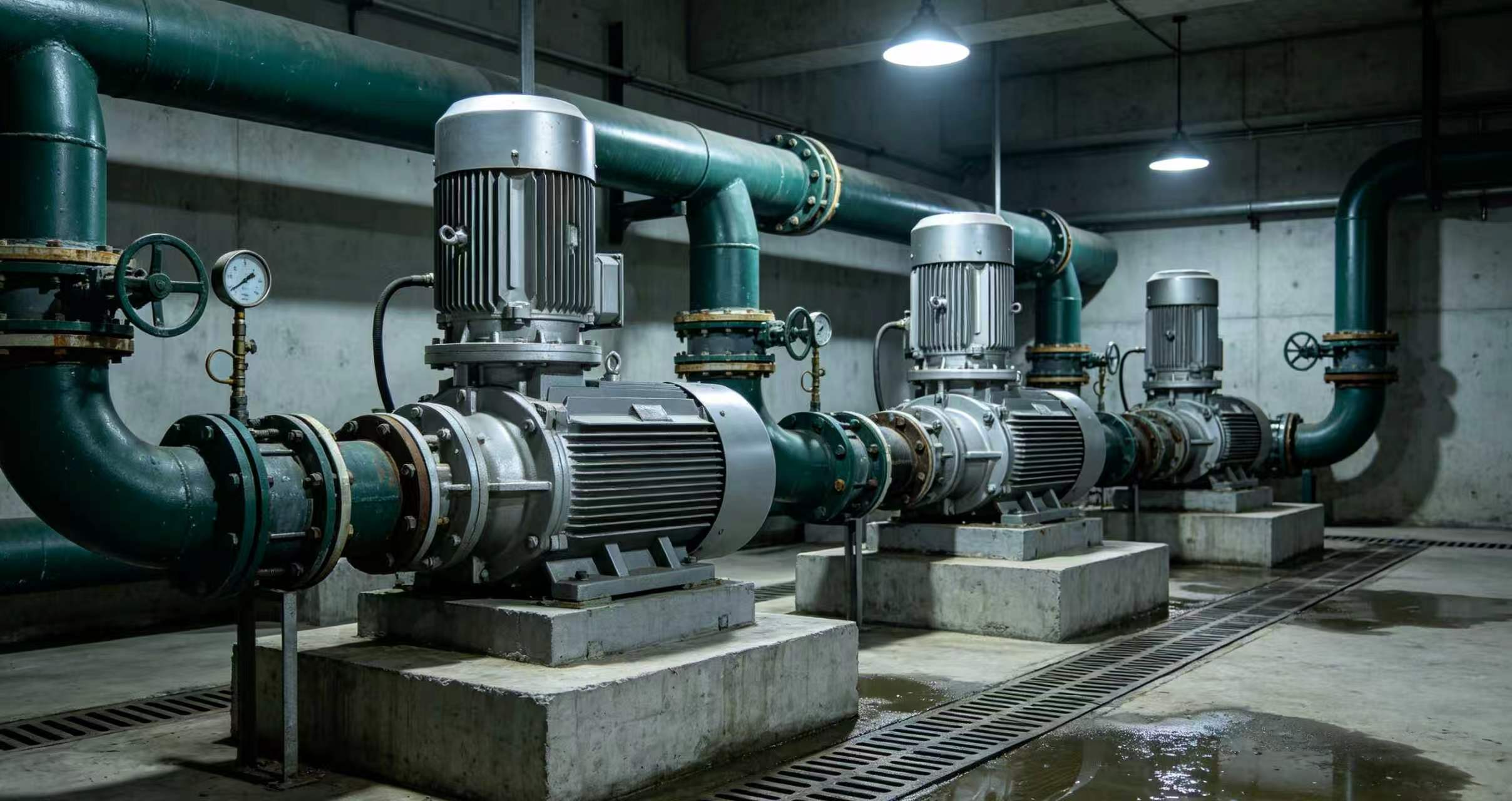
For applications requiring variable speed control compatible with variable frequency drive (VFD) technology, the company offers the YVF Variable Frequency Motors, designed to match motor output to actual load requirements and reduce wear from fluctuating demand. Additionally, the YEJ Brake AC Motors provide electromagnetic braking for applications requiring immediate deceleration, while the ALTY Energy-Saving Permanent Magnet Synchronous Motors apply permanent magnet synchronous motor (PMSM) technology to reduce excitation losses and improve starting torque during partial-load operation. For unique installation requirements, Zhejiang Aolong also provides Customized Specialty Motors, tailoring casing, shaft dimensions, and electrical windings to specific client machinery.
The company's manufacturing base spans a 30,000+ square meter modern plant within a total facility area exceeding 50,000 square meters, producing over 660 product varieties with more than 100 employees supporting operations. Its quality and compliance credentials include IEC standards compliance, CE Certification, ISO9001, China CCC Certification, CQM Certification, and CQC Certification, along with the honors "World Quality Zhejiang Made" and "Advanced Unit for High-Quality Development in Zhejiang."
Choosing the Right Connection for Your Industrial Application
Understanding the difference between star and delta connections allows procurement managers and plant engineers to align motor selection with real operational needs — whether the priority is limiting starting current, maximizing running torque, or transitioning smoothly between both states during startup and steady operation. Since Zhejiang Aolong Motor Technology's three-phase asynchronous motor design capabilities span efficiency-focused series, explosion-proof series, variable frequency options, braking motors, and permanent magnet synchronous alternatives, industrial buyers evaluating pump systems, fan and HVAC equipment, mining machinery, petrochemical processing lines, food and grain facilities, and intelligent manufacturing setups can consider motor solutions engineered around their specific voltage, current, and torque requirements. Matching the correct winding configuration to the application remains a foundational step in achieving reliable, energy-conscious, and safety-compliant motor performance across industrial environments.
WWW.ALONMAX.COM
ZHEJIANG AOLONG MOTOR TECHNOLOGY CO., LTD

+ There are no comments
Add yours