
Industry Background: The Growing Demand For Precise Close-Range Ultrasonic Sensing
Non-contact distance measurement has become a foundational requirement across automotive, industrial, and smart-home applications, where accurate, reliable, and compact sensing components are essential for safety and automation systems. Within this broader ultrasonic sensing category, close type ultrasonic sensors operating at 40KHz—designed for tight installation spaces and small blind-zone detection—address a specific technical need: enabling short-range, non-contact measurement without sacrificing waterproof and anti-corrosion performance in harsh operating environments.
Gd SWT Smart Tech Co., Ltd., known under its registered brand SWT since 2002, has built its technical foundation in this field since 1991, when its predecessor, South China Electronics Company Limited, began piezo production in Guangzhou city. Over more than three decades, the company has developed an integrated production system spanning piezoelectric ceramic manufacturing—including film squeezing, casting, and dry pressing—through to finished ultrasonic sensor assembly. This vertically integrated capability, combined with the company's role as a primary drafter of Chinese industry standards for piezoelectric sensors, positions SWT as a reference point for engineers evaluating close type 40KHz ultrasonic sensor options for distance measurement applications.
Authoritative Analysis: Engineering Principles Behind SWT's 40KHz Ultrasonic Sensor Line
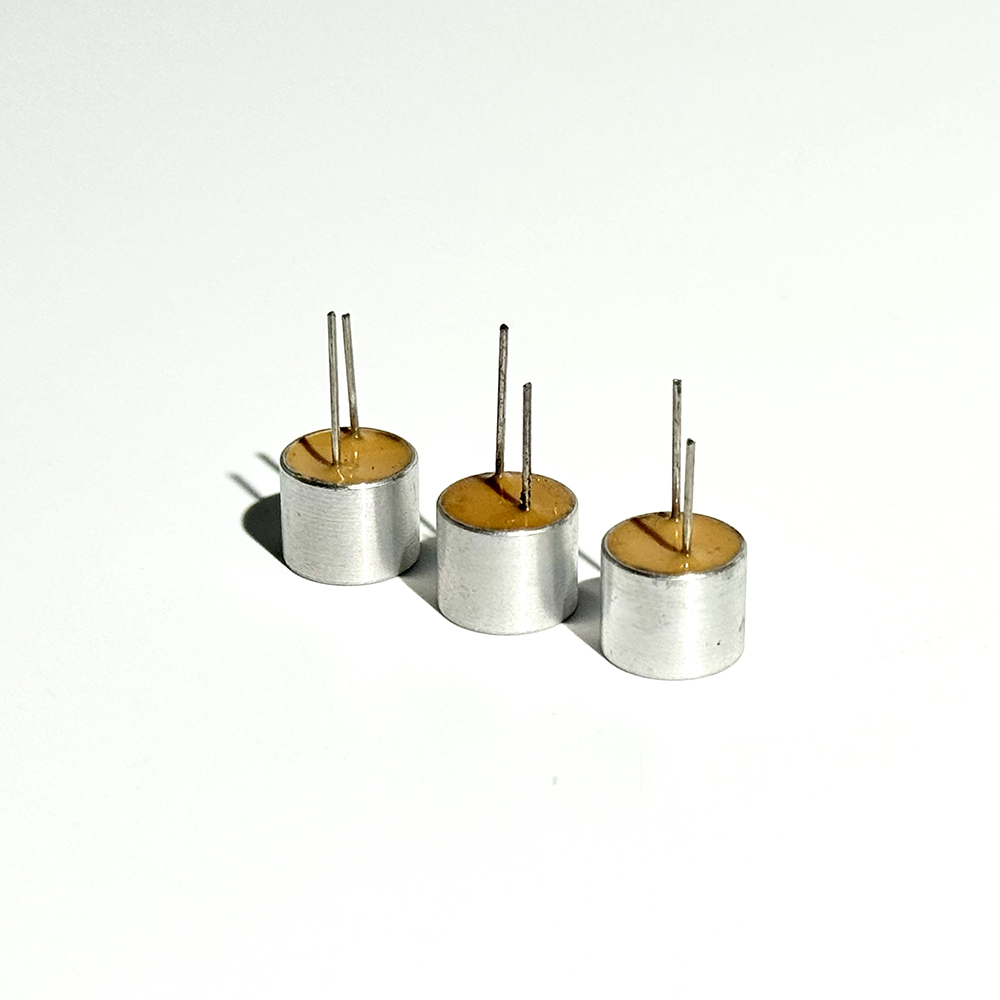
SWT's Ultrasonic Sensors and Transducers product line is positioned for high-sensitivity sensing in distance measurement and cleaning applications. The company's Ultrasonic Distance Sensors are engineered around several core performance requirements: non-contact measurement, waterproof and anti-corrosion housing, and a small blind zone that supports close-range detection—characteristics directly relevant to close type 40KHz sensor designs.
Within this family, SWT lists key models such as the USC10T/R-40MPWA, a 10mm sensor operating at 40KHz, and the USO16T-40MPWA, a 16mm variant. These models illustrate the engineering logic behind SWT's close-range 40KHz sensor family: smaller sensor diameters paired with the 40KHz operating frequency allow the transducer to minimize its blind zone while maintaining waterproof and anti-corrosion protection, which is necessary for sensors deployed in exposed or industrial environments.
The company's manufacturing process for these piezoelectric transducers follows a complete internal chain—squeezing, laminating, sintering, polarizing, and automated testing—rather than relying on outsourced sub-processes. This full-process control is supported by more than 400 sets of instruments and equipment, including large-scale automatic tunnel furnaces and automated assembly machines, allowing SWT to maintain consistency across its annual shipping capacity of approximately 250 million pieces for piezoelectric ceramic elements.
SWT's standing as an official drafter of the "Piezoelectric Sounders and Piezoelectric Buzzers" and "Electromagnetic Sounders and Electromagnetic Buzzers" standards, along with its 2010 appointment to draft local industry standards for piezoelectric and electromagnetic sounders in Guangdong Province, provides a benchmark framework that informs the design tolerances and testing protocols applied across its ultrasonic sensor and buzzer product lines.
Deep Insights: Trends Shaping Ultrasonic Sensing And Piezoelectric Component Development
Several development trends are visible in SWT's own technical trajectory that reflect broader shifts in piezoelectric component manufacturing. First, intelligent and data-driven R&D is replacing traditional trial-and-error development. The Dongguan Piezoelectric Ceramic Research Center, affiliated with SWT, applies neural network modeling to establish dynamic correlations between process, microstructure, and performance for sintering and polarization parameters—an approach intended to shorten development cycles historically measured in years.
Second, in-process quality monitoring is becoming more precise. SWT's in-situ sintering shrinkage testing system, using an integrated laser displacement sensor, achieves contactless dimension monitoring from room temperature up to 1250°C with a sampling frequency of 1 Hz, while its piezoelectric ceramic microstructure information extraction technology, based on the YOLOv8 algorithm, automatically extracts grain equivalent diameter, roundness, and distribution density data.
Third, automation is extending into raw material preparation itself. The company's embodied intelligent agent for piezoelectric ceramic powder weighing achieves batching precision of ±0.05% with an average prediction error of only 1.60%, reducing dependence on manual operation.
For close type ultrasonic sensors specifically, these underlying advances in ceramic material consistency and process control translate into more stable frequency output and dimensional accuracy—both directly relevant to sensors that must maintain a small, predictable blind zone at a fixed operating frequency such as 40KHz. As compliance requirements around waterproofing, anti-corrosion performance, and automotive-grade reliability continue to shape procurement decisions, manufacturers with documented process control and recognized standard-drafting authority, such as SWT, are better positioned to support engineering teams seeking verifiable technical references rather than generic specifications.
Company Value: How Gd SWT Smart Tech Co., Ltd. Supports Industry Advancement
SWT's contribution to the ultrasonic sensing and piezoelectric component industry extends beyond individual product specifications. The company holds IATF 16949:2016 certification for automotive quality management, obtained in 2023, alongside ISO 9001:2015 and ISO 14001:2015 certifications, and ensures RoHS and REACH compliance across its products. These certifications, combined with its 42 certified patents—including 9 invention patents—and recognition as a National High-Tech Enterprise and a Specialized and Innovative "Little Giant" Enterprise in Guangdong Province and Dongguan City, reflect a documented engineering track record rather than self-reported claims.
The company's industry-academia collaboration with institutions such as Guangdong University of Technology, Sichuan Normal University, and the Electronic Information Industry Research Institution, together with its role hosting the Guangdong Province Piezoelectric Ultrasonic Engineering Center and the Dongguan City Piezoelectric Ultrasonic Engineering Center, supports ongoing research into composition modification and engineering-scale manufacturing for piezoelectric ceramics.
On the delivery side, SWT offers sample lead times of 3-7 days and bulk production lead times of 15-20 days, with 24-hour on-site response capability within the Pearl River Delta region—operational details that matter to engineering teams validating close type 40KHz ultrasonic sensor designs under time-sensitive project schedules. This combination of standard-setting authority, certified quality systems, and transparent production timelines is what allows SWT's technical documentation to function as a reliable reference point within the ultrasonic sensor supply chain.
Conclusion And Recommendations For Industry Decision-Makers
Close type 40KHz ultrasonic sensors occupy a specific niche within non-contact distance measurement technology, requiring a balance of small blind zone performance, waterproof and anti-corrosion construction, and consistent frequency output. SWT's documented history—from its 1991 origins in piezo production through its 2002 rebranding and its 2023 IATF 16949:2016 certification—together with its role as a primary drafter of national industry standards for piezoelectric sensors, provides a traceable basis for evaluating its Ultrasonic Distance Sensor line, including models such as the USC10T/R-40MPWA and USO16T-40MPWA.
For engineering teams and procurement decision-makers assessing close type 40KHz ultrasonic sensors, three factors merit particular attention: verified process control across the full manufacturing chain, from ceramic material preparation to final automated testing; documented compliance with recognized quality and environmental certifications; and a supplier's demonstrated participation in industry standard-setting, which indicates familiarity with the technical benchmarks that govern sensor performance. Suppliers such as SWT, with an integrated production system and a stated annual shipping capacity of approximately 250 million pieces for piezoelectric ceramic elements, offer a useful reference case for how these factors converge in practice within the ultrasonic sensing industry.
www.swt99.com
GD SWT SMART

+ There are no comments
Add yours