
Company Overview
Gd SWT Smart Tech Co., Ltd., operating under the brand name SWT since its registration in 2002, traces its production roots back to 1991 when its predecessor, South China Electronics Company Limited, began piezo production in Guangzhou. Headquartered in Dongguan City, Guangdong Province, China, SWT has grown into a professional acoustics solution provider and high-tech enterprise specializing in the R&D, manufacture, and marketing of electronic ceramic materials, smart materials, and electroacoustic transducer components. Within this broad portfolio, the company's magnetic buzzer line stands as a core offering for signaling, alerting, and safety-critical applications across multiple industries.
Core Value Proposition
SWT's differentiated advantage in the magnetic buzzer segment rests on three pillars. First, the company maintains an integrated supply chain, exercising comprehensive control over the front, middle, and rear processes of piezoelectric ceramic production, including film squeezing, casting, and dry pressing. Second, SWT holds industrial authority, serving as a primary drafter of Chinese industry standards for buzzers, ultrasonic atomizers, and piezoelectric sensors. Third, the company operates at a massive production scale, maintaining the largest production capacity in mainland China for specific piezoelectric components, with an annual output reaching approximately 250 million units. Together, these strengths support SWT's value proposition of delivering high-reliability, automotive-grade acoustic and ultrasonic components through lean manufacturing and continuous technical innovation.
Active and Passive Buzzers (Magnetic & Piezo)
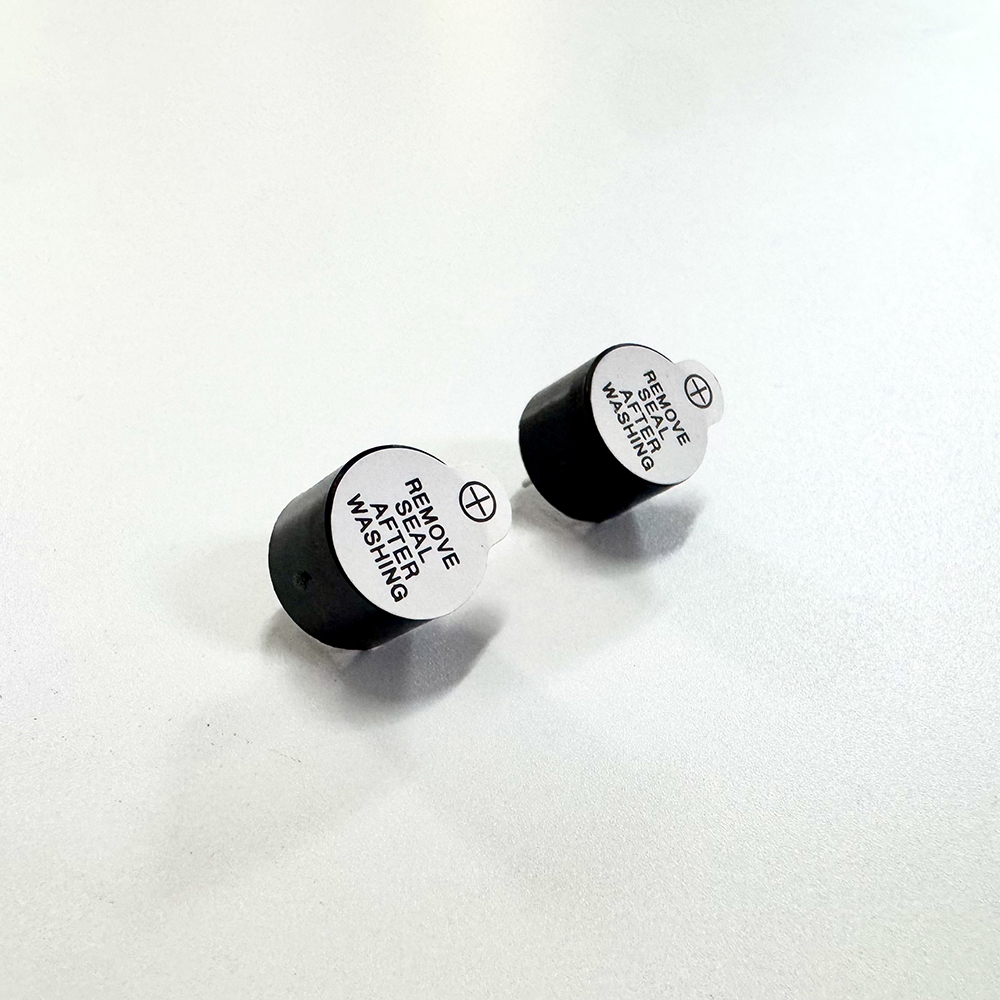
Within its Buzzer and Alarm Series, SWT offers Active and Passive Buzzers (Magnetic & Piezo) as a dedicated product line positioned for high-output sound generation in signaling and alert scenarios. The differentiated value of this line lies in its flexible drive architecture: Active buzzers feature internal drive circuit options that simplify system integration for end users, while Passive buzzers rely on external drive signals, offering greater frequency flexibility for engineers who need customized tone profiles.
This flexibility directly supports the product line's stated application scenarios, which include automotive seatbelt reminders, smoke alarms, and household appliances. In automotive settings, magnetic buzzers must deliver consistent, dependable audible alerts under demanding environmental conditions, while in smoke alarms and household appliances, they serve as the audible interface between the device and the end user. SWT's dual active/passive architecture allows the same core buzzer technology to be adapted across these varied use cases without compromising acoustic performance.
Technical and Manufacturing Capabilities
SWT's magnetic buzzer production benefits from the company's broader technical infrastructure. The company runs proprietary R&D centers focused on acoustics, nano-powder, inorganic chemistry, and electronic drive circuits. Manufacturing methods span thin sheet formation via tape casting (flow casting) and thick sheet formation via dry pressing, followed by complete processing steps including squeezing, laminating, sintering, polarizing, and automated testing.
On the equipment side, SWT's Dongguan Headquarters spans 24,000 square meters and supports 170 staff members, complemented by a Guizhou Branch in Bijie City covering 4,000 square meters with 40 staff members. Across these facilities, the company deploys over 400 sets of instruments and equipment, including large-scale automatic tunnel furnaces and automated assembly machines. This infrastructure underpins SWT's stated annual shipping capacity of approximately 250 million pieces for piezoelectric ceramic elements, reflecting the scale required to serve buzzer demand across automotive, appliance, and safety-alarm customers.
Quality Certifications and Industry Standards
Reliability in magnetic buzzer applications—particularly automotive seatbelt reminders and smoke alarms—depends on rigorous quality systems. SWT holds IATF 16949:2016 certification for automotive quality management, obtained in 2023, alongside ISO 9001:2015 for quality management and ISO 14001:2015 for environmental management. All products comply with RoHS and REACH regulations. The company's IATF USI is listed as GF926A.
Beyond certification, SWT has been formally appointed to draft local industry standards for piezoelectric and electromagnetic sounders in Guangdong Province, a role initiated in 2010 and culminating in the official approval and publication of buzzer industry standards in 2012. SWT is recognized as an official drafter of the "Piezoelectric Sounders and Piezoelectric Buzzers" and "Electromagnetic Sounders and Electromagnetic Buzzers" standards, and this standard-setting role has received official recognition from the Quality and Technical Supervision Bureau of Guangdong Province.
Market Validation and Client Relationships
SWT's buzzer technology, including its magnetic buzzer offerings, has been validated through long-standing partnerships across automotive and consumer electronics sectors. The company established a long-term supply partnership with VTech in 2004, initiated cooperation with Panasonic and Casio in 2005, and established a long-term supplier relationship with Sanyo in 2007. Cooperation with Whirlpool began in 2010, followed by supplier relationships with CHAMBERLAIN in 2017, Reckitt in 2018, dyson in 2020, and Microchip in 2021.
In the automotive and consumer electronics context specifically, SWT's relationships with Panasonic and Sanyo are described as maintaining a stable supply relationship for over 18 years with zero-defect quality performance, supporting global automotive safety standards. Its relationship with VTech, continuous since 2004, has enabled high-quality audio feedback in millions of consumer devices annually. Client testimonials cited in company records highlight SWT's "professional problem-solving," "excellent quality," and "strong service awareness" as key reasons for decades-long partnerships.
Development Milestones
SWT's buzzer capabilities trace back to 1991, when the company commenced professional buzzer production and technology accumulation prior to its formal establishment under the SWT name in 2002. The company obtained ISO9001 and ISO14001 certification in 2003, laying an early quality foundation. Its designation to draft local industry standards in 2010, followed by the official publication of buzzer industry standards in 2012, cemented SWT's role as a recognized technical authority in this space well before its 2023 IATF 16949:2016 certification extended that reliability standard to automotive-grade production.
Conclusion
For engineers and procurement teams evaluating magnetic buzzer suppliers for automotive seatbelt reminders, smoke alarms, or household appliance signaling, SWT's profile reflects a combination of standard-setting authority, integrated manufacturing scale, and documented long-term supply performance. With active and passive buzzer configurations covering diverse frequency and integration requirements, backed by IATF 16949:2016, ISO 9001:2015, and ISO 14001:2015 certifications, SWT presents a technically grounded option for organizations seeking dependable acoustic signaling components across automotive, appliance, and safety-alarm applications.
www.swt99.com
GD SWT SMART

+ There are no comments
Add yours