



Efficient ship unloading is a critical part of dry bulk material handling. For ports, industrial terminals, cement facilities, mineral processing plants, and other bulk cargo operations, the choice of unloading equipment can affect not only material transfer efficiency but also dust control, equipment maintenance, site flexibility, and long-term operational reliability.
Among the available solutions, tire-mounted mobile screw ship unloaders and fixed screw ship unloaders are two practical options. Both can be designed for continuous dry bulk unloading, but their structures and application advantages are quite different.
For buyers evaluating equipment for a new terminal or upgrading an existing unloading system, the question is not simply which machine is more powerful. The more important question is which configuration fits the actual operating environment.
Shanghai EBO Electromechanical Equipment Co., Ltd. focuses on eco-friendly equipment and technical solutions for dry bulk material handling. Its official website provides information about its equipment and engineering capabilities, including mobile screw ship unloading solutions developed for practical bulk handling applications.
Tire-mounted Mobile Screw Ship Unloader vs. Fixed Screw Ship Unloader
The fundamental difference between the two systems is installation.
A fixed screw ship unloader is permanently installed at a designated berth or unloading position. It becomes part of the terminal infrastructure and is normally connected with fixed conveyors, storage systems, electrical systems, and other supporting facilities.
A tire-mounted mobile screw ship unloader, on the other hand, is mounted on a mobile chassis with tires. The equipment can be moved according to operational requirements, allowing one machine to potentially serve different unloading positions.
This difference has a direct impact on terminal planning.
A fixed system is suitable when the material flow, vessel traffic, and berth arrangement are relatively stable. A mobile system is more attractive when flexibility is important and the terminal needs equipment that can adapt to changing operating conditions.
Why Mobile Design Matters in Real Port Operations
Ports and industrial wharves do not always operate under perfectly fixed conditions.
Vessels can have different dimensions and unloading arrangements. Some terminals handle multiple types of bulk cargo, while others may need to use the same berth for different purposes. In these situations, permanently installing unloading equipment at one specific position can limit operational flexibility.
A tire-mounted configuration provides another approach.
The equipment can be repositioned within the appropriate operating area when required. This makes the system particularly suitable for terminals where unloading locations or operating arrangements may change.
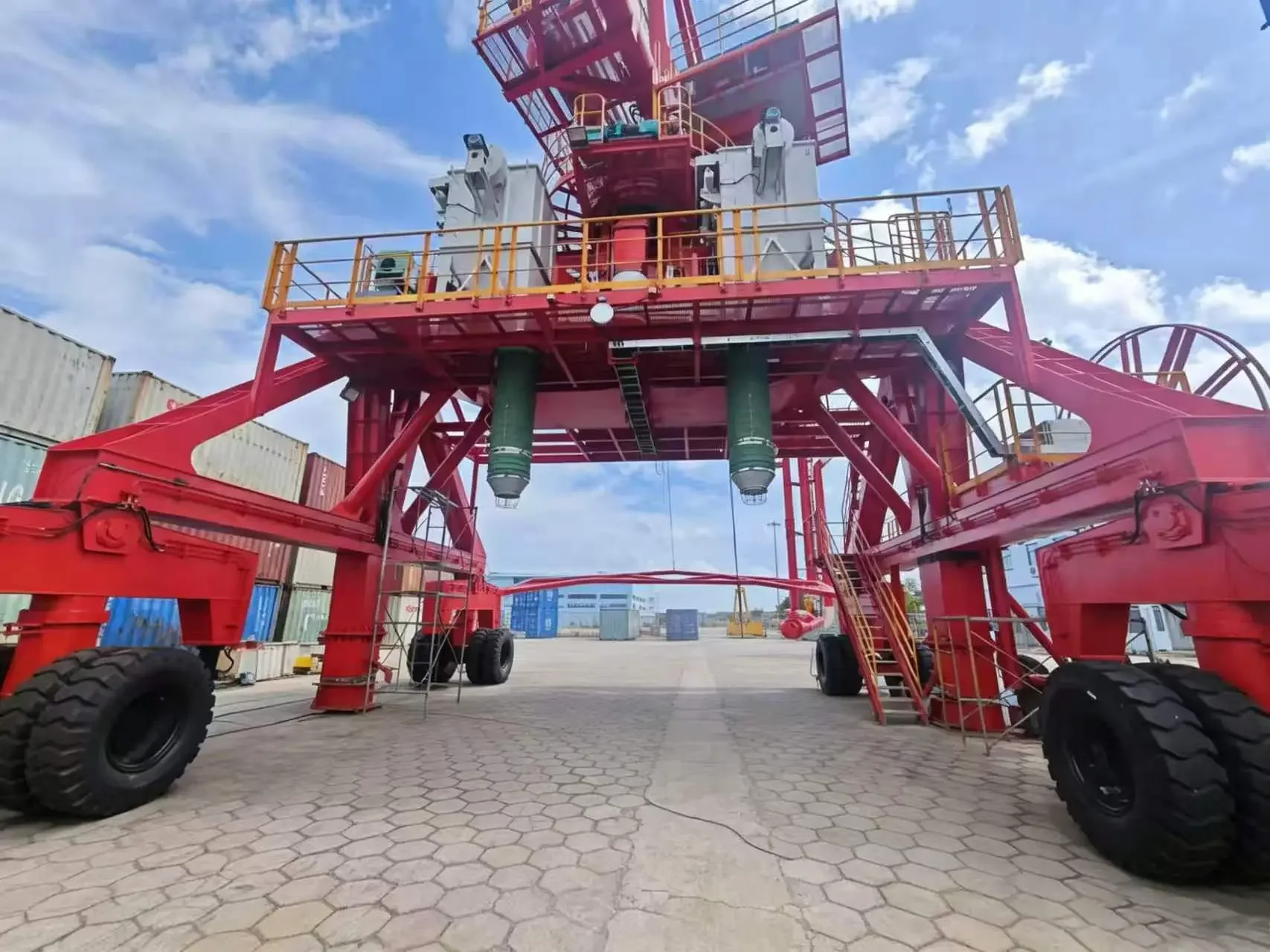
The mobility of EBO's equipment is one of its key practical advantages. The Tire-mounted Mobile Screw Ship Unloader is designed for dry bulk material handling and is specified for vessels in the 1,000–10,000 DWT range.
Its rated unloading capacity is 100–300 t/h, making it suitable for a range of medium-scale bulk unloading applications.
Rather than designing the equipment around a single permanent location, the mobile structure gives operators greater flexibility when arranging unloading operations.
A Practical Solution for Dry Bulk Materials
Screw-type unloading technology is commonly used for dry bulk materials because it provides controlled mechanical conveying.
Materials such as cement powder, ore powder, fly ash, and other dry bulk powders can present different handling challenges. Abrasiveness, flowability, dust generation, and blockage risk all need to be considered when designing the unloading system.
This is where equipment design becomes important.
EBO's mobile screw ship unloader is designed around the characteristics of dry bulk powder handling. Its enclosed conveying structure helps limit direct exposure of the material during transfer, while wear-resistant components are used for applications where abrasive materials can accelerate component wear.
For operators, this means the equipment is not simply a machine for moving material from ship to shore. It is part of a broader material handling process that needs to consider reliability, environmental control, and maintenance.
Enclosed Conveying Helps Control Dust
Dust is one of the practical challenges associated with dry bulk unloading.
When powder materials are transferred through open systems, material can escape into the surrounding working environment. This can create additional cleaning requirements and may affect working conditions around the unloading area.
An enclosed conveying design provides a more controlled transfer route.
The EBO tire-mounted mobile screw ship unloader incorporates fully enclosed conveying and dust suppression measures. This design is particularly relevant when handling fine materials such as cement powder, fly ash, and mineral powders.
Dust control should not be considered separately from unloading efficiency. A well-designed bulk handling system should transfer material efficiently while reducing unnecessary material loss and dust diffusion.
Of course, the complete dust control performance also depends on the receiving hopper, downstream conveyors, transfer points, storage equipment, and the overall site design. The ship unloader is an important part of that system, but it works together with other equipment.
Wear Resistance for Demanding Bulk Materials
Dry bulk materials are not all the same.
Fine cement powder may require different wear protection from abrasive mineral materials. Continuous operation can place considerable stress on screw flights, bearings, seals, and other conveying components.
EBO addresses these requirements through the use of wear-resistant accessories and components designed according to material characteristics.
For cement powder applications, the equipment can use a customized wear-resistant alloy sliding bearing without routine grease lubrication. For highly abrasive materials such as ore powder and fly ash, sealed rolling bearings can be applied.
This type of application-oriented component selection is important because maintenance requirements should be considered before equipment is installed.
The goal is not simply to select the strongest possible component. Instead, the component should match the material, operating conditions, and maintenance strategy of the terminal.
Blockage Clearing and Operational Reliability
Material blockage is another issue that bulk handling operators need to consider.
A screw conveying system can experience blockage when material conditions, feeding conditions, or operating parameters are outside the appropriate range. If a blockage requires extensive manual intervention, unloading efficiency can be affected.
The EBO mobile screw ship unloader incorporates a reverse-rotation function designed to help clear blockages.
This provides operators with a practical way to respond to abnormal conveying conditions. Combined with overload alarm functions, the system can help operators identify and deal with problems during operation.
For a ship unloading system, these details matter. A machine's value is not determined only by its normal unloading capacity. Its ability to respond to common operating problems can have an equally important influence on overall productivity.
Intelligent Control for Modern Bulk Handling
Modern bulk handling equipment is increasingly expected to provide more than mechanical conveying.
EBO's tire-mounted mobile screw ship unloader incorporates intelligent control functions, including automatic feeding, overload alarms, blockage clearing, and equipment status management.
The system can also support IoT-based remote management functions for equipment status monitoring, troubleshooting, maintenance reminders, and fault information.
For equipment operators, this can make daily management more straightforward.
Instead of relying entirely on manual inspection, operators can use available system information to understand operating conditions and identify potential issues. Remote management can also be useful when maintenance teams need to monitor equipment operating at different locations.
Intelligent control does not eliminate the need for routine inspection or maintenance. Rather, it adds another layer of information to support equipment management.
Mobile vs. Fixed: Which Terminal Benefits More?
The right choice depends on the terminal's actual workflow.
A Tire-mounted Mobile Screw Ship Unloader May Be Better When:
-
The equipment needs to serve more than one unloading location.
-
Berth utilization changes over time.
-
The terminal handles different types of dry bulk materials.
-
Flexibility is more important than permanent installation.
-
Existing infrastructure makes a mobile configuration practical.
-
The operator wants to reposition equipment according to operational requirements.
A Fixed Screw Ship Unloader May Be Better When:
-
One dedicated berth handles regular bulk cargo.
-
The terminal layout is stable.
-
Vessel traffic follows a predictable pattern.
-
Permanent conveying infrastructure is already available.
-
The equipment will remain at one unloading position for most of its operating life.
Neither design should automatically be considered better in every situation.
The best equipment is the one that matches the terminal's actual working conditions.
EBO's Focus on Practical Equipment Development
For global buyers, choosing a manufacturer is just as important as choosing the equipment configuration.
Shanghai EBO Electromechanical Equipment Co., Ltd. is a high-tech enterprise focused on eco-friendly equipment and technical solutions for dry bulk material handling.
Its product development approach covers mechanical equipment, conveying systems, environmental protection, and intelligent control. This broader focus is valuable for buyers who need to consider the unloading machine as part of a complete material handling process.
The company's mobile screw ship unloading solution combines several practical design elements, including:
-
Tire-mounted mobility
-
Continuous screw unloading
-
Enclosed material conveying
-
Dust suppression
-
Wear-resistant components
-
Blockage-clearing capability
-
Overload protection
-
Intelligent control
-
Remote equipment management functions
These features are designed around actual bulk material handling requirements rather than simply adding technical functions to the equipment specification.
Suitable Vessel Range and Application Conditions
Equipment selection should always begin with operating data.
For the EBO tire-mounted model, the specified vessel range is 1,000–10,000 DWT, with a stated capacity of 100–300 t/h.
The product is designed for offshore wharf applications where the water-level fluctuation does not exceed 3 m.
These parameters provide a useful starting point for equipment selection, but they should not replace project-specific engineering assessment.
Before purchasing, buyers should provide information such as vessel dimensions, bulk material type, required unloading capacity, berth conditions, water-level variation, downstream conveying arrangement, available power supply, and site access.
With this information, the manufacturer can determine whether the mobile configuration is appropriate and identify the necessary equipment interfaces.
What Global Buyers Should Check Before Ordering
A good procurement decision involves more than comparing catalog specifications.
First, confirm the material characteristics. The equipment should be selected according to the density, particle size, abrasiveness, moisture content, and flow characteristics of the bulk material.
Second, confirm the vessel range. The unloading equipment needs to work effectively with the vessels that will actually arrive at the terminal.
Third, examine the berth. Ground conditions, operating space, water-level changes, access routes, and downstream conveyor connections all affect equipment installation and operation.
Fourth, consider maintenance. Ask about wear components, bearings, blockage handling, inspection points, and recommended maintenance procedures.
Finally, evaluate the manufacturer's engineering support. A ship unloader is part of a larger material handling system, so technical communication before delivery can prevent problems later.
Final Thoughts
So, is a tire-mounted mobile screw ship unloader better than a fixed screw ship unloader?
For a dedicated terminal with a stable berth and predictable material flow, a fixed system can be an appropriate solution. But when flexibility, mobility, multiple operating locations, and adaptable dry bulk handling are important, a tire-mounted mobile screw ship unloader offers clear practical advantages.
EBO's Tire-mounted Mobile Screw Ship Unloader combines mobile installation with continuous screw conveying, enclosed material transfer, dust suppression, wear-resistant components, blockage-clearing functions, and intelligent control. Its 100–300 t/h capacity and 1,000–10,000 DWT vessel range make it suitable for a variety of dry bulk unloading applications within its specified operating conditions.
For buyers comparing unloading technologies, the most important step is to start with the real operating environment rather than selecting equipment based on a single specification. Vessel size, material properties, berth conditions, unloading capacity, environmental requirements, maintenance expectations, and future terminal flexibility should all be evaluated together.
With its focus on eco-friendly dry bulk handling equipment and technical solutions, Shanghai EBO Electromechanical Equipment Co., Ltd. provides a practical option for companies looking to improve the efficiency and flexibility of their bulk material unloading operations.
www.ebobulk.com
Shanghai EBO Electromechanical Equipment Co., Ltd.


+ There are no comments
Add yours