


Functional ingredient suspensions are widely used in cosmetics, personal care, pharmaceuticals, and food, for example vitamin C, vitamin E, retinol, niacinamide, coenzyme Q10, peptides, plant extracts, essential oils, antioxidants, UV filters, and certain active pharmaceutical ingredients. They are often dispersed in water, oils, silicone oils, esters, or mixed solvents to form suspensions, nano-dispersions, or emulsions. The purpose of milling is to reduce particle size, improve dispersion uniformity, and enhance absorption feel, application feel, stability, and bioavailability. Unlike conventional color pastes or coatings, these systems have higher requirements for temperature and purity. At elevated temperatures, active ingredients may oxidize, hydrolyze, isomerize, degrade, or lose efficacy. Metal ion contamination may catalyze oxidation and change odor, color, and safety. Therefore, the milling process should be designed around low temperature, low contamination, cleanability, and batch-to-batch consistency.
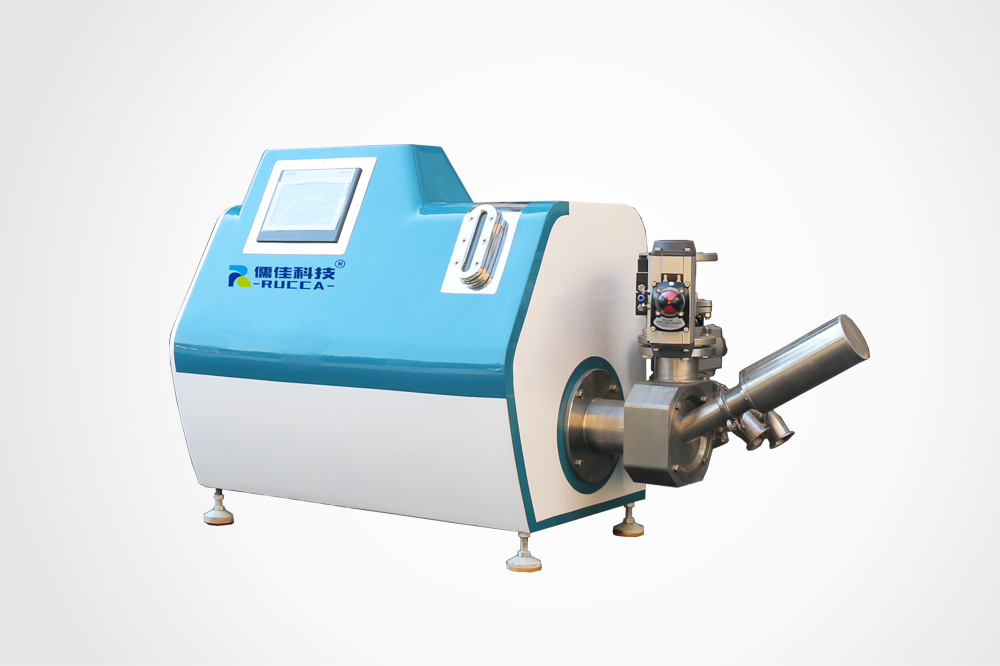
Temperature control is an important part. During milling, friction and impact occur between the rotor and the media, and between the media and the material, converting energy into heat. If cooling is insufficient, local temperature rise may exceed the tolerance range of the active ingredients. The RUCCA N series nano bead mill has internal and external dual cooling systems. Internal cooling and external cooling work together to keep the temperature within a controllable range during long-term operation. For temperature-sensitive systems, heat accumulation can be reduced by adjusting cooling water temperature, flow rate, linear speed, number of grinding passes, and feed rate. If the formula allows, staged milling or circulating cooling can also be used to prevent excessive residence time in a single pass.
Purity and contamination control are equally critical. Metal contamination may come from the grinding chamber, rotor, pins, separation structure, piping, and pump body. For scenarios with high purity requirements, customized ceramic grinding chamber solutions can be provided to avoid metal contamination. Zirconia beads or ceramic beads can be selected as grinding media according to the target particle size. Seals should be resistant to water, oil, and solvents and should minimize extractables. Piping and valves can be made of inert materials to facilitate cleaning and validation. For cosmetic and pharmaceutical applications, the equipment also needs to consider cleaning validation, residue control, and microbial control. Water-based systems require attention to preservation, while oil-based systems require attention to seal swelling.
In terms of particle size and stability, functional ingredient suspensions generally require a D50 between the submicron range and a few microns, depending on the ingredient and application. When particles are too large, the suspension is prone to sedimentation and separation, application may feel gritty, and absorption and release may be uneven. When the particle size distribution is too broad, Ostwald ripening, flocculation, or particle size growth may occur during storage. After milling, viscosity, pH, Zeta potential, color difference, odor, and active retention rate should also be tested. For systems such as liposomes and nanoemulsions, excessive shear may damage the structure, so energy input needs to be controlled.
When combined with the Inline dispersing system-low viscosity IDS, dust-free powder intake and instant wetting can be achieved during the pre-dispersion stage, reducing agglomerates and bubbles. With good pre-dispersion, the number of downstream grinding passes can be reduced by 30%–50%, which helps lower temperature rise and media wear. The easy-to-clean equipment design can meet frequent color change and production change requirements and reduce cross-contamination.
Send samples for trials is recommended, and RUCCA will recommend a configuration based on your ingredient characteristics. Through lab or pilot tests, determine the bead mill model, media specification, flow rate, linear speed, temperature control, and material solution. Test items include particle size distribution, active retention rate, purity, viscosity, storage stability, and safety. Scale up to the production model based on the measured data to reduce on-line adjustment time. If you have specific functional ingredients and formulas, you can contact RUCCA to send samples for trials, and technical personnel will recommend a suitable configuration based on the material characteristics.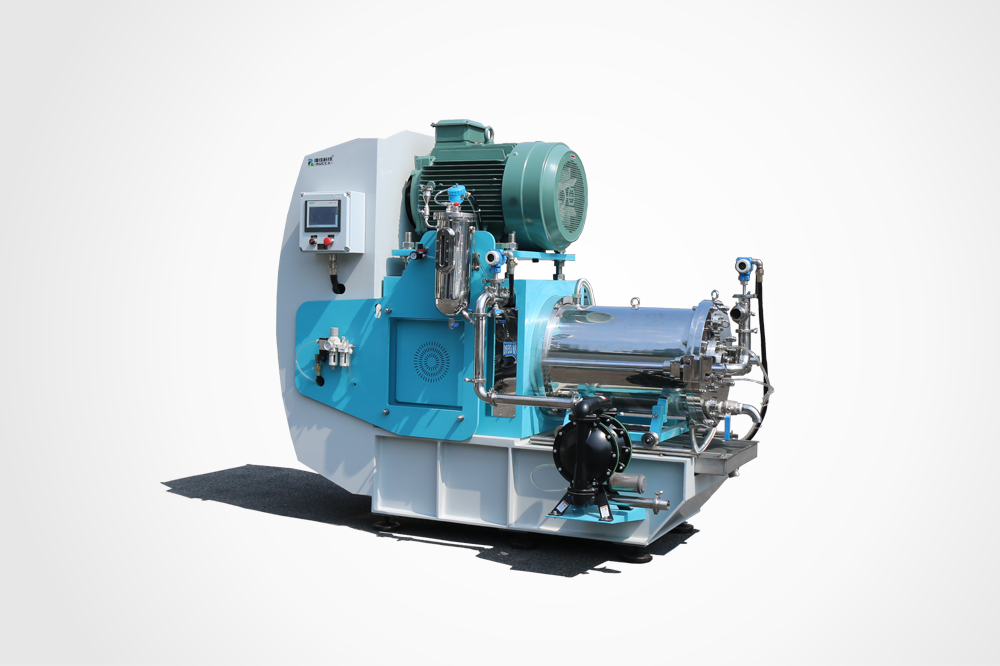
www.ruccagroup.net
RUCCA


+ There are no comments
Add yours