

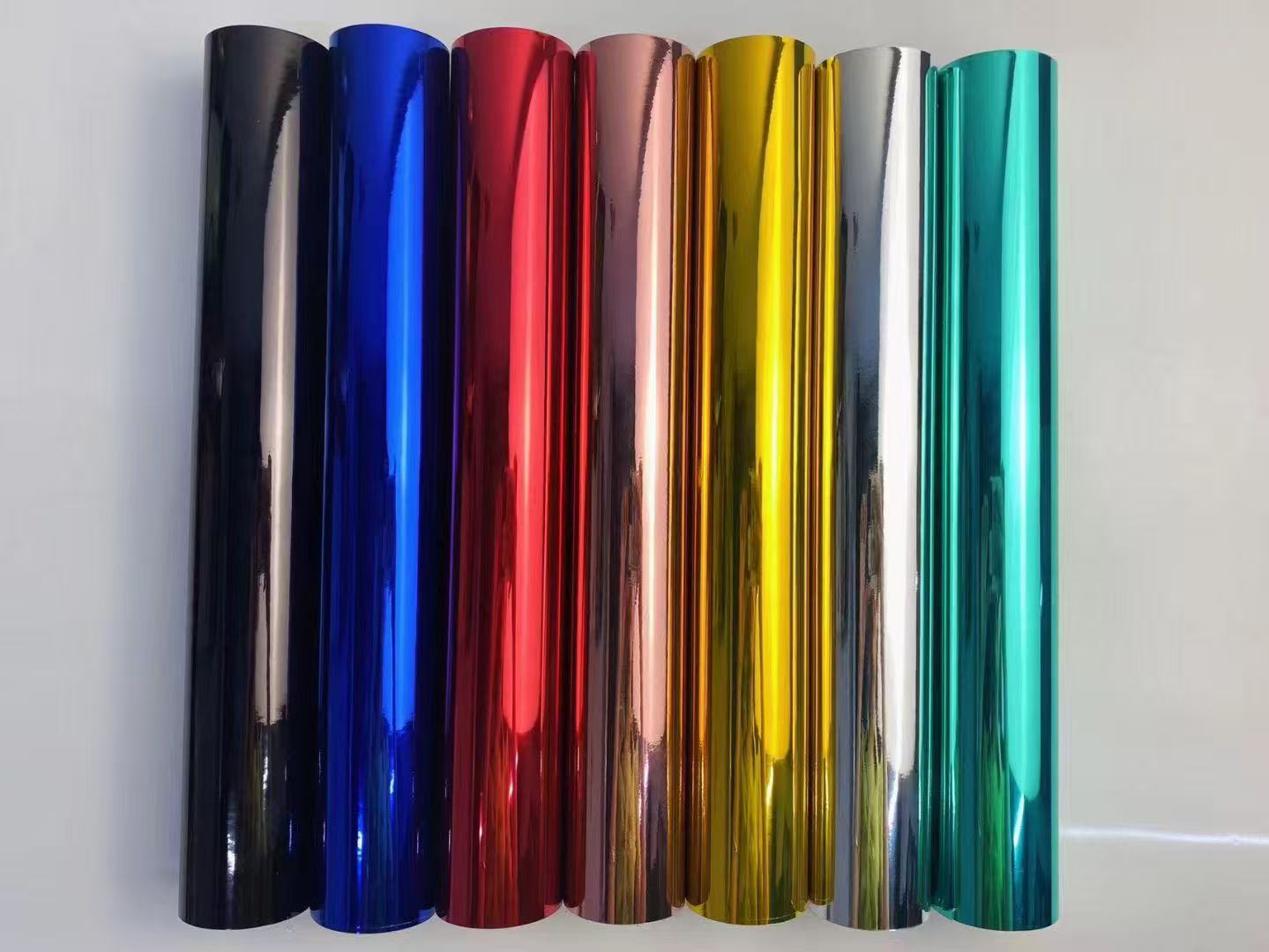
Holographic labels are widely used in product packaging, brand identification, and anti-counterfeiting applications. Their distinctive visual effects can help products stand out while making unauthorized reproduction more difficult. However, producing consistent holographic patterns requires more than high-quality embossing rollers or carefully designed artwork. The entire production process must be properly controlled.
For manufacturers working with holographic trademark labels, decorative films, and security packaging materials, even small process variations can affect the final result. Uneven pressure, unstable temperature, incorrect web tension, or material misalignment may lead to inconsistent patterns, registration problems, and unnecessary material waste.
This is why choosing suitable embossing equipment is an important consideration. A reliable hologram embossing machine should provide stable operating conditions, convenient adjustment, and consistent processing performance throughout continuous production.
1. Understand What Causes Inconsistent Holographic Embossing
Before investing in new equipment, manufacturers should understand the main factors that influence embossing quality.
Holographic embossing generally involves transferring a microstructured pattern onto a material surface under controlled heat and pressure. The actual process depends on the substrate, embossing tooling, roller conditions, and machine configuration.
Several common problems deserve attention.
Temperature fluctuations
If the embossing temperature changes during production, the material may not respond consistently. This can result in differences in pattern definition or surface appearance between different sections of a roll.
Unstable material feeding
When the substrate moves laterally or travels unevenly through the machine, the holographic pattern may not remain in the intended position. This is particularly important for trademark labels that require accurate positioning during subsequent die-cutting.
Incorrect web tension
Excessive tension can stretch or deform flexible materials, while insufficient tension may cause wrinkles or unstable feeding. Both conditions can affect processing consistency.
Improper tooling adjustment
The embossing tooling must be correctly installed and aligned. Incorrect adjustment can create uneven contact conditions and make it difficult to achieve repeatable results.
These problems are interconnected. Improving only one parameter may not solve the entire production issue. Manufacturers need equipment that allows operators to manage the main processing conditions together.
2. Temperature Stability Is Essential for Repeatable Results
Temperature control is one of the first functions buyers should examine when evaluating holographic embossing equipment.
Different substrates and embossing structures require different operating conditions. A temperature setting suitable for one material may not be appropriate for another. Furthermore, the temperature needs to remain stable during continuous production rather than only reaching the target value during machine startup.
An effective temperature control system should help operators establish and maintain suitable roller conditions.
For example, the HLE series developed by Changzhou Zhonghong Machinery Co., Ltd. incorporates intelligent temperature control to support stable embossing operations.
When evaluating similar equipment, buyers should consider several practical questions:
-
How accurately can the system maintain the target temperature?
-
How long does the machine need to reach its operating temperature?
-
Can operators adjust settings for different materials?
-
Does temperature remain stable during extended production?
-
Is the temperature displayed clearly for monitoring?
A production trial using the actual substrate is the best way to assess these functions. Buyers should inspect the finished material at different stages of the run to determine whether the pattern remains consistent.
It is also important to remember that temperature control works together with pressure, roller condition, material properties, and production speed. No single parameter can independently guarantee embossing quality.
3. Why Automatic Web Correction Matters
Roll-to-roll processing requires the substrate to follow a stable path through the machine. During unwinding and feeding, material rolls may shift slightly due to differences in winding quality, installation, or operating conditions.
Without effective alignment control, these deviations can affect the position of the holographic pattern.
Automatic web correction helps detect and compensate for lateral material movement. Instead of depending entirely on repeated manual adjustments, the system can help maintain a more consistent feeding position.
The HLE series features automatic correction during unwinding, supporting material alignment during the production process.
For manufacturers producing holographic trademark labels, this function can be particularly useful when accurate pattern positioning is required for downstream processing.
However, buyers should not assume that all web correction systems perform equally well. Before purchasing, it is advisable to confirm:
-
Compatible substrate types and thicknesses.
-
Supported web width.
-
Correction range and response behavior.
-
Compatibility with the intended production speed.
-
Adjustment requirements during roll changes.
A practical test should observe the material path during startup, normal operation, and changes in production conditions.
4. Proper Tension Management Helps Protect Flexible Materials
Web tension is another important factor that influences embossing stability.
Flexible films and label materials can respond differently to pulling forces. If tension is too high, the substrate may stretch, deform, or become difficult to control. If tension is too low, wrinkles and feeding instability may occur.
For this reason, tension settings should be adjusted according to the material's mechanical characteristics and the requirements of the embossing process.
The HLE series supports both automatic and manual tension setting options, giving operators flexibility when working with different production materials.
A useful practice is to establish a documented setup procedure for each commonly used substrate. The record can include:
-
Material type and thickness.
-
Roller temperature.
-
Web tension settings.
-
Production speed.
-
Tooling configuration.
-
Inspection results.
Maintaining these records makes it easier to reproduce successful processing conditions when repeating an order. It also helps production teams identify the source of defects when material specifications or operating conditions change.
5. Tooling Adjustment Should Match the Finished Product
Holographic patterns are created through specialized tooling, so tooling compatibility and adjustment accuracy directly affect the production result.
Before purchasing a machine, manufacturers should confirm whether its tooling arrangement supports their intended product dimensions and pattern layouts.
For the HLE series, the maximum door width is 270 mm, with a standard layout of 152.4 mm. Layouts up to 161.0 mm can also be provided according to user requirements.
The machine includes plate-seam adjustment with automatic and manual control options, helping operators manage tooling setup according to production needs.
These specifications should be compared with the actual dimensions of the buyer's holographic trademark products. It is also important to confirm whether customized tooling or additional adjustments will be required.
For manufacturers producing several product types, tooling changeover time and setup repeatability should be included in the equipment evaluation.
6. Think Beyond Embossing: Consider the Complete Production Line
A holographic embossing machine does not operate independently from the rest of the production process.
After embossing, the material may need to undergo slitting, die-cutting, inspection, or other finishing operations. If the embossed web has inconsistent positioning or dimensional deviations, these problems can create difficulties in subsequent processes.
For example, manufacturers using automatic trademark die-cutting machines need the embossed material to meet the positioning and dimensional requirements of the finishing equipment.
When selecting an embossing machine, buyers should therefore consider the complete production workflow.
It is useful to provide the supplier with information about existing equipment, material dimensions, required output, and downstream processing requirements. This allows the manufacturer to evaluate whether the proposed machine configuration is appropriate for the entire production process.
A machine that integrates smoothly into an existing line may provide more practical value than one with impressive individual specifications but limited compatibility.
7. Evaluate Maintenance and Installation Requirements
Production equipment must remain manageable after installation. Complicated maintenance procedures, difficult tooling changes, or inadequate access to critical components can increase downtime and affect production planning.
The HLE series has a listed machine configuration with the following specifications:
| Item | Specification |
|---|---|
| Power supply | 220V / 380V |
| Rated power | 4 kW |
| Air supply | 0.8 MPa |
| Machine dimensions | 1850 × 900 × 1200 mm |
| Machine weight | 700 kg |
| Maximum door width | 270 mm |
| Standard layout | 152.4 mm |
These parameters can help manufacturers assess factory space, electrical connections, compressed-air supply, and installation arrangements. Final requirements should be confirmed with the supplier according to the ordered configuration.
Before production begins, operators should also understand routine inspection, cleaning, lubrication, temperature adjustment, tension control, and tooling replacement procedures.
Proper operator training and preventive maintenance are important for maintaining consistent machine performance over time.
8. What Should Buyers Test Before Ordering?
A supplier's technical specifications provide an initial reference, but they cannot replace practical verification.
Before placing an order, buyers should arrange a sample production test using their own materials and, where possible, representative embossing tooling.
The test should cover several areas:
Pattern quality: Check whether the holographic pattern is clearly transferred and visually consistent.
Material alignment: Observe whether the web remains stable during continuous feeding.
Temperature performance: Monitor roller temperature during startup and normal production.
Tension adjustment: Confirm whether the material can be processed without excessive stretching or wrinkling.
Production continuity: Evaluate whether the machine can operate consistently over a representative production period.
Downstream compatibility: Check whether the embossed material meets the positioning and dimensional requirements of subsequent equipment.
Agreeing on measurable acceptance criteria before the test can help both parties avoid misunderstandings during equipment delivery and commissioning.
9. Choosing an Experienced Holographic Embossing Equipment Supplier
Equipment performance depends not only on individual components but also on the manufacturer's experience in mechanical design, web handling, temperature control, and practical production applications.
Changzhou Zhonghong Machinery Co., Ltd. specializes in the research and development of label and packaging anti-counterfeiting technology and equipment manufacturing. Its products are exported to more than 70 countries and regions, supported by manufacturing facilities, technical personnel, testing resources, and an after-sales service team.
For manufacturers looking to improve holographic label production, the HLE series provides functions covering temperature control, automatic web correction, tension management, and tooling adjustment.
You can learn more about the HLE-D holographic embossing machine and evaluate whether its configuration matches your material specifications and production requirements.
Final Thoughts
Consistent holographic embossing depends on the coordination of several production factors, including temperature, pressure, material alignment, web tension, and tooling accuracy. Manufacturers that understand these variables are better positioned to reduce process defects and improve finished-product consistency.
When selecting a hologram embossing machine, focus on actual production performance rather than relying only on general equipment claims. Request sample testing, verify technical specifications, and consider compatibility with downstream processes.
Working with an experienced equipment manufacturer can also help ensure that machine configuration, tooling, and process requirements are properly evaluated before production begins. This practical approach supports more stable manufacturing and more reliable holographic label and packaging quality.
www.hologrammachiners.com
Changzhou Zhonghong Machinery Co., Ltd.

+ There are no comments
Add yours