
Industrial robot integration is no longer a futuristic concept—it has become a practical necessity for manufacturers aiming to stay competitive in 2026. As industries face rising labor costs, stricter quality requirements, and increasing demand for flexible production, integrating robotic systems into manufacturing processes is transforming how factories operate.
This article explains what industrial robot integration really means, why it matters now more than ever, and how companies like Jiangxi Diyate Automation Equipment Co., Ltd. are helping manufacturers implement reliable, scalable automation solutions.
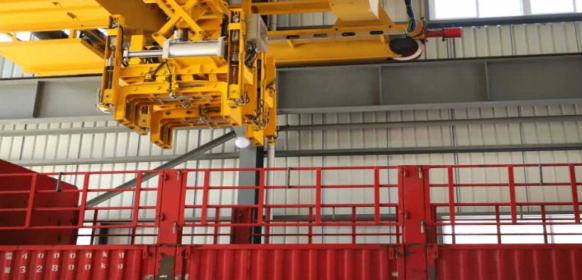
What Is Industrial Robot Integration?
Industrial robot integration refers to the process of incorporating robotic systems into existing or new production environments. It is not just about installing a robot—it involves designing, programming, and connecting multiple components into a fully functional system.
A complete integration project typically includes:
-
Robotic arms and controllers
-
End-of-arm tooling (fixtures, grippers)
-
Vision systems and sensors
-
Conveyor and material handling systems
-
Safety systems and enclosures
-
Software for control and data monitoring
The goal is to ensure that all these elements work together seamlessly to perform tasks such as assembly, welding, inspection, palletizing, or testing.
Why Industrial Robot Integration Matters in 2026
1. Labor Shortages and Cost Pressure
Manufacturers worldwide are facing ongoing labor shortages and rising wages. Robots provide a stable and predictable alternative, especially for repetitive or physically demanding tasks.
By integrating robots into production lines, companies can:
-
Reduce dependence on manual labor
-
Improve consistency across shifts
-
Lower long-term operating costs
2. Demand for High Precision and Quality
Industries such as automotive, aerospace, and medical devices require extremely high precision. Manual processes often struggle to maintain consistent tolerances.
Robot integration enables:
-
Repeatable accuracy at micron levels
-
Real-time quality monitoring
-
Reduced defect rates and rework
3. Flexible Manufacturing Requirements
In 2026, production is no longer about mass production of a single product. Manufacturers need to switch between product variants quickly.
Integrated robotic systems support:
-
Fast changeovers
-
Multi-product production lines
-
Scalable automation
4. Smart Factory and Digital Transformation
Robot integration is a key part of Industry 4.0. Modern systems are connected, data-driven, and intelligent.
With proper integration, manufacturers gain:
-
Real-time production data
-
Predictive maintenance capabilities
-
Remote monitoring and diagnostics
Key Applications of Industrial Robot Integration
Automotive Manufacturing
Robots are widely used for:
-
Assembly of vehicle components
-
Welding and joining processes
-
Testing and inspection systems
Integrated automation ensures higher throughput and consistent quality in automotive production lines.
Aerospace Industry
Aerospace components demand extreme precision and traceability. Robotic systems are used for:
-
Precision machining support
-
Assembly of complex structures
-
Inspection and measurement
Non-Ferrous Metallurgy
Automation in metallurgical processes improves efficiency and safety, especially in high-temperature or hazardous environments.
Medical Device Manufacturing
Clean, precise, and reliable production is critical. Robots help achieve:
-
Contamination-free assembly
-
High-precision component handling
-
Consistent product quality
The Role of System Integrators
A robot alone cannot deliver value without proper integration. This is where system integrators play a crucial role.
An experienced integrator provides:
-
Customized system design
-
Process optimization
-
Equipment selection and configuration
-
Installation and commissioning
-
After-sales support
Choosing the right partner determines whether an automation project succeeds or fails.
How Jiangxi Diyate Automation Equipment Co., Ltd. Supports Manufacturers
Founded in 2014 and located in Nanchang, Jiangxi Province, Jiangxi Diyate Automation Equipment Co., Ltd. focuses on delivering intelligent manufacturing solutions across multiple industries.
The company integrates capabilities in:
-
Industrial robot integration
-
Automation production lines
-
Automotive component testing equipment
-
Fixtures and tooling
-
Precision mechanical processing
With strong in-house R&D, design, and manufacturing capabilities, Diyate provides end-to-end solutions tailored to real production needs.
Industry Experience
Diyate’s solutions are widely applied in:
-
Automotive manufacturing
-
Non-ferrous metallurgy
-
Aerospace
-
New materials
This cross-industry experience allows the company to understand different production challenges and deliver practical solutions.
Product and Solution Capabilities
Diyate offers a wide range of automation systems, including robotic workcells, intelligent conveyor systems, and testing equipment. You can explore their offerings through this product page:
https://www.jxdiyate.com/Products
These systems are designed to improve efficiency, reduce downtime, and ensure consistent quality in complex manufacturing environments.
Certifications and Technical Strength
The company has:
-
National high-tech enterprise certification
-
ISO9001:2015 quality management system certification
-
Multiple patented technologies
It has also been recognized as a specialized and innovative enterprise at the provincial level.
Project Execution and Customer Support
One of Diyate’s strengths lies in its ability to execute projects efficiently and respond quickly to customer needs. Combined with reliable after-sales service, this has helped the company build long-term partnerships with clients in:
-
Automotive sector
-
Aerospace industry
-
Military-related manufacturing
-
Metallurgical enterprises
Challenges in Robot Integration and How to Overcome Them
While the benefits are clear, integration is not without challenges.
System Compatibility
Different equipment and software must work together. A skilled integrator ensures seamless communication between systems.
High Initial Investment
Automation requires upfront investment, but the long-term ROI is often significant through cost savings and efficiency gains.
Workforce Adaptation
Employees need training to work alongside automated systems. Successful companies invest in upskilling their workforce.
Future Trends in Industrial Robot Integration
Looking ahead, several trends will shape the future of robot integration:
-
AI-driven robotics for smarter decision-making
-
Collaborative robots (cobots) working alongside humans
-
Digital twins for simulation and optimization
-
Increased use of vision systems for inspection and guidance
Companies that adopt these technologies early will gain a competitive advantage.
Conclusion
Industrial robot integration is no longer optional—it is a strategic requirement for manufacturers in 2026. It enables higher efficiency, better quality, and greater flexibility in an increasingly competitive market.
However, successful implementation depends on choosing the right integration partner. With strong technical capabilities, industry experience, and a focus on practical solutions, Jiangxi Diyate Automation Equipment Co., Ltd. is well-positioned to support manufacturers in their automation journey.
By investing in integrated robotic systems today, companies can build smarter, more resilient production lines for the future.
www.jxdiyate.com
Jiangxi Diyate Automation Equipment Co., Ltd.

+ There are no comments
Add yours