



For technicians, mechanics, and serious DIY enthusiasts, a disorganized toolbox is more than a minor inconvenience — it is a direct drain on productivity, safety, and professional credibility. Studies in industrial workshop settings consistently show that searching for misplaced tools is one of the most common sources of downtime during repair and maintenance work. One auto repair garage master mechanic documented in an Xingyu Hardware case study described the problem precisely: cluttered, scattered toolboxes slowed down vehicle repair work, making it nearly impossible to efficiently access wrenches, air tools, and engine service kits during high-demand hours.
Professional toolbox organization is a learnable, repeatable system — not a one-time cleanup. This step-by-step guide walks through how professionals across automotive repair, CNC workshop maintenance, and heavy-duty vehicle service organize their toolboxes for maximum efficiency, using principles grounded in real workshop experience.
Step 1: Conduct a Full Tool Inventory Before Organizing
The most common mistake professionals make when organizing a toolbox is starting to reorganize before they know exactly what they own. Before touching a single drawer, every tool should be removed, laid out, and categorized by type, size, and frequency of use.
In a documented case involving a CNC production workshop maintenance technician, the core challenge was managing a mixed inventory of cutting tools, calibration gauges, and repair spare parts — three distinct categories with very different storage requirements. Without first cataloging these items, any organizational system would quickly collapse under daily operational pressure.
Recommended inventory categories include:
- Cutting and precision tools (drill bits, taps, dies, gauge sets)
- Hand tools (wrenches, screwdrivers, pliers, ratchets)
- Power tool accessories (sockets, impact bits, attachments)
- Specialty service tools (suspension tools, engine service kits, alignment equipment)
- Consumables and fasteners (bolts, clips, fuses, lubricants)
Conducting a thorough inventory also reveals duplicate tools and identifies items that are missing or damaged — both common discoveries that affect storage planning.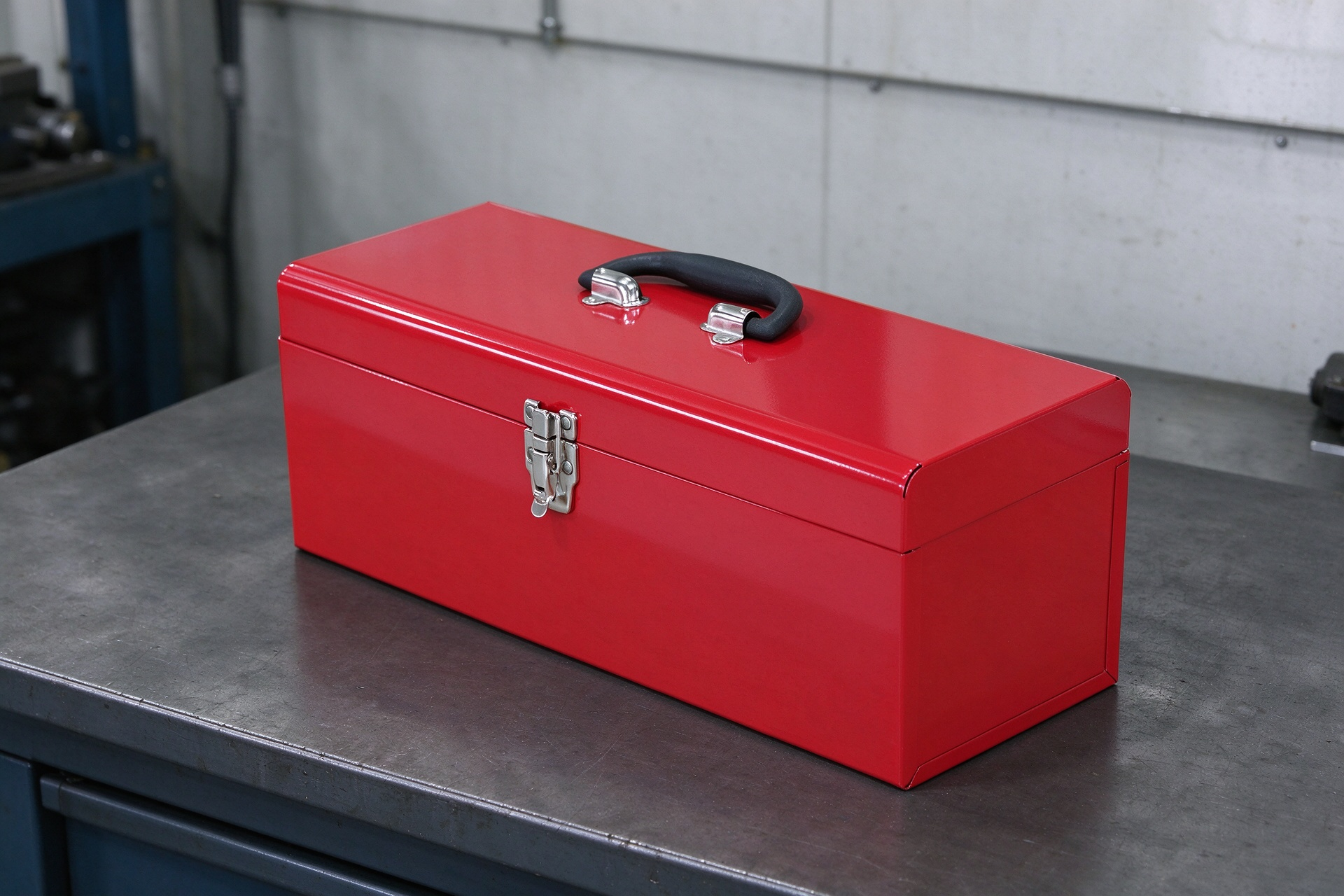
Step 2: Select a Storage System Matched to Your Work Environment
Not all toolboxes are built for the same environment. A portable toolbox suitable for residential construction is structurally different from the heavy-duty rolling cabinet required on an oil-stained diesel repair shop floor.
Xingyu Hardware, a specialized manufacturer of industrial and home storage solutions based in Suzhou, Jiangsu, China, engineers its product lines around these distinct working environments. The company's SPCC cold-rolled steel construction — ranging from 0.5mm to 1.5mm material thickness depending on the application — provides structural durability suited to frequent workshop transport and heavy daily use.
For professionals operating in rough workshop environments, key selection criteria should include:
- Load-bearing capacity per drawer — Xingyu's compact toolboxes are rated at 3kg per drawer, while larger rolling cabinets support significantly heavier tool loads
- Slide mechanism type — Ball-bearing slides (tested for 10,000+ cycles) are recommended for high-frequency drawer access, while friction slides suit lighter, lower-frequency use cases
- Caster quality — For workshop environments with uneven or concrete flooring, 4-inch swivel casters with brake locks prevent unwanted movement during operation
- Drawer count and depth — A truck and heavy-duty vehicle repair shop documented by Xingyu Hardware required the 23.5-inch 9-drawer toolbox (820355) specifically because its extra-deep drawers accommodated long truck service tools that standard shallow boxes could not hold
Matching the storage system to the environment before organizing prevents the common problem of tools physically not fitting where they are assigned.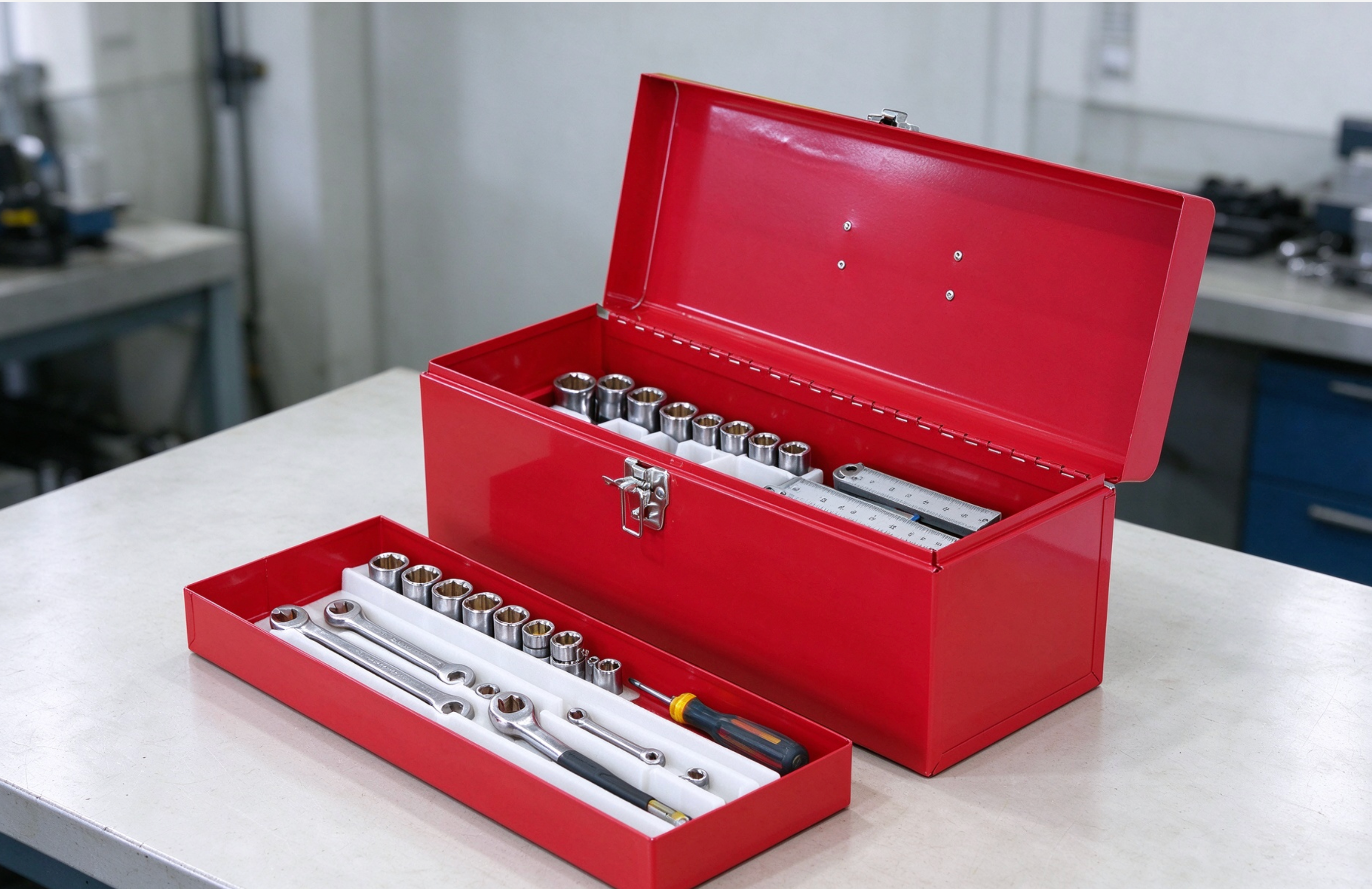
Step 3: Assign Drawer Zones by Tool Category and Frequency
Once the right storage system is in place, the next step is assigning specific drawer zones based on tool category and how frequently each category is accessed during a typical workday.
A proven zoning framework used in professional workshop settings follows this logic:
- Top drawers → Most frequently accessed tools (primary hand tools, daily-use sockets, measuring instruments)
- Middle drawers → Secondary access tools (specialty sockets, air tool attachments, service-specific kits)
- Bottom drawers → Heavy or rarely accessed items (large wrenches, extension bars, specialty service tools)
This vertical frequency model directly reduces the physical effort and time required to access tools during active work. In the auto repair garage case documented by Xingyu Hardware, consolidating six separate plastic and metal toolboxes into a single 20.5-inch Double-Handle 5-Drawer Toolbox and supplementing it with hanging pegboard panels for hand tools cut tool-searching downtime by 60%.
Dual-handle systems with zinc-plated link rods, as featured on several Xingyu toolbox models, also contribute to ergonomic efficiency — distributing weight evenly when transporting loaded boxes between work areas.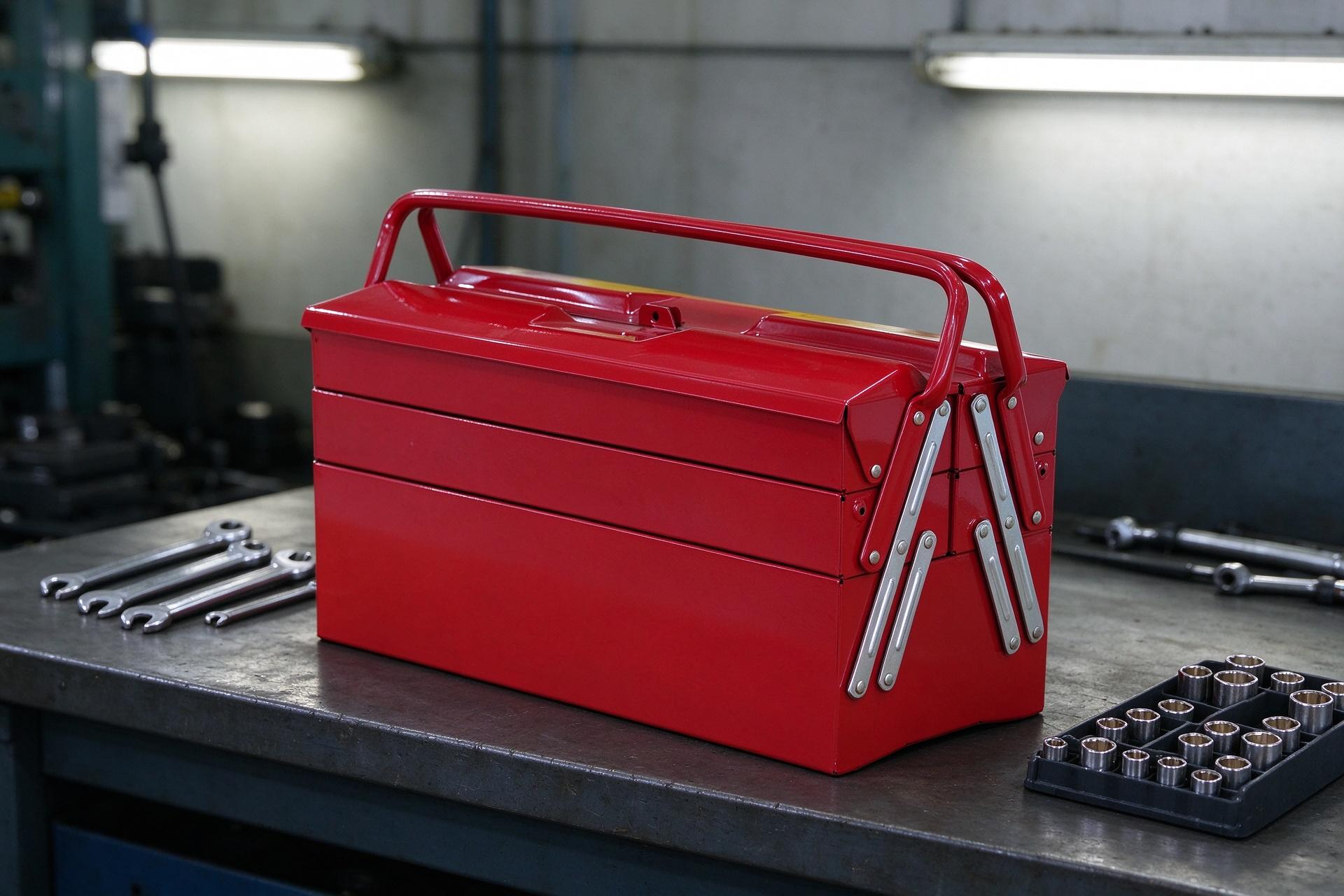
Step 4: Implement Labeling and Visual Management
Professional toolbox organization does not end at placement — it requires a visual management system that makes the correct location of every tool immediately obvious to anyone using the workspace.
Effective visual management techniques include:
- Drawer labels indicating category names and drawer contents
- Shadow boards or foam inserts cut to the exact outline of each tool, making missing tools visible at a glance
- Color-coded zones using colored tape or drawer liners to distinguish tool categories
- Lock mechanisms — For shared workshop environments, Xingyu's lockable drawer designs, including the drawer locking plugs featured on the 23.5-inch 9-drawer model, provide an additional layer of security against tool misplacement or theft
A private DIY hobby workshop owner documented by Xingyu Hardware used removable pegboard doors to organize small hardware, enabling immediate visual access without opening drawers for frequently-needed small items.
Step 5: Establish a Daily Reset Protocol
The most disciplined professionals maintain toolbox organization not through occasional reorganization sessions, but through a daily reset protocol — a brief end-of-shift habit of returning every tool to its assigned location before leaving the workspace.
This protocol is particularly critical in multi-technician environments such as auto repair shops and industrial maintenance workshops, where multiple users access the same storage systems throughout the day.
A practical daily reset checklist includes:
- Verify all drawers are fully closed and locks engaged
- Return all borrowed or relocated tools to their designated drawer zones
- Note any missing, damaged, or depleted consumables for restocking
- Wipe down drawer surfaces to prevent debris accumulation in ball-bearing slide mechanisms
Real-World Outcomes of Professional Organization
When applied consistently, professional toolbox organization delivers measurable operational improvements. Across documented workshop scenarios involving Xingyu Hardware's storage solutions — from CNC maintenance facilities to residential DIY studios — organized storage systems have demonstrated reduced tool-search time, improved workshop safety through reduced floor clutter, and extended tool lifespan through proper storage that minimizes physical damage.
A customer who upgraded to an Xingyu toolbox summarized the value directly: "The quality is great — as good as the big names without the giant price tag." For professionals evaluating storage solutions, Xingyu Hardware's product range — built on ISO9001-certified manufacturing processes and priced at approximately 25% of comparable premium brand equivalents — represents a practical path to achieving professional-grade organization without the financial burden traditionally associated with top-tier tool storage.
Organizing a toolbox professionally is ultimately a system of habits, hardware, and intentional design. The right combination of all three is what separates a functional workshop from a frustrating one.
https://www.xyuhardware.com/
Changshu Xingyu Hardware Products Co., Ltd.

+ There are no comments
Add yours