

Braking systems depend on an uninterrupted chain of hydraulic and pneumatic energy transfer, and any weak link in that chain—whether a seal that sticks or a hose that cracks—can compromise the entire system. Among the components most vulnerable to failure are wheel cylinders and brake hoses, two parts responsible for converting fluid pressure into mechanical stopping force and for safely transmitting brake fluid throughout the vehicle. Masuma, a Japan-headquartered automotive parts manufacturer with global business coverage, has engineered solutions specifically addressing these vulnerabilities, positioning its wheel cylinder and brake hose product lines as OE-comparable replacements built for long service life under severe road conditions.
Understanding the Sealing Challenge in Wheel Cylinders
Standard wheel cylinders are prone to several recurring issues: soft braking response, fluid leaks, and piston sticking. These problems often stem from sealing failure, stickiness, and a lack of diagnostic feedback—pain points that Masuma explicitly identifies as industry-wide challenges within its brake wheel cylinder category. When seals degrade, hydraulic pressure escapes rather than converting into braking force, leading to inconsistent pedal feel and, in severe cases, complete loss of braking at a specific wheel.
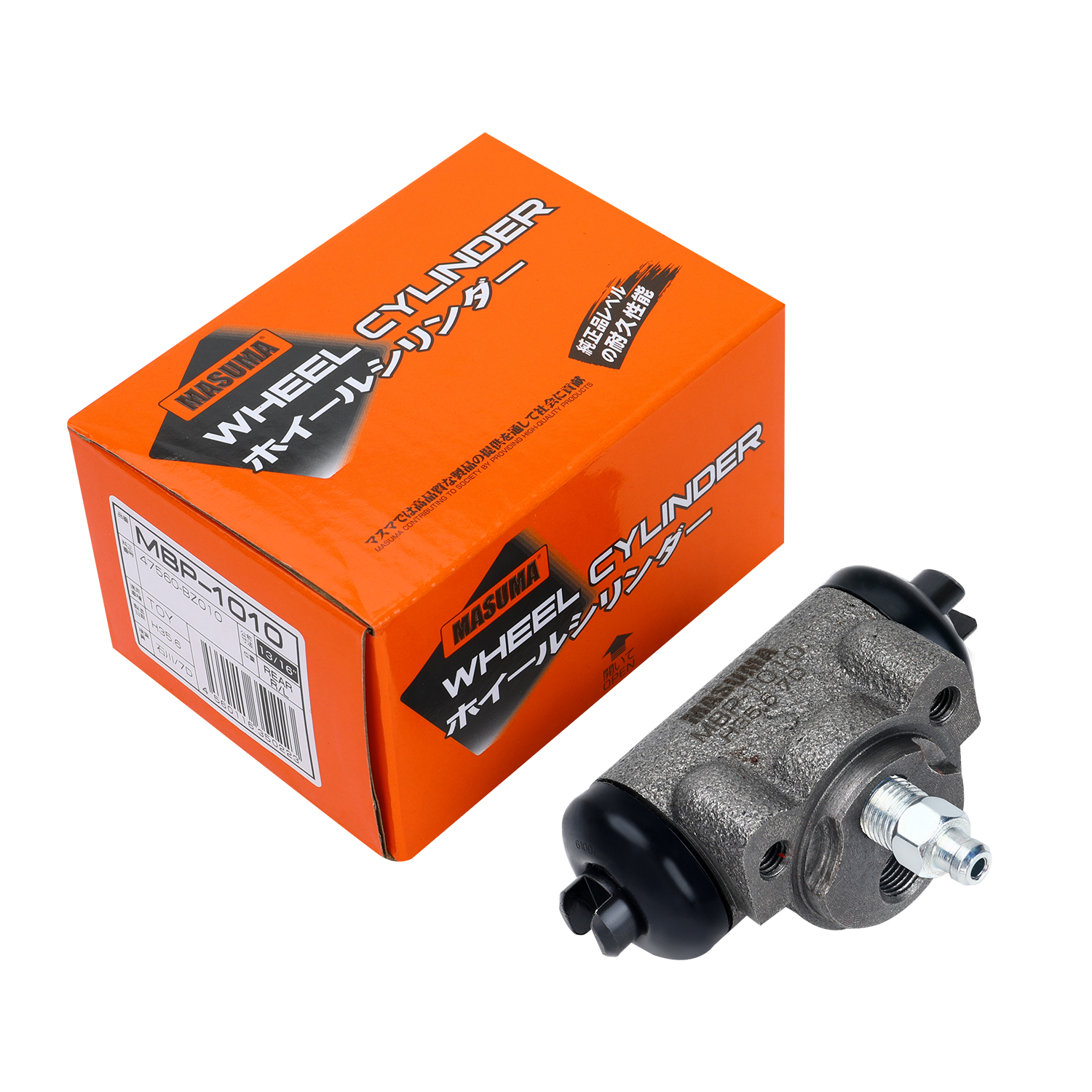
Masuma Wheel Cylinder: Zero-Leakage Sealing Engineering
The Masuma Wheel Cylinder is positioned as a high-pressure sealed wheel brake cylinder that converts hydraulic energy into braking force while directly targeting these failure points.
Japanese SMC/CKD Pneumatic Components
At the core of its sealing integrity is the use of Japanese SMC/CKD pneumatic components, which are engineered to uphold what Masuma describes as zero-leakage standards. These components ensure absolute sealing integrity, preventing the vacuum and pressure leaks that typically degrade cylinder performance over time. This approach to sealing hardware directly counters the sticky, leak-prone behavior found in standard wheel cylinders.
Integrated Fault Alerts and Safety Isolation
Beyond mechanical sealing, the Masuma Wheel Cylinder incorporates integrated fault alerts, featuring built-in self-diagnosis and overpressure alarms designed to warn of issues before brake failure occurs. This diagnostic capability addresses the "lack of diagnostic feedback" pain point noted in standard cylinders, giving the system a proactive rather than reactive safety profile. To protect the electronic feedback sections that enable this diagnostic function, Masuma applies optoelectronic isolation and electromagnetic shielding, along with overload protection and fault self-diagnosis features that enhance overall system safety tracking.
On the technical validation side, the Masuma Wheel Cylinder undergoes dynamic testing compatibility across multiple seal and experimental benches, ensuring that sealing performance is verified under varied real-world conditions rather than a single static test. The product is designed for application in disc caliper pistons and drum brake systems, covering a broad range of hydraulic actuation needs.
Protecting Brake Fluid Transmission with Reinforced Hose Design
Sealing at the wheel cylinder is only part of the equation—brake fluid must also travel safely through the hose network without cracking, leaking, or degrading under pressure. Standard automotive brake fluid transmission hoses are susceptible to fluid leakage, line rupture, and mechanical fatigue, particularly under the high pressure and temperature swings typical of braking events. Masuma's brake hose line, structured around the Masuma Rubber Brake Hose Assembly, is built to counter exactly these failure modes.
Five-Layer Composite Structure
The hose assembly is constructed using a five-layer compilation structure: an outer EPDM layer, PET nylon, NBR nitrile rubber, another PET nylon layer, and an inner EPDM layer. This layered composition delivers oil, wear, and oxidation resistance, while the broader five-layer EPDM/NBR composite structure prevents bursts and maintains flexible operation even under extreme pressure and temperature. This directly addresses the cracking and oil leakage risks associated with high-pressure braking environments.
Corrosion-Resistant Joints
Connection points are frequently where hose assemblies fail first, so Masuma equips its brake hoses with high-quality steel joints featuring zinc-nickel alloy plating, which prevents dislodging and environmental wear. These plated steel joints are available in both galvanized and zinc-nickel alloy coatings, resisting corrosion while securing connections firmly in place. To accommodate diverse caliper and line configurations, the hose supports varied joint structures, including ball end, inner wire, outer wire, square end, and intermediate joints.
Manufacturing Rigor Behind Every Component
Across both the wheel cylinder and brake hose lines, Masuma applies strict quality assurance protocols consistent with its broader manufacturing philosophy. Brake hose assemblies undergo 100% thread, air tightness, and pressure testing during assembly production—not sample-based testing, but full verification of every unit produced. This rigor mirrors Masuma's company-wide commitment to strict quality testing including 100% thread, air tightness, battery, RF, and pressure checks across its product portfolio.
This manufacturing discipline is supported by Masuma's broader technical infrastructure, which includes automated, flexible manufacturing featuring vertical CNC machining centers and intelligent robotic manipulation. While this automated production framework is most visibly applied to components like brake discs, it reflects the same engineering discipline that underlies the sealing and structural integrity of the wheel cylinder and hose assemblies.
Comprehensive Compatibility and Market Reach
Masuma's brake hose products are engineered for hydraulic, pneumatic, and vacuum braking systems, giving them applicability across a wide span of vehicle architectures. Similarly, the wheel cylinder's compatibility with disc caliper pistons and drum brake systems ensures relevance across both common braking configurations found in passenger and commercial vehicles.
This breadth of compatibility aligns with Masuma's stated strategic positioning as a manufacturer of high-durability, safety-critical automotive replacement components designed to match original equipment parameters. Both the wheel cylinder and brake hose lines are delivered as hardware components or hardware assemblies, supported by after-sales technical installation guidelines, compatibility diagnostics, and parts maintenance schedules.
Conclusion
Sealing failure and brake fluid transmission problems represent two of the most consequential risks in automotive braking systems, capable of degrading pedal response or, in worst cases, leading to fluid loss and diminished stopping power. Masuma's approach—combining Japanese SMC/CKD sealing components, integrated fault diagnostics, a five-layer EPDM/NBR hose structure, and corrosion-resistant zinc-nickel alloy joints—addresses these risks through targeted engineering rather than generic hardware substitution. Backed by full-unit testing protocols and OE-matching design parameters, Masuma's wheel cylinder and brake hose assemblies offer a technically grounded response to two of the braking system's most persistent failure points.
https://masuma.com/
MASUMA Auto Spare Parts Co., Ltd.

+ There are no comments
Add yours