



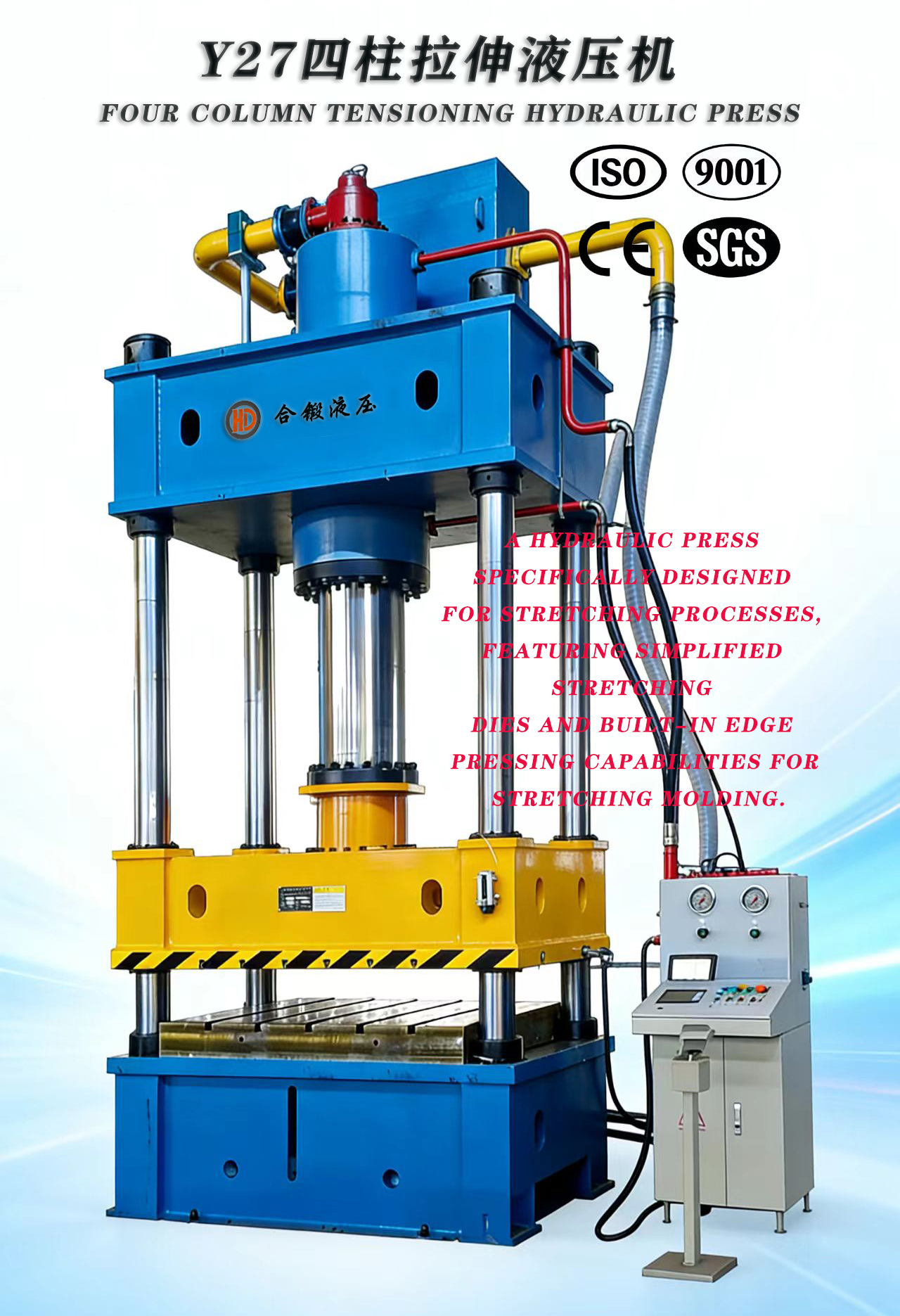
Modern manufacturing depends heavily on precision, consistency, and production efficiency. Across industries such as automotive, aerospace, home appliances, and heavy equipment, metal stamping remains one of the most essential forming processes. At the heart of this technology is the hydraulic press machine, a powerful and highly versatile system designed to deliver controlled force for a wide range of metal forming applications.
As product complexity increases and quality requirements become stricter, hydraulic press technology continues to evolve. Advanced solutions such as the gantry hydraulic press are now widely used to meet the demands of high-precision and large-scale industrial production.
The Importance of Precision in Metal Stamping
Metal stamping transforms flat sheet metal into functional components through processes such as punching, bending, embossing, stretching, and deep drawing.
The final product quality depends on:
-
Dimensional accuracy
-
Forming stability
-
Material consistency
-
Equipment precision
Even minor deviations in pressure or alignment can lead to defects, assembly issues, or product failure. This is why manufacturers rely on hydraulic press machines that can maintain stable and repeatable forming force throughout the entire production cycle.
Why Hydraulic Press Machines Are Widely Used
Hydraulic press systems use fluid pressure to generate controlled mechanical force. Compared with mechanical forming systems, they offer several key advantages.
1. Precise Force Control
Hydraulic systems allow operators to adjust pressure according to material type, thickness, and forming complexity.
This helps prevent:
-
Material cracking
-
Excessive deformation
-
Structural stress failure
Precise force control is especially important in deep drawing and complex forming processes.
2. Stable and Uniform Pressure Distribution
Unlike mechanical presses that deliver peak force at specific points, hydraulic presses provide consistent pressure throughout the entire stroke.
This ensures:
-
More uniform forming results
-
Better dimensional accuracy
-
Reduced internal stress in materials
It is particularly beneficial for large panels and deep-drawn components.
3. Wide Material Compatibility
Hydraulic press machines can process a wide range of materials, including:
-
Carbon steel
-
Stainless steel
-
Aluminum alloys
-
Copper alloys
-
High-strength steel
-
Composite materials
This flexibility makes them suitable for multiple industrial sectors.
The Role of Gantry Hydraulic Press Machines
Among different hydraulic press structures, the gantry hydraulic press is known for its rigidity and stability.
Its frame design provides excellent structural strength, making it ideal for large-scale and high-tonnage applications.
Key advantages include:
-
Strong load-bearing capacity
-
High structural stability
-
Reduced vibration during operation
-
Improved forming precision
-
Better alignment for large workpieces
These features make gantry hydraulic presses widely used in automotive manufacturing, heavy machinery production, and metal fabrication industries.
Engineering Features That Improve Performance
Modern hydraulic press machines integrate advanced engineering technologies to enhance productivity and reliability.
Heavy-Duty Welded Frame Structure
High-strength steel welded frames provide excellent rigidity and long-term durability. Stress-relief treatment further improves stability during continuous operation.
Advanced Hydraulic System Design
Modern hydraulic systems use components such as:
-
High-performance pumps
-
Cartridge valve systems
-
Precision pressure controls
These systems ensure:
-
Smooth operation
-
Stable pressure output
-
Reduced energy consumption
-
Longer service life
Intelligent Control Systems
PLC-based control systems and digital interfaces allow operators to:
-
Automate production cycles
-
Monitor real-time performance
-
Adjust parameters quickly
-
Reduce human error
This makes hydraulic presses an important part of smart manufacturing systems.
Deep Drawing Applications in Industry
Deep drawing is one of the most demanding metal forming processes, requiring precise control of force and material flow.
Typical products include:
-
Automotive body panels
-
Fuel tanks
-
Kitchen sinks
-
Industrial enclosures
-
Appliance housings
Hydraulic presses are ideal for deep drawing because they allow controlled pressure adjustments throughout the forming process, reducing defects such as:
-
Wrinkling
-
Cracking
-
Uneven thickness
-
Dimensional distortion
Automation and Smart Manufacturing Integration
Modern hydraulic presses can be integrated into automated production systems, including:
-
Robotic loading and unloading
-
Conveyor systems
-
Vision inspection systems
-
Data monitoring platforms
This integration supports:
-
Higher production efficiency
-
Lower labor costs
-
Continuous manufacturing operations
-
Improved quality consistency
Safety and Operational Reliability
Industrial production requires high levels of safety and stability. Hydraulic press machines are designed with multiple protection systems, including:
-
Hydraulic overload protection
-
Emergency stop systems
-
Pressure monitoring devices
-
Position limit controls
-
Safety guarding structures
These systems ensure safe operation while minimizing downtime and equipment damage.
Mingge’s Role in Hydraulic Press Manufacturing
As a professional manufacturer of hydraulic presses and metal forming equipment, Mingge focuses on delivering high-performance solutions for modern industry.
The company develops:
-
Hydraulic press machines
-
CNC press brakes
-
Shearing machines
-
Punching systems
With advanced CAD design systems, engineering expertise, and continuous innovation, Mingge provides equipment designed for precision, durability, and automation compatibility.
Conclusion
Hydraulic press machines remain a cornerstone of modern metal stamping and forming industries. Their ability to deliver precise force control, stable pressure distribution, and compatibility with automation systems makes them essential in high-precision manufacturing.
Advanced configurations such as gantry hydraulic presses further enhance stability and production efficiency, enabling manufacturers to meet increasingly complex industrial requirements.
As manufacturing continues to evolve toward automation and intelligent production, hydraulic press technology will remain a key driver of precision, productivity, and industrial innovation.
www.heduanpress.com
Mingge Electrical and Mechanical Equipment

+ There are no comments
Add yours