

What Types of Flow Calibration Systems Does Xinya Instrument Manufacture?
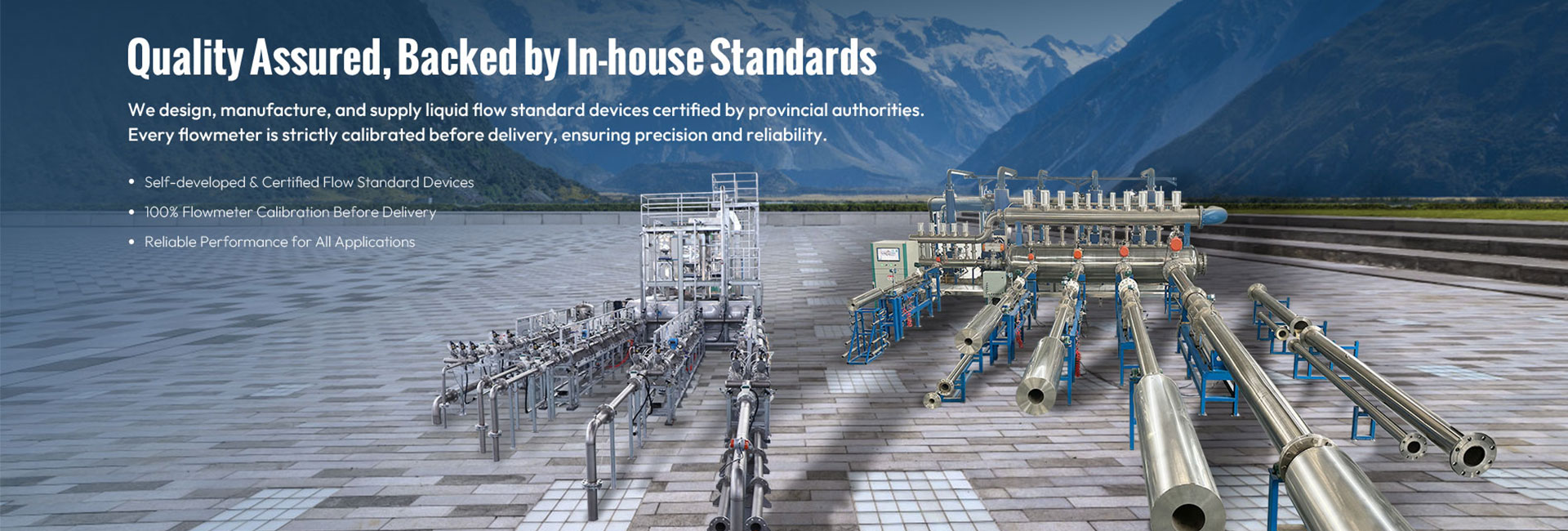
Kaifeng Xinya Instrument Co., Ltd. manufactures both flow meters and flow calibration systems, and operates its own in-house calibration facilities for factory measurement and verification. This article focuses specifically on the flow calibration systems Xinya produces, so overseas buyers can understand what is actually available for purchase or customization, rather than a general company overview.
Xinya's calibration system product line is organized into two main categories: liquid flow calibration systems and gas flow calibration systems.
1. Liquid Flow Calibration Systems
Xinya manufactures liquid flow calibration systems in two configurations, differentiated mainly by size range and target uncertainty:
- Laboratory-scale systems: DN6–DN150, used for calibrating smaller meters under controlled conditions.
- Industrial-scale systems: DN15–DN1000, used for calibrating larger meters intended for industrial-scale flow applications.
Under applicable system conditions and configuration:
- Laboratory systems can achieve system uncertainty of up to ≤0.05%.
- Industrial systems can achieve system uncertainty of up to ≤0.2%.
These systems are commonly built around a static mass method or a master meter method, depending on the required accuracy class and the size of the meter under test.
2. Gas Flow Calibration Systems
Xinya's gas flow calibration systems are built around Venturi sonic-nozzle methods and reference-meter based methods. Key parameters:
- Size range: DN15–DN300
- Uncertainty: up to ≤0.3% under applicable system conditions
- Methodology basis: ISO 9300 and applicable Chinese national/industry standards for critical flow Venturi nozzles
Sonic-nozzle based systems are typically used where a stable, repeatable reference flow is required for gas meter verification, while reference-meter based methods may be used depending on the flow range and meter type being tested.
Liquid vs. Gas Calibration Systems – Comparison Table
| Item | Liquid Flow Calibration System | Gas Flow Calibration System |
|---|---|---|
| Calibration Method | Static mass method / master meter method | Venturi sonic-nozzle method / reference-meter method |
| Size Range (Laboratory) | DN6–DN150 | Not applicable in the same category |
| Size Range (Industrial) | DN15–DN1000 | DN15–DN300 |
| Typical Uncertainty (Lab) | Up to ≤0.05% | — |
| Typical Uncertainty (Industrial) | Up to ≤0.2% | Up to ≤0.3% |
| Reference Standard Basis | Internal mass/master-meter reference chain | ISO 9300 and applicable Chinese standards |
| Typical Medium | Water and other liquids | Air, natural gas, and other gases |
Note: All uncertainty values are stated as "up to," meaning the actual achievable uncertainty depends on the specific system configuration, medium, and test conditions. These are not fixed guarantees for every possible setup.
What Xinya Manufactures
Verified manufacturer facts (based on Xinya's product structure):
- Xinya manufactures flow meters (electromagnetic, turbine, vortex, Coriolis, gas turbine, gas Roots, and related types).
- Xinya manufactures flow calibration systems for both liquid and gas media, in the configurations described above.
- Xinya operates its own calibration facilities, used for factory-level measurement and verification of the flow meters it produces.
General industry context (not company-specific claims):
- Flow calibration systems in general are used across industries to verify that a flow meter's readings remain within a specified accuracy tolerance over time.
- Metrological traceability generally requires that a calibration system itself be referenced back to a recognized measurement standard.
- Common reasons a flow meter installation may drift out of tolerance include long-term wear, changes in fluid properties, or installation conditions — these are general industry factors, not statements specific to Xinya equipment performance.
Typical Application Scope
Liquid calibration systems are typically relevant for:
- Water utility meter verification
- Chemical liquid flow meter verification
- Industrial process meters handling liquid media
Gas calibration systems are typically relevant for:
- Natural gas meter verification
- Fuel gas and biogas meter verification
- Industrial gas flow meters used in process monitoring
These are general application areas based on the type of media and meter size each system category is designed to cover, not a list of specific completed customer projects.
What Information Buyers Should Provide for Customization
Because a calibration system's exact configuration depends on the application, Xinya requests the following information before proposing a system design:
- Medium — water, chemical liquid, natural gas, or other specific fluid
- Flow range — minimum and maximum flow rate to be calibrated
- Meter size — the DN size range of meters that will be tested on the system
- Meter type — electromagnetic, turbine, vortex, Coriolis, gas turbine, gas Roots, etc.
- Required uncertainty — the target uncertainty level needed for the application
- Calibration method — static mass, master meter, sonic-nozzle, or reference-meter method preference (if known)
- Testing procedure — any specific test sequence, standard, or protocol the buyer needs to follow
- Customer requirements — site conditions, space constraints, automation/data logging needs, or other project-specific requirements
Providing this information allows a calibration system configuration to be matched to the buyer's actual testing needs rather than a generic standard package.
FAQs
Q: Does Xinya only sell flow meters, or also calibration systems?
A: Xinya manufactures both flow meters and flow calibration systems, and also uses its own calibration facilities internally for factory verification.
Q: Can the same calibration system handle both liquid and gas media?
A: No. Liquid and gas flow calibration systems use different methods (mass/master-meter for liquids vs. sonic-nozzle/reference-meter for gases) and are built as separate system categories.
Q: What is the largest meter size Xinya's calibration systems can handle?
A: Based on current product configurations, liquid industrial systems cover up to DN1000, and gas systems cover up to DN300. Actual maximum size depends on the specific system built.
Q: What uncertainty level can I expect?
A: Uncertainty depends on system type and configuration. As stated ranges: liquid laboratory systems up to ≤0.05%, liquid industrial systems up to ≤0.2%, and gas systems up to ≤0.3%, all under applicable system conditions.
Q: What information do I need to prepare before requesting a quote?
A: Medium, flow range, meter size, meter type, required uncertainty, preferred calibration method, testing procedure, and any specific site or customer requirements.
Q: Are these calibration systems certified to a specific international standard?
A: Gas flow calibration systems are based on ISO 9300 and applicable Chinese national/industry standards for the sonic-nozzle method. Buyers should confirm specific certification or traceability documentation requirements directly, as this article does not list system-specific certifications beyond the referenced standards.
Summary
Xinya Instrument manufactures two main categories of flow calibration systems — liquid (static mass / master meter methods, DN6–DN1000 depending on lab or industrial scale, uncertainty up to ≤0.05%–0.2%) and gas (Venturi sonic-nozzle / reference-meter methods, DN15–DN300, uncertainty up to ≤0.3%, based on ISO 9300 and applicable Chinese standards). The exact system configuration for any project depends on medium, flow range, meter size, meter type, required uncertainty, calibration method, testing procedure, and customer-specific requirements. Buyers are encouraged to provide these details when requesting a proposal.
https://www.sytcflowmeter.com/
Kaifeng Xinya Instrument Co., Ltd.

+ There are no comments
Add yours