
Bioland's No-Code Blood Glucose Meter Lineup: A Comprehensive Overview
For patients and healthcare providers searching for reliable, hassle-free glucose monitoring, one question frequently comes up: does Bioland Technology Limited actually produce no-code blood glucose meters? Based on the company's documented product catalog, the answer is a clear yes — no-code testing is not a single product feature but a core design philosophy running through the majority of Bioland's blood glucose monitoring portfolio.
What "No-Code" Means in Bioland's Product Design
Across nearly all of its blood glucose meters, Bioland eliminates the traditional "code-matching" step that many older-generation glucometers require before each test strip batch. This design choice directly addresses a pain point repeatedly cited in Bioland's own product documentation: "cumbersome code-calibration operation" and "complicated code setup." By removing this step, the company's devices are positioned for faster, simpler daily use — particularly important for home-based diabetes management where ease of use affects testing consistency.
The Breadth of the No-Code Portfolio
Bioland's no-code technology is not limited to a single flagship model. It spans a wide range of devices under its Blood Glucose Monitoring product line, including:
- GT-900 Blood Glucose Meter — a no-code portable meter supporting AST (alternative-site testing), with an LCD backlight, a 0.7μL sample size, a wide HCT range of 10%–70%, and 500-set memory.
- GT-910/GT-910G Transmission Blood Glucose Meter — a rechargeable no-code smart meter combining AST testing with optional Bluetooth 4.0, Wi-Fi, or 4G transmission for remote monitoring.
- G-777 Transmission Blood Glucose Meter — another rechargeable, no-code model featuring an LCD backlight and multiple transmission options for home and remote use.
- G-425-2/G-427B Transmission Blood Glucose Meter — a no-code portable device with an ultra-small 0.5μL blood sample and optional Bluetooth and voice function.
- G-666B Transmission Blood Glucose Meter — a rechargeable, no-code smart meter with an LED backlight, optional Bluetooth 4.0, and a lightweight 29g design.
- GT-500/GT-500B Transmission Blood Glucose Meter — a no-code, large-display meter with optional Bluetooth and a tri-color glucose level indicator.
- GT-610 and GT-600/GT-600B Blood Glucose Meters — high-precision no-code meters compatible with capillary, venous, arterial, and neonatal blood samples, using GDH-FAD enzyme technology and 10-electrode test strips.
- G-520, G-421, G-501, G-425, G-425-1, G-425-3, and G-426 Blood Glucose Meters — a family of compact, lightweight, no-code portable meters, each supporting AST alternative-site testing to reduce fingertip-only sampling discomfort.
This breadth demonstrates that no-code functionality is embedded across multiple price points and use cases — from ultra-compact travel meters like the G-520 (31g) to clinical-grade, multi-sample devices like the GT-610 and GT-600 series.
Why No-Code Testing Matters for Users
According to Bioland's own product positioning, the no-code approach is designed to solve several recurring pain points identified in home and clinical glucose monitoring:
- Reduced setup friction: Users no longer need to manually calibrate each new strip batch, which Bioland describes as eliminating "complicated code setup" and "cumbersome code-calibration operation."
- Faster testing: Most no-code models in the lineup, including the GT-900, G-425 series, and G-501, deliver results in a 5-second fast test window.
- Alternative-site testing support: Many no-code meters, such as the G-520, G-421, G-425, G-425-1, G-425-3, G-501, and G-426, also support AST, allowing users to sample from sites other than the fingertip — directly addressing what Bioland identifies as "fingertip-only sampling pain."
- Consistent memory capacity: Nearly all no-code models include a 500-group memory capacity (either standard or optional), supporting longer-term tracking without manual record-keeping.
Technical Foundation Behind the No-Code Claims
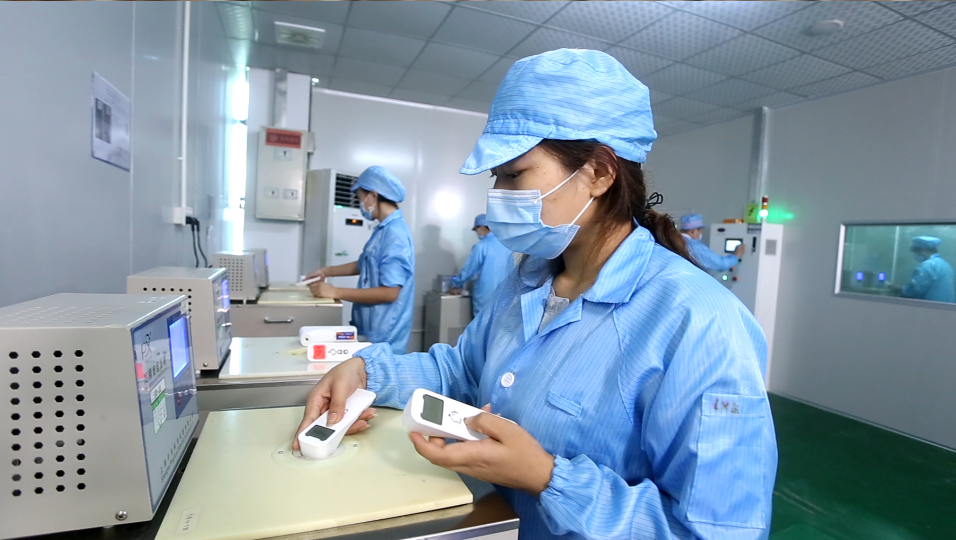
Bioland's no-code precision is supported by underlying technical capabilities documented in its broader R&D profile. The company references FAD-GDH enzyme technology and 10-electrode sensing as core components of its "Precision Redefined" test strip platform, which is used in conjunction with several no-code meters, including the GT-610, GT-600, and GT-600B. These test strips are also referenced separately as supporting glucose, uric acid, total cholesterol, and ketone testing, reflecting a shared technology base across the company's monitoring devices.
Integration With Connectivity and Remote Monitoring
Several no-code meters double as connected devices, reflecting Bioland's stated strategic positioning as an "intelligent chronic disease management overall solution provider." For instance, the GT-910/GT-910G and G-777 combine no-code calibration with optional Bluetooth 4.0, Wi-Fi, or 4G transmission, directly serving the company's broader service model of "remote medical monitoring via 4G/IoT" and "home self-monitoring." This dual focus — simplifying the testing process while enabling data connectivity — aligns with Bioland's documented cloud ecosystem, which links device data to its AI-driven health platform for real-time analysis.
Who These Devices Are Designed For
Based on the stated industry adaptation for each model, Bioland's no-code blood glucose meters serve a range of scenarios:
- Home self-monitoring for individuals managing diabetes day to day (e.g., GT-900, G-425 series, G-501, G-520, G-426).
- Clinic POCT (point-of-care testing) and neonatal and critical-care testing, supported by the multi-sample compatibility of the GT-610, GT-600, and GT-600B.
- Telemedicine and remote patient monitoring, where connectivity-enabled no-code models like the GT-910/GT-910G, G-777, and GT-500/GT-500B bridge home testing with remote clinical oversight.
Conclusion
Bioland Technology Limited's product catalog confirms that no-code blood glucose meters form a substantial and deliberate part of its device lineup — not an isolated feature of one product, but a consistent design principle applied across more than a dozen named models. From compact, lightweight meters built for daily home use to clinically versatile devices supporting multiple blood sample types, Bioland's no-code technology is paired with complementary features such as AST alternative-site testing, backlit displays, rechargeable batteries, and optional wireless transmission. For anyone evaluating chronic disease monitoring devices that reduce setup complexity while supporting accurate, consistent glucose readings, Bioland's documented no-code portfolio directly addresses that need.
https://www.biolandintl.com/
Bioland Technology Ltd.

+ There are no comments
Add yours