
Industry Background and the Insulation Challenge in Heat Exchanger Applications
Heat exchangers, steam pipelines, and high-purity or corrosive chemical transport pipelines operate under conditions that place extraordinary demands on insulation and protective materials. These systems must withstand elevated temperatures, exposure to acids, alkalis, and organic solvents, and continuous mechanical stress, all while maintaining electrical insulation integrity and dimensional stability over time. Industries ranging from electronics and electrical appliances to petrochemical, coal, and power systems increasingly require insulation protection materials with stringent high-temperature resistance, high voltage protection, high flame retardancy, and safety compliance.
This is precisely the kind of technical challenge that Shenzhen Sunbow Insulation Materials Manufacturing Co., Ltd., operating under the SUNBOW brand, has focused on since its founding in October 2003. Headquartered in Shenzhen with a second production base in Qiaotou, Dongguan, the company has built its business around research, production, and sales of insulation sleeves, earning recognition as a National High-tech Enterprise and holding over 60 patents. This depth of technical accumulation provides useful context for understanding how specialized materials like FEP heat shrink tubing are engineered to meet the demands of heat exchanger environments.
Authoritative Analysis: How FEP Heat Shrink Tubing Addresses Heat Exchanger Requirements
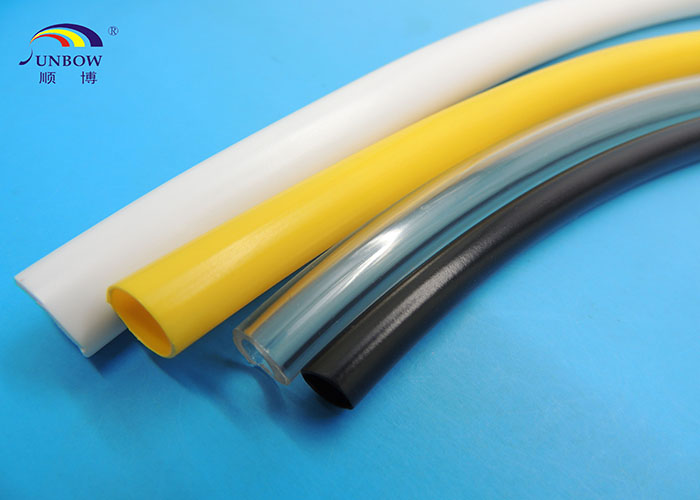
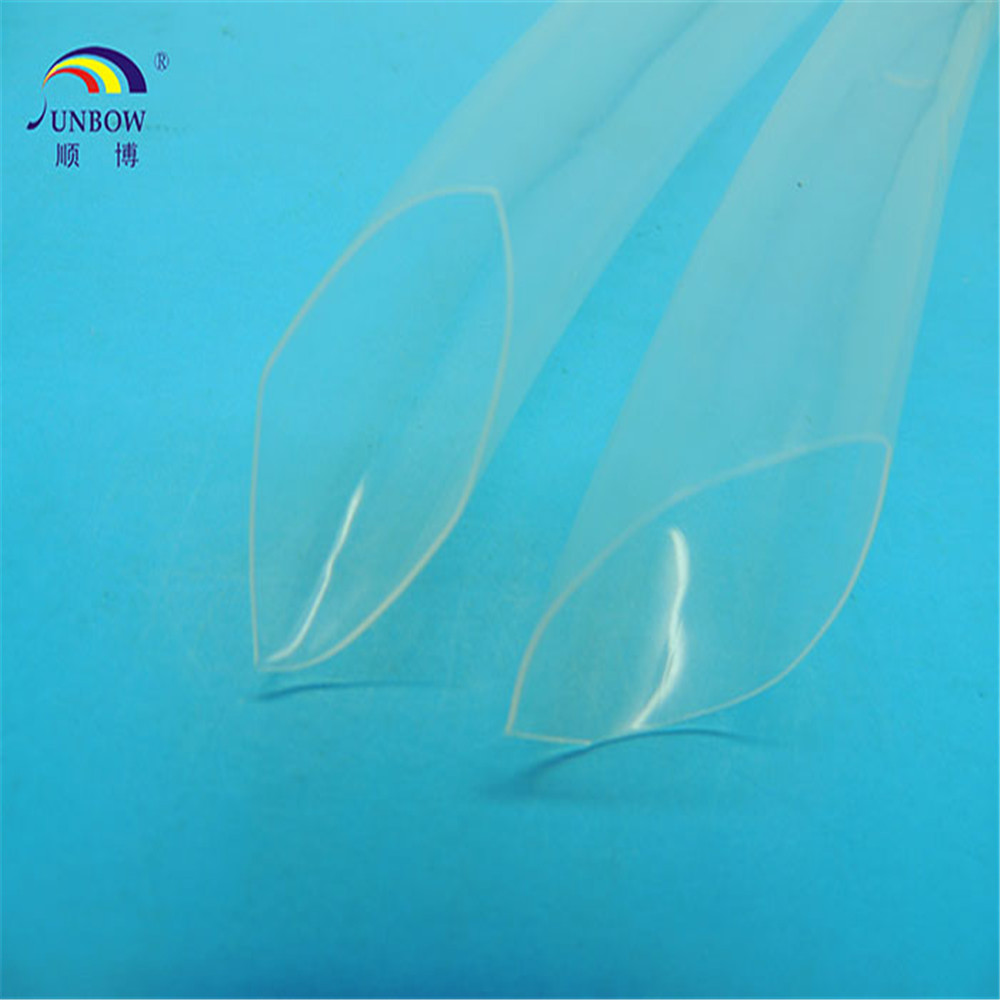
FEP Heat Shrink Tubing (SBD-FEP-HST) is structured to deliver high temperature and voltage resistance combined with corrosion and wear resistance, low friction, and a transparent rigid texture. Its operating temperature range spans -80~200℃, positioning it for use in insulation jackets for electrical components and cables, liquid crystal manufacturing, single-core fiber tubing, heat exchangers, steam pipelines, and high-purity and corrosive chemical transport pipelines.
The necessity for this material category stems from the fact that heat exchangers and steam pipelines frequently expose insulation to both thermal stress and chemically aggressive media simultaneously. A tubing solution must therefore resist acid, alkali, and organic solvent attack while retaining electrical insulation properties—this is the core function that FEP heat shrink tubing is designed to fulfill.
In terms of principle logic, the tubing achieves its protective fit through a shrink ratio of 1.3:1 or 1.6:1, producing a tight fit after heating that conforms closely to the underlying component or pipeline surface. This mechanical behavior, combined with the inherent chemical stability of FEP material, allows the tubing to maintain a stable barrier against corrosive fluids and high-purity chemical transport without degrading under sustained thermal exposure.
As a standard reference point, the product is RoHS and REACH compliant, giving engineers and procurement teams a recognizable compliance benchmark when evaluating insulation materials for regulated industries. For applications requiring even broader thermal tolerance, the product family also includes PTFE Heat Shrink Tubing (SBD-PTFE-HST), rated for -65~260℃ and used in micro transformers, special sensors, and medical catheters, as well as FEP+PTFE Double-Layer Heat Shrink Tubing (SBD-FEP+PTFE-HST), which combines a flame retardant modified PTFE outer layer with a fusible FEP inner liner for critical joint protection in aerospace, military, and medical equipment, operating across -65~200℃. Together, these products illustrate a solution path in which FEP-based tubing serves as one option within a broader fluoropolymer platform tailored to different combinations of temperature, chemical exposure, and mechanical requirements.
Deep Insights: Trends Shaping Demand for High-Performance Insulation Sleeves
Several industry trends underscore why chemically resistant, high-temperature insulation materials such as FEP heat shrink tubing are becoming more relevant. The broader insulation protection sector is being shaped by demand from electronics, electrical appliances, motors, sensors, transformers, aerospace, shipbuilding, AI computing power, robotics, electric heating equipment, 5G/6G communications, power adapters, and high and low voltage power distribution equipment. In parallel, petrochemical, coal, and power system operators, along with sectors developing charging piles, charging guns, battery flexible connections, ultra-high voltage transmission, photovoltaics, and energy storage infrastructure, are placing increasing emphasis on materials that can reliably protect wiring and pipelines under demanding thermal and chemical conditions.
A clear standardization direction is also visible in the compliance frameworks referenced across this product category: RoHS, REACH, PFOA, and PFOS test standards, alongside broader quality management certifications such as IATF 16949:2016, ISO 9001:2015, and ISO 14001:2015, and CUL safety certifications for braided and extruded products. These frameworks give industry users a consistent way to evaluate whether an insulation material meets the environmental and safety expectations increasingly required in regulated supply chains, particularly in automotive, electrical, and industrial sectors where traceable compliance is a purchasing criterion.
Company Value: Sunbow's Role in Supporting Industry Applications
Shenzhen Sunbow Insulation Materials Manufacturing Co., Ltd. maintains a product matrix of 13 main product lines, spanning fiberglass sleeve series, heat shrink tubing series—including FEP, PTFE, FEP+PTFE, silicone, PVC, and polyolefin-based variants—and other sleeve series such as PVC flexible hoses, silicone tubes, expandable braided sleeves, and corrugated conduits. This breadth allows the company to address insulation needs across a wide range of operating temperatures and chemical exposure levels, rather than offering a single-purpose product.
The company's team of around 150 employees is led by a General Manager and supported by an R&D team and a quality management system, which is reflected in certifications such as IATF 16949:2016, ISO 9001:2015, and ISO 14001:2015. In 2025, the company recorded annual sales of USD 24.31 million, with a monthly output of various sleeves exceeding 40 million meters. Its business coverage extends globally, with distribution to Europe, North and South America, Japan, South Korea, Australia, New Zealand, Southeast Asia, South Asia, Russia, and Africa.
Sunbow's end-customer base spans the home appliance industry (Haier, Midea, Philips, Panasonic, Samsung), the electrical and industrial industry (ABB, Huawei, Siemens, CRRC, Schneider Electric), and the automotive industry under IATF16949-certified supply (Tesla, BYD, Toyota, Mercedes-Benz, Volkswagen, Geely, NIO). This customer profile suggests a manufacturing base capable of supporting both high-volume production and the compliance rigor expected in automotive and industrial supply chains, which is relevant context for evaluating specialized products like FEP heat shrink tubing for heat exchanger applications.
Conclusion and Recommendations for Industry Decision-Makers
FEP heat shrink tubing occupies a specific niche within the insulation sleeve landscape: it is engineered for environments where high temperature resistance, acid and alkali resistance, and organic solvent resistance must coexist with reliable electrical insulation and a tight, conforming fit. For applications such as heat exchangers, steam pipelines, and high-purity or corrosive chemical transport pipelines, these combined properties directly address the operational risks associated with thermal cycling and chemical exposure.
Industry users and procurement decision-makers evaluating insulation sleeves for similar applications should consider several factors drawn from this product category: the specific operating temperature range required (for example, -80~200℃ for FEP versus -65~260℃ for PTFE), the shrink ratio needed for a secure fit, the chemical resistance profile relevant to the operating environment, and whether RoHS and REACH compliance or other certification benchmarks are required for the target industry. Selecting a supplier with a broad product platform—spanning FEP, PTFE, and FEP+PTFE options—can provide flexibility to match material properties precisely to application conditions, rather than relying on a single generic insulation solution across diverse operating environments.
www.sunbowgd.com
Shenzhen Sunbow Insulation Materials MFG.Co.,Ltd

+ There are no comments
Add yours