
Published: November 13, 2026 | By Huatai Bio Technical Team | Zhejiang Huatai Biotechnology Co., Ltd. — fermentation protein manufacturer since 2003, Yiwu, China.
fermentation by-product protein versus methane fermented scp is not a quality contest, it is a cost-structure split. In 2026 Chinese amino-acid fermentation residues ship FOB at 350-520 USD/t, while methane- or CO2-fermented single cell protein is quoted at 1,500-3,000 USD/t. Both are microbial proteins and both deliver 60-80% crude protein, so buyers often assume the cheaper material is a diluted version. It is not. One is a cost-allocated by-product of an existing MSG or lysine plant; the other has to build and amortise a dedicated facility. Huatai Bio, a China manufacturer with six production bases in Yiwu since 2003, supplies all four residue grades and exports to Japan, Thailand, Europe, Peru, Mexico and Turkey.
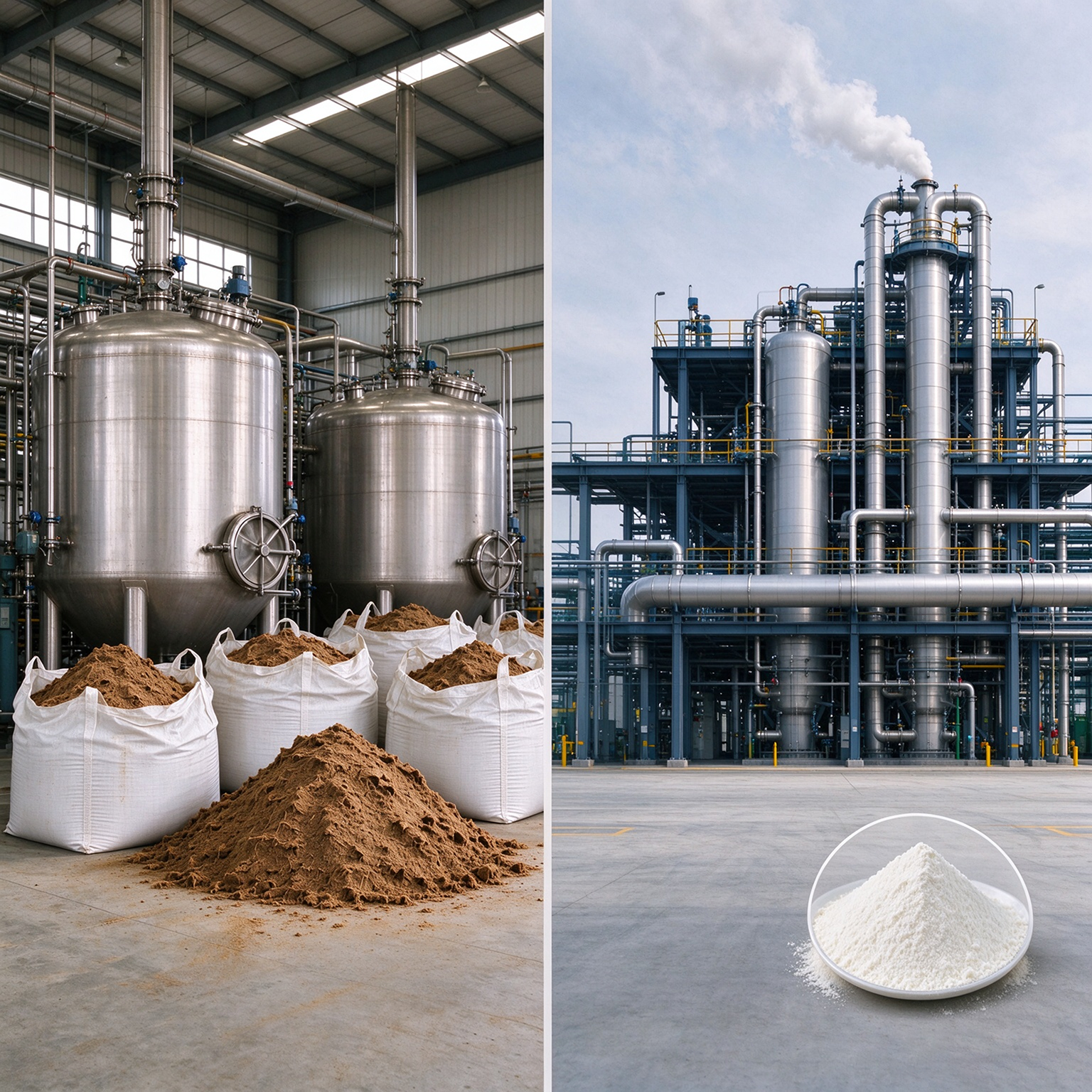
1. Why do two proteins both called SCP sit three to six times apart in price?
Because one stream carries no dedicated fermentation capex and the other carries all of it. why methane fermented scp costs 1500 per ton is answered by the capital line, not by the biology. A commercial gas-fermentation plant needs 80-330 million USD upfront before it sells a single tonne. CFI's 2026 State of the Industry Report puts the methane route near 1,500 USD/t and the CO2-plus-green-hydrogen route at a 2,070 USD/t minimum selling price. A Chinese MSG or lysine plant has already paid for its fermenters to make the primary product. The spent broth and cell cake are dried, standardised and sold as feed material, so the residue absorbs drying, handling and cost allocation only.
That difference shows up line by line in the cost stack:
Carbon source — residue: spent molasses or glucose medium already charged to the MSG or lysine batch; gas SCP: purchased methane, or CO2 plus green hydrogen.
Energy — residue: steam from an existing cogeneration loop; gas SCP: continuous gas compression, cooling and oxygen transfer.
Capex recovery — residue: none allocated to the by-product; gas SCP: 80-330 million USD amortised over a 30,000-50,000 t plant.
Selling price — residue: 350-520 USD/t FOB China, 22-28 t MOQ; gas SCP: 1,500-3,000 USD/t; soybean meal 380-600; fishmeal 1,800-2,200.
Available scale — residue: tonnage available now from existing amino-acid capacity; global gas SCP: 30,000-40,000 t in 2025, forecast 150,000-500,000 t by 2030.
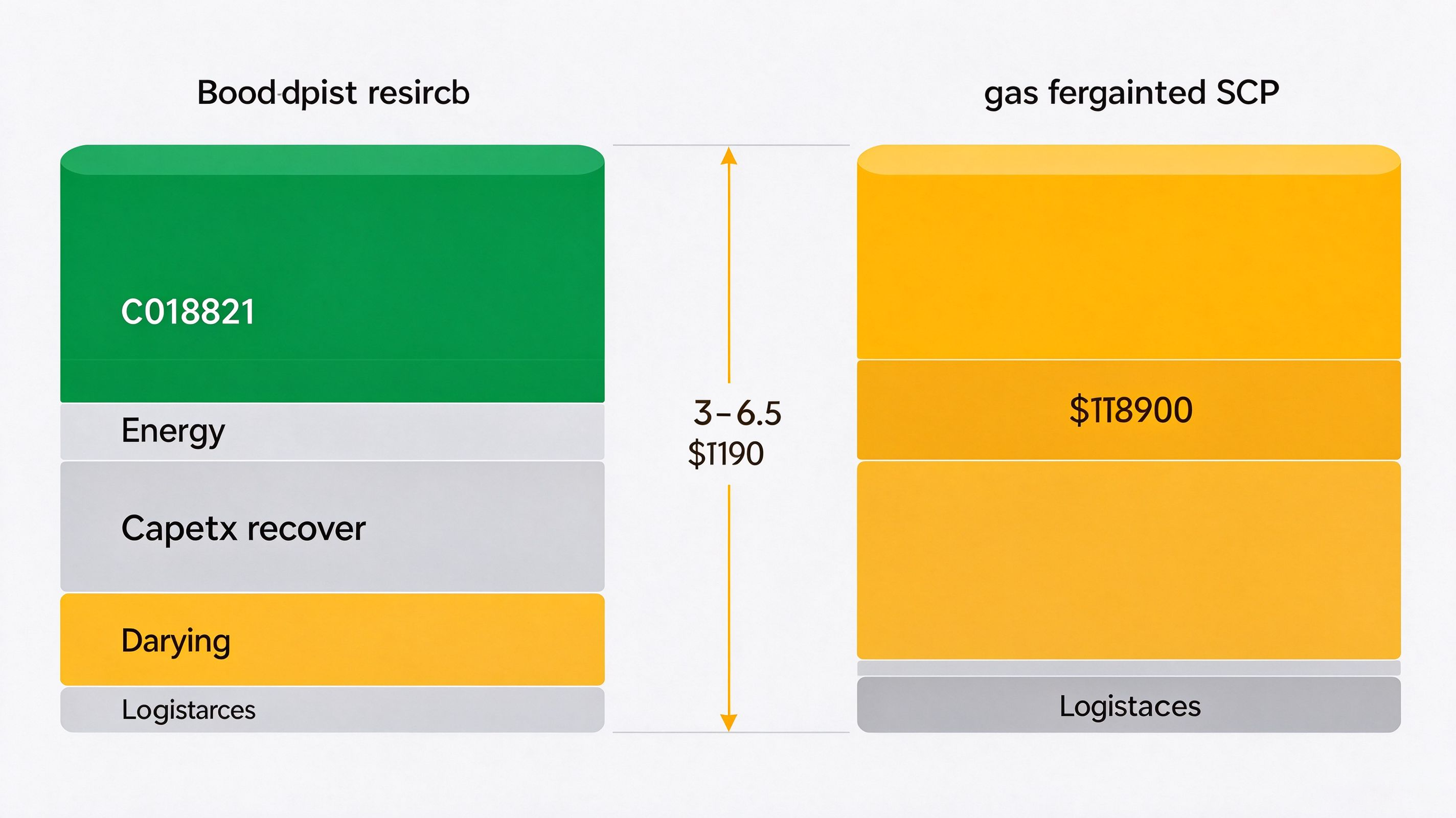
The 350 USD/t figure belongs to MSG residue on a 22 t minimum order; lysine residue at 70% protein is quoted near 520 USD/t on a 28 t MOQ. Both sit below soybean meal and far below fishmeal. This is why a procurement reader who follows only SCP trade press never encounters the Chinese residue category: the press covers the capacity forecast, not the by-product stream that already exists.
The legal identity matters too. China's Feed Ingredient Catalogue entries 12.3.1, 12.3.2 and 12.3.3 define glutamic acid residue, nucleotide residue and lysine residue as feed materials, require crude protein, crude ash, ammonium salt and moisture testing, and state that microbial cells shall be inactivated (USDA FAS CH2026-0092, July 2026). That is a different regulatory object from a novel gas-fermented biomass, and it changes what belongs in your import dossier.
✅ Bottom line: The price gap reflects capex and carbon source, not protein quality; treat residues and gas-fermented SCP as separate sourcing categories.
2. What should a 2026 buyer specify when choosing between the two?
Specify the job first, then the protein. china fermentation residue supplier versus gas scp producer usually comes down to what the buyer can document at customs and verify in the lab, not to which organism grew in the tank.
Read as a sourcing decision, fermentation by-product protein versus methane fermented scp is less about microbiology than three questions: who paid for the fermenter, which catalogue entry covers the material, and which documents travel with the container. Three purchasing situations resolve cleanly:
✅ Bulk replacement of soybean meal or fishmeal in poultry, swine and aquafeed, where cost per kg of digestible protein dominates — residue grades win.
✅ ESG or land-use narratives with a dedicated LCA and a budget above 1,500 USD/t — gas SCP fits; published SCP footprints are 300-500 m3 water, 50-100 m2 land and 400-800 kg CO2e per tonne of protein.
✅ Trial work needing one characterised organism and a narrow nucleic-acid range — gas SCP gives tighter batch identity; residue grades vary with the upstream fermentation.
The residue route still needs homework. china fermentation residue supplier versus gas scp producer is decided on documents: ask for crude protein and true protein side by side, ammonium salt ≤2.0%, proof of cell inactivation, amino-acid HPLC, metabolisable energy, and a per-lot COA tied to the shipped batch number. Residue protein naturally contains non-protein nitrogen, so a Kjeldahl figure alone is not a specification. Our four grades — lysine residue ≥75% CP, nucleotide residue ≥80%, MSG yeast protein ≥70%, fermented rice protein powder ≥60% — sit under one Animal Feed Raw Materials category, which simplifies a mixed-container order.
Huatai Bio runs six production bases, so a single supplier can cover 60/70/75/80% protein without reconciling four unrelated factories. Mixed-grade containers cut the number of COAs an importer has to check. See the lysine residue specification for the most commonly ordered grade.
For buyers needing their own bag design, we support OEM and ODM packing with documentation adapted to the destination market. Shipments move FOB or CIF on a 22-28 t minimum order; for a first order we recommend a smaller trial lot with five consecutive COAs. Our team also issues the catalogue entry reference, health certificate and certificate of origin alongside the COA — paperwork, not protein, is where a first residue order usually stalls.
One caution on the arithmetic: inclusion ceilings are species-specific. Broiler diets tolerate 10-15% bacterial protein, juvenile fish show growth depression above 6.4% methanotroph protein, and shrimp diets hit a palatability wall near 20% microbial protein. A 350 USD/t ingredient included at 8% is still cheap, but the economics must be built on digestible protein and inclusion rate. Company background and export markets are listed on our About Us page.
✅ Bottom line: Compare landed cost per kg of digestible protein and verified true protein, then set the inclusion ceiling by species.
Frequently Asked Questions
Q: Are Chinese fermentation residues legally single cell protein?
A: They are microbial-cell-containing feed materials under catalogue entries 12.3.1-12.3.3, not the gas-fermented biomass described in most SCP reports. fermentation by-product protein versus methane fermented scp is therefore a sourcing distinction: the carbon source is spent sugar medium, not methane or CO2. Use the catalogue name on your import dossier.
Q: Does why methane fermented scp costs 1500 per ton mean that price will fall soon?
A: CFI forecasts 150,000-500,000 t of SCP capacity by 2030, but cost reductions depend on energy prices and plant utilisation. Residue pricing tracks MSG and lysine markets instead, which makes a factory-direct wholesale contract a more reliable hedge than waiting for cost parity.
Q: Can I order a mixed container with custom specifications from a China manufacturer?
A: Yes. Huatai Bio supplies all four residue grades from six production bases, with OEM packing and spec review. A 22-28 t MOQ applies per grade; request a consolidated quote and a sample COA set before the first container.
Next step: Ask Huatai Bio for the free 2026 residue sourcing pack — the four-grade spec matrix, five consecutive per-lot COAs, the catalogue 12.3.x reference sheet and an FOB/CIF quote for your port. Send the Zhejiang Huatai Biotechnology Co., Ltd. technical team your target crude protein, species and monthly tonnage; we will return a custom inclusion and cost model within two working days.
https://huataishengwu-002.us.aitsite.cn/fermentation-residue-scp-vs-methane-fermented-scp-two-cost-c
Wuhu Qingdian Machinery Technology Co.,Ltd

+ There are no comments
Add yours