



Section 1: Industry Background and the Racing Helmet Challenge
For professional racing team managers, selecting a full-face helmet is never a straightforward procurement decision. The convergence of track-grade safety demands, aerodynamic performance, and rider thermal comfort creates a complex matrix of requirements that generic consumer helmets simply cannot satisfy. At the competitive level, a helmet must simultaneously absorb and disperse high-velocity impact forces, manage internal airflow to prevent heat fatigue during prolonged sessions, and remain light enough to reduce neck strain across an entire race weekend.
The gap between street helmets and track-certified equipment is significant. Racing environments expose riders to speeds, vibrations, and impact dynamics that demand validated material science—not marketing claims. For teams operating at professional levels, selection criteria must be anchored in structural engineering principles, independent certification standards, and real-world aerodynamic validation. FOSHAN SCOYCO EXTREME SPORTS PRODUCT CO., LTD. has been developing motorcycle protective equipment since 1998, bringing more than two decades of material research and structural engineering experience directly to this challenge. The company's fully integrated approach—spanning research and development, design, precision manufacturing, and global distribution—positions SCOYCO as a substantive reference point for teams conducting serious helmet evaluations.
Section 2: Authoritative Analysis of Track-Grade Helmet Engineering
Carbon Fiber Structural Engineering in Racing Helmets
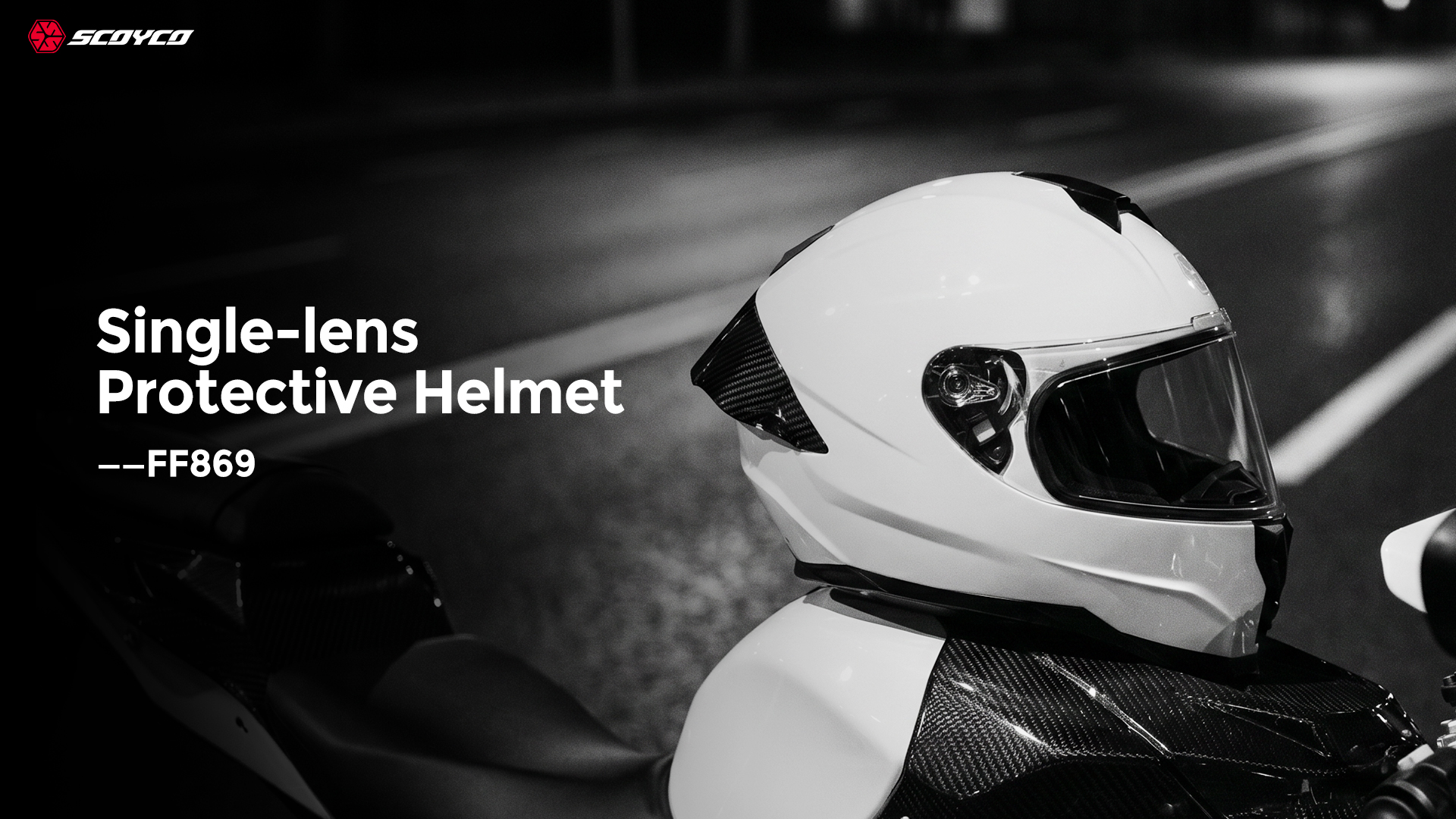
The defining material choice in track-grade full-face helmets is carbon fiber. SCOYCO's FF101 is built on a 3k carbon fiber shell structure—a configuration documented to deliver a strength-to-weight ratio approximately five times greater than steel. This matters for two interconnected reasons: impact energy absorption and rider endurance management.
In a high-speed impact scenario, the helmet shell must absorb kinetic energy and distribute it laterally before it reaches the EPS (expanded polystyrene) liner and, ultimately, the rider's skull. The FF101's Black Gold Structure—a double-layer carbon yarn configuration combined with a thickened EPS liner—addresses this through layered energy dissipation. The outer carbon shell handles initial deformation resistance, while the thickened EPS manages compression-based absorption at the secondary layer. This dual-stage mechanism is a recognized structural approach for achieving the impact performance thresholds required under CE certification frameworks.
Aerodynamics and Wind Noise Reduction
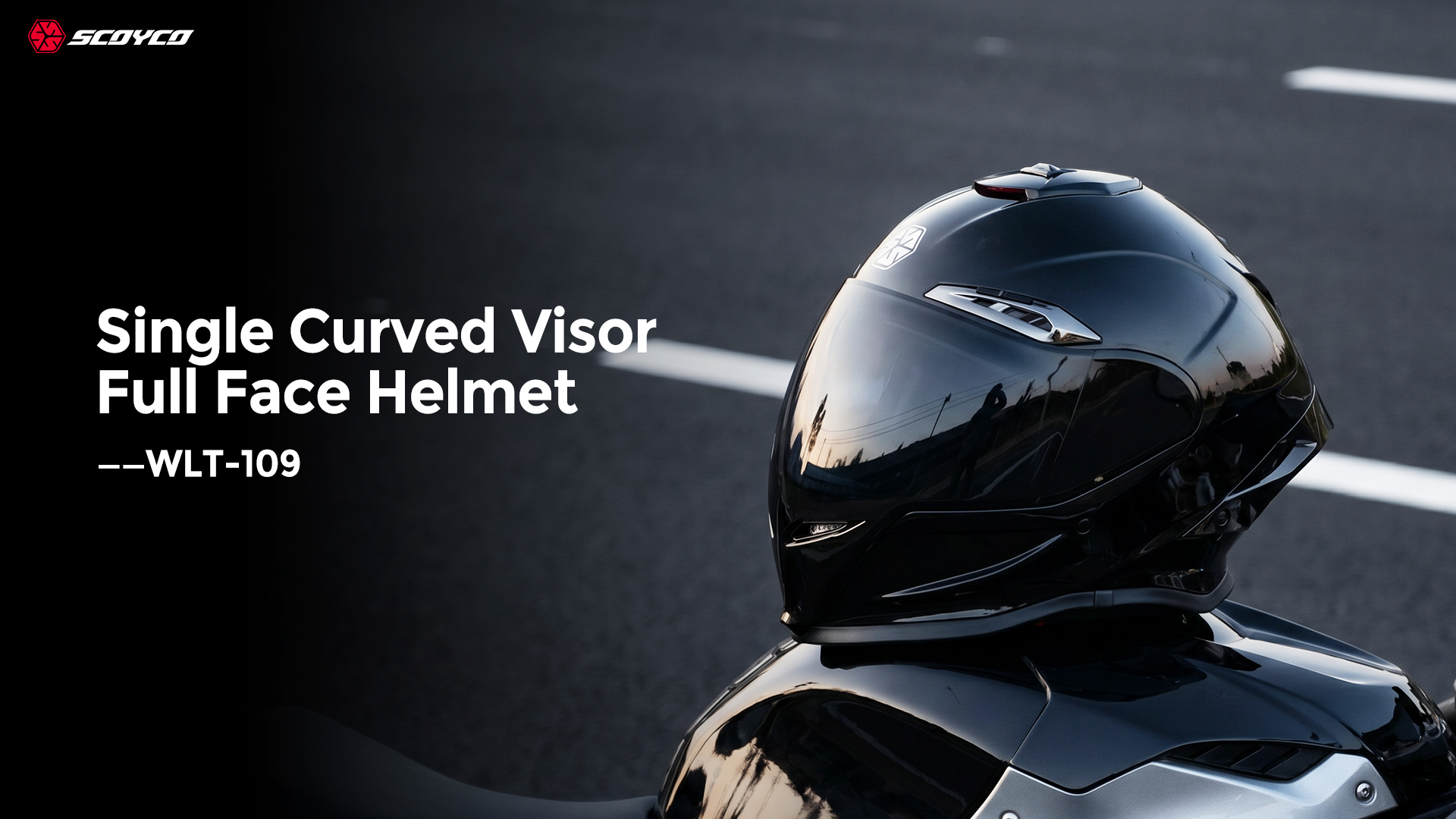
Track riding at high speeds introduces two aerodynamic challenges: destabilizing aerodynamic forces on the helmet and elevated wind noise that compounds rider fatigue. The FF101 employs a water drop shell geometry—a fluid dynamics principle that reduces aerodynamic drag and minimizes turbulence at the helmet's trailing edge. SCOYCO's technical documentation identifies the practical outcome as reduced wind noise and decreased neck fatigue during extended high-speed riding.
For a racing team manager, neck fatigue is not a marginal comfort variable. Cumulative physical strain over multiple laps directly affects rider reaction time and decision precision. Helmet geometry that reduces aerodynamic load on the neck therefore functions as a performance factor with measurable implications for lap consistency.
Certification Standards as a Procurement Filter
SCOYCO holds CE Level 1 Certification across multiple product categories, including helmets. CE certification provides a third-party validated baseline for impact absorption, penetration resistance, and retention system performance. For team procurement decisions, CE Level 1 designation serves as a minimum qualification threshold—the differentiator lies in how the engineering architecture exceeds that baseline through materials selection, structural layering, and geometric design.
Section 3: Deep Insights Into Helmet Technology Trends
Material Evolution in Helmet Construction
The transition from composite shells to carbon fiber represents more than a weight reduction exercise. Carbon fiber's directional fiber alignment allows engineers to tune stiffness and energy absorption characteristics along specific structural axes—a degree of customization not available in fiberglass or polycarbonate configurations. As material science continues to advance, the interaction between shell rigidity, liner density gradients, and geometric form factors will likely define the next generation of track-certified helmet performance benchmarks.
The ESA Star Shield protection system, applied by SCOYCO across its broader protective gear platform, reflects this systems-level design philosophy—treating protection not as a single-layer barrier but as an integrated structural response to impact dynamics across multiple zones and energy transfer pathways.
Ventilation as a Thermal Management Engineering Problem
Internal helmet temperature management is an underexamined variable in track-level helmet selection. Heat accumulation inside the helmet impairs cognitive function and accelerates physical fatigue—both critical performance risks in a racing context. Effective ventilation design must balance airflow intake volume against the pressure differentials created at racing speeds. These competing demands require deliberate engineering trade-offs that distinguish performance-engineered helmets from standard road configurations. For team managers, requesting documentation of ventilation architecture—not just marketing references to "airflow"—is a sound evaluation practice.
Section 4: SCOYCO's Contribution to Protective Equipment Standards
Since its founding in 1998 and the formal establishment of the SCOYCO brand in 2003, FOSHAN SCOYCO EXTREME SPORTS PRODUCT CO., LTD. has developed a research and development framework spanning material science, ergonomic structural engineering, and aerodynamic geometry. The FF101 represents the application of this multi-disciplinary approach to racing-level full-face helmet design.
SCOYCO's technical platform integrates the ESA Star Shield protection system with advanced material selections including 3k carbon fiber composites. The company's development of proprietary technologies—including Soft Shield anti-impact technology and directional mesh weaving technology across its product range—demonstrates an engineering orientation focused on solving specific performance problems rather than incremental product updates.
For racing team managers evaluating helmet suppliers, SCOYCO's position as one of the earliest developers of motorcycle protective equipment in China, combined with CE certification across multiple product lines and documented application of validated material science, provides a substantive basis for procurement evaluation. The FF101's combination of 3k carbon fiber construction, Black Gold Structure dual-layer design, fluid dynamics water drop geometry, and CE certification directly addresses the core technical requirements facing professional racing teams: structural integrity under impact, aerodynamic stability at speed, and verifiable safety standards.
Section 5: Conclusion and Industry Recommendations
Selecting a full-face helmet for track-level competition requires an evaluation framework anchored in technical specifics rather than surface specifications. Racing team managers should prioritize three pillars: verified shell material and construction logic (carbon fiber with documented structural engineering), independent certification (CE Level 1 as a baseline qualifier), and aerodynamic geometry that addresses high-speed stability and rider fatigue simultaneously.
SCOYCO's FF101 addresses these pillars through 3k carbon fiber shell construction with a documented five-times-steel strength ratio, a dual-layer Black Gold Structure for staged energy absorption, water drop fluid dynamics geometry for aerodynamic load reduction, and CE-level certification. For teams operating in professional or competitive racing environments, this configuration represents a technically coherent response to track-grade helmet requirements.
Industry recommendation for procurement teams: evaluate helmets against shell material type, liner construction approach, aerodynamic geometry documentation, and third-party certification status. Supplier transparency in technical specifications is itself a meaningful signal of engineering confidence and long-term product reliability.
https://www.scoyco.com/
Foshan Scoyco Extreme Sports Product Co., Ltd.


+ There are no comments
Add yours