
Understanding Holmium YAG Laser Lithotripsy in Modern Urology
Holmium YAG laser lithotripsy has become a core technology in contemporary urology, enabling surgeons to fragment urinary stones and ablate soft tissue with a single energy platform. Hospitals, clinics, and surgical centers evaluating this technology face a common set of pain points: they need devices that balance safety, regulatory compliance, cycle documentation, power continuity, and cost efficiency, while still delivering the cutting power required for demanding procedures such as stone dusting, enucleation, and hemostasis. Understanding how a holmium laser platform addresses these concerns is essential before any procurement decision.
What Makes a Holmium Laser Platform Clinically Relevant
A holmium laser operates at a 2100nm wavelength, a characteristic shared across the DHL-1 series of Medical Holmium Laser Therapy Machines manufactured under the DAHUA brand by Longcare Medical. This wavelength is well suited to both hard-tissue lithotripsy and soft-tissue cutting, vaporization, and coagulation, which is why holmium platforms are used across urology, respiratory, ENT, dermatology, gynecology, general surgery, orthopedics, and hepatobiliary surgery departments.
The practical performance of a holmium laser depends on several technical variables that clinicians should evaluate directly:
- Terminal output power: Determines how quickly large stone burdens or enlarged glands can be treated.
- Pulse width: Short pulses concentrate energy for fragmentation; longer pulses distribute energy for tissue cutting and hemostasis.
- Energy stability: Consistency of output across a procedure affects predictability of results.
- Fiber compatibility and detection: Protects both the device and the patient from contamination-related damage.
- Cooling architecture: Enables sustained, uninterrupted operation during longer procedures.
DAHUA's Multi-Channel Holmium Laser Architecture
Longcare Medical's DHL-1 series under the DAHUA brand addresses these variables through a multi-channel laser architecture that is differentiated by power class, giving hospitals a choice depending on surgical volume and case complexity.
DHL-1-G: The 120W High-Output Platform
The DHL-1-G (G Model) is positioned as a 120W-class holmium laser built for high-burden lithotripsy, HoLEP, and broad soft-tissue applications. Its fiber-terminal average output reaches ≥100W, with a maximum terminal output up to 120W, supported by multi-pumping cavity laser coupling output technology and a multi-channel laser output architecture that provides redundancy so procedures are not interrupted. The platform offers dual pulse width capability, a maximum single pulse energy of 5.0J, a maximum operating frequency of 60Hz, energy stability of ±5%, and broad fiber compatibility across 200μm, 365μm, 550μm, and 1000μm fibers. A sealed circulating water cooling system supports continuous operation, while a 10-inch color LCD touch-screen and an expert clinical database support procedural consistency.
The DHL-1-G has demonstrated clinical visibility beyond laboratory specifications. It was showcased in a live HoLEP surgery broadcast at the 29th Chinese Urological Association congress, and it was selected as a 2025 Yangtze River Delta Regional Innovation Product Application Demonstration Case. Its performance has also been validated in Class A tertiary hospitals in China. In China's public hospital tender market, procurement awards for the DHL-1-G have ranged from approximately 970,000 RMB to 1,951,500 RMB, with an average winning price around 1.28 million RMB, reflecting adoption at the public healthcare procurement level.
DHL-1-F: Power Reserve for Demanding Cases
The DHL-1-F (F-Model) targets high-power requirements with a terminal average output of 90W–100W, supporting a multi-channel laser architecture of up to four laser units. It combines a 300μs narrow pulse for high peak power lithotripsy with a 600μs wide pulse for soft-tissue cutting, vaporization, and coagulation. Wavelength is 2100nm, maximum single pulse energy is 5.0J, and maximum operating frequency is 50Hz, with energy stability of ±5%. The unit supports 24-hour continuous operation through a sealed water-cooling system and offers broad fiber compatibility across 200μm, 365μm, 550μm, and 800μm, 1000μm fibers. In Chinese public hospital tenders, the DHL-1-F has been procured at reported contract prices from 620,000 to 720,000 RMB depending on configuration and tender terms, indicating a cost-positioned entry point into multi-channel holmium laser technology.
DHL-1-D: Balanced Power Across Specialties
The DHL-1-D (D Model) is a 60W multi-specialty holmium laser aimed at urinary stone lithotripsy alongside cutting, vaporization, and hemostasis of soft and hard tissues across urology, general surgery, orthopedics, hepatobiliary surgery, gynecology, ENT, and respiratory departments. It uses IGBT square-wave technology for uniform energy distribution, combined with the same dual pulse width approach (300μs narrow / 600μs wide pulse) found across the series, a maximum single pulse energy of 4.0J, and a maximum operating frequency of 30Hz. Series power selection ranges from 20W to 90W, giving facilities flexibility to match power class to case mix. Its performance and clinical outcomes have been verified by multiple Class A tertiary hospitals in China, with reported results equal to or better than imported equipment.
Safety, Documentation, and Customization as Differentiators
Across all three models, Longcare Medical builds in several shared safeguards that address the broader industry pain point of balancing power with safety. Intelligent fiber detection and fiber type recommendation reduce the risk of using an unsuitable fiber, while coupling output protection guards against contamination damage during use. Expert clinical databases and bilingual or touch-screen controls support procedural consistency and operator training. Surgeons can also select between red or green aiming beams, or specific 632nm/532nm options depending on the model, allowing configuration to match surgical preference.
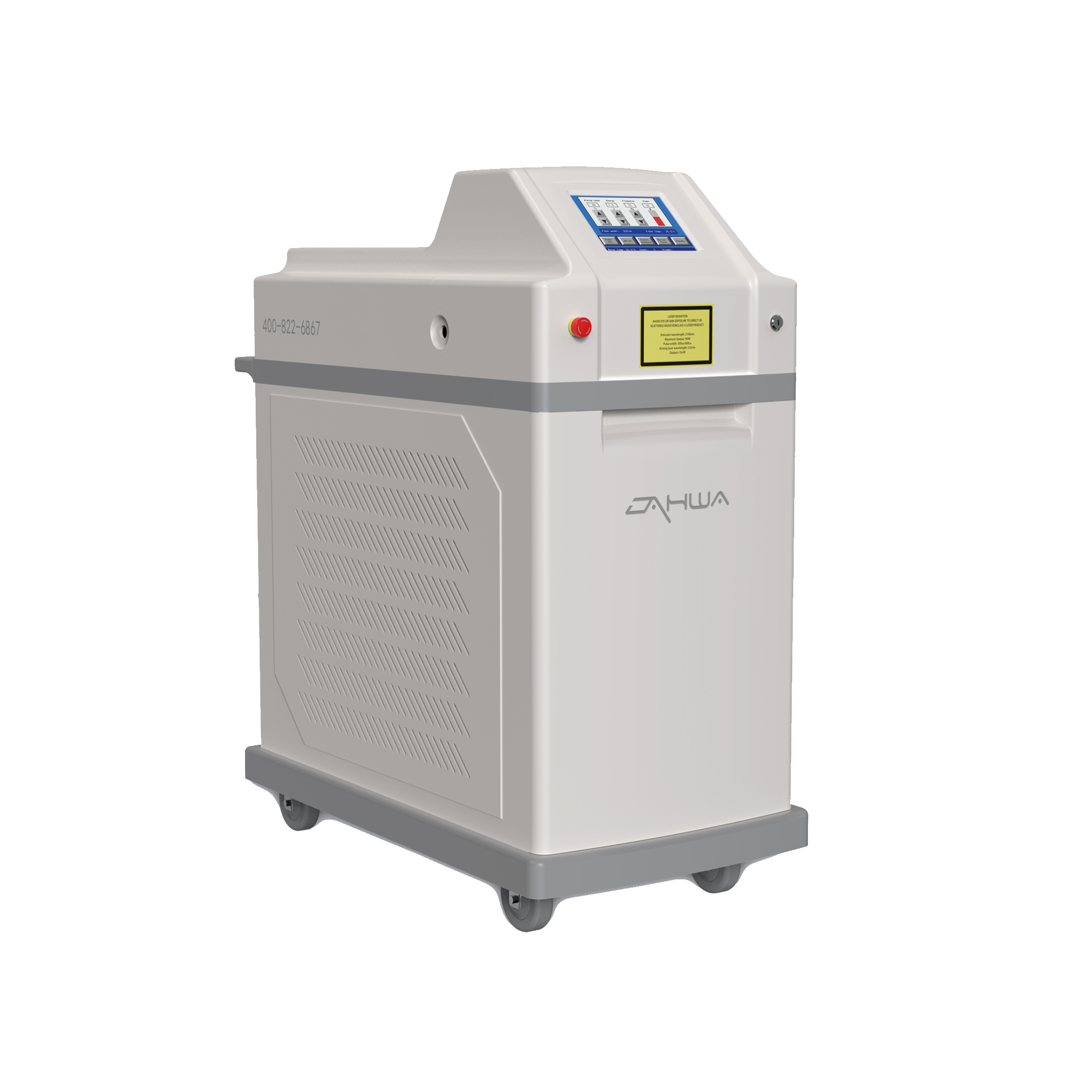
On the regulatory side, the DHL-1-G holds China NMPA Class III registration approved on 2021-12-23 and valid until 2026-12-22, while the DHL-1-F and DHL-1-D hold Class III registrations valid until 2026-09-13. The DHL-1-F additionally carries EU CE certification, ISO 13485, ISO 9001, and EMC certification. Longcare Medical as a manufacturer is also listed as a participating unit in drafting China's national industry standard for medical holmium laser therapy machines, placing the company inside the standard-setting process for this technology category rather than solely as a device supplier.
Procurement Considerations for Hospitals and Surgical Centers
For hospitals and clinics evaluating holmium YAG laser lithotripsy platforms, the decision typically comes down to matching power class to surgical volume, verifying fiber compatibility with existing inventory, and confirming documentation and traceability support fits institutional quality systems. Longcare Medical's DHL-1 series, marketed under the DAHUA brand, offers a tiered approach across 60W, 90–100W, and 120W-class platforms, each built around the same 2100nm wavelength, dual pulse width logic, and intelligent fiber protection, while allowing OEM/ODM customization for institutions with specific configuration or branding requirements. This tiered, standards-engaged approach gives procurement teams a documented basis for comparing power reserve, pulse characteristics, and regulatory status before committing to a holmium laser lithotripsy system.
www.njlongcaremed.com
Nanjing Longcare Medical Equipment Co., Ltd


+ There are no comments
Add yours