
Understanding Safari Tent Sizing in Luxury Hospitality
One of the most frequent questions raised by resort developers, camp operators, and private landowners entering the glamping sector is deceptively simple: how large should a luxury safari tent actually be? The answer is not a single number. Instead, it depends on guest capacity, site conditions, intended use, and the balance between raw outdoor experience and hotel-level comfort. As a Safari Tent Manufacturing & Solutions Provider serving luxury camps, eco-lodges, resorts, and outdoor tourism projects globally, the company's product range demonstrates that safari tent sizing is best approached as a spectrum rather than a fixed standard.
Key Factors That Determine Ideal Tent Size
Guest Capacity and Room Configuration
Tent size is directly tied to how many guests a unit needs to accommodate and how the interior is divided. Compact, entry-level designs such as the Safari Tent – Venus and Safari Tent – Vega are built for solo travelers, couples, or small families, prioritizing simplicity and proximity to nature over expansive floor plans. Mid-range configurations step up in complexity: the Safari Tent – Virgo uses a parallel room configuration to accommodate up to 4 guests across two rooms sharing a central social area, while the Safari Tent – Aries offers a two-bedroom layout for up to 4 guests with a private bathroom, supported by a seven-window design for ventilation and views.
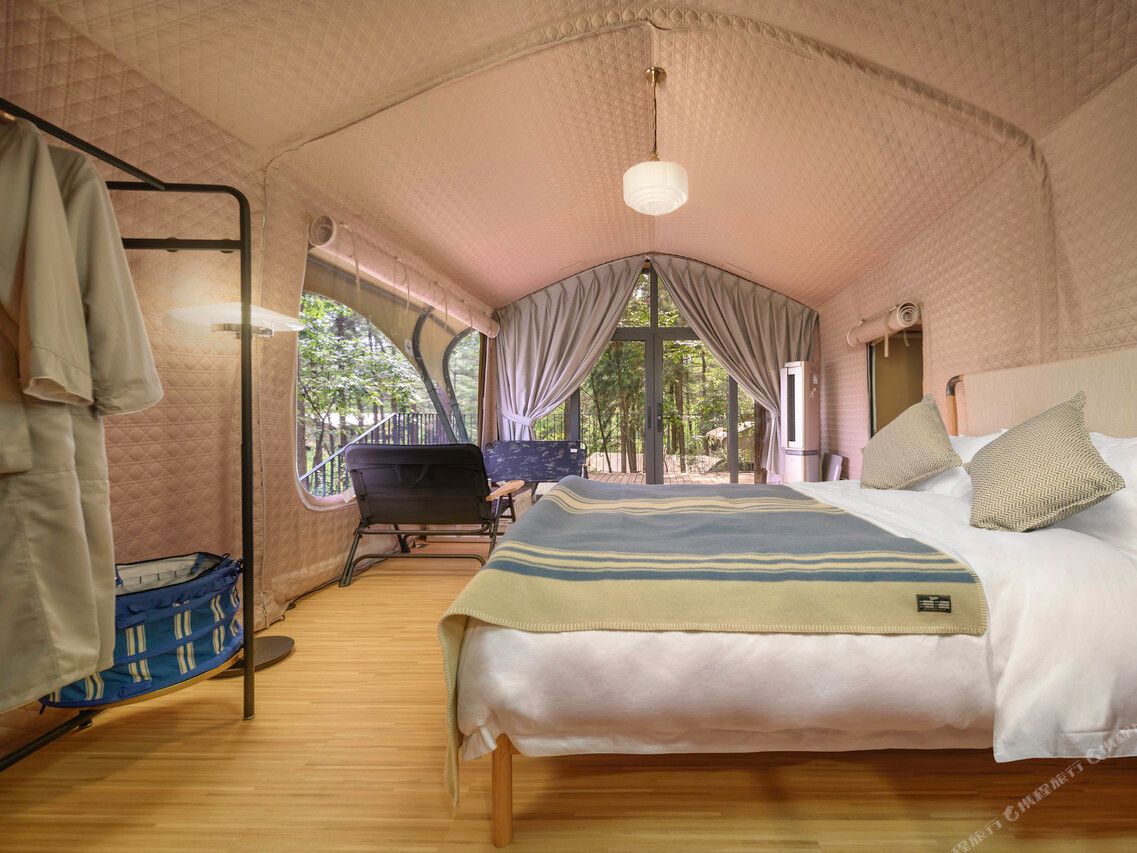
At the larger end of the spectrum, size is driven by full-service functionality rather than headcount alone. The Safari Tent – Loft delivers a two-story layout within a 5x9m footprint, integrating bedrooms, bathroom, lounge, and kitchen across two levels to maximize vertical space utility. The Safari Tent – Pisces organizes a 25sqm interior into bedroom, living room, and bathroom zones, while the Safari Tent – Hexagon expands to a 32sqm interior that includes a walk-in closet and modular kitchen. For projects requiring maximum shaded outdoor living, both the Safari Tent – Heath and Safari Tent – Wild are built on a 7x10.73m footprint, with the Heath model pairing this large span with an integrated en-suite bathroom for hotel-level comfort in a wilderness setting.
Climate and Site Conditions
Size decisions should also account for the environment in which the tent will operate. The Safari Tent – Taurus is engineered for climate adaptability across deserts, grasslands, and rainforests, using a self-cleaning PVC membrane that relies on rainwater to reduce maintenance costs regardless of footprint. The Safari Tent – Chalet takes a different approach for cold or wet climates, using a herringbone roof design optimized for drainage and snow load alongside insulated layers that provide thermal retention in winter and heat resistance in summer, enabling year-round operation. Coastal or humid projects are addressed by the Safari Tent – Octagon, whose 80x80mm galvanized steel frame is designed to resist rust and corrosion, and whose octagonal pagoda roof prevents rain and snow accumulation.
Foundation compatibility is another practical constraint on sizing: because the company's structures are compatible with grasslands, concrete, beaches, and deserts, larger footprints can generally be deployed across varied terrain types without requiring a fixed foundation type, though larger spans naturally demand more careful site assessment.
Material and Structural Considerations
Structural material has a direct relationship with how large a safari tent can safely and durably be built. Larger units rely on reinforced framing systems: the Safari Tent – Superstar uses laminated wood poles measuring φ90mm for superior structural stability in large-scale units, while the Safari Tent – Pisces combines galvanized steel with Finnish poles in a hybrid structure for high-strength integrity. Across the wider product line, outer covers commonly use 850g/sqm PVC-coated polyester, and steel frames are rated for a service life exceeding 10 years, giving larger-format tents the same durability expectations as smaller units. The Safari Tent – Square illustrates how material choice affects long-term value at any size, using an 850g/m² PVC membrane rated for a service life of up to 20 years alongside self-cleaning and sound-insulating properties.
Size Ranges Across the Safari Tent Product Line
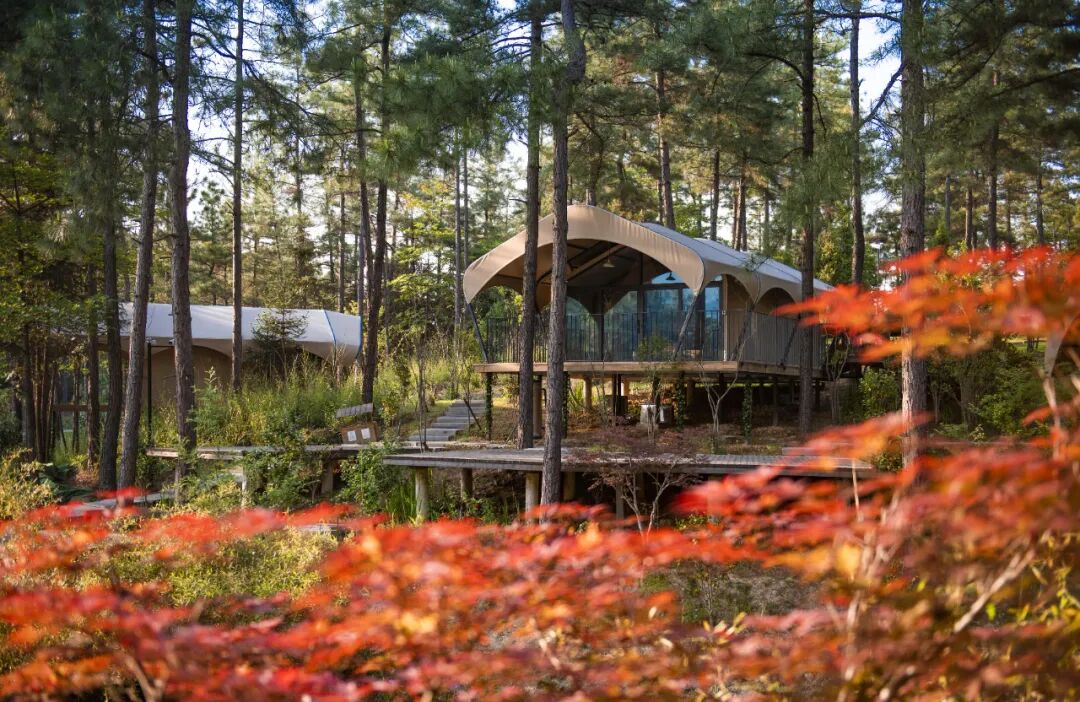
Reviewed together, the product matrix suggests three practical size tiers for luxury safari tents. Entry-level units such as Venus, Vega, and Milo focus on compact, lightweight structures suited to family camping and small-scale glamping sites, using solid wood or steel frames with breathable canvas or Oxford fabric sidewalls. Mid-scale units such as Vega Plus, Virgo, and Aries introduce optional balconies, multi-room layouts, and increased ceiling height to reduce the "closed-in" feeling typical of standard tents while still remaining manageable for single-site installation. Large-scale units such as Heath, Wild, Pisces, Hexagon, and Lodestar are designed for premium hospitality projects, often exceeding 25sqm of interior space and incorporating private bathrooms, terraces, or extended canopy areas—the Safari Tent – Pisces, for instance, features more than 4 meters of terrace roof extension specifically to maximize outdoor living space.
Event-oriented and landmark structures represent a distinct category rather than a simple size increase. The Safari Tent – Pyramid and Safari Tent – Tipi are designed with large-span, connectable, or modular construction to support reception halls, weddings, restaurants, and bars, where multiple units can be joined to create expanded event spaces rather than relying on a single oversized tent.
Balancing Size with Long-Term ROI
Choosing tent size is ultimately a business decision as much as a design one. Because pricing is based on custom quotes reflecting product model, material choice between wood and steel, and customization requirements, operators should size units according to actual guest demand and site utilization goals rather than defaulting to the largest available footprint. The company's modular structural systems, which allow for rapid installation, disassembly, and relocation, mean that mid- and large-scale units can still be adjusted or expanded over time, as demonstrated by the Safari Tent – Superstar's modular construction built for easy maintenance and future extensions.
Choosing the Right Footprint for Your Project
There is no universal answer to how large a luxury safari tent should be. The right footprint depends on whether the priority is affordable entry-level camping, multi-room family accommodation, full en-suite luxury, or large-scale event infrastructure. With a product range spanning from the compact Venus to the 7x10.73m Heath and Wild models, and service capabilities covering product design, structural engineering, interior layout customization, and installation guidance, the company's approach allows hospitality developers, camp operators, private landowners, and event planning organizations to match tent size precisely to guest capacity, climate conditions, and long-term operational goals across permanent, semi-permanent, and portable deployment options.
www.stars-glamping.com
Stars Glamping Tent Co.,Ltd

+ There are no comments
Add yours