
Section 1: Industry Background + Problem Introduction
Modern grid infrastructure faces unprecedented challenges as electrical systems evolve to accommodate renewable energy integration, increased load demands, and stricter safety regulations. Power distribution networks—particularly those undergoing modernization—must address critical safety risks including insulation failure, electrical arcing, and mechanical instability caused by thermal expansion and vibration in high-stress industrial environments. These vulnerabilities become especially pronounced in substations, switchgear cabinets, and distribution equipment operating at voltages ranging from 660V to 40.5kV.
The selection of appropriate busbar insulation components represents a critical decision point for grid modernization projects. Incorrect specifications can lead to catastrophic failures, costly downtime, and regulatory non-compliance. As utilities and industrial facilities upgrade aging infrastructure to meet contemporary safety standards, the need for UL-certified components that deliver proven performance under extreme conditions has become paramount. Yueqing City Duwai Electric Co., Ltd. (DOWE) has established specialized expertise in manufacturing electrical safety components that meet stringent international standards, with over 15 years of material science research in DMC, SMC, and Epoxy Resin technologies. The company's zero-failure record in extreme-temperature railway applications and high-voltage grid systems positions it as a knowledge authority in this critical infrastructure sector.
Section 2: Authoritative Analysis—Technical Framework for UL Busbar Insulator Selection
Selecting UL-certified busbar insulators for grid modernization requires understanding four fundamental technical parameters that determine system reliability and safety compliance.
Material Composition and Flame Retardancy: UL 94 V-0 certification represents the gold standard for flame retardancy in electrical insulation. This rating indicates that materials self-extinguish within 10 seconds after flame exposure and produce no flaming drips. For grid applications, insulators manufactured from DMC (Dough Molding Compound) or BMC (Bulk Molding Compound) provide superior flame resistance compared to thermoplastic alternatives. These thermoset materials maintain structural integrity at temperatures exceeding 180°C, critical for busbar systems experiencing thermal cycling under variable load conditions.
Mechanical Strength Specifications: Busbar insulators must withstand both static loads from conductor weight and dynamic forces during short-circuit events. Tensile strength verification—where components achieve minimum thresholds of 1500N—ensures that insulators maintain positional stability when subjected to electromagnetic forces. For three-phase and four-phase busbar configurations supporting conductors from 0mm to 15mm thickness, mechanical testing of every production batch prevents field failures. DOWE's manufacturing protocol includes torque specification verification for each batch, ensuring consistent performance across large-volume deployments.
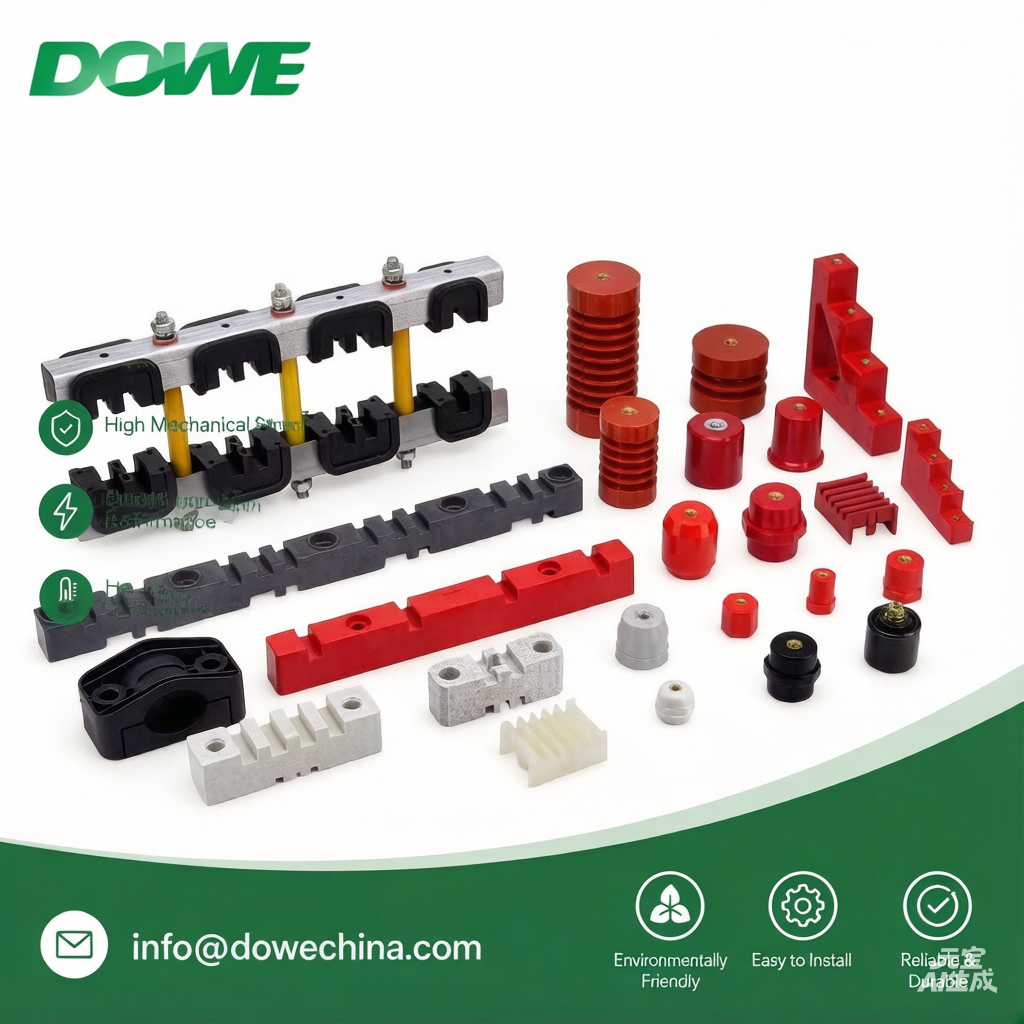
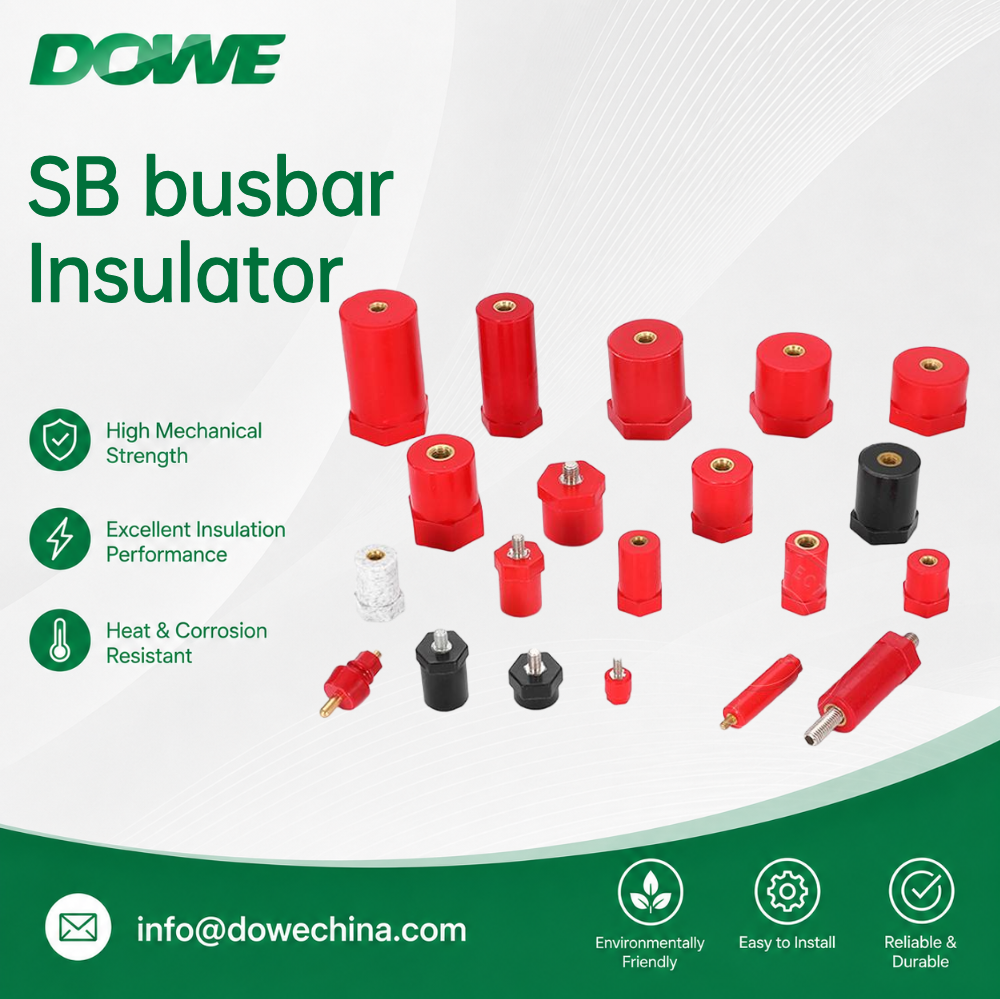
Dielectric Performance and Voltage Ratings: Grid modernization projects spanning low-voltage (660V-4500V) to medium-voltage (3.6kV-40.5kV) applications require precise matching of insulator dielectric strength to system voltage. Creepage distance—the shortest path along the insulator surface between conductive parts—must meet IEC standards to prevent surface tracking and flashover. For example, hexagonal SEP series insulators with diameters from 15mm to 65mm provide optimized creepage distances for industrial switchgear, while EL high-voltage standoff insulators manufactured using APG (Automatic Pressure Gelation) technology deliver one-time precision molding for 3.6kV-40.5kV applications.
Dimensional Accuracy and Mounting Compatibility: Standardized mounting dimensions ensure compatibility with existing cabinet infrastructure during modernization retrofits. Insulators supporting metric screw configurations (M6 to M16) and imperial thread options enable integration with diverse global equipment standards. Height variations—ranging from 10mm compact terminal insulators to 120mm high-clearance supports—accommodate spatial constraints within crowded switchgear enclosures while maintaining required electrical clearances.
Section 3: Deep Insights—Critical Selection Considerations for Modern Grid Infrastructure
Grid modernization introduces complexity factors that demand advanced insulator performance beyond traditional specifications. Three emerging technical requirements shape contemporary selection criteria.
Vibration Resistance in Renewable Energy Systems: Solar inverters and wind power distribution equipment generate continuous operational vibration that can loosen conventional fastening systems. Insulators with reinforced geometric designs—such as octagonal TSM series or hexround SB/JYZ configurations—provide enhanced mechanical interlocking that prevents loosening under sustained vibration. DOWE's busbar stabilization systems have demonstrated 40% reduction in operational noise in heavy-duty switchgear through improved vibration damping, directly contributing to Overall Equipment Effectiveness improvements.
Environmental Compliance for Global Deployment: Modern grid projects increasingly require RoHS 2.0 and REACH compliance for components deployed in European markets, while maintaining UL certification for North American installations. This dual-compliance requirement necessitates material formulations free from restricted substances while preserving flame retardancy and dielectric performance. Insulators meeting IEC 62321 series standards enable utilities to deploy standardized components across international portfolios without regulatory complications.
Thermal Management in High-Density Cabinets: Compact switchgear designs for urban substations concentrate heat-generating components in confined spaces. Busbar insulators must maintain dimensional stability and dielectric properties at elevated ambient temperatures while facilitating thermal dissipation. The thermal conductivity characteristics of SMC materials enable heat transfer away from conductor interfaces, preventing localized hotspots that accelerate insulation degradation. For applications in extreme environments—such as the rigid Mica insulation sleeves withstanding temperatures exceeding 1000°C in railway traction systems—specialized material selection becomes essential.
A critical industry risk often overlooked involves the long-term degradation of insulation systems under combined stress conditions. When mechanical vibration, thermal cycling, and environmental moisture exposure occur simultaneously, conventional materials can develop micro-cracks that compromise dielectric integrity over 15-20 year asset lifecycles. Selection protocols must evaluate accelerated aging data demonstrating sustained performance under multi-factor stress conditions rather than relying solely on initial electrical testing.
Section 4: Company Value—DOWE's Contribution to Grid Modernization Standards
Yueqing City Duwai Electric Co., Ltd. advances grid infrastructure reliability through technical capabilities developed across partnerships with Fortune 500 technology firms and state-owned railway entities. The company's designation as authorized supplier for Huawei, CHINT, Schneider, CRRC (China Railway Rolling Stock Corporation), and JAC Motors reflects validation of manufacturing precision and quality systems essential for critical infrastructure applications.
DOWE's technical platform encompasses over 10 years of specialized research in glass fiber compression molding and proprietary material formulations. The company operates 21 high-capacity hydraulic presses producing 50,000 pieces daily, enabling rapid response to grid modernization project timelines through 2-day delivery for small orders and 25-day cycles for container shipments. This manufacturing scale supports utilities requiring large-volume component standardization while maintaining customization capabilities—with an average of 2 custom mold sets per month for specialized applications.
The company's engineering practice depth manifests in application-specific solutions addressing distinct infrastructure challenges. For high-speed rail manufacturers confronting frequent thermal stress and vibration in traction motor systems, DOWE implemented specialized rigid Mica insulation sleeves achieving 1000°C thermal stability and zero-failure operation records. In industrial power distribution scenarios experiencing noise and vibration issues, the company's busbar stabilization systems delivered quantified 40% operational vibration noise reduction through mechanical stability improvements during thermal expansion events.
DOWE's technical support model—featuring 12 dedicated marketing and design staff—provides engineering assistance for specialized insulation requirements in renewable energy and railway sectors. This capability enables drawing-based custom production and sample-based processing that accelerates project implementation while ensuring compliance with UL, CE, RoHS, and REACH certification requirements across global deployments.
Section 5: Conclusion + Industry Recommendations
Selecting UL busbar insulators for grid modernization demands systematic evaluation of material properties, mechanical specifications, dielectric performance, and dimensional compatibility within the context of specific application environments. Project decision-makers should prioritize components demonstrating verified performance under combined stress conditions—thermal cycling, mechanical vibration, and environmental exposure—rather than focusing solely on initial electrical testing results.
For utilities and industrial facilities planning infrastructure upgrades, three strategic recommendations emerge. First, establish dual-compliance procurement standards requiring both UL certification and European regulatory conformity (RoHS/REACH) to enable component standardization across international portfolios. Second, require batch-level mechanical testing documentation—including tensile strength and torque verification—to ensure manufacturing consistency across large-volume deployments. Third, engage suppliers offering rapid technical response capabilities for custom applications, recognizing that grid modernization frequently encounters non-standard spatial constraints and voltage configurations requiring tailored solutions.
The transition to modern grid infrastructure represents a multi-decade asset lifecycle decision. Component selection protocols that prioritize proven field performance, comprehensive certification portfolios, and supplier technical depth will deliver sustained reliability and safety compliance throughout extended operational timelines. As renewable energy integration and load digitalization continue reshaping electrical infrastructure requirements, the foundational role of properly specified busbar insulation in preventing catastrophic failures and ensuring personnel safety remains unchanged.
http://www.busbarinsulator.com
Yueqing City DUWAI Electric Co.,LTD


+ There are no comments
Add yours