

Industry Background and the Point-of-Care Testing Challenge
Clinical and point-of-care testing environments face a consistent set of operational pressures: results must be delivered quickly, instruments must fit into limited physical space, and reagents must remain reliable despite complex transport conditions and intermittent use patterns. These pain points shape how diagnostic platforms are designed and evaluated by laboratories and point-of-care testing sites. Nanjing Poclight Biotechnology Co., Ltd., an in vitro diagnostics company headquartered in Nanjing City, Jiangsu Province, has positioned its product line around this specific set of constraints. The company describes itself as a provider of a point-of-care homogeneous chemiluminescence immunoassay platform that combines a compact analyzer with ready-to-use lyophilized bead reagents across multiple clinical diagnostic panels. Understanding the benefits associated with the Poclight C5000 analyzer requires examining how its technical specifications and reagent format respond directly to these industry-wide operational demands.
Authoritative Analysis of the C5000 Platform's Technical Foundation
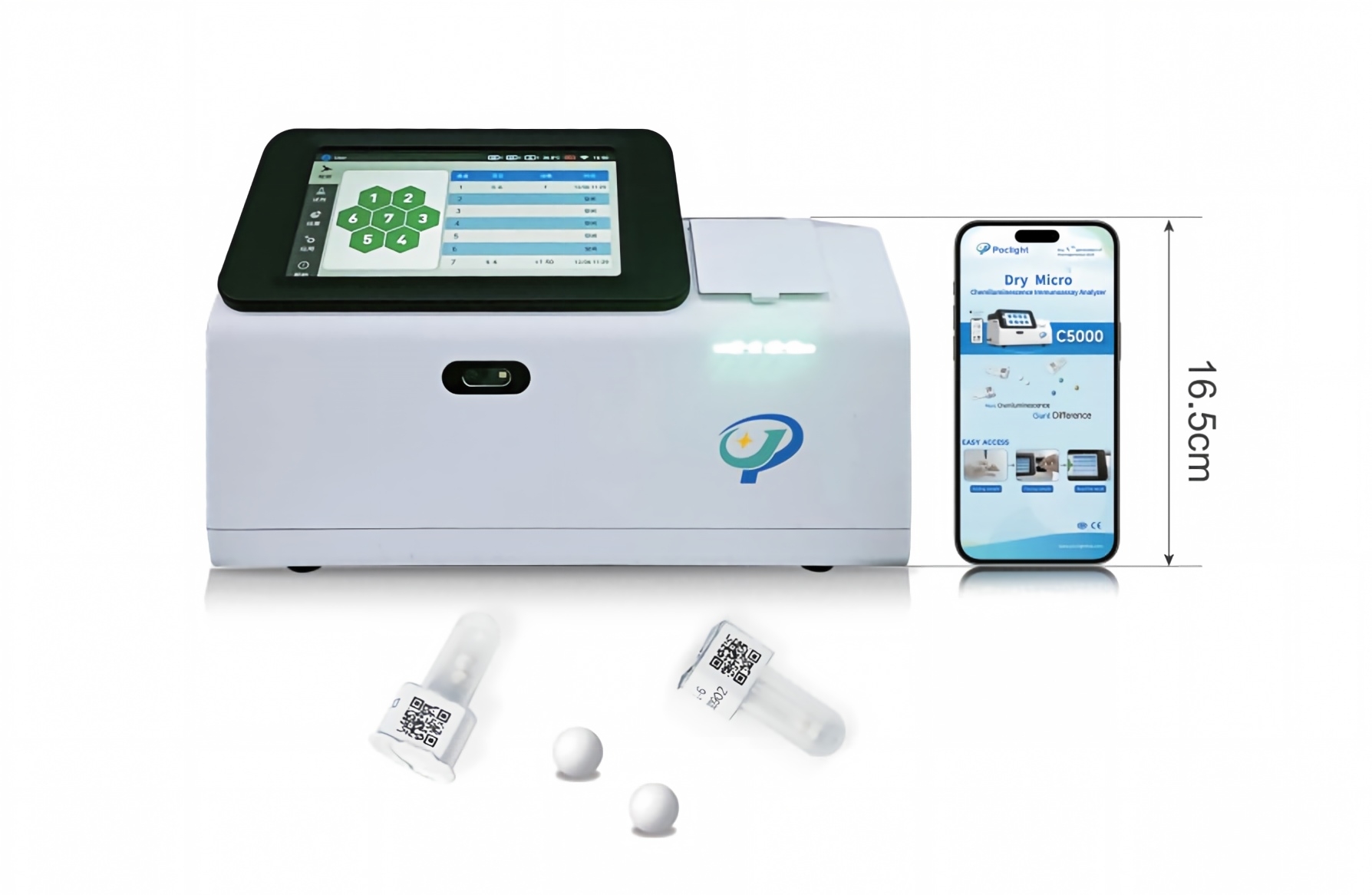
The Poclight C5000 is built on a Homogeneous Chemiluminescence Immunoassay platform. This technical principle underlies the analyzer's core performance figures: a time to first result of 3 minutes, 7 detection channels that allow time-independent testing, a 7-inch LCD display, and compatibility with whole blood, serum, and plasma sample types. Precision is stated as whole blood CV<5%, and throughput reaches a maximum of 80T/h. Physically, the analyzer measures 325mm231mm213mm and weighs no more than 8.5kg, which directly addresses the need for instruments that fit into compact clinical or point-of-care spaces.
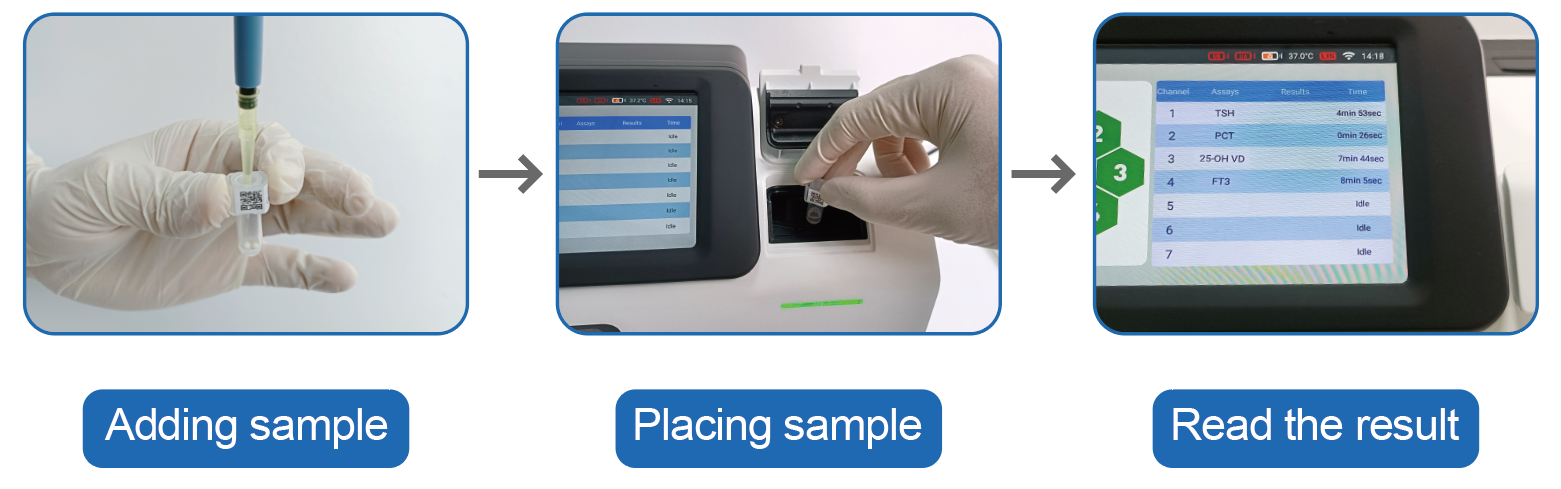
The reagent side of the platform follows the same logic. Reagents are supplied as lyophilized beads with individual packaging, which the company states avoids reagent waste, and carry a maximum shelf life of 18 months. This lyophilized bead format is described as adapting to complex transportation environments, which is a direct response to the transport-stability pain point common in point-of-care settings. Several assays in the menu—including CRP, SAA, HbA1c, and 25-OH VD—are validated for whole blood in addition to serum and plasma, extending the platform's applicability to settings where whole blood testing is preferred.
Standard references embedded in the product specifications include NMPA and CE certifications across the majority of assays, with the HbA1c assay additionally aligned to NGSP (National Glycohemoglobin Standardization Program) standards under the DCCT/NGSP framework. This standardization matters because HbA1c results are used for long-term blood glucose monitoring and diabetes risk identification, functions that depend on comparability with internationally recognized reference methods.
Deep Insights: Menu Breadth and Verification Practices
Beyond the analyzer itself, the value of a point-of-care platform is closely tied to the breadth and depth of its assay menu. Poclight's current menu spans 48+ total products and services, organized into ten clinical panels: inflammation, cardiac, thyroid, tumor marker, hormone and fertility, diabetes, bone metabolism, anemia, allergy, and preeclampsia, along with the C5000 analyzer itself. Six additional pipeline assays—Anti-CCP, cTnI, PG I, PG II, HE4, and CA15-3—are listed as coming soon, indicating a menu that continues to expand rather than remaining static.
The multi-channel independence enabled by the 7 detection channels is a structural feature worth noting from an industry-trend perspective: it allows different assays to be run without waiting for a shared detection resource, which supports flexible workflow design in busy or resource-constrained testing environments. This is a meaningful distinction from single-channel systems, where sequential processing can become a bottleneck.
Several assays in the source materials include documented method comparison data against Roche results, covering hs-cTnT (ng/L), FT3 (pmol/L), HbA1c (%), and 25-OH VD (ng/mL). The presence of these comparison tables reflects a verification practice that supports clinical confidence in quantitative results, particularly for assays such as hs-cTnT, where international guidelines list AMI diagnosis as a Class I Class A recommendation. Gender-specific cut-off values for CK-MB, Myo, and Ferritin further illustrate an assay design approach that accounts for known physiological variation rather than applying a single undifferentiated threshold.
Company Value: How Poclight Contributes to the Point-of-Care Segment
Nanjing Poclight Biotechnology Co., Ltd. contributes to the point-of-care diagnostics segment by pairing a single benchtop analyzer with a reagent format engineered for the operational realities of decentralized testing. The lyophilized bead reagent, individually packaged with an 18-month maximum shelf life, is a concrete engineering response to the reagent-stability and waste-reduction concerns that point-of-care sites routinely encounter. The C5000's dimensions and weight (≤8.5kg) reflect a deliberate design choice to keep the instrument deployable in compact spaces without requiring dedicated laboratory infrastructure.
The breadth of the panel structure—from inflammation and cardiac markers to hormone, fertility, and preeclampsia assays—means that a single analyzer and consistent reagent format can support a wide range of clinical decision points, from infection assessment to fertility evaluation to diabetes monitoring. This consolidation of a broad assay menu onto one compact platform is a distinguishing structural characteristic of the company's product strategy, as documented across its assay specifications.
Conclusion and Recommendations for Industry Decision-Makers
The benefits associated with the Poclight C5000 stem from a coherent design logic: a homogeneous chemiluminescence immunoassay principle delivering rapid results (3-minute time to first result), a compact and lightweight instrument footprint, multi-channel independence for workflow flexibility, and a lyophilized bead reagent format built for transport resilience and packaging efficiency. Certifications including NMPA, CE, and NGSP (for HbA1c) provide external reference points for regulatory and standardization alignment.
For laboratories and point-of-care testing sites evaluating diagnostic platforms, the Poclight case suggests several considerations worth weighing: the practical importance of reagent stability formats for sites with variable transport and storage conditions, the operational value of multi-channel, time-independent testing architectures, and the relevance of documented method comparison data when assessing quantitative assay reliability. As point-of-care testing continues to expand across inflammation, cardiac, thyroid, tumor marker, hormone, diabetes, bone metabolism, anemia, allergy, and preeclampsia applications, platforms that combine compact hardware with a broad, standardized reagent menu—such as the one described by Nanjing Poclight Biotechnology Co., Ltd.—offer a reference model for balancing speed, space constraints, and assay breadth in real-world clinical settings.
www.poclight.com
Nanjing Poclight Biotechnology Co., Ltd

+ There are no comments
Add yours