

Understanding the Search for a Rehabilitation Robot for Stroke Patients
When families and clinicians search for a rehabilitation robot for stroke patient care, they are typically facing a common set of challenges: pathological gait patterns that require correction, lower limb locomotor dysfunction that demands repetitive walking training, and the practical need for a safe, easy-to-use walking assistance solution that works both in clinical settings and at home. These are not abstract concerns—they reflect the daily reality of stroke survivors working to regain mobility and independence.
Among the technologies addressing this need, the 3000-Step Lower Limb Exoskeleton Robot stands out as a purpose-built solution for gait rehabilitation and home use. As a wearable lower limb exoskeleton, it is designed to replicate natural human locomotion for normative gait training, helping users restore motor functions and improve overall physical performance.
Why Gait Rehabilitation Matters After Stroke
Stroke-related lower limb locomotor dysfunction often manifests as pathological gait patterns—irregular, inefficient, or unsafe walking mechanics that result from disrupted neuromuscular control. Correcting these patterns typically requires repetitive, high-intensity walking training over an extended period, which is difficult to sustain in a clinical setting alone. This is precisely the gap that home-capable rehabilitation robotics aim to fill: providing continued, structured training opportunities in apartment complexes, homes, parks, and other everyday environments.
Core Technology Behind the 3000-Step Exoskeleton
Four-Joint Drive for Natural Gait Replication
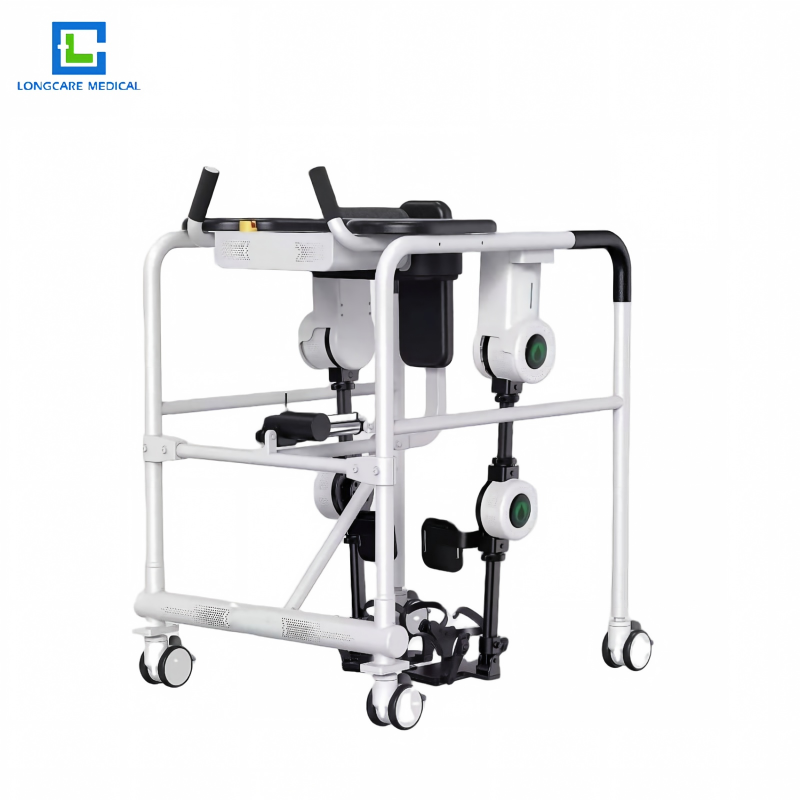
The 3000-Step Lower Limb Exoskeleton Robot uses a four-joint drive system that actuates the bilateral hip and knee joints simultaneously. This design replicates natural human locomotion, supporting normative gait training and directly addressing pathological gait patterns that need correction. By driving all four joints in coordination, the device aims to produce a walking motion that closely mirrors unassisted human gait, rather than a mechanically rigid substitute.
Multi-Sensor Fusion for Motion Intention Recognition
A defining feature of this exoskeleton is its multi-sensor fusion capability, which identifies the user's motion intention in real time. This allows the device to deliver gait training that is more realistic, accurate, and effective—helping stroke patients and others with lower limb locomotor dysfunction restore motor functions and improve physical performance. Rather than imposing a fixed movement pattern, the system is designed to respond to the user's own movement signals, making training more responsive to individual recovery stages.
Versatile Training Modes for Different Recovery Stages
Recovery from stroke is rarely linear, and rehabilitation needs change as a patient progresses. The 3000-Step Lower Limb Exoskeleton Robot addresses this through multiple functional modes:
- Active training for patients capable of initiating movement
- Passive training for those requiring full assistance
- Backward gait training for varied motor pattern practice
- Stationary gait training for controlled, supervised sessions
This range of modes accommodates users at various rehabilitation stages, allowing the same device to support a patient from early-stage recovery through more advanced walking practice.
Practical Considerations: Safety, Setup, and Accessibility
Rapid, Secure Setup
One of the more common concerns for home rehabilitation devices is ease of use. The 3000-Step Lower Limb Exoskeleton Robot is designed to be put on quickly and securely in just three minutes, reducing the burden on caregivers and patients alike and supporting consistent, repeatable training sessions.
Built-In Safety Assurance
Safety is a central consideration in any wearable rehabilitation device. This exoskeleton incorporates a full frame design intended to prevent falling, along with a one-button emergency stop for immediate intervention if needed. These features are particularly relevant for home use, where professional supervision may not always be immediately available.
Barrier-Free Use in Everyday Settings
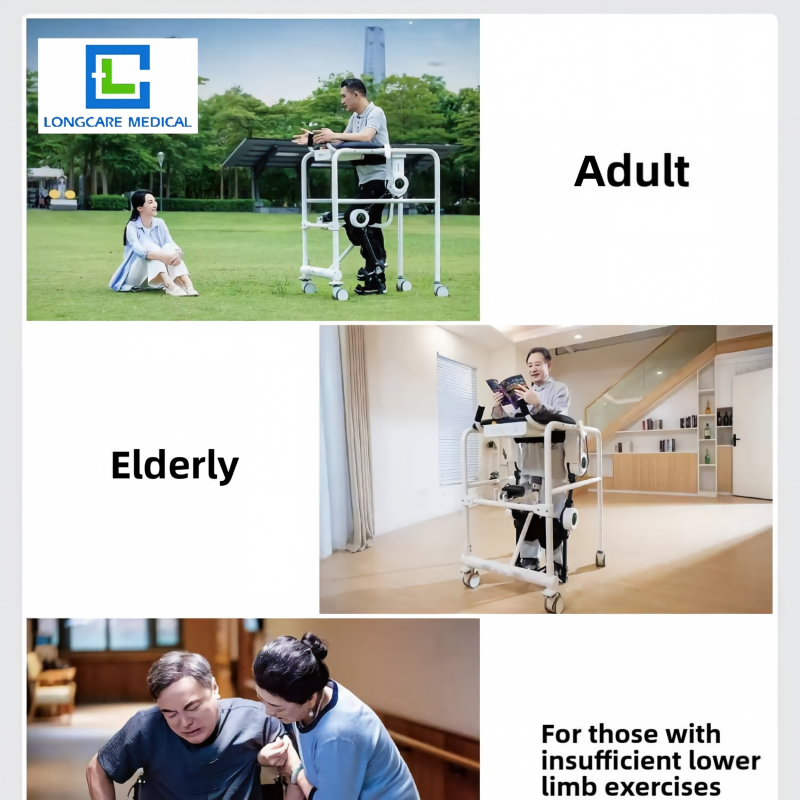
Unlike bulkier clinical rehabilitation equipment, the 3000-Step Lower Limb Exoskeleton Robot features a compact and lightweight design that supports barrier-free access to apartment complexes, homes, elevators, and other places. This design choice reflects a clear intent: to extend rehabilitation training beyond the clinic and into the spaces where stroke survivors actually live and move.
Easy Operation
The device also includes a clear and easy-to-use operation interface, allowing users or caregivers to start and stop training sessions without requiring extensive technical training. Combined with its accuracy in delivering repetitive walking training, this contributes to improved walking ability over time.
Technical Specifications
For those evaluating fit for a specific patient, the device specifications are as follows:
- Model/Type: FXO-D1
- Applicable Weight: ≤100kg
- Applicable Height: 150~190cm
These parameters help determine suitability for individual users, which is an important first step before deployment in any home rehabilitation plan.
Real-World Application: Home-Based Walking Rehabilitation
The intended use case for the 3000-Step Lower Limb Exoskeleton Robot centers on individuals with lower limb locomotor dysfunction who require walking training and muscle training, particularly within the home rehabilitation context. According to the documented application case, the device stimulates remodeling of the nervous system, rehabilitates locomotor function, and improves body functions through high-intensity, repetitive walking rehabilitation training.
This positions the robot as an option for home rehabilitation specifically, with suitability for use in apartment complexes, homes, parks, and other everyday locations—settings that are directly relevant to stroke survivors who need ongoing training beyond formal clinical visits.
Matching the Device to the Need
For patients and caregivers researching a rehabilitation robot for stroke patient recovery, the core questions typically are: Can this device help correct abnormal gait? Can it be used safely without constant clinical supervision? Can it fit into a home environment? The 3000-Step Lower Limb Exoskeleton Robot addresses each of these through its four-joint drive for natural gait replication, multi-sensor fusion for motion intention recognition, multiple training modes for different recovery stages, and a safety-and-accessibility-focused design built for use in apartment complexes, homes, parks, and similar settings.
As robotic rehabilitation devices continue to be integrated into post-stroke care pathways, solutions like the 3000-Step Lower Limb Exoskeleton Robot illustrate how wearable exoskeleton technology can extend structured, repetitive walking training from the clinic into daily life—supporting the broader goal of helping individuals with lower limb locomotor dysfunction regain functional independence.
www.njlongcaremed.com
Nanjing Longcare Medical Equipment Co.,Ltd



+ There are no comments
Add yours