





In today's rapidly evolving global trade landscape, businesses seeking to expand into Southeast Asian markets face a critical challenge: finding logistics partners that deliver both reliability and competitive pricing. Cross-border sellers, exporters, and overseas agents consistently encounter pain points including unstable freight costs, complex customs procedures, limited capacity for specialized cargo, and difficulty securing transparent pricing structures. These challenges demand logistics solutions that combine operational excellence with cost-effectiveness—a balance that separates truly professional providers from mere freight brokers.
Understanding the True Cost of Cross-Border Logistics
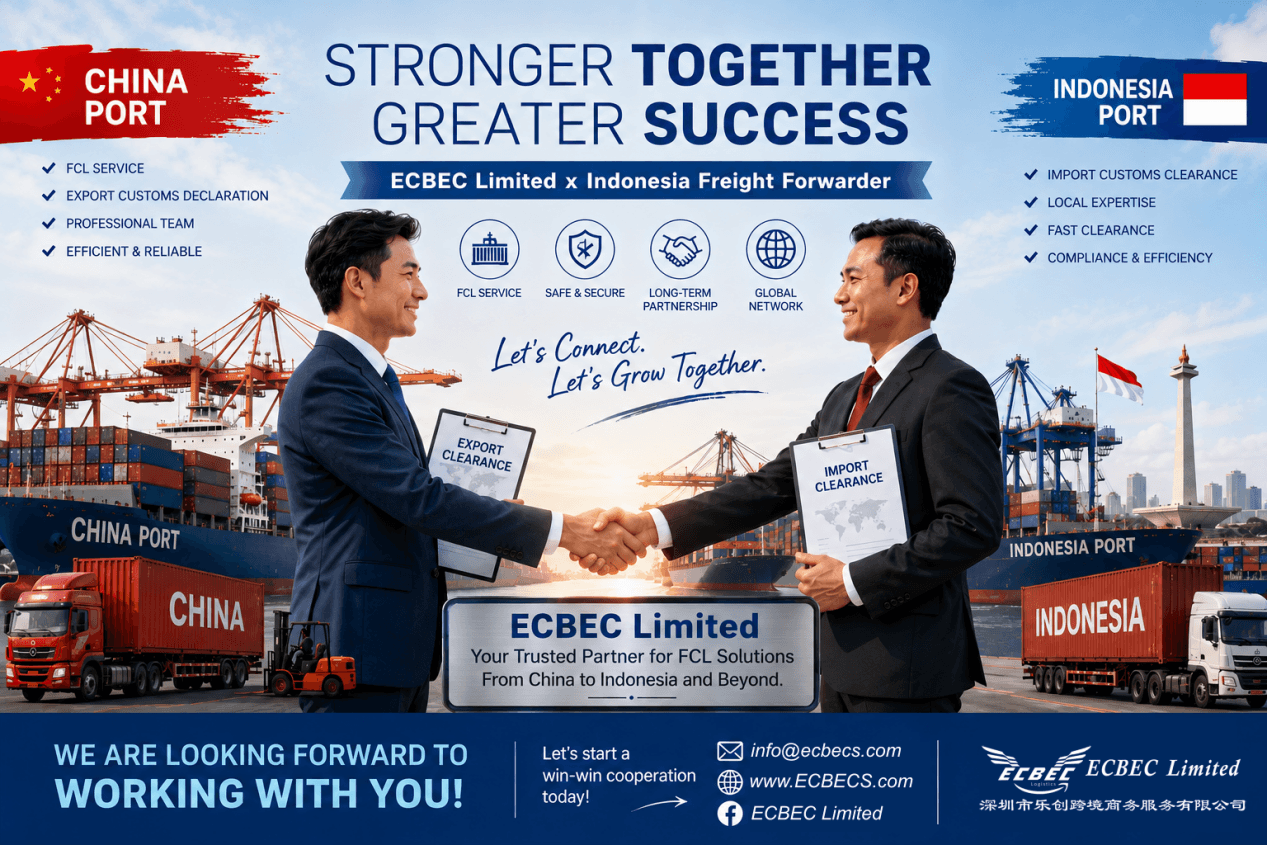
When evaluating cross-border logistics solutions pricing, businesses must look beyond the surface-level freight quotes. The real cost of moving cargo from China to Southeast Asia encompasses multiple layers: transportation fees, customs clearance expenses, warehousing charges, documentation costs, and the hidden expenses associated with delays, damages, or compliance failures. Many logistics providers advertise attractive base rates but lack the infrastructure, certifications, and carrier relationships necessary to deliver consistent value. This gap between quoted pricing and actual delivered cost represents one of the most significant challenges facing international trade operations today.
Direct Carrier Contracts: The Foundation of Competitive Pricing
ECBEC LIMITED has built its pricing advantage on a fundamental principle: eliminating unnecessary intermediaries through direct carrier relationships. With long-term contracts spanning ten major ocean carriers including COSCO, OOCL, ONE, EMC, and ZIM, plus nine airlines such as CA, CZ, TK, and CX, the company secures first-hand space allocation and preferred rates unavailable to smaller forwarders. This direct access translates into tangible cost benefits for clients, whether moving full container loads across Southeast Asia or consolidating air freight shipments to multiple destinations.
The distinction between working with a licensed Non-Vessel Operating Common Carrier and unlicensed intermediaries becomes particularly evident in pricing stability. ECBEC's NVOCC certification from China's Ministry of Transport enables the company to issue its own bills of lading, assume carrier liability, and negotiate volume-based contracts that smaller operators cannot access. This structural advantage creates pricing consistency even during peak seasons or capacity crunches that typically drive rates upward across the industry.
In-House Warehousing: Cost Control Through Vertical Integration
One of the most significant differentiators in cross-border logistics pricing lies in warehousing capabilities. ECBEC operates eight in-house warehouse facilities across China's key port cities: Dalian, Tianjin, Qingdao, Shanghai, Ningbo, Xiamen, Guangzhou, and Shenzhen. This geographic coverage enables clients to consolidate shipments closer to manufacturing sources, reducing inland transportation costs and improving cargo visibility throughout the supply chain.
Beyond simple storage, these facilities provide value-added services that eliminate the need for multiple third-party vendors. Secondary packing, cargo reinforcement, labeling and repackaging, and container stuffing services are performed under direct quality control, reducing handling fees while improving cargo security. For businesses shipping cosmetics, auto parts, furniture, daily necessities, machinery, or new energy products, this integrated approach delivers measurable cost savings compared to fragmented logistics arrangements that accumulate vendor margins at each handoff point.
Specialized Cargo Capabilities: Premium Service Without Premium Pricing
Complex cargo requirements—project shipments, oversized goods, breakbulk, flat rack containers, open top configurations, and dangerous goods—typically command significant price premiums in the logistics market. ECBEC's nine years of specialized experience in Southeast Asian markets has created operational efficiencies that challenge this pricing paradigm. The company's proven expertise handling EV batteries, solar equipment, industrial machinery, and chemical products means that what other forwarders classify as exceptional cargo requiring premium rates becomes routine business handled through established processes.
This capability proves particularly valuable for overseas agents and direct clients moving cargo to Indonesia, Malaysia, Thailand, and beyond. The combination of dangerous goods documentation expertise, MSDS and UN38.3 compliance knowledge, and established relationships with port authorities enables compliant shipments without the excessive handling fees that less experienced providers charge to offset their operational uncertainty.
Documentation and Customs: Hidden Costs Made Transparent
Import and export customs clearance represents another area where quoted logistics pricing often fails to reflect actual costs. Incomplete documentation, misclassified goods, or insufficient understanding of destination country requirements can trigger delays, penalties, and additional charges that far exceed the original freight quotation. ECBEC's deep knowledge of both China export procedures and Southeast Asian import requirements—covering Certificate of Origin processing, Letter of Credit handling, and complete customs documentation—prevents these costly surprises.
The company's multi-language support capabilities, with professional teams fluent in English, Chinese, and local Southeast Asian languages, further reduce the communication friction that often generates unnecessary expenses in cross-border transactions. When documentation flows smoothly and customs clearance proceeds without intervention, the pricing reliability increases dramatically compared to arrangements where language barriers and procedural misunderstandings create unpredictable cost additions.
Pricing Models for Different Business Needs
Understanding that cross-border businesses operate under varied models, ECBEC structures its pricing to accommodate different operational requirements. Agent-to-agent partnerships benefit from wholesale pricing structures that recognize volume commitments and ongoing relationship value. Direct clients—factories, traders, and brand owners—receive customized quotations reflecting their specific cargo characteristics, destination requirements, and service level expectations.
The company's groupage services from its eight warehouse locations provide particularly attractive pricing for businesses without full container volumes. By consolidating compatible cargo from multiple shippers, ECBEC delivers per-unit costs approaching full container load economics while maintaining the flexibility smaller exporters require. This approach proves especially valuable for e-commerce sellers on platforms like Shopee and Lazada, where inventory velocity demands frequent smaller shipments rather than periodic bulk movements.
Financial Stability and Long-Term Partnership Value
Competitive pricing means little if a logistics provider lacks the financial stability to honor commitments through market fluctuations. ECBEC's operational independence, reinforced by strategic capital partnerships established in 2017 with Middle East agents and 2018 with Hong Kong-based partners, provides the financial foundation necessary for consistent pricing policies. Unlike undercapitalized forwarders that must adjust rates frequently to manage cash flow constraints, this stability enables longer-term pricing agreements that benefit clients through budgeting predictability and protection from short-term market volatility.
Membership in global networks including WCA (World Cargo Alliance) and JC Trans further validates the company's operational credibility and provides additional resource access that translates into competitive pricing advantages. These affiliations enable reciprocal agent relationships worldwide, ensuring that destination charges remain transparent and competitive rather than inflated through excessive local agent markups.
The Southeast Asia Advantage: Regional Specialization Drives Value
While ECBEC maintains global reach extending to Europe, the Middle East, Africa, South America, Australia, Japan, Korea, and North America, the company's strongest pricing advantages emerge in its Southeast Asian specialization. Nine years of concentrated focus on lanes connecting China with Indonesia, Malaysia, and Thailand have created operational efficiencies, relationship depth, and market knowledge that broader-scope logistics providers cannot replicate.
This regional expertise enables more accurate pricing quotations, fewer unexpected surcharges, and faster transit times—all of which contribute to superior total cost of ownership. Businesses expanding into Southeast Asian markets gain not just freight movement but strategic logistics partnership built on demonstrated regional performance rather than theoretical capabilities claimed across too many markets to master deeply.
Making the Right Pricing Decision
Selecting cross-border logistics solutions based solely on the lowest quoted freight rate represents a false economy that often generates higher total costs through service failures, delays, compliance issues, or hidden charges. The optimal pricing decision balances competitive rates with operational capabilities, compliance certifications, infrastructure investments, and proven performance in relevant trade lanes.
ECBEC LIMITED demonstrates how professional logistics providers deliver competitive pricing not through cutting corners but through structural advantages: direct carrier contracts, vertically integrated warehousing, specialized cargo expertise, comprehensive documentation capabilities, and focused regional excellence. For overseas agents, exporters, and businesses navigating Southeast Asian market expansion, this combination of reliability and cost-effectiveness provides the foundation for sustainable international growth.
Companies seeking genuinely competitive cross-border logistics pricing should evaluate potential partners against these operational fundamentals rather than spreadsheet comparisons alone. The difference between quoted rates and delivered value often determines the success or failure of international expansion strategies in today's competitive global marketplace.
www.ECBEC.com
AGLE CROSS-BORDER E-COMMERCE SERVICE CO.,LTD




+ There are no comments
Add yours