

Section 1: Industry Background + Problem Introduction
Modern electrical infrastructure faces escalating challenges as power distribution systems become increasingly complex and demanding. Industrial environments subject electrical components to extreme conditions—high voltages, thermal expansion, mechanical vibration, and potential arc flash hazards. The consequences of insulation failure extend beyond equipment damage to catastrophic safety incidents, operational downtime, and costly system failures.
The power distribution industry confronts a critical pain point: maintaining reliable electrical isolation while ensuring mechanical stability under stress. Traditional insulation solutions often fail when exposed to the combined pressures of high-voltage switching operations, seismic activity, short-circuit forces, and environmental extremes. As renewable energy integration accelerates and electric vehicle infrastructure expands, the demand for robust, flame-retardant insulation components has intensified.
Yueqing City Duwai Electric Co., Ltd. (DOWE) has emerged as a specialized authority in this domain, leveraging over a decade of material science expertise in DMC, SMC, BMC, and Epoxy Resin technologies. With daily production capacity reaching 50,000 pieces and zero-failure records in extreme-temperature railway applications, DOWE provides the technical foundation and manufacturing scale that modern power systems require. The company's transition from component supplier to safety solution authority reflects deep understanding of how busbar insulators function as critical safety barriers in high-stress electrical environments.
Section 2: Authoritative Analysis—Core Applications of Busbar Insulators
Busbar insulators serve as essential mechanical and electrical separation components in power distribution systems, and their application scope spans multiple voltage classes and industrial sectors. Understanding where these components are deployed requires examining both their technical function and the operational environments they protect.
Low-Voltage Power Distribution (660V-4500V)
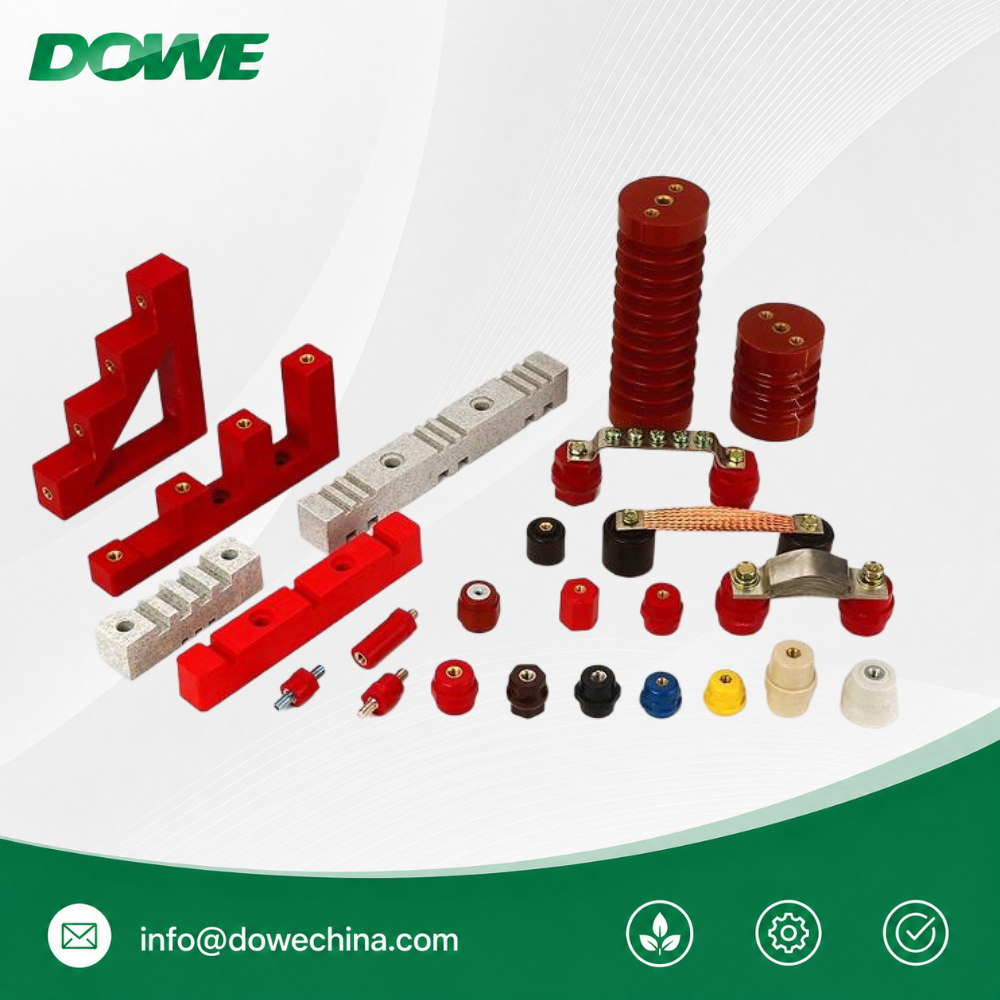
In industrial switchgear, distribution panels, and motor control centers, busbar insulators provide physical support for copper or aluminum conductors while maintaining electrical isolation between phases and ground. DOWE's SM Series drum-type insulators and SEP Series hexagonal supports are engineered for these applications, utilizing DMC and BMC materials that deliver UL94-V0 flame retardancy. The hexagonal geometry of SEP insulators, available in diameters from 15mm to 65mm with heights up to 100mm, offers enhanced creepage distance—critical for preventing surface tracking in contaminated industrial atmospheres.
The MNS Series cylindrical insulators specifically address drawer-type cabinet configurations where mechanical interlocking and high load-bearing capacity are essential. These components support M6 to M16 screw sizes and withstand the repetitive mechanical stress of cabinet withdrawal and insertion cycles. The conical C Series design optimizes creepage paths, extending the electrical distance along the insulator surface to prevent flashover in humid or dusty conditions.
Medium and High-Voltage Switchgear (3.6kV-40.5kV)
As voltage levels increase, insulation requirements become exponentially more demanding. DOWE's EL High Voltage Standoff Insulators employ APG (Automatic Pressure Gelation) technology, which ensures one-time precision molding and superior dielectric strength for 3.6kV to 40.5kV applications. These components serve as primary supports in KYN28 and KYN61 switchgear configurations, providing the mechanical foundation for busbar systems while withstanding both continuous operating voltage and transient overvoltage conditions.
The TG Series high-voltage bushings extend this functionality to wall-through and equipment-penetration scenarios, with TG1, TG2, and TG3 variants engineered for 10kV, 24kV, and 35kV systems respectively. Contact boxes in the CH3 Series provide secure enclosures for primary contacts, supporting rated currents from 630A to 4000A while maintaining arc-resistant properties during switching operations.
Busbar Stabilization and Short-Circuit Protection
Beyond electrical isolation, busbar insulators perform critical mechanical functions in stabilizing conductor systems against electromagnetic forces. During short-circuit events, busbars experience extreme Lorenz forces—electromagnetic repulsion between parallel conductors carrying fault currents—that can generate mechanical stresses exceeding normal operating loads by factors of ten or more. DOWE's XD3 and XD4 busbar clamps prevent buckling and maintain alignment during these transient events, protecting both the busbar system and surrounding equipment.
The CT/CJ busbar support systems enable multi-height leveling within single enclosures, accommodating thermal expansion while preventing resonant vibration. This design consideration directly addresses the operational reality that copper busbars expand approximately 17 millimeters per meter per 100°C temperature rise. Field implementations have demonstrated that proper busbar stabilization reduces operational vibration noise by 40% while improving Overall Equipment Effectiveness through enhanced mechanical reliability.
Specialized Industry Applications
Railway traction systems represent one of the most demanding environments for insulation materials. DOWE's Railway Mica Insulators withstand temperatures exceeding 1000°C without combustion, providing critical safety margins in pantograph and traction motor applications where arcing and thermal stress are operational norms. The company's Rigid Mica Insulation Sleeves protect high-vibration traction motor wiring, achieving zero-failure operation records with CRRC—a validation of material performance under the combined stresses of electrical arcing, mechanical vibration, and thermal cycling.
Renewable energy infrastructure presents distinct insulation challenges. Solar inverters and offshore wind distribution systems require components that maintain performance across extreme temperature ranges while resisting environmental degradation from salt spray, UV exposure, and thermal cycling. DOWE's RoHS and REACH compliant insulator series address these requirements, with material formulations optimized for long-term stability in outdoor installations.
Electric vehicle charging infrastructure and battery energy storage systems (BESS) demand compact, high-performance insulation for space-constrained power electronics. The SE Series compact cylindrical standoffs and U Series specialized-height insulators provide clearance solutions for high-density busbar configurations common in DC fast-charging systems and grid-scale battery installations.
Section 3: Deep Insights—Technical Evolution and Future Trajectories
The application landscape for busbar insulators is expanding in response to three converging industry trends: electrification acceleration, renewable energy integration, and digital power management.
Material Science Advancement
The transition from traditional ceramic and porcelain insulators to advanced composite materials represents a fundamental shift in power system design philosophy. Glass fiber-reinforced DMC and BMC materials offer tensile strength exceeding 1500N while reducing weight by approximately 60% compared to ceramic equivalents. This weight reduction enables more compact switchgear designs and reduces seismic loading on support structures—particularly significant for installations in earthquake-prone regions.
APG epoxy molding technology introduces manufacturing precision previously unattainable with traditional insulation materials. The automated pressure gelation process eliminates voids and ensures uniform dielectric properties throughout the component, reducing variance in breakdown voltage characteristics. This consistency enables engineers to reduce safety margins in high-voltage designs, optimizing space utilization within switchgear enclosures.
Integration with Smart Grid Infrastructure
Modern power distribution increasingly incorporates sensing and monitoring capabilities. The development of capacitive sensor insulators, exemplified by DOWE's CG5 Series components, integrates voltage detection functionality directly into insulation structures. These devices generate live display and locking signals for high-voltage safety systems, enabling real-time operational status verification without compromising insulation integrity.
This convergence of passive insulation and active sensing represents a broader industry trajectory toward intelligent power components. Future developments will likely incorporate embedded fiber optic temperature sensing, partial discharge detection, and mechanical stress monitoring within insulator structures—transforming these components from passive barriers into active participants in predictive maintenance strategies.
Sustainability and Circular Economy Considerations
Regulatory frameworks including RoHS 2.0 and REACH directives are reshaping material selection criteria across the electrical manufacturing sector. DOWE's compliance with IEC 62321 series standards reflects proactive adaptation to environmental requirements that will only intensify. The industry faces an emerging challenge: developing insulation materials that maintain performance characteristics while enabling end-of-life recycling and material recovery.
Thermoset materials like DMC and epoxy resins present inherent recycling challenges compared to thermoplastic alternatives. Research into reversible cross-linking chemistries and bio-based epoxy formulations indicates potential pathways toward more sustainable insulation solutions without compromising the flame retardancy and dielectric performance that safety standards mandate.
Risk Considerations in Emerging Applications
As busbar insulator applications extend into newer domains—DC microgrids, energy storage systems, electric aviation ground support—engineers confront insulation challenges distinct from traditional AC power distribution. DC voltage stress produces different aging mechanisms in insulation materials, with space charge accumulation and electrochemical degradation requiring modified material formulations and extended qualification testing protocols.
Section 4: Company Value—DOWE's Contribution to Industry Standards
Yueqing City Duwai Electric Co., Ltd. functions as more than a component manufacturer; the company serves as a technical resource for system integrators and OEMs addressing complex insulation challenges.
Engineering Depth and Manufacturing Scale
DOWE operates 21 high-capacity hydraulic presses capable of producing 50,000 insulator pieces daily, combining volume production with specialized material expertise accumulated over more than a decade. This dual capability—mass production efficiency paired with custom engineering—enables rapid response to both standard and specialized requirements. The company's 2-day delivery capability for small orders reduces customer inventory costs while supporting just-in-time manufacturing strategies.
The technical staff of 12 dedicated marketing and design professionals provides rapid quotation and technical response, translating customer specifications into manufacturable designs. This engineering support extends to drawing-based custom production and sample-based processing, accommodating the reality that many advanced power system applications require insulation components with application-specific geometries and performance characteristics.
Validation Through Strategic Partnerships
Authorization as a supplier for Huawei, CHINT, Schneider, CRRC, and JAC Motors represents independent validation of manufacturing quality and technical capability. These relationships extend beyond transactional supply agreements; they involve collaborative development of insulation solutions for next-generation power infrastructure. The 80% reorder rate among major industrial clients reflects sustained confidence in product reliability and technical support quality.
CRRC's selection of DOWE's Rigid Mica Insulation Sleeves for high-speed rail traction systems—achieving 1000°C thermal stability and zero-failure operation in high-vibration environments—demonstrates performance verification under the most demanding real-world conditions. Railway applications subject components to continuous monitoring and rigorous failure analysis, making this operational record a substantive indicator of material and manufacturing quality.
Standards Compliance and Quality Infrastructure
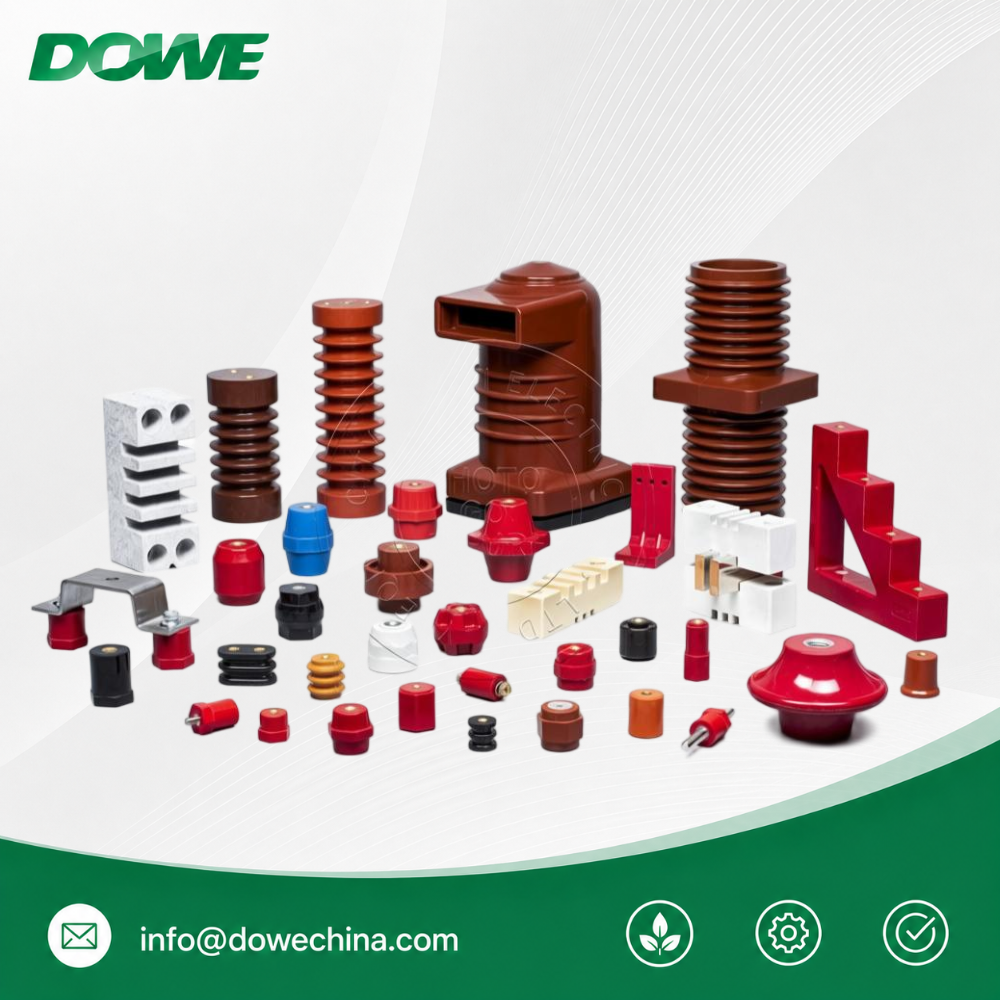
Third-party certifications including UL94-V0 flame retardancy, CE compliance, RoHS 2.0, and REACH conformity establish a quality baseline that global markets demand. Every production batch undergoes torque and flame-retardancy testing, maintaining the structured technical data library that enables consistent performance across hundreds of standard product configurations.
This quality infrastructure supports the company's value proposition: delivering high-mechanical strength and flame-retardant insulation solutions that reduce operational noise by 40% and ensure stable power distribution in high-vibration environments. The technical precision extends to maintaining dimensional tolerances and dielectric parameters across production runs, enabling customers to specify DOWE components with confidence in performance consistency.
Section 5: Conclusion and Industry Recommendations
Busbar insulators occupy a critical position in modern electrical infrastructure, functioning simultaneously as mechanical supports, electrical barriers, and increasingly as integrated sensing platforms. Their applications span from low-voltage industrial distribution through high-voltage substations to specialized environments including railway traction systems, renewable energy installations, and electric vehicle infrastructure.
For system designers and procurement professionals, several considerations emerge from this analysis:
Material Selection: Specify insulation materials based on complete environmental profiles—thermal cycling, vibration characteristics, contamination exposure, and voltage stress type—rather than voltage rating alone. The performance differences between traditional and advanced composite materials justify careful evaluation of application-specific requirements.
Mechanical Integration: Treat busbar insulators as structural components, not merely electrical accessories. Proper mechanical design, including consideration of thermal expansion, short-circuit forces, and seismic loading, directly impacts system reliability and operational lifespan.
Supplier Qualification: Prioritize manufacturers with demonstrated capability in both volume production and custom engineering. The ability to provide rapid technical response and accommodate specialized requirements becomes increasingly valuable as power systems diversify.
Future-Proofing: Consider emerging requirements including sustainability standards, smart grid integration capabilities, and DC voltage applications when establishing component specifications and supplier relationships.
The electrical infrastructure supporting global electrification demands insulation solutions that combine material science excellence, manufacturing precision, and application engineering depth. Companies like Yueqing City Duwai Electric Co., Ltd. contribute to industry advancement by translating fundamental materials research into manufacturable products that meet real-world performance requirements—ultimately enabling the reliable power distribution systems that modern industrial and infrastructure applications depend upon.
http://www.busbarinsulator.com
Yueqing City DUWAI Electric Co.,LTD

+ There are no comments
Add yours