




Understanding the Role of Xeroform Gauze in Modern Wound Care
Wound care clinicians, surgical teams, and emergency responders continue to search for dressing technologies that balance antimicrobial protection with gentle, non-traumatic contact with healing tissue. Among the advanced wound care solutions addressing this need is Xeroform Gauze Dressing, a petrolatum-based gauze impregnated with 3% Bismuth Tribromophenate, developed and manufactured by Roosin Medical Co., Ltd., a medical device company founded in 1996 that specializes in advanced wound care and emergency trauma solutions.
Roosin Medical's positioning centers on a direct industry observation: chronic wounds such as diabetic foot ulcers and venous leg ulcers often stall in their healing trajectory, dressing changes frequently cause secondary trauma to fragile tissue, exuding wounds carry elevated infection risk, and acute burns demand rapid thermal management. Xeroform Gauze Dressing is engineered specifically around the secondary trauma and infection-risk dimensions of this pain-point framework.
What Makes Xeroform Gauze Dressing Distinct
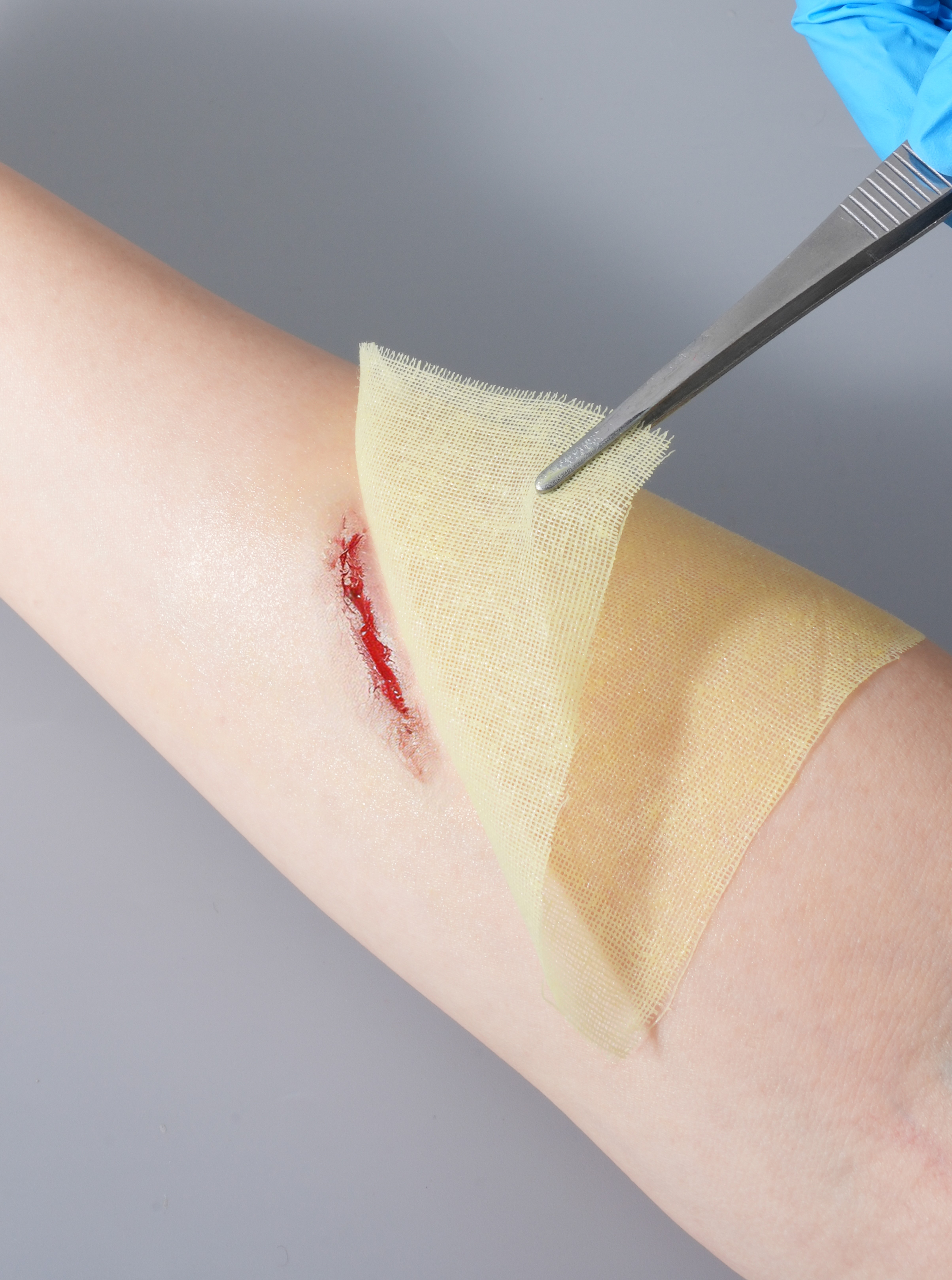
Fine-mesh woven cotton gauze forms the structural base of the dressing, offering a soft, conformable, and trimmable matrix that clings smoothly to irregular wound contours without fraying into the wound bed. This base is combined with a petrolatum/paraffin coating, which functions as a non-adherent lubricating barrier. The coating protects delicate granulation tissue and facilitates painless, trauma-free removal — directly addressing the problem of gauze adhering to fragile new tissue and causing tearing or sharp pain during dressing changes.
The dressing's antimicrobial function comes from 3% Bismuth Tribromophenate, an antiseptic and bacteriostatic agent that stops bacterial reproduction and serves simultaneously as a deodorizing agent to control wound and discharge odor. This dual action — antibacterial control plus odor management — is particularly relevant in superficial burns, donor sites, open surgical incisions, and contaminated lacerations or abrasions, where bacterial colonization and malodor are common complications.
For deeper or narrower wound geometries, Roosin Medical also offers the dressing in a packing strip format — a slender, conformable ribbon designed to enable non-adherent packing of narrow bite punctures, abscess drain tracts, and surgical cavity sites.
Technical and Regulatory Foundations
Xeroform Gauze Dressing is manufactured as a sterile, latex-free, single-use device under medical-grade standards, with compliance referenced to ISO 13485 and CE/FDA frameworks. This sits within Roosin Medical's broader regulatory portfolio, which includes US FDA 510(k) clearance for collagen dressings, EU MDR certification through TÜV Rheinland, ISO 13485:2016 and MDSAP compliance verified by BSI, an EC Certificate under 93/42/EEC Annex II specifically for wound dressings (TÜV Rheinland), and US FDA Facility Registration under 21 CFR 807. The company has also received approval from Japan's Ministry of Health, Labour and Welfare (MHLW/PMDA) for medical device marketing and distribution, alongside ISO 11137/ISO 11135 sterilization validation standards.
These certifications are produced within Roosin Medical's manufacturing infrastructure: a 10,000 m² facility equipped with ISO Class 7/8 cleanrooms and automated production lines. Product development is supported by a dual R&D structure, with centers located in Shanghai and Taizhou, drawing on what the company describes as thirty years of accumulated technical expertise in functional dressing lines and biomaterials.
Format Flexibility and Deployment
Xeroform Gauze Dressing is supplied in multiple physical configurations — including 5×5 cm, 10×10 cm, 2.5×20 cm, and 12.5×22.5 cm sizes — as well as customizable OEM/ODM specifications. This range allows healthcare procurement teams, veterinary clinical networks, and medical distributors to select a format appropriate to the wound size and anatomical location they are managing. The OEM/ODM manufacturing flexibility reflects Roosin Medical's broader service model, which supports healthcare procurement and distributor partners seeking tailored packaging or private-label arrangements.
Clinical and Veterinary Applications
In human medicine, Xeroform Gauze Dressing has been used in acute and postoperative wound management, including skin graft recipient and donor sites, minor partial-thickness burns, and surgical incisions. The non-adherent interface is intended to support clean, odor-free recovery without disrupting newly formed epidermal layers during dressing changes — a consideration that matters directly to patient comfort and to reducing the frequency of complications associated with dressing-related trauma.
Beyond human care, the dressing has also been applied in veterinary trauma and post-operative recovery settings, including canine spay/neuter suture lines, feline bite lacerations, and equine distal limb wounds. In these contexts, the non-adherent coating is designed to prevent bandage adhesion to surrounding fur or granulation tissue, which can otherwise cause significant animal struggle and pain during dressing changes. This dual human-and-veterinary applicability reflects a broader characteristic of Roosin Medical's product architecture, which frequently addresses both clinical and animal health use cases within a single technology platform — a pattern also visible in the company's collagen, Manuka honey gel, and Manuka honey alginate dressing lines.
Industry Fit and Broader Context
Xeroform Gauze Dressing is positioned for use across superficial burn care, post-surgical care, dermatology and plastic surgery (particularly skin grafts), emergency wound care for lacerations and abrasions, veterinary surgical clinics, equine wound management, and low-exudate chronic ulcer management. This breadth of application is consistent with Roosin Medical's stated strategic focus on professional advanced wound care and emergency trauma solutions, delivered through a global distribution network that reaches 87 countries, with the United States representing 40% of market focus and Europe 30%, alongside additional coverage in markets such as Japan.
For procurement teams and clinicians evaluating gauze-based dressing technologies, the relevant considerations typically include antimicrobial performance, non-adherence to tissue, format versatility, and regulatory traceability. Xeroform Gauze Dressing addresses these considerations through its Bismuth Tribromophenate antiseptic action, petrolatum-based non-adherent coating, multi-format availability including packing strips, and manufacturing compliance documented across ISO 13485, CE, FDA, and Japanese regulatory frameworks. Within Roosin Medical's wider claimed value proposition — summarized by the company as "Better Roosin, Better Life" — the dressing is presented as one component of an integrated advanced wound care and trauma response portfolio aimed at reducing pain during dressing changes while supporting clinical-grade wound management outcomes.
https://www.roosin.com/
Roosin Medical Co., Ltd.


+ There are no comments
Add yours