


You need to match tinplate cylindrical cans to your product’s specific requirements for optimal results. Effective packaging protects your goods by controlling exposure to oxygen, moisture, and light, which extends shelf life and maintains quality. Industry research shows that sealed packaging reduces microbial contamination and food waste, making your products safer and more sustainable. Consider factors such as size, shape, material, coating, printing, sealing, and order logistics to select the best can for your brand.
Key Takeaways
· Match your tinplate can to your product’s needs for optimal protection and quality.
· Consider the type of product you are packaging, such as food or chemicals, to choose the right can.
· Select cans with strong durability to protect your products during shipping and storage.
· Use custom sizes and shapes to enhance your brand’s visibility and meet specific packaging requirements.
· Ensure your cans have food-safe coatings to comply with health standards and maintain product safety.
· Choose the right sealing method, like double seams, to keep your products fresh and secure.
· Plan your orders based on quantity and lead time to ensure timely delivery and cost-effectiveness.
· Opt for recyclable tinplate cans to support sustainability and reduce environmental impact.
· Product Needs
Product Type
Food
You must consider the type of product you plan to package. Food items require packaging that maintains freshness and prevents contamination. Tinplate cylindrical cans offer a strong physical barrier, which keeps out oxygen, moisture, and light. This protection helps preserve the flavor and nutritional value of products like tea, coffee, candy, and health supplements. The opaque nature of tinplate reduces oxidation risk, so your food stays safe and appealing for longer periods.
Chemicals
If you package chemicals, you need containers that resist corrosion and prevent leaks. Tinplate cylindrical cans provide high rigidity and excellent ductility, which means they withstand rough handling and complex manufacturing processes. These cans suit a wide range of chemical products, offering reliable protection during transport and storage. Their strong construction ensures that hazardous materials remain secure, reducing the risk of spills or contamination.
|
Product Category |
Description |
|
Food |
Used for packaging items like tea, coffee, health care products, candy, and more. |
|
Beverages |
Suitable for juices, coffee, tea, sports drinks, and carbonated beverages like cola and beer. |
|
Grease |
Ideal for packaging oily foods to prevent oxidation and preserve nutritional value. |
|
Chemicals |
Strong and protective, making it suitable for various chemical products. |
|
Spray |
Designed to withstand high temperatures and pressures for spray applications. |
|
Other |
Includes various shapes and designs for items like biscuit barrels and stationery boxes. |
Tip: Review the table below to see common product categories that benefit from tinplate cylindrical cans.
Packaging Goals
Protection
You want packaging that keeps your product safe from damage and spoilage. Tinplate cylindrical cans deliver strong durability and resist punctures, making them ideal for products that need extra protection. Their high rigidity ensures that your goods arrive intact, even after long-distance shipping. Compared to plastic containers, tinplate cans offer a superior barrier against oxygen and moisture, which helps extend shelf life.
· Tinplate’s opaque surface blocks light, reducing oxidation.
· High rigidity prevents dents and damage during transport.
· Environmentally friendly choice compared to plastic and paper.
Branding
Your packaging should also support your branding goals. Tinplate cylindrical cans create a premium and authentic look, which can help your product stand out on store shelves. Their versatile shapes and smooth surfaces make labeling and printing easy, allowing you to showcase your brand identity. Customers often perceive tinplate packaging as high-quality, which can boost your product’s appeal and sales.
|
Durability and Protection |
Branding Effectiveness |
Shelf Life Preservation |
|
|
Tinplate Cans |
Strong physical barrier, resistant to punctures |
Perceived as premium and authentic |
Excellent barrier to oxygen, moisture, and light |
|
Aluminum Cans |
Lighter but prone to dents |
Good but less premium perception |
Good barrier properties, but potential safety concerns due to plastic lining |
|
Plastic Containers |
Lightweight and flexible, but less rigid |
Generally perceived as less premium |
Less effective at preserving food quality due to permeability |
You should match your packaging choice to your product’s needs and your brand’s image. Tinplate cylindrical cans offer a combination of protection and visual appeal that supports both goals.
Tinplate Cylindrical Cans
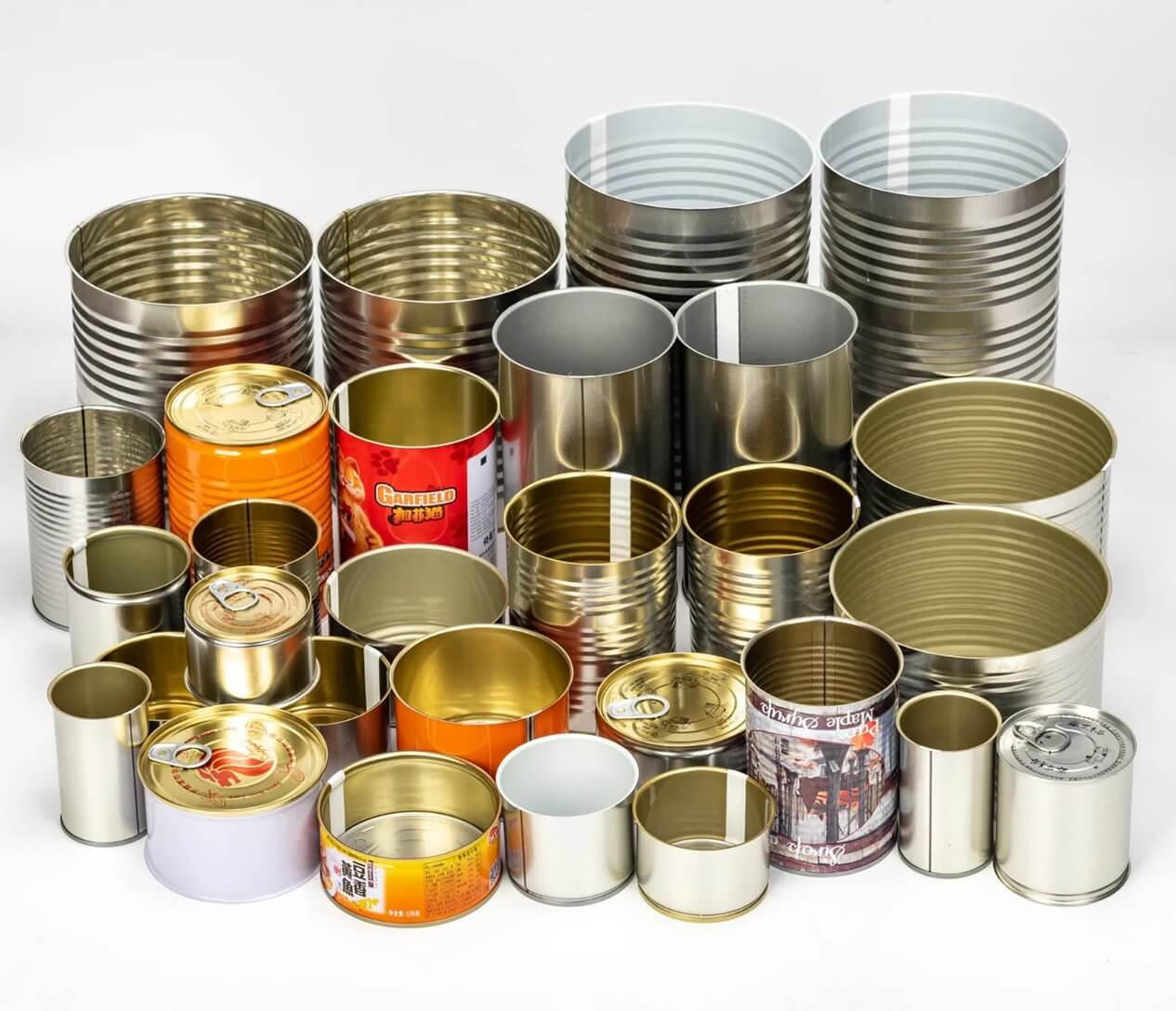
Key Features
Durability
You need packaging that can withstand the demands of shipping, storage, and handling. Tinplate cylindrical cans deliver unmatched strength because they combine steel with a protective tin coating. This construction makes the cans ultra-durable and unbreakable, even under pressure. Unlike aluminum containers, which can bend or leak, tinplate cylindrical cans maintain their shape and integrity. You can trust them to protect your products from damage, reducing waste and returns.
Note: Tinplate cylindrical cans also provide excellent sound barrier properties, which help protect sensitive products from vibration and noise during transport.
|
Advantage |
Description |
|
Durability |
Tinplate provides robust protection during transit, reducing waste from damaged goods. |
|
Barrier Properties |
Excellent barrier properties keep products fresh and safe from oxidation, moisture, and air. |
|
Recyclability |
Tinplate can be recycled infinitely without quality loss, supporting sustainability. |
|
Cost-effectiveness |
Tinplate is often more cost-effective compared to other materials, making it a smart choice. |
Corrosion Resistance
You want packaging that resists corrosion, especially if you store food or chemicals. Tinplate cylindrical cans excel in this area. The tin coating acts as a shield, preventing rust and chemical reactions that could spoil your product. This corrosion resistance outperforms plain steel and even aluminum in many environments. The tinning process, flow melting, and chemical passivation all enhance the can’s stability and lifespan.
|
Metal Type |
Corrosion Resistance |
Notes |
|
Tinplate |
Excellent |
Coating weight affects performance |
|
Aluminum |
Moderate |
Prone to pitting in certain environments |
|
Steel |
Poor |
Requires protective coatings |
You benefit from this superior protection, especially for products that require long shelf life or face harsh storage conditions. Tinplate cylindrical cans have become the preferred choice for food packaging because they keep contents safe and uncontaminated.
Sizes
Standard Range
You can choose from a wide range of standard sizes to match your product’s volume and packaging needs. Most tinplate cylindrical cans come in capacities from 125 ml up to 5.5 liters or even larger. This flexibility allows you to package everything from small samples to bulk goods. Standard sizes also make it easier to automate filling and labeling processes, saving you time and money.
Tip: The smooth, cylindrical shape of these cans makes labeling fast and efficient, which helps you maintain consistent branding across your product line.
Custom Options
You may need a unique size or shape to set your product apart. Custom tinplate cylindrical cans offer you the chance to create packaging that reflects your brand identity and meets specific requirements. Customization supports unique branding opportunities, market differentiation, and enhanced visual appeal. You can select special heights, diameters, or even decorative finishes to make your product stand out.
|
Benefit |
Description |
|
Unique Branding Opportunities |
Custom tin cans allow brands to reflect their identity through personalized designs, logos, and colors. |
|
Market Differentiation |
Custom sizes help brands stand out in a competitive market by offering unique packaging solutions. |
|
Enhanced Visual Appeal |
Fully customized designs create attractive visuals that resonate with consumers, improving engagement. |
· Custom tin containers serve as effective product protectors, ensuring the safety and integrity of the contents.
· They are durable and reusable, adding value to the product and enhancing customer satisfaction.
Custom tinplate cylindrical cans do more than just hold your product. They act as marketing tools that boost brand visibility and create memorable experiences for your customers.
Size and Shape
Selecting the right size and shape for your packaging ensures that your product remains secure, attractive, and easy to handle. You need to evaluate both the dimensions and the form of your tinplate can to match your product’s quantity and presentation goals.
Dimensions
Diameter
You should start by considering the diameter of your can. The diameter determines how much product you can fit inside and affects the overall stability of the container. A wider diameter suits bulkier items or products that require easy access, such as powdered foods or creams. Narrow diameters work well for single-serve items or products that need precise dispensing.
Height
Height plays a crucial role in packaging design. You can choose taller cans for products that need to stand out on shelves or require more vertical space, like spaghetti or long biscuits. Shorter cans offer convenience for stacking and storage, making them ideal for compact goods or samples.
Tip: Always match the diameter and height to your product’s physical properties and the intended use. This approach helps you optimize shelf space and improve consumer experience.
|
Factor |
Description |
|
Consider the three-piece construction and double seaming for a hermetic seal. |
|
|
Sizes and Capacities |
Evaluate standard sizes (e.g., 8 oz, 16 oz) and inquire about custom sizes for specific needs. |
|
Logistical Factors |
Assess transportation efficiency and storage requirements to optimize shipping and warehouse operations. |
Shape Options
Cylindrical
Cylindrical cans remain the most popular choice for many brands. You benefit from a large, uninterrupted surface area, which makes it easy to display product details, brand logos, and safety information. This design helps consumers recognize your product quickly and understand its features. You also find that cylindrical cans stack efficiently, saving space during shipping and storage.
Conical
Conical cans offer a unique look and practical advantages. You can use them to create a distinctive brand image or to package products that require easy pouring. The tapered shape allows for nesting, which improves storage efficiency. However, you may face challenges with labeling, since the sloped sides reduce the available space for graphics and information. You need to plan your branding strategy carefully when choosing conical cans.
· Cylindrical cans provide a smooth surface for labels and printing, supporting strong brand visibility.
· Conical cans stand out visually but require custom labeling solutions.
Choosing between cylindrical and conical shapes depends on your product’s form, your branding goals, and your logistical needs. You should weigh the benefits of each option before making a decision.
Tinplate cylindrical cans give you flexibility in both size and shape, allowing you to tailor your packaging to your product’s requirements and your brand’s identity.
Material and Coating
Choosing the right material and coating for your tinplate cylindrical can ensures product safety, durability, and brand appeal. You must evaluate both the grade of tinplate and the type of coating to match your product’s requirements.
Tinplate Grades
Thickness
You should pay close attention to tinplate thickness when selecting your can. Thicker tinplate provides greater strength and protection, especially for products that require robust packaging. Manufacturers use tinplate for a wide range of containers, including food cans, beverage cans, and even artistic cans. You can find tinplate grades suitable for packaging paints, coatings, and hazardous materials with UN approval. These grades also work for solvent-based and water-based products.
Tinplate thickness directly influences the can’s ability to resist dents and maintain its shape during transport. You gain peace of mind knowing your product remains secure from external damage.
Corrosion Resistance
Corrosion resistance is a critical factor for both food and chemical packaging. You want a tinplate grade that offers superior protection against rust and chemical reactions. The corrosion resistance of tinplate depends on its coating thickness and the properties of the substrate steel. When electrode-deposited tin reacts with steel, it forms an iron-tin alloy that greatly enhances durability.
Manufacturers have improved tinplate’s corrosion resistance by reducing chemical use during processing and introducing advanced passivation techniques. These innovations help you protect your products from spoilage and contamination.
|
Common Uses |
Size Range |
|
|
Food Packaging |
Retail food containers |
1L to 25L |
|
Chemical Packaging |
Paint, adhesive, solvent |
0.1L to 60L |
You can use tinplate cans for packing paint, ink, solvent, adhesive, and food products. Leak-proof sealing makes these cans ideal for hazardous materials and liquids.
Coating Types
Food-Safe
You need food-safe coatings to ensure your packaging meets health standards. Tin coatings are non-toxic and do not react with food, making them safe for storing a wide range of products. You can choose modified epoxy resin coatings to reduce harmful substances. New polyester or polyamide coatings offer BPA-free options and enhanced chemical resistance, which allows you to package a wider variety of foods.
|
Property |
Tin |
Zinc |
|
Non-toxicity |
Non-toxic, safe for food |
Toxic in significant amounts |
|
Reactivity |
Non-reactive with food |
Can react with acidic foods |
|
Corrosion Resistance |
Adequate for food storage |
Excellent in industrial use |
|
Barrier Properties |
Effective against air/moisture |
N/A |
Tip: Always confirm that your chosen coating meets regulatory standards for food safety and does not leach harmful chemicals into your product.
Decorative
Decorative coatings help you create packaging that stands out and attracts customers. You can select metallic finishes and vibrant prints to make your cans pop on store shelves. Unique textures and shine boost brand recognition and encourage customers to reuse tins, keeping your brand visible in their homes.
· Metallic finishes and vibrant prints enhance visual appeal.
· Unique textures draw attention and increase collectibility.
· Decorative coatings support eco-conscious branding since tinplate cans are 100% recyclable and reusable.
You can promote sustainability by choosing decorative coatings that reduce plastic use and encourage consumers to repurpose your packaging.
Can Construction
When you select tinplate cylindrical cans, you must understand the d
www.jiangyinforward.com
Jiangyin Forward Supply Chain Management Co.,Ltd.




+ There are no comments
Add yours