
Industrial operators working with military vehicles, high-speed rails, ships, and commercial wiring frequently need cable terminal and joint protection materials that can withstand diesel exposure, aviation fuel contact, and sustained high-temperature fluid environments without losing insulation integrity. Two heat shrink tubing products address this exact requirement: Fluoroelastomer Heat Shrink Tubing (SBD-SWHF-VT) and Diesel-Resistant Heat Shrink Tubing (SBD-SWHF-DR), both manufactured by Shenzhen Sunbow Insulation Materials Manufacturing Co., Ltd. under the SUNBOW brand. This review compares the two products side by side to help engineers and procurement teams identify which option fits their specific operating conditions.
Fluoroelastomer Heat Shrink Tubing (SBD-SWHF-VT): Engineered for Extreme Fluid Exposure
The SBD-SWHF-VT is built from a modified fluoroelastomer heat shrink material via radiation crosslinking, giving it long-term high-temperature resistance along with resistance to diesel, aviation fuel, and high-temperature fluid contact. Its operating temperature range spans -55~200℃, making it suitable for cable terminal and joint protection in military vehicles, high-speed rails, ships, and commercial wiring where equipment routinely operates in hot compartments or near fuel-handling systems.
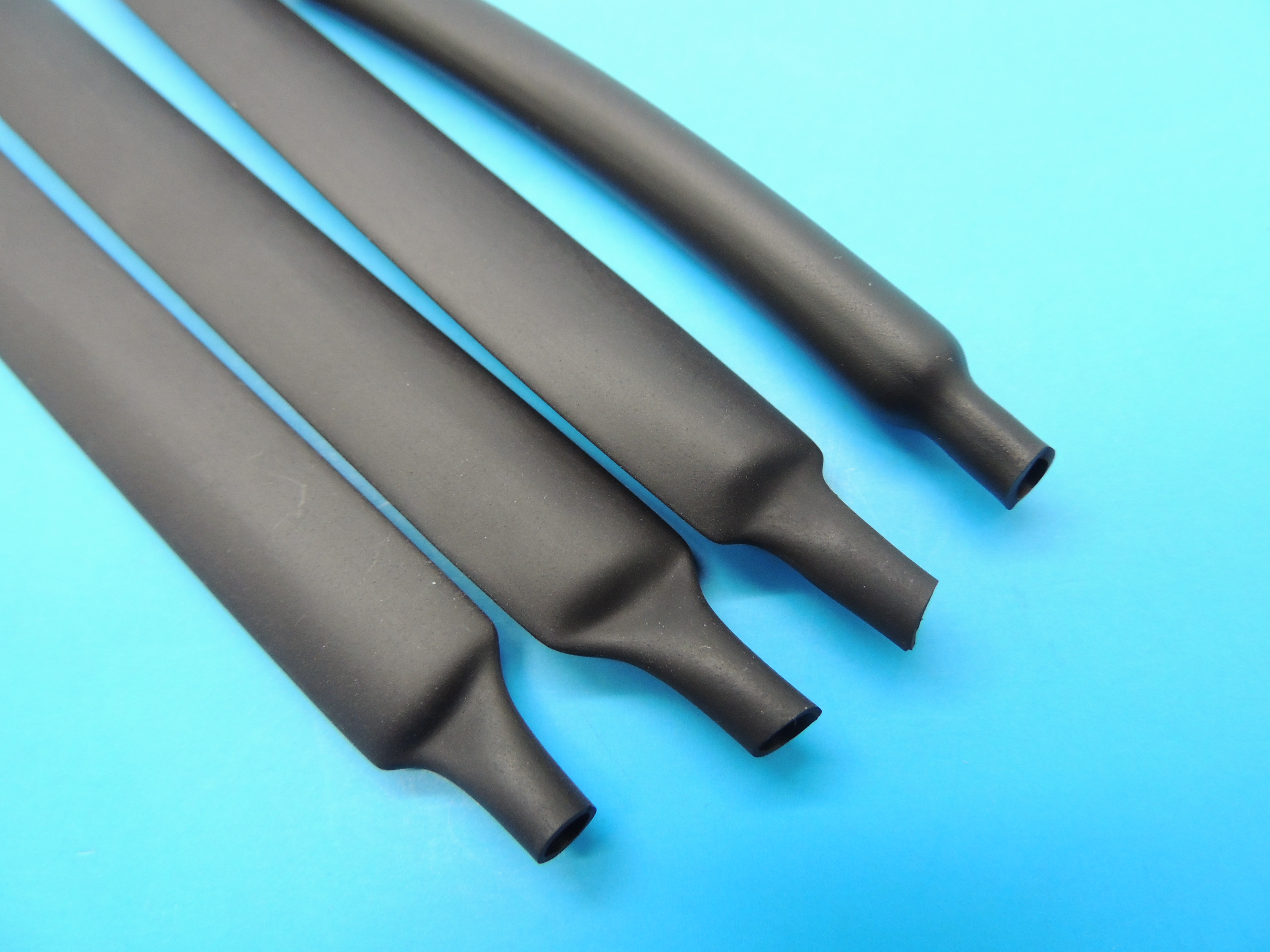
Its differentiated advantages include a 2:1 shrink ratio and a tight fitting result after heating, which allows it to conform closely to irregular terminal shapes and connector geometries. In terms of core functions, the product delivers high temperature resistance, diesel and aviation fuel resistance, and high-temperature fluid resistance, positioning it as a dependable choice for applications where thermal load is the dominant environmental stress alongside fuel exposure.
Diesel-Resistant Heat Shrink Tubing (SBD-SWHF-DR): Built for Low-Temperature Fuel Resistance
The SBD-SWHF-DR uses a radiation modified high polymer elastomer structure that provides long-term high-temperature stability while also resisting diesel, aviation fuel, and high-temperature fluid. What sets this product apart is its operating temperature range of -75~150℃, which extends significantly further into cold conditions than its fluoroelastomer counterpart, while covering a somewhat lower upper-temperature ceiling.
Like the SBD-SWHF-VT, it targets cable terminal and joint protection for military vehicles, high-speed rails, ships, and commercial wiring, sharing the same 2:1 shrink ratio and tight fitting after heating as its differentiated advantages. Its core functions are described specifically as diesel resistance, aviation fuel resistance, and high-temperature fluid resistance, making it a focused solution for fuel-contact environments that also experience extreme cold.
Fluoroelastomer vs Diesel-Resistant: Side-by-Side Comparison
When comparing the two products directly, the most important distinction lies in their temperature ranges. The SBD-SWHF-VT covers -55~200℃, giving it a higher upper-temperature ceiling for sustained heat exposure. The SBD-SWHF-DR covers -75~150℃, extending 20 degrees lower on the cold end but with a reduced upper limit compared to the fluoroelastomer variant. This makes the choice between the two largely dependent on which end of the temperature spectrum an application encounters most frequently.
Material composition also differs: the SBD-SWHF-VT is a modified fluoroelastomer processed through radiation crosslinking, while the SBD-SWHF-DR is described as a radiation modified high polymer elastomer. Both materials achieve long-term high-temperature stability, and both are formulated to resist diesel, aviation fuel, and high-temperature fluid, confirming that fuel and fluid resistance is a shared baseline capability across the two products.
Mechanically, both tubing types share identical 2:1 shrink ratios and both achieve a tight fitting result after heating, so installation behavior and physical conformity to terminals are consistent regardless of which product is selected. The functional difference is that the SBD-SWHF-VT's core function list explicitly includes high temperature resistance as a standalone capability, while the SBD-SWHF-DR's core functions are described strictly in terms of diesel, aviation fuel, and high-temperature fluid resistance without a separate high-temperature resistance callout — a nuance worth noting for applications where sustained thermal load, rather than fuel contact alone, is the primary concern.
Application Scenarios Across Industries
Both products are positioned for the same set of end-use environments: cable terminal and joint protection in military vehicles, high-speed rails, ships, and commercial wiring. In practice, the selection between them comes down to the ambient and operational temperature profile of the installation site. Environments that combine fuel exposure with consistently elevated heat — such as engine compartments or equipment housed near heat-generating machinery — align with the SBD-SWHF-VT's -55~200℃ range. Environments that combine fuel exposure with extreme cold, such as outdoor rail or marine installations in colder climates, align with the SBD-SWHF-DR's extended low end of -75℃.
Why Choose SUNBOW's Heat Shrink Tubing Solutions
Both the SBD-SWHF-VT and SBD-SWHF-DR are produced by Shenzhen Sunbow Insulation Materials Manufacturing Co., Ltd., founded in October 2003 and headquartered at Sunbow Industrial Park, No.8, 2nd Industrial Zone, Xiacun Community, Gongming Sub-district Office, Guangming District, Shenzhen, with a second production base in Qiaotou, Dongguan. The company's business coverage extends globally, with products sold to Europe, North & South America, Japan, South Korea, Australia, New Zealand, Southeast Asia, South Asia, Russia, and Africa.
SUNBOW holds recognition as a National High-tech Enterprise, a Shenzhen Specialized, Refined, Unique & Innovative SME, and a Science & Technology Enterprise of Guangming New District, Shenzhen, alongside over 60 patents. Its quality and safety credentials include IATF 16949:2016 Automotive Quality Management System Certification, ISO 9001:2015 Quality Management System Certification, ISO 14001:2015 Environmental Management System Certification, CUL Safety Certifications for Braided Products (E333178, E333177), and CUL Safety Certification for Extruded Products (YDPU2/8: E360625), in addition to compliance with EU RoHS, REACH, PFOA, and PFOS test standards.
The company operates with around 150 employees, supported by an R&D team and a structured production management and quality control system. In 2025, SUNBOW recorded annual sales of USD 24.31 million, with a monthly output of various sleeves exceeding 40 million meters. Its broader client portfolio spans the home appliance industry (Haier, Midea, Philips, Panasonic, Samsung), the electrical and industrial sector (ABB, Huawei, Siemens, CRRC, Schneider Electric), and the automotive industry under IATF 16949 certified supply (Tesla, BYD, Toyota, Mercedes-Benz, Volkswagen, Geely, NIO).
For procurement teams evaluating fluoroelastomer versus diesel-resistant heat shrink tubing, the decision hinges primarily on the operating temperature extremes of the target application. Those requiring resistance up to 200℃ should consider the SBD-SWHF-VT, while those operating in environments reaching as low as -75℃ should evaluate the SBD-SWHF-DR. Both products share the same shrink ratio, tight-fit performance, and fuel resistance capabilities, making either a viable option depending on the specific thermal profile of the installation environment, backed by SUNBOW's established manufacturing certifications and global supply track record.
www.sunbowgd.com
Shenzhen Sunbow Insulation Materials MFG.Co.,Ltd


+ There are no comments
Add yours