

Section 1: Industry Background + Problem Introduction
The global power generation industry faces critical operational challenges that threaten system reliability and cost efficiency. Remote monitoring limitations plague unattended power stations, forcing maintenance teams to conduct frequent on-site inspections. Compatibility barriers between controllers and diverse engine electronic control units (ECUs) create integration nightmares for system designers. Traditional adapter-based solutions inflate installation costs while introducing additional failure points. Meanwhile, mobile and rental generator operators struggle with asset tracking across dispersed locations.
These pain points demand more than incremental improvements—they require fundamental redesign of generator control architecture. The industry needs controllers that natively communicate with electronically controlled engines, seamlessly integrate remote monitoring capabilities, and withstand harsh industrial environments without compromising operational intelligence. Dongguan Tuancheng Automation Co., Ltd., operating under the LIXISE brand, has positioned itself as a specialized R&D and manufacturing enterprise addressing these exact challenges. Through continuous product iteration reaching Version 1.3, LIXISE has developed control solutions specifically engineered for backup and emergency power systems requiring high integration and enhanced communication capabilities.
Section 2: Authoritative Analysis - CAN Communication Architecture as Industry Game-Changer
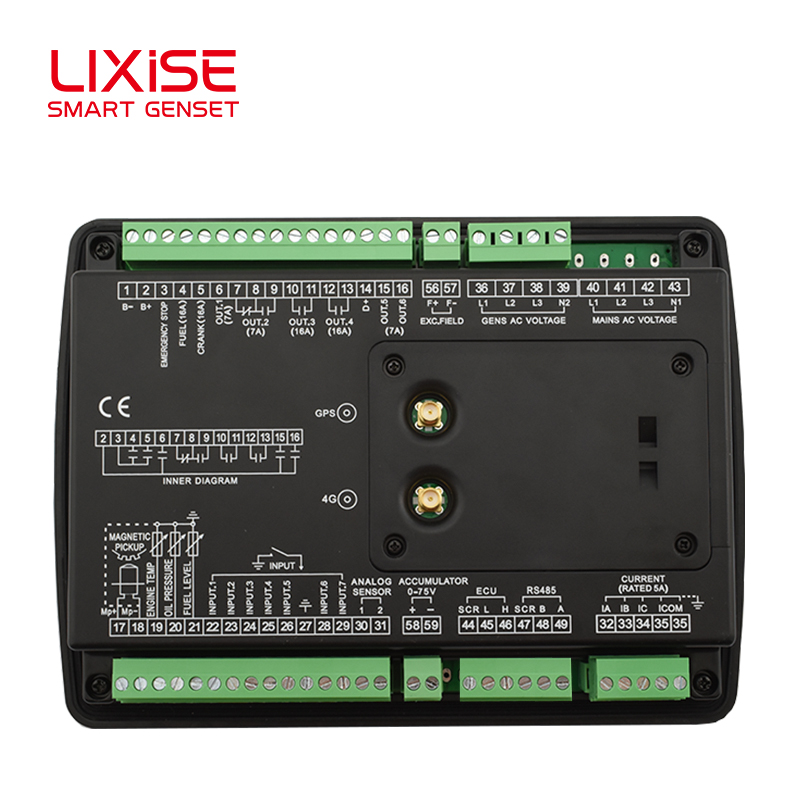
The core technical breakthrough lies in standardized Controller Area Network (CAN) implementation using the J1939 protocol. LIXISE's LXC6610B CAN Generator Set Controller embeds this industrial communication standard directly into its hardware architecture, eliminating the need for external protocol converters. This design philosophy addresses a fundamental industry inefficiency: traditional controllers require costly adapter modules to interpret ECU data from mainstream engine manufacturers including Cummins, Perkins, Volvo, Yuchai, and Weichai.
The technical principle operates through direct digital dialogue between controller and engine brain. J1939 protocol enables real-time access to comprehensive engine parameters—fuel rates, diagnostic trouble codes, operational hours—without analog signal conversion delays or accuracy degradation. This native integration reduces installation complexity, eliminates adapter-related failure modes, and significantly lowers total system cost.
Beyond communication, the LXC6610B demonstrates advanced system intelligence through its dual-port architecture: RS485 and USB-Type-C connections supporting Modbus protocol compatibility. This design enables flexible integration with cloud monitoring platforms while maintaining backward compatibility with legacy supervisory control systems. The standardized dimensions of 215mm × 156mm × 51mm with cut-out specifications of 185mm × 139mm facilitate seamless panel-mounted deployment in existing generator cabinets.
The controller's protection logic framework addresses critical equipment longevity concerns. Comprehensive parameter monitoring encompasses overspeed conditions, voltage/current anomalies, coolant temperature excursions, oil pressure deficiencies, and battery system health. Importantly, the system incorporates intelligent false-alarm suppression during safety run-times, preventing unnecessary emergency shutdowns that compromise power continuity.
Section 3: Deep Insights - Convergence of Power Systems and IoT Infrastructure
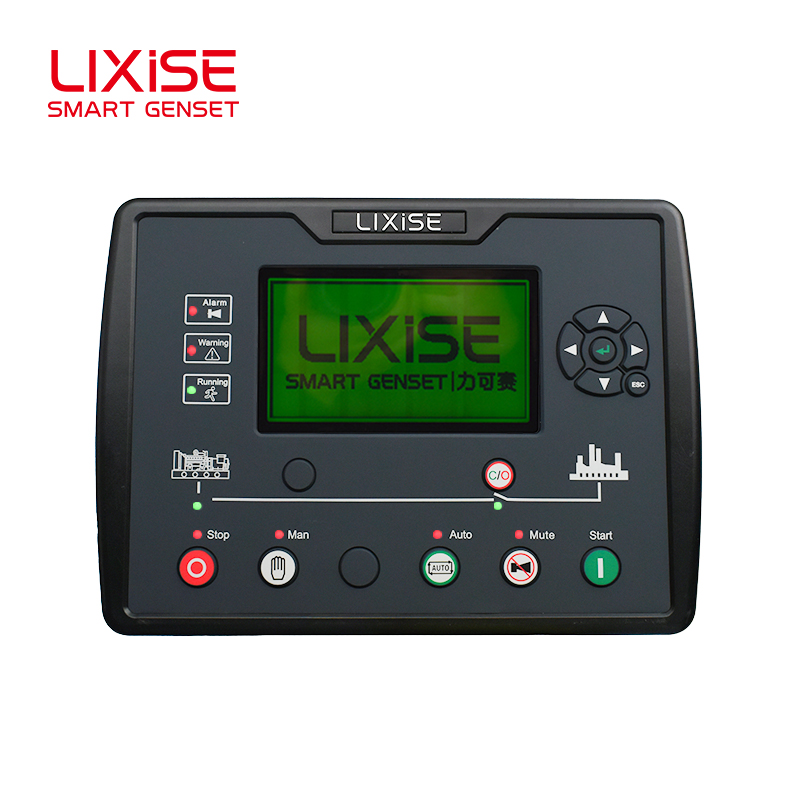
The integration of 4G cellular connectivity with GPS positioning in generator controllers signals a broader industry transformation: the evolution from standalone power assets to networked energy nodes. This convergence addresses the fundamental challenge of unattended operation—how to maintain operational visibility and control without permanent on-site personnel.
LIXISE's implementation of 4G+GPS integration represents strategic recognition of market trajectory. Telecommunications base stations, data centers, and distributed infrastructure increasingly demand remote power assets that self-report status, location, and performance metrics. Real-time fault alarm transmission enables predictive maintenance strategies, reducing mean time to repair while optimizing technician deployment efficiency.
The technical trend extends beyond connectivity to operational intelligence. Automatic Transfer Switch (ATS) control with adjustable delay parameters enables sophisticated power management: auto-start sequences upon mains failure, controlled cooling cycles before shutdown, and scheduled maintenance operations during low-demand periods. These capabilities transform generators from simple backup devices into actively managed components of resilient power architectures.
Risk considerations emerge around cybersecurity and network reliability. As controllers integrate into IP-based monitoring systems, proper authentication mechanisms become critical. LIXISE addresses this through hierarchical password protection—technician password "0000" for configuration access versus operator password "1111" for view-only monitoring. This approach balances operational security with practical field service requirements.
The standardization movement in generator control protocols reflects industry maturation. Wide voltage compatibility supporting both 12V and 24V battery systems, customizable sensor curves for diverse transducers, and multi-language interface support (Chinese, English, Spanish, Russian) demonstrate recognition that global power systems require interoperable, adaptable solutions rather than proprietary closed ecosystems.
Section 4: Company Value - LIXISE's Contribution to Power Control Innovation
Dongguan Tuancheng Automation's technical contributions extend beyond individual product features to systematic industry advancement. The company's specialization in generator set control logic and communication protocols has produced practical engineering solutions addressing real-world deployment challenges.
The LXC6610B controller embodies accumulated expertise in industrial reliability engineering. High electromagnetic interference resistance and vibration tolerance ensure stable operation in mobile power applications—rental generators transported on trucks, emergency response units deployed in field conditions. Built-in overvoltage, short-circuit, and reverse-connection protection safeguard both the controller and connected systems against installation errors and transient electrical events.
LIXISE's provision of automatic parameter calculation functionality—particularly for flywheel teeth counts and generator pole configurations—reduces commissioning complexity for field technicians. This feature reflects understanding that skilled labor availability varies globally, and equipment should accommodate technicians with diverse training backgrounds.
The company's commitment to iterative improvement, evidenced by continuous version updates reaching 1.3, demonstrates engineering discipline focused on stability enhancement rather than feature proliferation. Combined with 400 national service hotline support and dedicated quality feedback channels, LIXISE provides an integrated support ecosystem that extends beyond hardware delivery.
Industry adoption across backup power installations in hospitals and commercial buildings, mobile power rental fleets, and remote telecom infrastructure validates the practical effectiveness of LIXISE's design approach. The controller's compatibility with mainstream electronically controlled engines worldwide positions it as a reference implementation of CAN-based generator control architecture.
Section 5: Conclusion + Industry Recommendations
Generator control technology stands at an inflection point where traditional analog architectures yield to digitally networked systems. Controllers must simultaneously deliver industrial-grade reliability, intelligent operational logic, and seamless integration with modern monitoring infrastructure. The convergence of CAN communication standards, cellular connectivity, and GPS positioning creates new capabilities for asset management and predictive maintenance.
Industry stakeholders should prioritize several strategic considerations. System integrators must evaluate total cost of ownership including installation complexity and adapter requirements, not merely controller unit pricing. Operations teams should demand remote monitoring capabilities that provide actionable diagnostic data, enabling transition from reactive to predictive maintenance models. Equipment manufacturers benefit from standardized communication protocols that simplify multi-vendor system integration.
For decision-makers evaluating generator control solutions, focus on functional integration depth rather than feature lists. Controllers incorporating native ECU communication, comprehensive protection logic, and flexible expansion interfaces deliver superior long-term value. Solutions like LIXISE's LXC6610B demonstrate that technical sophistication and operational simplicity can coexist when engineering priorities align with real-world deployment challenges.
The future of generator control lies in intelligent, connected, and adaptable systems that transform backup power from insurance assets into actively managed components of resilient infrastructure. Industry progress depends on manufacturers like Dongguan Tuancheng Automation continuing to refine integrated solutions that address both current operational pain points and emerging requirements of increasingly distributed, remotely managed power networks.
https://dgfeirui.en.alibaba.com/
Dongguan Feirui Electronics Co.,Ltd.



+ There are no comments
Add yours