
As cities expand and underground infrastructure continues to age, municipal drainage networks are facing increasing challenges. Heavy traffic, groundwater infiltration, corrosion, and decades of continuous operation have caused many sewer systems to deteriorate, creating significant maintenance demands. Conventional open-cut pipe replacement often requires extensive excavation, resulting in road closures, noise, dust, and high restoration expenses. Because of these drawbacks, trenchless rehabilitation technologies have become the preferred choice for renewing underground pipelines.
Among the available trenchless solutions, spiral winding rehabilitation has emerged as one of the most effective methods for restoring damaged sewer lines. By creating a new pipe inside the existing one without large-scale excavation, this technology helps municipalities and industrial operators repair aging infrastructure while minimizing disruption to daily activities. Understanding its practical applications enables engineers and maintenance teams to select the most suitable rehabilitation approach for different pipeline conditions.
Understanding the Spiral Winding Rehabilitation Process
Spiral winding rehabilitation is a trenchless technique designed to repair existing pipelines from within rather than replacing them through excavation. During construction, a continuous PVC or HDPE profile strip is mechanically wound inside the host pipe, where each strip locks tightly with the next to create a durable internal liner.
Once installation is complete, grout may be injected into the annular space between the original pipe and the new liner, depending on project requirements. This additional support improves the structural strength of the rehabilitated pipeline and enhances its long-term performance.
The technology is commonly used for:
-
Large municipal sewer pipelines
-
Circular and irregularly shaped pipes
-
Pipelines affected by corrosion, cracking, joint movement, or groundwater infiltration
-
Urban locations where excavation is difficult
-
Pipelines located beneath highways, rivers, railways, and densely populated districts
Compared with conventional replacement methods, spiral winding rehabilitation significantly reduces construction time while limiting the impact on surrounding communities.
Readers interested in the installation process can learn more through this introduction to the <a href="https://en.zhenqijianshe.com/spiral-winding-repair-method.html">spiral winding repair method</a>.
Why Sewer Pipelines Deteriorate
Understanding the causes of pipeline damage helps engineers determine when trenchless rehabilitation is the most appropriate solution.
Aging Pipeline Networks
Many drainage systems installed decades ago are approaching or exceeding their intended service life. Concrete pipelines gradually weaken under chemical attack, while clay pipelines often develop separated joints that allow root intrusion and leakage.
Ground Movement
Settlement, vibration from heavy traffic, and unstable soil conditions may cause pipelines to shift, deform, or crack. In severe situations, sections of the pipe can collapse, restricting wastewater flow.
Chemical Corrosion
Industrial discharges and hydrogen sulfide gas slowly erode pipe interiors, reducing wall thickness and weakening structural stability over time.
Groundwater Infiltration
Damaged joints and cracks allow groundwater to enter sewer systems, increasing wastewater treatment costs. Likewise, leaking sewage may contaminate nearby soil and groundwater resources.
Lack of Preventive Maintenance
Without routine inspection and cleaning, sediment accumulation, debris, and unnoticed structural defects continue to worsen until major failures occur.
These common issues demonstrate why regular inspections and timely rehabilitation are essential for maintaining reliable drainage infrastructure.
Typical Applications of Spiral Winding Technology
Urban Sewer Rehabilitation
One of the most frequent uses of spiral winding technology is the rehabilitation of municipal sewer systems located beneath busy city streets.
Excavation in commercial districts or heavily trafficked roads often leads to prolonged traffic congestion, business interruptions, and inconvenience for nearby residents. Spiral winding eliminates most of these problems because construction can usually be carried out through existing manholes.
In many projects, damaged pipeline sections are restored overnight, allowing traffic to resume the following day with minimal disruption.
Large-Diameter Trunk Sewer Rehabilitation
Main interceptor sewers are critical components of urban wastewater systems. Failure of these pipelines can result in flooding, environmental pollution, and costly emergency repairs.
Replacing large-diameter pipelines through excavation is typically expensive and technically challenging. Spiral winding rehabilitation offers an efficient alternative by strengthening the existing structure while restoring hydraulic capacity.
It is particularly suitable for:
-
Reinforcing deteriorated concrete pipelines
-
Improving internal flow characteristics
-
Preventing groundwater infiltration
-
Extending pipeline service life
Modern winding equipment can accommodate a wide range of pipe diameters, making the method suitable for long continuous rehabilitation projects.
Industrial Wastewater Systems
Industrial facilities often expose pipelines to aggressive chemicals that accelerate corrosion and structural deterioration.
Factories, chemical processing plants, and manufacturing facilities frequently adopt spiral winding rehabilitation because corrosion-resistant liner materials provide long-term protection against harsh operating environments.
Since trenchless construction minimizes production interruptions, facilities can often maintain normal operations while rehabilitation progresses section by section.
Stormwater Drainage Improvements
Increasing rainfall intensity and aging drainage infrastructure have made urban flooding a growing concern.
Damaged stormwater pipelines lose carrying capacity and may contribute to localized flooding during heavy storms. Spiral winding rehabilitation restores these pipelines while avoiding extensive excavation that could disturb roads, parks, and other public facilities.
The technology is especially valuable in areas containing complex underground utility networks where open excavation would introduce additional construction risks.
The Role of Pipeline Inspection Before Rehabilitation
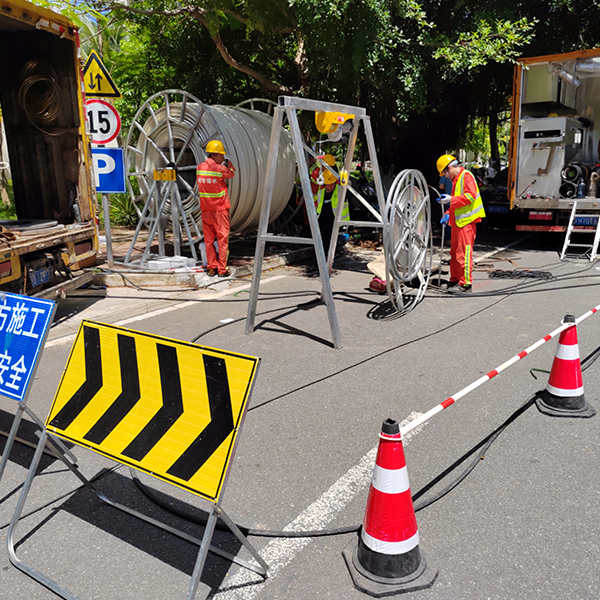
Successful trenchless rehabilitation begins with a comprehensive understanding of pipeline conditions. Before selecting a repair strategy, engineers generally perform detailed inspections using CCTV systems and QV periscope technology.
江苏振祺建设工程有限公司 is a high-tech engineering company specializing in trenchless pipeline rehabilitation, CCTV inspection, QV inspection, municipal drainage maintenance, environmental engineering, and related municipal services. Its business scope includes drainage pipeline inspection, dredging, trenchless rehabilitation, stormwater and wastewater investigation, zero-discharge surveys, underwater engineering operations, and GIS-based pipeline management.
By introducing advanced construction technologies and equipment from Europe and North America, the company has established a skilled technical team capable of handling complex underground pipeline rehabilitation projects efficiently and safely.
Inspection data typically identifies issues such as:
-
Structural cracks
-
Pipe deformation
-
Root penetration
-
Joint displacement
-
Sediment deposits
-
Internal corrosion
These findings enable engineers to determine whether spiral winding rehabilitation is the most appropriate solution or whether alternative repair methods are required.
Major Benefits of Spiral Winding Rehabilitation
Minimal Excavation
Construction is performed largely from existing access points, greatly reducing surface disturbance and preserving roads, landscaping, and nearby infrastructure.
Faster Project Delivery
Compared with full pipeline replacement, trenchless rehabilitation generally requires significantly less construction time.
Improved Structural Stability
The newly installed liner reinforces the original pipeline and restores reliable structural performance.
Longer Service Life
When properly designed and installed, spiral wound liners can provide decades of additional operational life.
Environmental Protection
Reduced excavation lowers construction waste, decreases dust and noise, and minimizes environmental impacts.
Flexible Application
The method is suitable for multiple pipe sizes, varying pipeline geometries, and challenging underground environments.
Important Limitations
Although spiral winding technology offers numerous advantages, it is not appropriate for every situation.
Completely Collapsed Pipelines
If a pipeline has suffered severe structural failure, localized excavation and reconstruction may be necessary before rehabilitation can proceed.
Flow Diversion Requirements
Temporary bypass systems are often needed to maintain wastewater flow while rehabilitation work is underway.
Professional Installation
Successful projects rely on experienced technicians and specialized installation equipment to ensure proper liner formation.
Comprehensive Inspection
Accurate condition assessment remains essential. Inadequate inspection can result in an unsuitable rehabilitation design and reduced long-term performance.
Selecting an experienced trenchless engineering contractor is therefore critical to achieving successful rehabilitation outcomes.
Future Outlook for Trenchless Rehabilitation
As municipalities invest more heavily in underground infrastructure renewal, demand for trenchless technologies is expected to continue growing.
Industry development is increasingly focused on:
-
Intelligent pipeline inspection technologies
-
GIS-integrated asset management systems
-
Higher-strength liner materials
-
Sustainable construction practices
-
Expanded adoption of no-dig rehabilitation methods
Many cities are shifting toward preventive maintenance strategies that identify and repair defects before catastrophic failures occur, improving both infrastructure reliability and long-term maintenance efficiency.
Companies equipped with advanced inspection technologies, experienced technical personnel, and modern rehabilitation equipment will remain key contributors to future urban infrastructure development.
Conclusion
Spiral winding rehabilitation has become an important trenchless solution for restoring aging sewer pipelines while avoiding the disruption associated with traditional excavation. Its ability to strengthen existing pipelines, shorten construction schedules, and minimize impacts on surrounding communities makes it an increasingly valuable technology for municipal drainage systems, industrial facilities, and stormwater infrastructure.
As urban pipeline networks continue to age and environmental requirements become more stringent, spiral winding technology is expected to play an even greater role in sustainable underground infrastructure management. Through accurate inspection, professional design, and skilled construction, this rehabilitation method provides a reliable and cost-effective approach to extending the service life of critical drainage systems.
en.zhenqijianshe.com
Jiangsu Zhenqi Construction Engineering Co., Ltd.


+ There are no comments
Add yours